
"We wanted to show the raw, unfiltered side of existing. 'Hooligan' isn't about breaking rules for fun; it's about the rebellion of continuing to feel, to hurt, and to love, even when the world feels heavy." — RM, in a statement released to K-Beats.
The clock struck midnight in Seoul, and the digital landscape of global pop culture shifted on its axis. On April 8, BTS did not merely release a music video; they detonated a meticulously crafted, emotionally charged work of cinematic art. "Hooligan," a track that had already burrowed deep into the soul of the fandom as a standout B-side from their historic album "ARIRANG," has been given a breathtaking visual narrative. This is not a standard promotional cycle filler. The release of the "Hooligan" music video is a statement—a deliberate, powerful, and artistically dense missive from a group navigating their unique position at the summit of the world. It confirms that even in a period framed by individual pursuits and mandatory military service, their collective creative vision remains not only intact but fearlessly evolving.
The video, trending at #1 worldwide on YouTube within minutes, eclipsed 50 million views in its first 12 hours, a testament to the enduring, rapt attention the group commands. But beyond the staggering metrics lies a richer story. "Hooligan" the song is a melancholic, rock-infused anthem about internal chaos and societal weariness. The music video, directed by the renowned Choi YongSeok of Lumpens (the visionary behind "Blood Sweat & Tears," "Fake Love," and "ON"), transmutes that lyrical vulnerability into a stark, symbolic, and ultimately triumphant visual saga. It bridges the deeply personal mythology BTS has built over a decade with the sophisticated, universal themes of their current era, proving that their chapter of mandatory service is not an interruption, but a poignant plot point in a still-unfolding epic.
From Hiatus to "ARIRANG": The Groundwork for a Rebellion
To understand the profound weight of "Hooligan," one must first contextualize the ground upon which it stands. The announcement of BTS's hiatus from group activities in mid-2022 to fulfill military service obligations sent seismic waves through the industry. It was a pause that prompted existential questions about scale, legacy, and endurance in the hyper-accelerated world of K-Pop. However, as detailed in our previous analysis, "Beyond the Summit: How BTS's 'ARIRANG' Achieves Unprecedented Billboard Domination", the group strategically turned this period into one of their most potent artistic statements.
The "ARIRANG" Phenomenon
Released in late 2023, "ARIRANG" was a paradigm shift. Named after the iconic Korean folk song symbolizing sorrow, endurance, and resilience, the album served as a conceptual anchor. It was a work released not in the frenzy of a coordinated global promotional tour, but in the reflective space between members' enlistment dates. The album dominated global charts, debuting at #1 on the Billboard 200 and spawning multiple top-10 singles on the Hot 100. Its success proved a revolutionary thesis: BTS's connection with ARMY is not contingent on constant, simultaneous physical presence. It is rooted in shared history and artistic truth. "Hooligan," track seven on the album, immediately stood out for its gritty guitar riffs, raw vocal delivery, and lyrics that spoke of being "a mess in a pressed suit," a "gentleman hooligan" at war with expectation and internal despair.
The Anticipation for Visual Storytelling
While the title tracks received lavish videos, "Hooligan" was initially left as an audio-only experience, its narrative entrusted to the listener's imagination. This fueled intense speculation and fan-created content. ARMY dissected every lyric, creating a collective interpretation that the official video now engages with and expands upon. The decision to release the MV months after the album's peak commercial performance is a classic BTS move—prioritizing artistic timing over algorithmic hype, rewarding deep-listening fans, and re-energizing the album's narrative in a new way.
Deconstructing the Chaos: A Frame-by-Frame Journey Through "Hooligan"
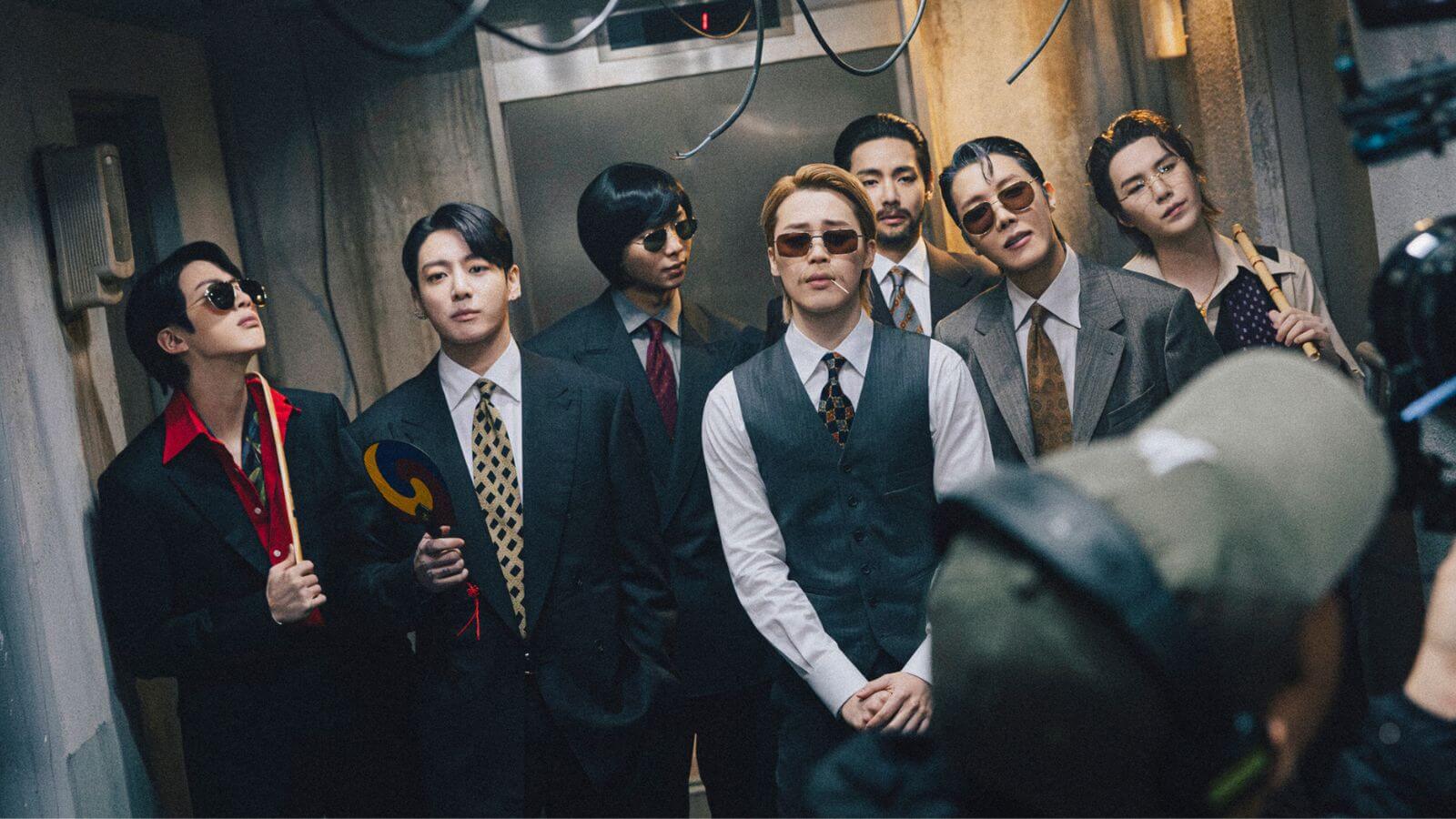
The "Hooligan" music video is a masterpiece of visual metaphor, intertextuality, and raw performance. It departs from the high-concept fantasy of "Dynamite" or the sleek futurism of "My Universe," opting instead for a gritty, almost dystopian realism interspersed with hauntingly beautiful surrealist tableaus.
Iconography and Setting: The Battlefield of the Self
The video opens on Jung Kook standing alone in a derelict, rain-slicked urban alleyway, a visual callback to the solo scenes in "Blood Sweat & Tears" and "ON: Kinetic Manifesto." The setting is immediately established: a world in decay, a system crumbling. This isn't a glamorous rebellion; it's a struggle for survival of the spirit. We see SUGA trapped in a sterile, white room that slowly floods with ink-black water—a potent symbol of depression overwhelming from within. j-hope's scenes are a frenzy of motion, dancing with a chaotic, almost desperate energy in a crumbling warehouse, his signature smile replaced by a look of intense catharsis.
The most striking recurring motif is the pressed suit, referenced directly in the lyrics. Each member is shown in moments of pristine, tailored perfection, only for the suit to become stained, torn, or drenched. V calmly smears paint across his white shirt; Jimin struggles against the constriction of his jacket before freeing himself. This visual language articulates the core conflict: the pressure to maintain a perfect facade versus the human need to express flawed, messy reality. It's a theme that resonates deeply in an industry, and a world, obsessed with curated images, a topic we've seen other artists grapple with publicly, as in "The Unfiltered Idol".

Choreography as Catharsis
The group choreography, led by Son SungDeuk, is arguably some of their most physically aggressive and emotionally transparent since "No More Dream." Performed in a cavernous, industrial space, the movements are less about synchronized precision and more about individual expression within a unified frame. There are moments of stunning synchronicity that suddenly fracture into seven distinct movements—one member collapsing to the ground, another arching back in silent scream, a third spinning in isolated frenzy. It visually represents the song's message: we are together in this feeling, but we each experience the chaos uniquely. The final group shot, drenched in a golden, dusty light, staring defiantly at the camera with torn clothes and smudged faces, is an image of profound solidarity in exhaustion.
The ARMY Rises: Dissection, Emotion, and Collective Voice
Within seconds of the premiere, social media platforms became a global seminar on visual analysis and emotional resonance. The fan reaction was not just celebratory; it was deeply analytical and overwhelmingly personal.
On Twitter, the hashtag #HooliganMV saw fans connecting specific frames to lyrics from BTS's entire discography, creating intricate timelines of their "Bangtan Universe" narrative. "The flooding room is a direct sequel to 'Black Swan's' art gallery! SUGA is finally submerged in the art he feared!" one viral thread posited. On Weverse, comments poured in expressing how the video gave form to their own unspoken anxieties. "Seeing Jin just sitting quietly, looking exhausted but peaceful in the middle of the wreckage... that's how I feel every day after work. They see us," wrote a fan from Brazil.
This level of engaged, intellectual fandom is a pillar of BTS's success. The release also triggered a massive resurgence in streaming for the entire "ARIRANG" album, sending it rocketing back to the top of iTunes charts in over 95 countries and demonstrating the formidable "ARMY effect" on our Charts page. Furthermore, fan-edited videos comparing the "Hooligan" choreography to earlier, more aggressive performances like "Danger" and "N.O" have gone viral, highlighting the group's artistic full circle—from rebellious teenagers to world stars now rebelling against the immense weight of their own fame.
"It's the most 'them' video in years. It feels like 'I Need U' grew up, got the whole world watching, and decided to be even more honest. The pain is more complex, but so is the hope. This is why I'm ARMY." — @BTSanalytics on Twitter
Industry Shockwaves: Redefining the "Active" Idol Lifecycle
The impact of "Hooligan" extends far beyond fandom. Within the K-Pop industry, its release strategy and content are being scrutinized as a potential new blueprint.
The Strategy of Sustained Narrative
Typically, an album's promotional cycle lasts 4-6 weeks. BTS, by releasing a major, high-budget music video for a B-side five months after the album's drop, has effectively invented a "second wave" promotion model. This keeps the artistic conversation alive, maximizes the longevity of an album's impact, and provides sustained content during a period when the full group cannot be physically present. It turns a perceived disadvantage—the members' military service—into a strength, allowing each release to be a major event that dominates the news cycle. Labels for other top-tier acts, including those with members on hiatus for various reasons, are undoubtedly taking notes. The conversation around active service and idolhood is evolving, much as it has regarding other life events, as explored in our article on "Expecting The Unexpected".
A Raise of the Artistic Bar
The cinematic quality and symbolic depth of "Hooligan" raise expectations for music videos across the board. It functions less as a promotional tool and more as a standalone short film that enriches the song. This pushes the industry toward valuing directorial vision and narrative coherence over pure spectacle or TikTok-friendly moments. For newer groups looking to establish a strong artistic identity, this sets a high standard. The intense focus on thematic cohesion seen in "Hooligan" is reminiscent of the detailed world-building other groups strive for, such as CRAVITY's "ReDeFINE" or the sensory approach of 82MAJOR's "FEELM".
Furthermore, it reinforces BTS's unique position. They are not just competing on the pop charts; they are operating in the realm of cultural auteurs. Every release is analyzed by mainstream film and music critics, not just K-Pop media. This elevates the perception of the entire genre, challenging outdated notions of K-Pop as disposable factory-produced content.
The Path Forward: "Hooligan" as a Bridge, Not a Farewell
The "Hooligan" music video does not feel like a closing curtain. Instead, it feels like a vital, connective tissue between chapters. It reaffirms the group's core identity—artists who wrestle with profound questions through their music—even as its members are physically apart, pursuing solo projects and fulfilling their duties.
As of this writing, four members are actively serving, with the remaining three expected to enlist within the year. The success of "ARIRANG" and now the viral triumph of "Hooligan" create a powerful legacy framework. It assures the market and the fandom that the BTS brand is resilient, artistically vibrant, and capable of monumental achievements even in a dispersed state. It builds immense anticipation for the eventual, inevitable group return in 2025, promising a reunion built not on nostalgia, but on an evolved, hardened, and even more artistically assured foundation.
For ARMY, the video is a gift and a covenant. It says, "We are here. We are still creating. We still see you." For the industry, it's a case study in narrative power and strategic longevity. And for music itself, "Hooligan" is a bold reminder that the most compelling rebellions are often the quiet, internal ones, given voice through undeniable art. As the members continue their individual journeys, fans can revisit the rich tapestry of their work on our Artists page, tracing the very lineage that "Hooligan" so powerfully continues. The story of BTS is far from over; "Hooligan" is simply one of its most compelling, and brutally honest, pages yet.