
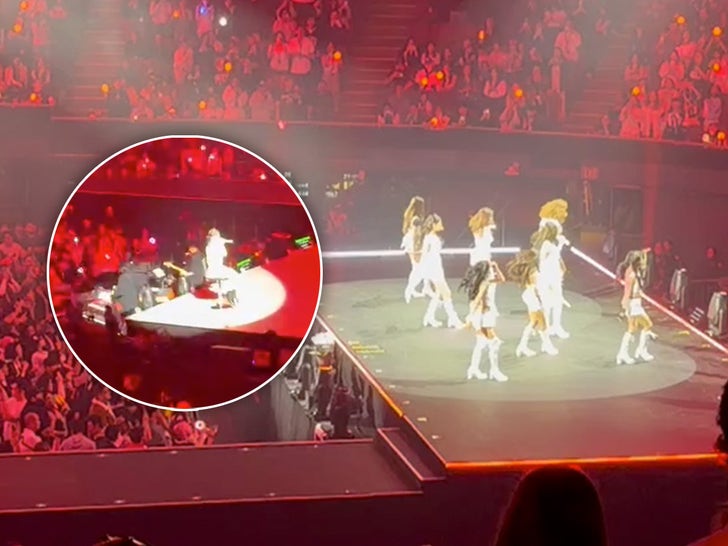

The arena lights dim, the opening chords of Set Me Free begin to pulse through 15,000 speakers, and nine silhouettes are meant to materialize on stage. But for the last leg of TWICE’s mammoth “READY TO BE” World Tour, only eight figures emerge from the haze. The space where Kim Dahyun usually stands—a beacon of radiant energy known for her iconic “eye smile” and effortless fan service—remains conspicuously, painfully empty. This isn't a creative choice; it's a sobering reality dictated by physical limits. The announcement from JYP Entertainment confirming Dahyun’s continued absence from tour stops due to a persistent back injury has shifted the celebratory mood of the tour into a poignant testament to resilience, both for the artist and the group she temporarily leaves behind.
This development is more than a routine hiatus notice. It represents a critical stress test for one of K-Pop’s most enduring and synchronized girl groups at the peak of their global commercial power. How does a unit built on perfect chemistry and shared presence adapt when a core piece is missing? What does it reveal about the physical toll of a decade in the industry? And how does the fandom, ONCE, rally not in protest, but in protective support? The situation with Dahyun opens a window into the modern mechanics of mega-tours, artist welfare, and the unbreakable, sometimes invisible, bonds that hold a group together even when they are, physically, apart.
From Rookie Darlings to Global Icons: The TWICE Trajectory
To understand the significance of a member's absence, one must first appreciate the totality of TWICE's presence. Debuted in 2015 under JYP Entertainment after the survival show Sixteen, TWICE didn't just enter the K-Pop scene; they helped redefine its global potential in the third generation. Their path was built on an infectious, bright concept, unforgettable melodies like TT and Likey, and a meticulously cultivated image of nine distinct but harmonized personalities. Dahyun, in particular, carved out a unique niche. Not initially highlighted as a main vocal or dancer, she became the group’s “mood-maker” and a master of communication. Her playful antics on stage, her ability to connect with cameras across a stadium, and her genuine, shimmering presence became a non-negotiable part of the TWICE experience.
Their evolution from cheerful hitmakers to mature, self-producing artists who command stadiums worldwide is a case study in longevity. Albums like Formula of Love: O+T=<3 and Between 1&2 showcased growing artistic input. Their current “READY TO BE” tour is the culmination of this journey, a victory lap celebrating their status as true global headliners. As we explored in our analysis of group dynamics in Strategic Pause or New Chapter? Inside WEi’s Shift to Individual Promotions, the balance between unit strength and individual expression is delicate. For TWICE, that balance has always tilted toward the power of nine. That's why a single absence resonates so deeply; it challenges a fundamental pillar of their identity.
The Anatomy of a Group's Heart: Dahyun's Role
Dahyun’s role transcends her official positions. She is TWICE’s connective tissue to the audience. During ments, her humor breaks tension. In fan interactions, her warmth is legendary. On stage, while she has grown into a formidable performer, her greatest strength is her expressive, joyous engagement. She embodies the “cheerful perseverance” that is core to TWICE’s brand. Removing that energy isn't a simple subtraction; it requires a recalibration of the entire group's stage dynamic and emotional output.
The Official Word and the Unspoken Toll
JYP Entertainment’s latest statement is a follow-up to an initial alert back in February. The agency clarified that Dahyun is suffering from “sudden pain and stiffness in her neck and back” and that after extensive consultation with medical staff, the recommendation was clear: she requires rest and stability to prevent worsening the condition. The announcement emphasized that the decision was made “for the artist’s health as the top priority” and asked for ONCE’s understanding. Notably, the injury is described as persistent and related to the intense physical demands of tour rehearsals and performances.
“We feel it is important that she receives sufficient rest and stability for recovery. We ask for the generous understanding of fans.”
This isn't an isolated incident in K-Pop’s high-stakes environment. The industry’s relentless schedule—packed with practice, travel, performances, and media commitments—often treats the idol’s body as an instrument that must never fall out of tune. Back and knee injuries are particularly common, given the complex choreography and constant travel. Dahyun’s situation forces a public conversation about sustainability. While agencies have gotten better at issuing health notices, the underlying economic model of capitalizing on a group’s peak touring years often conflicts with necessary recuperation time.
Behind the Curtain: Re-blocking, Rehearsing, and Recovering
Logistically, Dahyun’s absence triggers a massive behind-the-scenes overhaul. Choreography for nine people is a complex spatial puzzle. Removing one piece means the remaining eight must relearn formations, adjust their spacing, and redistribute lines and center positions—all while maintaining the visual cohesion and energy of the original design. Vocal arrangements also shift, requiring other members to cover Dahyun’s parts, a task that demands extra rehearsal to ensure seamless harmony. This adaptive process is a testament to the members' professionalism, but it also adds a layer of mental and physical stress during an already grueling tour.

A Fandom in Unity: ONCE’s Protective Embrace
In the often-volatile world of K-Pop fandom, the reaction to Dahyun’s news has been a powerful example of collective empathy. Rather than expressing disappointment about altered performances, the global ONCE community has mobilized under unified hashtags like #GetWellSoonDahyun and #AlwaysWithDahyun. Social media is flooded with supportive messages, edited videos highlighting her best moments, and projects to send healing letters to the agency.
This stands in stark contrast to the factional disputes we sometimes see, such as those detailed in The Reverse Stream: How Allegations of "Chart Jamming" Ignite a Fandom War. The ONCE response is purposefully focused on the artist’s well-being over consumption of the product. Fan unions have publicly stated that they will cheer extra loud for the eight performing members while holding space for Dahyun. This mature, health-first stance reflects the mutual respect cultivated over TWICE’s long career. It’s a poignant reminder that at its best, fandom is a partnership, not just a transaction.
The Virtual Presence: A Digital Bridge
In a modern twist, Dahyun has leveraged social media to maintain a connection. While she cannot perform, she has posted reassuring messages on Bubble, telling fans she misses them and is working hard to recover. This digital lifeline helps mitigate the feeling of total absence, allowing her to participate in the tour’s emotional journey from afar. It’s a savvy use of the tools available to modern idols to manage their narrative and comfort fans directly, without filter.
The Bigger Picture: Injury, Agency, and the K-Pop System
Dahyun’s enforced hiatus opens a broader discussion about the K-Pop industry’s approach to artist health and longevity. For years, the standard practice was to “power through” injuries, often with painkillers and bandages, reinforcing a dangerous culture of silence and endurance. While transparency has improved, the structural pressures remain. Tours are major revenue drivers, and insurance, logistics, and ticket sales are planned years in advance, creating immense inertia.
JYP’s decision to prioritize rest, even for a key member during a flagship tour, can be seen as a positive step in a shifting paradigm. It acknowledges that the long-term value of a healthy artist outweighs the short-term gain of a complete lineup. This aligns with a growing trend where agencies are forced to balance commercial imperatives with a more public-facing commitment to welfare, a calculus that becomes more complex with veteran groups like TWICE whose members are entering their second decade as performers.
Furthermore, it highlights the different strategies groups employ. Some, like Xdinary Heroes with their band-centric, less choreography-heavy performances (as noted in Sonic Blueprints: How Xdinary Heroes' 'X room' Deconstructs the Playbook), may inherently have different physical risk profiles. For dance-focused girl groups like TWICE, the question becomes how to evolve their performance style to be sustainable as they age in the industry—a challenge all long-running active groups must eventually face.
Looking Ahead: Recovery, Return, and Resilience
So, what’s next for Dahyun and TWICE? The immediate future involves careful rehabilitation. Back injuries are notoriously finicky, and a rushed return could lead to chronic issues. The focus will be on full recovery, not merely symptom management. For the eight members on stage, the tour will continue as a demonstration of their formidable adaptability. Their performances will inherently be different—a tribute to their missing piece—but will undoubtedly solidify their reputation as consummate professionals.
When Dahyun does return, it will be a moment of immense emotional release for the group and fandom alike. It will reinforce the narrative of TWICE’s unbreakable bond. In the longer term, this incident may influence how JYP plans future tours, potentially building in more structured rest periods or incorporating more flexible staging. For ONCE, this experience has deepened the fandom’s character, proving its priority is the human behind the idol.
The “READY TO BE” tour will be remembered not just for its spectacular setlists, but for this chapter of resilience. It underscores a fundamental truth in K-Pop: the show does go on, but sometimes, its most powerful message is sent from the silence of an empty spot on the stage, and the collective decision to protect one of their own. For the latest updates on TWICE and all your favorite artists, always check our News page. The journey continues, and the wait for a complete, healthy reunion makes the heart, as the old adage goes, grow even fonder.