
In a move that reflects a shifting paradigm for veteran K-Pop acts, The Rose has announced a planned temporary hiatus following their 10th-anniversary album and tour. This is not a disbandment but a strategic, member-led pause, highlighting a mature approach to longevity in an industry infamous for burnout. The decision underscores a new focus on sustainable careers, artistic replenishment, and the evolving power dynamics between artists and their agencies.
- What Did The Rose Actually Announce?
- Why Would a Band at Its Peak Choose a Break?
- What Do We Know About Their Contract & Agency Situation?
- How Will This Impact Black Roses and Their Fandom Economy?
- Is This Part of a Larger Trend in K-Pop?
- What Can We Realistically Expect When They Return?
- Frequently Asked Questions (FAQ)
What Did The Rose Actually Announce?
The core announcement was a meticulously planned sequence of activities leading to a hiatus. This structure is crucial—it’s not a sudden stoppage but a curated closure of one chapter before opening the next.
The Phased Approach: Album, Tour, Then Pause
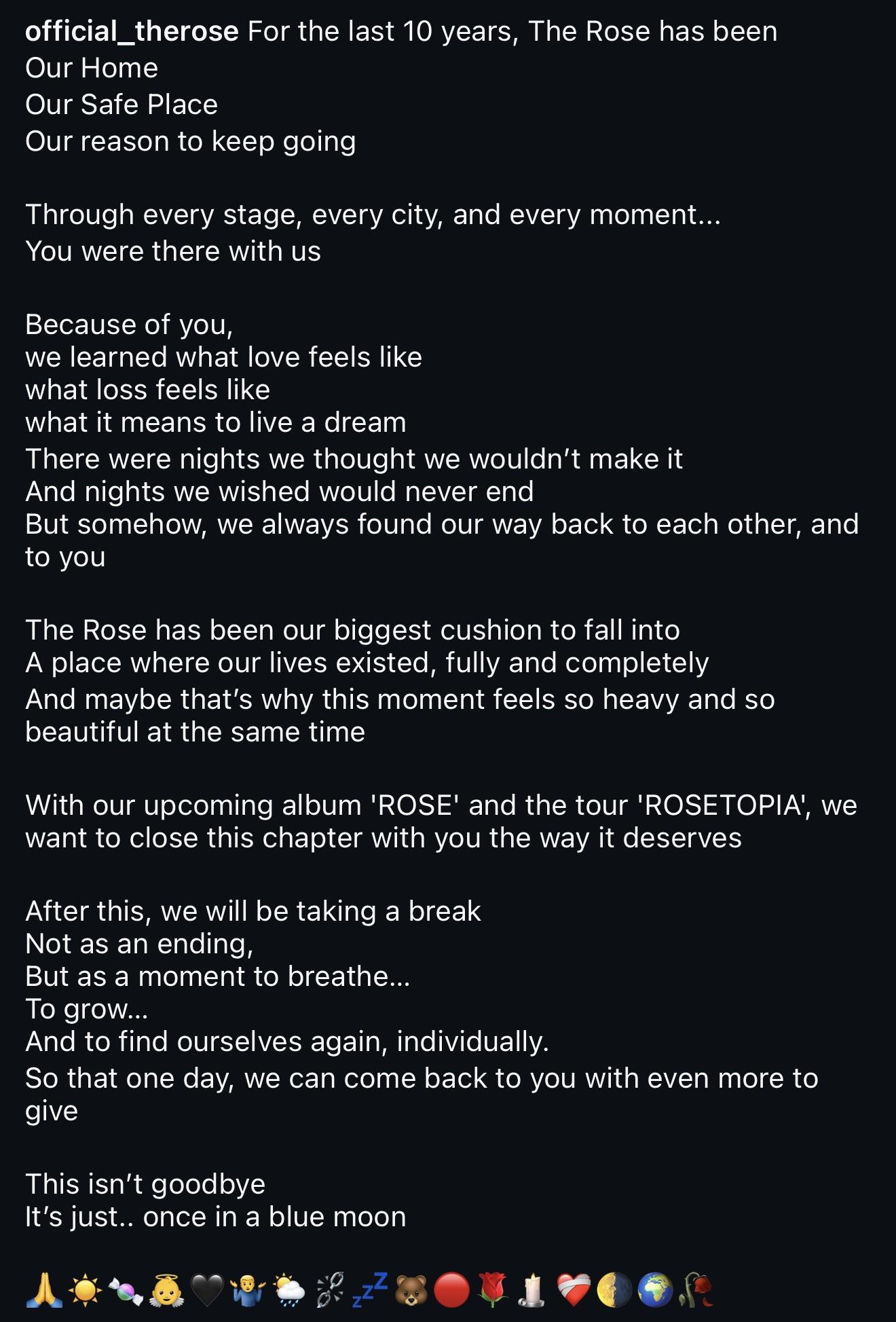
The band outlined a clear roadmap: first, a new album commemorating their 10th anniversary; second, a global tour to connect with fans worldwide; and finally, a period of rest and individual activity. This phased approach is a gesture of respect to their fans, ensuring they are not left without new music or chances for connection.
The Language of "Temporary Activity Pause"
The specific terminology used is a deliberate industry term. A "temporary activity pause" formally signifies a halt in full-group promotions while leaving the door open for members' solo endeavors, individual creative projects, and, most importantly, a guaranteed return. It distances itself from the finality of "disbandment" or indefinite "hiatus."
The heartfelt Instagram post emphasized gratitude and future promises, framing the break as a necessary step for growth, not an ending. This direct communication builds immense trust.
Why Would a Band at Its Peak Choose a Break?
On the surface, taking a break after a landmark anniversary seems counterintuitive. However, for a band like The Rose, whose career has been a marathon of resilience, this decision is a peak-performance strategy.
Combating Creative Exhaustion and Burnout
The relentless K-Pop promotion cycle—compose, record, promote, tour, repeat—is a known catalyst for burnout. For a self-producing band deeply involved in writing and composition, the need to refill the creative well is existential. This break is a proactive measure against the kind of exhaustion we've seen cripple other artists, a topic we explored in depth in The Coffee Grind Escape.
The Military Service Horizon
With members Woosung (1993) and Dojoon (1994) approaching the age for mandatory military service, the group is facing a mandatory pause in the near future. This self-directed break allows them to control the narrative and timing, completing a major celebratory cycle on their own terms before the legally required hiatus.
Pursuing Individual Artistic Passions
Long-term groups often speak of the tension between group and individual identity. A structured pause allows members like Woosung to deepen his solo work, or Hajoon and Jaehyeong to explore production and session work, ultimately bringing new skills and influences back to The Rose.

What Do We Know About Their Contract & Agency Situation?
The Rose's unique journey with their label, Windfall, is central to understanding the feasibility of this break. Their history gives them leverage many idol groups do not have.
From Independent to Major-Label Negotiations
The Rose's early struggles, including their legal battle with their former agency J&Star, forged a fiercely independent and business-savvy mindset. When they signed with Windfall, it was reportedly under conditions that granted them significant creative control and favorable contract terms, a hard-won right after their hiatus from 2019-2022.
The Power of Fan-Supported Leverage
Their successful 2022 comeback and sold-out "Heal Together" world tour proved their commercial viability directly to their label. This success provides the leverage to negotiate a mutually agreed-upon pause rather than having one imposed upon them. It’s a testament to the power of a dedicated, spending fandom.
Comparison: Agency Models & Break Viability
Not all groups can institute such a pause. The possibility hinges on agency philosophy, contract details, and the group's revenue-generating power.
Agency Type / Group Example Typical Stance on Hiatus Key Factors Influencing Decision Major "Big 4" Idol Groups (e.g., TWICE, NCT) Rare, often only for military service or health crises. Rigid group schedules, large rosters, heavy debt-recovery models, focus on constant content. Senior Legacy Groups (e.g., SHINee, Apink) More common, with periods of solo activities. Renewed contracts with better terms, established fanbase, agency trust built over years. Artist-Led Bands / Indie Labels (e.g., The Rose, Day6) Most feasible, often member-initiated. Greater creative control, direct communication with label, understanding of artistic process.How Will This Impact Black Roses and Their Fandom Economy?
For Black Roses, the fandom, this announcement is a test of faith and community. The economic and emotional ecosystem built around the band will now enter a new phase.
The Shift from Group-Centric to Member-Centric Support
Fandom spending will logically pivot from group albums and concerts to supporting individual member projects. This could mean streaming Woosung's solo music, attending Jaehyeong's potential DJ sets, or following Hajoon's production credits. The health of these solo ventures will be a key metric during the hiatus.
Maintaining Community Cohesion Without New Content
The fandom's online spaces will need to adapt. Discussion will likely focus on:
- Revisiting and analyzing the band's deep discography.
- Sharing updates from members' individual SNS and activities.
- Organizing fan projects to maintain momentum and communal identity.
The Long-Term Loyalty Payoff
History shows that if handled transparently, a planned hiatus can strengthen fan loyalty. The promise of a return creates anticipation, and supporting members individually builds a deeper, more personal bond. When the group reunites, the comeback is not just a release—it's a major event.
Is This Part of a Larger Trend in K-Pop?
The Rose's decision is not happening in a vacuum. It reflects a broader, slow-burning shift in how artists, especially those beyond the rookie years, are managing their careers and mental health.
The "Sustainable Career" Model vs. The "Burn and Out" System
The old K-Pop model prioritized non-stop activity to maximize profit in a short window. The new, emerging model—seen with veterans like MAMAMOO and GOT7—embraces rhythmic pauses and solo phases to ensure a 10-, 15-, or 20-year career. It’s a rejection of the unsustainable pace that leads to the severe consequences discussed in our article on The Road Not Taken.
Post-Military Service Strategy Evolution
For male groups, the military era is inevitable. The new strategy is to control the narrative: release a major project, go on a triumphant tour, *then* enlist or take a break, leaving fans on a high note. This is a masterclass in legacy management, contrasting with the abrupt halts of the past.
Band vs. Idol Group Dynamics
Bands, with their emphasis on live instrumentation and member composition, often follow a rock-band lifecycle model that naturally includes breaks and solo projects. This is more culturally aligned with global music acts and is becoming more accepted within the K-Pop ecosystem for self-producing idol groups as well.
What Can We Realistically Expect When They Return?
Predicting the post-hiatus landscape involves analyzing the members' growth during the break and the state of the industry upon their return.
Musical Evolution and New Influences
The Rose will not return as the same band. Woosung's solo R&B explorations, Dojoon's folk leanings, and the rhythm section's external work will inevitably seep into the group's signature anthemic rock sound. Expect a more mature, potentially genre-blending third act in their career.
A Strengthened Business Position
If individual projects succeed, each member's brand value increases, strengthening the group's collective negotiating power for future tours, album budgets, and creative direction. They could return not just as artists, but as even more formidable industry partners.
The "Next Chapter" Narrative
Their comeback will be framed as "Season 2" or "Volume III." Marketing will focus on their growth, renewal, and the deepened bond with fans who waited. It transforms a hiatus from a loss into a prologue for an eagerly awaited new story, a powerful tool for rejuvenating a career. For more on how artists successfully reinvent their narratives, see our analysis of IU's "Perfect Crown" success.
Frequently Asked Questions (FAQ)
Is The Rose disbanding?
No. The announcement explicitly states this is a temporary activity pause. The planned album and tour before the break, plus the language of "see you again," all strongly indicate a reunion after a period of rest and individual activities.
How long will the hiatus last?
No official timeline has been given. The duration will likely depend on the scope of the members' individual projects and the timing of mandatory military service for the older members. Industry patterns suggest a hiatus of 18-24 months is plausible.
Will the members be active individually during the break?
Almost certainly. The nature of a "pause" in contemporary K-Pop typically allows for solo music, acting, variety appearances, and production work. Follow their individual Instagram accounts for the most direct updates.
Should I be worried about their contract with Windfall?
There is no public indication of conflict. This appears to be a collaborative decision. Their successful tour and album sales make them valuable assets to Windfall; a healthy, rested group returning is in the label's long-term financial interest.
How can I support them during the hiatus?
Support their final pre-hiatus album and tour, stream their existing discography, and engage with their individual activities. Maintaining streaming numbers and social media engagement signals enduring demand to the industry.
Does this affect other bands like DAY6 or N.Flying?
Not directly, but it reinforces a viable model. It shows agencies and fans that a planned pause for a popular band is not a career-ender but can be a strategic reset. It may empower other groups in negotiations.
Conclusion & What to Watch For Next
The Rose's announcement is a landmark moment that transcends a simple hiatus notice. It represents the maturation of a band and a segment of the K-Pop industry that is prioritizing mental health, artistic sustainability, and long-term fan relationships over short-term saturation. This is a calculated move by veterans who have fought for their artistic freedom and are now using it to design a career on their own terms.
The key takeaways are clear: this is a planned, member-driven strategy, not a symptom of trouble. It reflects a broader shift toward sustainable careers in K-Pop. The future of The Rose is not in doubt; it is merely being recalibrated.
Your Next Steps: Keep an eye on our News page for updates on The Rose's 10th-anniversary album details and tour dates. Explore their journey and other artist stories on our Artists page. To understand the full context of industry pressures, revisit our essential reporting on the performance paradox facing newer generations and the intense scrutiny on live performance. The Rose's pause is a direct response to the very environment these articles examine.