
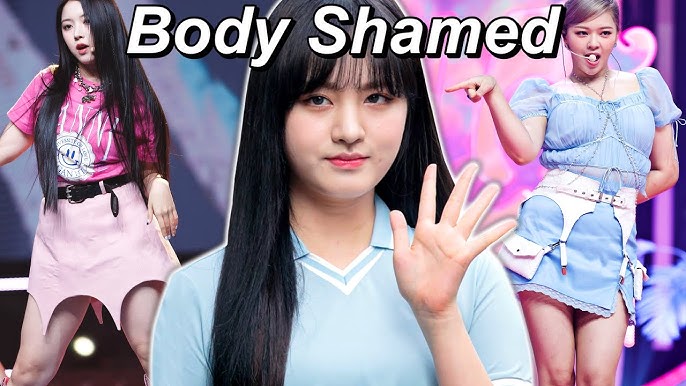

The recent online firestorm surrounding a 4th-gen male idol's weight gain is less about fitness and more about a critical industry crossroads. This incident exposes a deep-seated paradox: the demand for ever-more athletic, high-energy performances clashes violently with unrealistic, often unhealthy, body image expectations. The real story isn't on a scale; it's about the unsustainable pressures defining the new generation's era.
- The Spark: What Exactly Set the Internet Ablaze?
- Why Now? The 4th Gen Performance Arms Race
- The Glaring Double Standard: A Tale of Two Reactions
- Behind the Scenes: What Role Do Agencies Really Play?
- The Unseen Reel: Mental Health and Artistic Longevity
- Is There a Path Forward? Rethinking "Stage Readiness"
- Your Questions Answered: Idols, Image, and Industry
The Spark: What Exactly Set the Internet Ablaze?
Following a recent music show performance, a segment of online communities, primarily on forums like Instiz and Pann, ignited with criticism aimed at one member of a popular 4th-gen boy group. The core grievance was not about missed notes or choreography, but his physical appearance. Commenters argued that perceived weight gain had diminished his stage presence and, controversially, his ability to execute the group's demanding routines effectively.
The Anatomy of a Viral Critique
The critique quickly evolved from isolated comments into a coordinated narrative. Clips from the fancam were slowed down, zoomed in, and shared side-by-side with older footage, creating a "evidence reel" meant to prove a decline in physical condition. This narrative was neatly packaged with labels like "unprofessional" and "disrespectful to fans," weaponizing fan culture's own language to amplify the shame.
Beyond "Trolling": The Legitimization of Body Policing
This incident stands out because the criticism framed itself as concern for "performance quality," not just aesthetics. By anchoring the attack in the idol's professional duty—the performance—critics attempted to legitimize what is, at its core, invasive body policing. It shifted the conversation from cruel personal attacks to a seemingly objective discussion of "stage readiness," a dangerous and subjective new metric.
Why Now? The 4th Gen Performance Arms Race
The intensity of this backlash is uniquely tied to the environment 4th-gen idols operate within. Performance standards have escalated to near-acrobatic levels, creating a physical demand unlike any previous generation.
The Choreography Complexity Quotient
Today's hits are defined by intricate, powerful, and relentless choreography. Moves are sharper, formations are more complex, and the expectation of perfect synchronization is absolute. Idols are not just dancers; they are athletes performing high-intensity interval training for three-minute stretches, often multiple times a day. This has led fans to view idols increasingly as precision machines, where any perceived variable, including weight, is seen as a threat to the mechanism.
Fancam Culture and the Microscope Effect
The rise of individual fancams has fundamentally changed the game. Every member is watched in isolation, their every micro-expression and physical nuance analyzed frame-by-frame. There is no hiding in the group. This hyper-scrutiny, as we explored in The Raw Truth: How One 3rd Gen Idol's 'Rehearsal Dump' Ended the Live Singing Debate, can be a tool for proving skill but also a weapon for magnifying perceived flaws. The body is no longer part of a whole performance; it is a standalone subject for critique.
The Glaring Double Standard: A Tale of Two Reactions
History shows that the industry and public apply vastly different standards to male and female idols regarding body image. This incident reinforces a painful hypocrisy.
 Scenario
Typical Public & Industry Reaction (Female Idols)
Typical Public & Industry Reaction (Male Idols)
Underlying Bias
Weight Gain
Intense scrutiny, "contract violations," forced hiatuses, public apologies.
Often ignored or mocked; if criticized, framed as "laziness" or lack of professionalism.
Female bodies are treated as public property to be maintained. Male bodies are criticized for functional failure, not aesthetic violation.
Muscle Gain / Body Building
Often controversial; labeled "unfeminine," can lead to brand loss.
Generally praised as dedication, "beastly," enhancing performance and masculinity.
Physical strength is a positive masculine trait but a risky deviation from feminine ideals.
Public Discussion
Constant, normalized topic on variety shows, with weight regularly disclosed.
Less frequent, but when it occurs (like this case), it is shockingly virulent and performance-linked.
The conversation about women is chronic and aesthetic. For men, it is acute and tied to utility.
Scenario
Typical Public & Industry Reaction (Female Idols)
Typical Public & Industry Reaction (Male Idols)
Underlying Bias
Weight Gain
Intense scrutiny, "contract violations," forced hiatuses, public apologies.
Often ignored or mocked; if criticized, framed as "laziness" or lack of professionalism.
Female bodies are treated as public property to be maintained. Male bodies are criticized for functional failure, not aesthetic violation.
Muscle Gain / Body Building
Often controversial; labeled "unfeminine," can lead to brand loss.
Generally praised as dedication, "beastly," enhancing performance and masculinity.
Physical strength is a positive masculine trait but a risky deviation from feminine ideals.
Public Discussion
Constant, normalized topic on variety shows, with weight regularly disclosed.
Less frequent, but when it occurs (like this case), it is shockingly virulent and performance-linked.
The conversation about women is chronic and aesthetic. For men, it is acute and tied to utility.
When the Script Flips: Male Idols in the Crosshairs
While female idols face relentless, chronic pressure to maintain a specific slim figure, male idols have historically had slightly more leeway. However, as this case proves, that leeway is conditional and instantly revoked when fans decide an idol has crossed an invisible line. The criticism then adopts a different, more "pragmatic" tone—attacking his capability rather than just his look—which can, in some ways, be even more damaging to an artist's professional identity.
Behind the Scenes: What Role Do Agencies Really Play?
Management companies are the architects of an idol's public image, making their silence or action in these moments profoundly telling.
The Standard Protocol: Control and Containment
Typically, agencies enforce strict regimens—monitored diets, mandatory gym hours, regular weigh-ins—to maintain the "standard" idol body. When a member deviates, internal pressure is usually applied long before the public notices. The fact that this situation reached public crisis mode suggests either a breakdown in that internal system, a conscious decision to allow natural physical changes, or, more worryingly, an underlying health or mental stress issue that prevented standard protocols from being effective.
A Missed Opportunity for Leadership
This moment presented the agency with a choice: perpetuate the harmful narrative by forcing a rapid public "correction," or take a stand. A strong statement supporting their artist's health and professional commitment, while acknowledging the physical demands of their performance, could have been groundbreaking. Instead, most agencies opt for radio silence or private discipline, missing the chance to educate the public and shield their artist, as seen in similar high-pressure situations like Solo Debut Disaster: What GEMINI's Fall From Grace Reveals.
The Unseen Reel: Mental Health and Artistic Longevity
The immediate cost is public shaming, but the long-term toll on the idol and the industry is far greater.
The Performance-Anxiety Feedback Loop
Knowing that your body is being watched as a performance metric creates immense anxiety. This can lead to unhealthy coping mechanisms, injury from over-training, or a paralyzing fear of the stage. The joy of performance is replaced by dread of the post-performance autopsy on forums. How can an artist develop genuine stage presence when they are mentally tracking every angle of their physique?
Stifling Artistic Evolution
Idols are artists expected to mature and evolve. Physical change is a part of human life and often accompanies artistic growth. Locking idols into the exact physical mold of their debut year is not only unrealistic but creatively stifling. It denies them the ability to explore different concepts, sounds, and personas that might naturally come with age and experience. They become trapped in a perpetual physical adolescence to match their "idol" image.
Is There a Path Forward? Rethinking "Stage Readiness"
Breaking this cycle requires a multi-front shift in perspective from fans, agencies, and the media ecosystem.
Redefining the "Ideal" Idol Body
The focus must shift from aesthetics to sustainable functionality. The "ideal" body is the one that can healthily withstand a rigorous schedule, deliver powerful vocals and choreography, and have the resilience to last a decade-long career. This looks different on every individual. Promoting this narrative requires courage from agencies in their PR and from senior idols who can use their platform, much like the honest revelations discussed in The Body Politic.
The Fan Power to Shape Culture
The most potent force for change is the fandom itself. Counter-narratives that celebrate skill, artistry, and health over a number on a scale are powerful. Flooding social media with support, highlighting flawless vocal runs or expressive moments from the same performance, changes the algorithm and the conversation. Fans protect idols from scandals; it's time to actively protect them from this toxic standard as well.
Your Questions Answered: Idols, Image, and Industry
Don't idols have a duty to maintain their appearance for their job?
Their duty is to perform skillfully and connect with audiences. Professionalism includes taking care of one's instrument—their body and voice—for longevity. This is fundamentally about health and capability, not conforming to a singular, often unhealthy, aesthetic standard. A weight fluctuation does not automatically equate to negligence.
Why is it different from a model or actor being criticized for changing their look?
The key difference is the integrated, athletic demand. An idol's "look" is actively employed in a strenuous, skill-based performance. Criticism of an actor's weight for a role is usually about specific character portrayal. Criticism of an idol is often vaguely about "stage presence" and tied to a non-specific, ever-shifting "ideal," while ignoring the actual execution of complex skills.
Could this hurt the group's brand or future activities?
In the short term, it creates negative buzz. In the long term, a group's brand is built on music, performance quality, and fan loyalty. If the idol continues to perform well and the group supports him, the impact can be mitigated. However, if agencies overreact and bench a talented member, they damage group cohesion and artistic output, which is far more harmful.
Has any idol ever publicly addressed weight criticism successfully?
A few have, usually after the fact, by framing it around health or personal journey. Success is measured by shifting the narrative. The most effective instances involve idols acknowledging the pressure while affirming their commitment to their craft and health on their own terms, thereby reclaiming agency over their own narrative.
Where can I find balanced news on my favorite idols without the toxic commentary?
Stick to reputable sources that focus on musical and career achievements. Follow our News page for event coverage and our Charts page for data-driven success metrics. Curate your social media to follow translators and fans who highlight positive contributions and artistic analysis.
Conclusion: The Performance is Everything—Including the Performer
The viral shaming of this 4th-gen idol is a symptom of a larger disease: the commodification of the idol body to a degree that overshadows the art itself. The industry sells a fantasy, but it is built on the very real, very human labor of performers. To demand superhuman output while denying the humanity of basic physical change is an unsustainable contradiction.
The path forward begins with a conscious choice to watch differently. Look at the performance—the energy, the expression, the synchronization, the live vocal stability. Celebrate the artistry documented on our Artists page. Support idols as complete artists, not as avatars locked in a permanent state of physical "perfection." The true measure of a generation's legacy won't be its waistlines, but the longevity, health, and groundbreaking art of its artists. Let's choose to champion that future.