
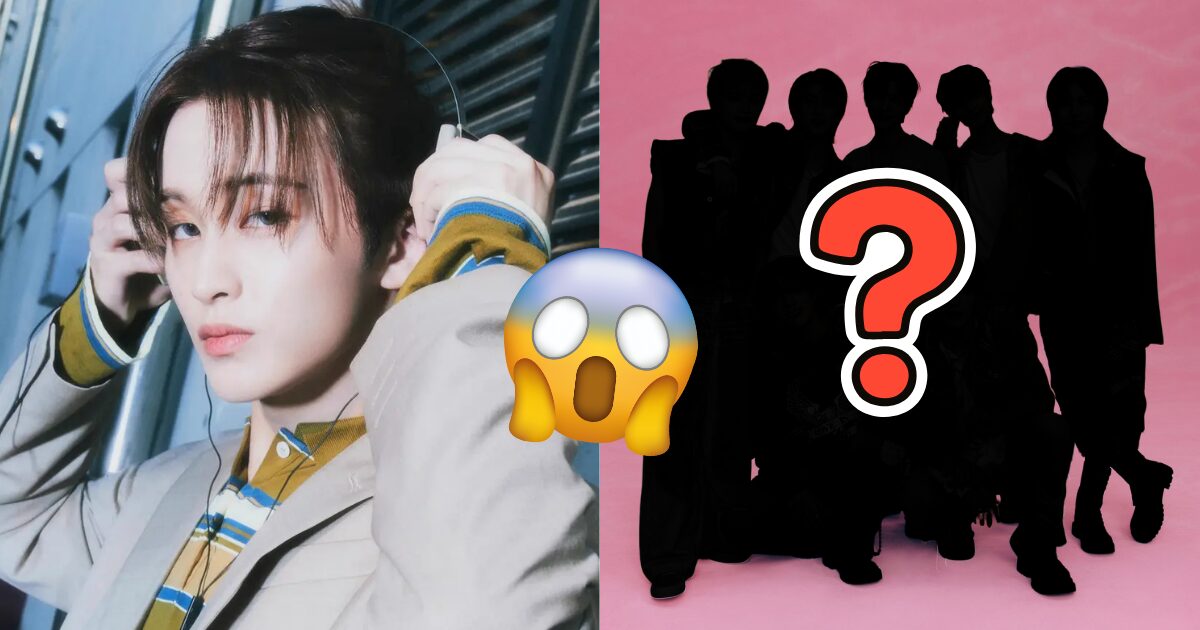

The world of K-Pop runs on patterns: the synchronized choreography, the meticulous comeback schedules, the rhythmic pulse of fanchant guides. But recently, the community's analytical gaze has shifted from light sticks to spreadsheets, from music videos to mortality tables of a different kind. A new, somber pattern has gone viral, one that doesn't speak of success but of seismic change. It’s a pattern woven into the very fabric of group longevity, and it has found its latest—and for many, its most poignant—example in the departure of Mark Lee from the flagship unit of SM Entertainment’s ambitious project, NCT.
The announcement, while framed as a graduation to focus on his thriving activities in NCT 127 and NCT U, sent shockwaves beyond the NCTzen fandom. It acted as a catalyst, causing a long-whispered theory to erupt into mainstream discourse. Dubbed “The 7-Year Curse” or, more statistically, “The 30+ Groups Theory,” this concept posits a chilling correlation: that a staggering number of major K-Pop groups experience a fundamental, often devastating, shift around or before their seventh anniversary. This shift isn't just a member departure; it’s the point where the initial contract period concludes, dreams are reevaluated, and the immutable unit fans fell in love with becomes subject to the unforgiving calculus of the entertainment industry.
The Prodigy and The Prototype: Mark Lee's NCT Journey
To understand why Mark’s situation became the linchpin for this viral discussion, one must first understand his unique position within the K-Pop ecosystem. Mark Lee isn't just a member; he is an archetype. Debuting in 2016 as part of the first rotational unit, NCT U, and then simultaneously in the fixed unit NCT 127 and the then-teenage rotational unit NCT DREAM, Mark embodied the experimental, boundless spirit of NCT’s “infinite expansion” system. He was the constant in a sea of variables, the familiar face guiding fans through a complex universe.
His “graduation” from NCT DREAM in 2018, as he aged out of the unit’s concept, was a emotionally charged precedent, foreshadowing that within the NCT structure, change was the only constant. His return to the unit in 2020 after the system’s revision was a moment of unprecedented fan power and joy. Therefore, his latest departure from the main NCT umbrella activities feels fundamentally different. It’s not a rotation within a system; it’s a step out of it. For many, it marks the end of the first, most experimental chapter of NCT itself. As we explored in our previous coverage, even members like Doyoung have felt compelled to address the emotional fallout and unit stability rumors directly, underscoring the seismic nature of this shift.
The Original 7: Contract Law as Cultural Catalyst
The root of the "7-Year" discourse is not mystical; it's contractual. For generations, the standard exclusive K-Pop trainee/artist contract was seven years, a duration influenced by domestic laws designed to protect young talent from excessively long bindings. This created a natural inflection point. The seventh year became a cliffhanger season finale for every group, where the story could continue with the original cast, lose key characters, or end entirely. This system birthed legendary renewals, like Girls’ Generation’s, and heartbreaking dissolutions. It established the seven-year mark as K-Pop’s psychological and professional Rubicon.
Decoding the "30+ Groups" Viral Phenomenon
The viral thread that caught fire following Mark’s news didn’t just name a few groups. It presented a daunting, crowdsourced ledger. The claim isn’t that groups disappear at seven years, but that they are almost universally transformed. The evidence presented is a roll call of K-Pop’s second and third generations, a stark reminder of impermanence.
"It's not a curse, it's a calendar. The industry is built on this seven-year cycle. What we're mourning isn't magic, it's the expiration of the initial dream." - @KPOPDATA_analyst, a viral tweet with over 50k likes.
The lists circulating include groups who disbanded like 4Minute, SISTAR (who famously disbanded on a high at their 7th year), and Girl’s Day. It highlights groups who lost pivotal members: EXO’s wave of departures began post-7th year, BEAST rebranding as Highlight after leaving their company, and GOT7’s groundbreaking exit from JYP Entertainment to retain their group name. It also notes groups who survived intact but entered a distinct "new chapter," often with reduced group activity as members branch into solo careers, like BTS and SEVENTEEN entering their enlistment era, or TWICE renewing but with a clear shift toward individual endeavors.
This pattern even extends to sub-units and specific member numbers, adding a layer of eerie specificity. Mark was the 7th member announced for NCT’s initial lineup in 2016. His departure, for some fans, fits a nested pattern within the larger one. The data is compelling because it is real—it reflects the standard operational timeframe of the industry. You can explore the histories of many of these artists on our comprehensive Artists page.

A Sea of Emotion: Fan Reaction from Grief to Galvanization
The fan reaction has been a complex tapestry of grief, anxiety, and analytical fervor. For NCTzens, the feeling is one of profound loss mixed with proud support for Mark’s future. “It feels like the end of an era, not just a departure,” one fan site wrote. “He was the glue. Without him in the overall activities, the NCT concept itself shifts.” This sentiment echoes the starkly different public reactions we analyzed between groups like NCT DREAM and ENHYPEN in our article on K-Pop's emotional dichotomy post-departure.
Beyond the immediate fandom, the wider K-Pop community on platforms like Twitter, TikTok, and Reddit has engaged in a massive collective data-mining project. Threads compare timelines, create infographics, and debate exceptions. For fans of groups approaching their own seventh anniversary, the theory has sparked preemptive anxiety. Comment sections under news about groups in their sixth year are now filled with “Don’t speak the curse into existence” and “Our contract renewal is next year, I’m so scared.”
However, a counter-movement has also emerged. Many fans and commentators are using the theory to celebrate resilience. They point to groups like SHINee, Super Junior, and Apink, who have navigated changes, losses, and renewals to continue for well over a decade. They argue the “curse” is actually a “challenge,” a filter that separates transient projects from enduring legacies. The discourse has become a way for fans to process the inherent tension in K-Pop: the idol group as both a flawless, permanent fantasy and a collective of real individuals with evolving careers, much like the journey Monsta X has been on, as discussed in our feature on how they redefine success beyond the charts.
Industry Anatomy: Why The "Curse" is Really Systemic Pressure
Labeling this a “curse” anthropomorphizes a cold, structural reality. Industry analysts point to a confluence of factors that converge around the 5-7 year mark:
- Contractual Reckoning: The core legal and financial reset. Members, now in their mid-to-late 20s, have the experience and, often, the personal capital to negotiate for better terms, different creative directions, or a path out.
- Creative and Personal Evolution: The artists who debuted as teenagers have grown. Their musical tastes, personal goals, and desire for artistic expression may no longer align with the group’s established identity or their company’s vision.
- Military Enlistment (for boy groups): This unavoidable hiatus for male idols can destabilize group momentum, forcing a natural pivot to solo work that sometimes becomes permanent.
- Market Saturation & "Peak" Theory: Companies often operate on a 5-7 year cycle for a group’s peak profitability before investing heavier resources in the next generation. Group activities may slow, pushing members to solidify individual brands—a trend visible in the strategic solo moves of artists like BLACKPINK’s Jennie, which we covered in her strategic evolution as an icon.
- Burnout: The relentless pace of the K-Pop industry is unsustainable. After seven years of constant comebacks, promotions, tours, and media scrutiny, exhaustion is a legitimate reason for seeking change.
“What fans call a curse, we call a business cycle,” an anonymous industry planner told K-Beats. “The first contract is for building the brand. The second contract, if it happens, is for managing the legacy and leveraging individual stars. NCT’s system was a radical attempt to future-proof against this, but it seems even the most innovative structures aren’t immune to human and market forces.” For more on how established artists navigate this new chapter, T.O.P’s recent solo work is a masterclass in personal and artistic rebirth, as detailed in our review of 'Desperado'.
The New Horizon: What This Pattern Means for K-Pop's Future
The viral awareness of the “7-Year Shift” is more than a morbid fascination; it represents a maturation of the K-Pop fanbase. Fans are no longer naive to the industry’s mechanics. They are historians, analysts, and realists. This knowledge is changing the emotional landscape of fandom, perhaps fostering a greater appreciation for the present moment.
Looking ahead, the industry itself is adapting. We see shorter initial contract terms for some newer groups, more flexible “group exclusive” vs. “individual activity” clauses, and companies publicly supporting members’ solo ventures early on to mitigate future tension. The success of GOT7’s post-departure group continuity has set a powerful new precedent, proving that a group’s identity can survive beyond the walls of its founding agency.
For NCT, the path forward is the next great experiment. Can the “infinite expansion” model contract, rather than expand? Does the system now pivot to solidify its remaining fixed units—127, DREAM, and WayV—as self-sustaining entities? For Mark, the future is likely a blend of focused 127 promotions, increased solo music (following his successful solo debut Child), and acting. His journey will be a closely watched case study in post-system idol career navigation.
Ultimately, the “curse” is a narrative framework we use to process change. The numbers tell a story of endings, but also of astonishing resilience and adaptation. The seventh year is not a cliff, but a crossroads. Some groups take one path together, some diverge, and some forge entirely new trails. The viral theory, sparked by the departure of a key prodigy, isn’t a prophecy of doom. It’s a collective recognition of a cycle, and perhaps, a call to cherish the music and the moments while they are wholly, beautifully intact. As this story continues to develop, stay tuned to our News page for the latest updates and in-depth analysis on all your favorite artists navigating these pivotal career moments.