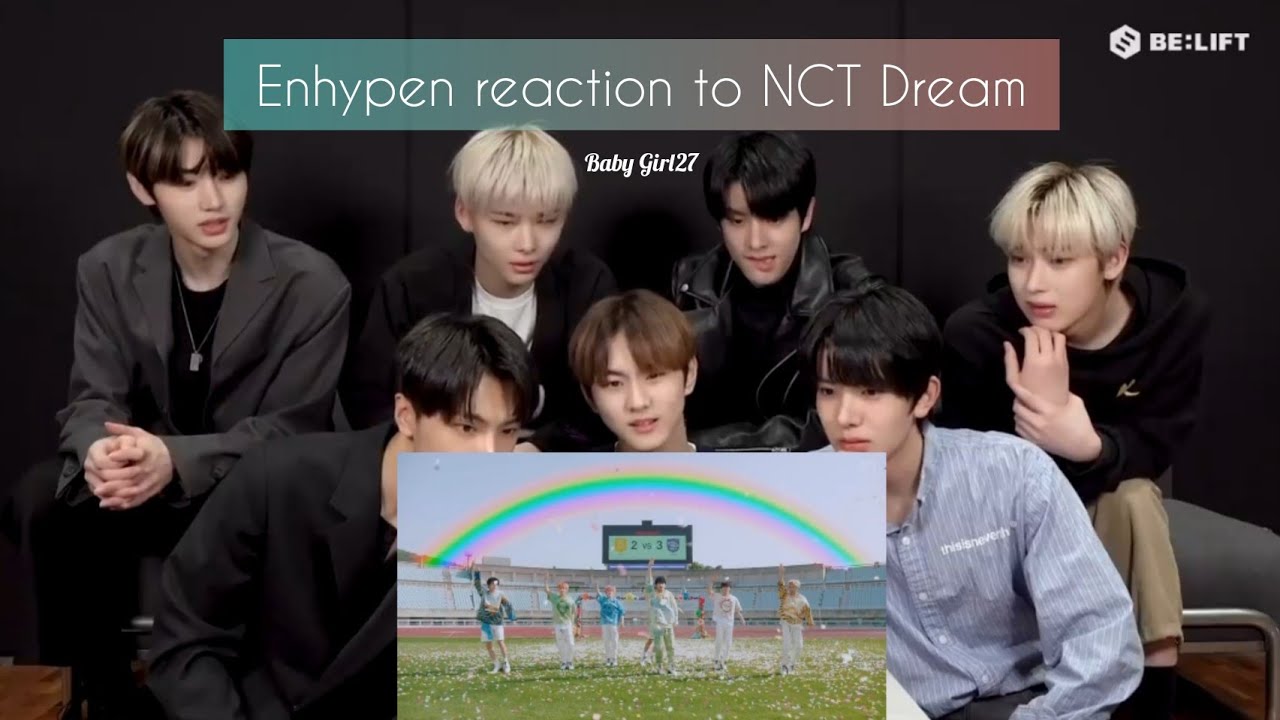

In the meticulously choreographed world of K-Pop, where image is currency and every public utterance is a calculated data point, genuine human emotion is often the rarest commodity. Yet, twice in recent months, the industry's polished facade has been pierced by seismic events: the historic, tear-stained departure of founding member Mark Lee from NCT, and the sudden, shrouded exit of Kim Sunoo from ENHYPEN. While both events sent shockwaves through their respective fandoms, it is the starkly contrasting aftermath—the way the remaining members have publicly navigated their grief and confusion—that has become a cultural lightning rod. Where one group offered a raw, unfiltered window into profound loss, the other presented a unified, impenetrable front of forward momentum. This divergence has done more than just spark fan debates; it has forced a critical examination of the unwritten rules governing idol behavior, corporate influence, and what fans are truly entitled to witness.
A Tale of Two Systems: Legacy vs. Neo-Tradition
To understand the reactions, one must first understand the foundational DNA of each group. NCT DREAM, a subunit of the sprawling NCT universe, was built on a now-defunct "graduation" system. Born from SM Entertainment's ambitious, experimental vision, the original concept involved members leaving the unit upon reaching adulthood. While this system was officially abandoned, allowing the current 7Dream lineup to cement itself, the shadow of impermanence always lingered. Their story is one of brothers who fought systemic odds to stay together, making any departure not just a loss, but a betrayal of a hard-won unity. Their bond, forged in the crucible of SM's rigid trainee system and public uncertainty, is legendary among fans.
ENHYPEN: Forged in the Fire of Survival
In contrast, ENHYPEN was born from the hyper-modern, digitally-integrated crucible of the survival show I-LAND, under the joint venture of HYBE's Belift Lab. Their formation was a public referendum, their bonds televised and voted on by fans. This origin story cultivates a different dynamic—one often perceived as more corporately streamlined and media-trained for the global stage from day one. Their narrative is one of destiny and chosen fate, a seamless assembly of parts to form a hit-making whole. The departure of a member, therefore, challenges that very narrative of pre-ordained unity, creating a dissonance that demands a different kind of management.
The News: A Study in Contrasting Communications
The official announcements for both departures were, as is standard, sterile and respectful. But it was in the days and weeks that followed that the chasm between the two groups' approaches became undeniable.
NCT DREAM's Emotional Reckoning
For NCT DREAM, Mark's exit was treated as an open wound. The members did not shy away from expressing their devastation. In a now-iconic live broadcast just days after the news broke, the atmosphere was palpably heavy. Members like Haechan and Jeno, typically vibrant and playful, were visibly red-eyed and struggled to maintain composure. They spoke haltingly about the irreplaceable void left behind, shared nostalgic memories, and offered no platitudes about "new beginnings." Haechan’s subsequent radio show segments became accidental therapy sessions, where he repeatedly referenced the difficulty of adjusting, once famously stating,
"It feels like the air in the room has changed. We have to learn to breathe differently now."This public grappling extended to their performances, where fans noted a new, somber gravity in stages for songs like "Hello Future," which took on a heartbreakingly ironic tone. Our exclusive coverage, "The Ties That Bind", detailed the profound emotional impact on the unit.
ENHYPEN's Unified Front
ENHYPEN's approach was the antithesis. Following Sunoo's departure announcement, the group's public appearances—from fan meetings to scheduled variety content—proceeded with a disciplined, almost unsettling normalcy. The six remaining members presented a unified, professional facade. In their first concert as a sextet, speeches focused entirely on gratitude to fans (ENGENEs) and excitement for the future, with no direct mention of the elephant in the room. When leader Jungwon was pressed in a brief media interaction, he offered a carefully curated response:
"We are all focusing our hearts on moving forward together with ENGENEs. We ask for your continued warm support for ENHYPEN's path ahead."Social media posts highlighted group cohesion and upcoming projects. The message was clear: ENHYPEN is, and always will be, about the collective journey forward, not the individual pieces left behind. This strategy mirrors the focused, borderless ambition seen in their tour planning, as analyzed in our report "Beyond the Border."
Fan & Community Reaction: A Fandom Civil War
The fan response has fractured along predictable yet deeply passionate lines, turning forum threads and social media platforms into ideological battlegrounds.
Supporters of NCT DREAM's openness hail it as a brave act of authenticity in a controlled industry. "They're treating us like human beings who shared in this loss, not just consumers," one fan tweeted, a sentiment echoed thousands of times. This transparency is seen as honoring the deep, years-long bond between the members and their fans. It validates the fans' own grief, creating a shared space for mourning. However, critics argue this approach risks "trauma-dumping" and places an undue emotional burden on the fanbase, potentially hindering the group's—and the members'—psychological closure.
The Professionalism Argument
Conversely, defenders of ENHYPEN's stance praise their "professionalism" and "strength." They argue that public displays of grief are a private matter and that the group's duty is to deliver performances and stability to their fans. "They are protecting us from more pain and showing us they are strong enough to continue," commented a top post on a fan community board. This perspective views emotional restraint as a form of respect and resilience. Yet, the opposition is vehement. Detractors label the approach as "cold," "corporate," and "dehumanizing," suggesting it implies the bond between members was merely transactional. Speculation runs rampant, with some fearing enforced silence points to a more contentious behind-the-scenes situation, a stark contrast to the theories of noble sacrifice that surrounded Mark's exit, as explored in the viral "Forbidden Planet" hypothesis.
Industry Analysis: Corporate Handprints and Cultural Shifts
This dichotomy cannot be viewed in a vacuum. The reactions are almost certainly shaped, if not dictated, by the distinct corporate philosophies of their powerhouse agencies.
SM Entertainment, for all its flaws, has a history of leveraging the "emotional lore" of its groups. From TVXQ's split to EXO's member changes, SM has often allowed—or perhaps found it impossible to suppress—narratives of deep, familial bonds and the pain of separation. This human drama becomes part of the group's enduring mythos, deepening fan investment. The handling of Mark's departure fits this pattern: it's a tragic chapter in an ongoing epic. It’s worth noting that industry whispers about future shifts continue, as highlighted in our exclusive leak report.
The HYBE Protocol
HYBE (via Belift Lab), represents a newer, more data-driven model. Its groups are global brands from inception, with an emphasis on seamless narrative, high production value, and scalable fandom engagement. Public turmoil disrupts this narrative. The protocol appears to be immediate containment, message control, and a rapid pivot to the future—treating the departure as a logistical recalibration rather than an emotional plot point. This creates a clean, stable product for investors and a clear "path forward" for fans, but can feel clinically detached. It raises a critical question: In the pursuit of global market stability, is the industry sanitizing the very human connections that fuel it?
This debate also touches on the evolving concept of an idol's "emotional labor." Are fans shareholders in an idol's personal grief, or are they an audience entitled only to the final, polished performance? The contrasting cases of NCT DREAM and ENHYPEN present two opposing answers. For more context on the artists at the center of these discussions, explore our comprehensive Artists page.
What's Next: Redefining the Idol-Fan Contract
The fallout from these events will reverberate far beyond chart positions or concert tickets. They signal a pivotal moment in redefining the contract between idol and fan.
For NCT DREAM, the challenge is transformation. Can they channel their public grief into a new artistic chapter that honors the past without being anchored by it? Their next musical offering will be scrutinized for hints of melancholy or rebirth. Their continued ability to be emotionally transparent, while eventually rediscovering their collective joy, will be their ultimate test. The industry will watch to see if this "open-book" strategy leads to stronger long-term fan loyalty or emotional burnout.
For ENHYPEN, the challenge is one of nuance. Can they maintain their disciplined front while finding subtle, perhaps non-verbal, ways to acknowledge the change and validate their fans' complex emotions? Their upcoming "FATE Plus" tour and next album cycle will be analyzed frame-by-frame for cracks in the armor or hints of unspoken sentiment. Their success will be a case study for the HYBE model's ability to handle crisis without sacrificing perceived authenticity.
Ultimately, this debate underscores a fundamental tension in contemporary K-Pop. Fans, armed with direct digital access, crave authentic connection. Corporations, managing billion-dollar global assets, require control and narrative consistency. The "correct" response likely doesn't exist. What the contrasting stories of NCT DREAM and ENHYPEN reveal is that there is now a spectrum of acceptable public mourning. In this new era, a group's reaction to loss is becoming as much a part of their identity as their music. It is a high-stakes performance where the script is unwritten, and the audience is judging not just the art, but the heart. As the industry continues to evolve, tracking these stories remains crucial; stay updated on all major movements on our News page.