
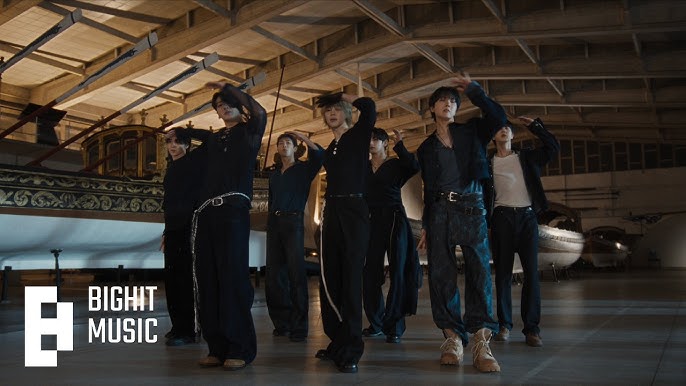

In an industry built on relentless momentum, where the calendar is measured in comebacks, promotions, and world tours, the idea of slowing down is often equated with falling behind. For BTS, a group whose very name in Korean, Bangtan Sonyeondan, translates to "Bulletproof Boy Scouts" and whose career trajectory has mirrored a rocket's ascent, velocity seemed an immutable law. Yet, with the release of their sweeping, mid-tempo single "SWIM" this past Friday, the global superstars have done something far more revolutionary than simply dropping a new track. They have, with deliberate artistry and unflinching confidence, applied the brakes. This isn't a slowdown born of fatigue, but a strategic, philosophical recalibration—a masterclass in how the biggest act in the world chooses to re-enter the conversation not with a bang, but with a deep, collective breath.
The song itself serves as the manifesto for this new chapter. Gone is the explosive, high-energy title track formula of "Dynamite" or "Butter." In its place is a synth-laden, atmospheric piece built on a pulsating, water-like rhythm. Lyrically, it trades anthemic declarations for introspective metaphor. "SWIM" is about the act of moving forward through resistance, the weight of expectation, and the choice to find one's own rhythm in an overwhelming current. For a group returning from their first prolonged period of individual focus since enlistments began, the message is unmistakably meta. As one industry insider who requested anonymity told K-Beats, "This isn't a song trying to conquer the charts in the first hour. It's a statement piece. It's BTS saying, 'We are here, we are moving, but we are doing it on our own terms now.' The commercial success is almost a secondary certainty."
From "No More Dream" to the Dream Achieved: The Run That Never Stopped
To understand the seismic nature of "SWIM's" pace, one must first recount the breakneck sprint that defined BTS's first decade. Their 2013 debut, "No More Dream," was a rebellious hip-hop track that immediately set them apart, but also placed them at the starting block of an impossibly competitive race. For years, their narrative was one of underdogs chasing validation: first a music show win, then a Daesang, then charting on the Billboard Hot 100, then a stadium world tour. Each goal, once reached, was immediately replaced by a new, higher one. Their content machine—from "Run BTS!" variety episodes to constant V LIVE streams and meticulously documented documentary series—created a sense of perpetual motion, making fans feel they were running right alongside the members.
"The 'BTS Run' was both literal and figurative," says cultural critic Park Min-kyung, whose work often focuses on idol labor. "It was the title of their song, it was the name of their variety show, and it was the defining characteristic of their career arc. They were in a state of constant acceleration to break barriers, both for themselves and for K-pop as a whole. The annual 'Festa' dinner was perhaps the only mandated pause, and even those often contained major announcements that fueled the next leg of the run." This period cemented their legacy but also raised a pressing question: what happens when you've reached the summit everyone told you was the goal, and you're still running?
The Hiatus That Wasn't a Hiatus
Chapter 2, announced in June 2022, was the long-anticipated answer. Framed not as a disbandment or hiatus but as a period for individual projects and, inevitably, military service, it was a structural slowdown forced by national duty but embraced as creative necessity. Members launched solo albums—Jin with "The Astronaut," j-hope with "Jack In The Box," RM with "Indigo," Jimin with "FACE," V with "Layover," Jungkook with "GOLDEN," and SUGA with his Agust D projects. These works were critically acclaimed and commercially massive, but they served a dual purpose: satisfying the market's demand for BTS content while allowing the group narrative to breathe. As we analyzed in our piece on solo identities within groups, "BTS Dives Deeper: 'SWIM' to Receive Seven Distinct Member Remixes", this individual strengthening is now flowing directly back into the group's dynamic.
The final group performance before this era, "Yet To Come" in Busan in 2022, was a poignant promise of future reunion. But the years that followed were filled with a different kind of noise: the speculation, the countdowns, the endless online debates about post-enlistment strategies. Through it all, HYBE and BTS remained characteristically quiet about the specifics of a musical return, focusing instead on individual updates and the steady march toward the group's full reunion in 2025.
Decoding "SWIM": The Sound and Symbolism of a New Tempo
"SWIM" was released with minimal traditional promotion—no teaser image roll-out, no cryptic logo videos, no pre-order period. It simply arrived at midnight KST, accompanied by a stunning, cinematic music video directed by longtime collaborator Lumpens. The video features the seven members not in synchronized, powerful dance formation, but often isolated or in pairs, interacting with vast, watery environments—flooded rooms, endless oceans, pouring rain. The choreography, when it appears, is fluid and interpretive, emphasizing grace and resilience over power and punch.
"We talked a lot about what sound should welcome us all back together," RM is quoted as saying in the official comeback press release. "It couldn't be what we've done before. We're not the same people we were in 2019, or even 2022. 'SWIM' felt right because it's about process, not destination. It's about the effort it takes to stay afloat and move forward, which is something every person on earth understands."
Sonically, the track is a departure. Produced by a team including Pdogg and member SUGA, it leans into ambient pop and alternative R&B. The instrumental is spacious, allowing the vocal colors of each member to shine with a new maturity. Jungkook's ad-libs are fewer but more emotionally resonant; Jin's stable, warm tone acts as an anchor; the rap line's verses are more melodic and woven into the song's fabric rather than serving as explosive breaks. It is a song designed for headphones and reflection, not for stadium chants—though one can easily imagine 50,000 ARMYs swaying to it under moonlight.

The Data Behind the Deliberation
Despite—or perhaps because of—its subdued nature, "SWIM" has performed phenomenally. It achieved a "Perfect All-Kill" on Korean realtime charts within six hours of release and debuted at No. 3 on the Billboard Global 200, with streaming numbers indicating remarkable longevity rather than a single-day spike. This commercial success, achieved without the traditional promotional circus, sends a powerful message to the industry. It proves that for an act of BTS's stature, the art can lead, and the audience will follow. It disrupts the high-cost, high-burnout comeback model that younger groups are forced to endure. For more on the pressures of maintaining public image in this model, see our analysis of "Beyond the Lens: How Jennie's 'Effortless' Vacation Sparks a Conversation."
The decision to follow the single with seven individual member remixes, a move we reported on exclusively, further underscores this shift from uniform group identity to a collective of distinct artists. Each remix, from V's jazzy, lo-fi reinterpretation to j-hope's hip-hop-infused version, explores a different emotional facet of the song's core theme, allowing fans to "swim" through the experience from seven unique perspectives.
ARMY's Tide: Relief, Reflection, and Unwavering Support
The fan reaction to "SWIM" has been a fascinating study in a fandom maturing in tandem with its idols. On platform X (formerly Twitter), the hashtag #BTS_SWIM trended globally, but the tone of the posts was notably different from the frenetic, record-breaking zeal of past comebacks. There was a palpable sense of relief and emotional resonance.
"For years, we were running with them, cheering them on, but also worrying," writes @BangtanForever, a fanbase moderator with over 200K followers, in a lengthy thread. "'SWIM' feels like they're telling us it's okay to float for a minute. To just be in the moment with them. The pressure isn't gone, but we're carrying it differently now." On fan community sites like Weverse and Reddit's r/bangtan, deep-dive lyrical analysis threads have overtaken streaming goal posts as the most engaged-with content. Fans are dissecting the water imagery, linking lyrics to past discography, and sharing personal stories of what "swimming" through their own challenges means.
This reflective mood stands in stark contrast to the often-toxic rumor mills that spring up during idol inactivity. As we've seen in cases like "The Echo Chamber of Proof: Deconstructing the Jungkook-Winter Dating Rumors," silence can breed speculation. However, ARMY's sustained connection through the members' individual work seems to have forged a deeper, more patient understanding. The dominant emotion isn't hunger for more, but gratitude for the thoughtful offering they've been given.
Industry Ripples: How BTS's Pace Resets the Market Clock
The impact of "SWIM" extends far beyond music charts and into the boardrooms of entertainment companies across Seoul. BTS has effectively demonstrated a new post-peak lifecycle model for a mega-group. "They have moved from a growth mindset to a legacy mindset," explains Lee Chul-ho, a music industry analyst. "The KPIs are no longer about breaking the next record; they're about deepening cultural impact, artistic integrity, and sustainable brand longevity. 'SWIM' isn't designed to grab new 12-year-old fans. It's designed to affirm the loyalty of their existing global fanbase and to command respect from the industry as artists."
This has several concrete implications. First, it relieves the crushing pressure on the group to constantly "top" themselves with bigger numbers, allowing for more creative risk-taking. Second, it sets a precedent for how other senior groups might navigate enlistment eras and mature careers, potentially leading to a wider variety of sounds and concepts in the industry's upper echelon. Finally, it forces media and chart-watchers to reevaluate their metrics for success. As you can see on our Charts page, longevity and stability are becoming key indicators, challenging the "flash-in-the-pan" debut culture.
However, this model is uniquely accessible to BTS, who have built an unprecedented financial and cultural safety net. For mid-tier or rising groups, the relentless "run" is still an economic necessity. BTS's move essentially creates a two-tier industry: one where established acts can explore "slow comebacks," and another where rookies must fight in the sprint of their lives. It also places HYBE in a fascinating position, as they must balance the measured approach of their flagship with the aggressive development of their newer groups on our Artists page.
What's Next: Navigating the Currents of 2025 and Beyond
So, where does the "SWIM" era lead? The announced remix project is the immediate next step, transforming the single into a multi-week experiential campaign rather than a one-and-done release. This is a savvy move that honors the members' individual journeys during Chapter 2 while reinforcing group unity. A dedicated "SWIM" performance video, likely featuring the full, fluid choreography, is anticipated.
Looking further ahead, all signs point to the full group album and world tour in 2025, once all members have completed their service. "SWIM" acts as the perfect bridge to that moment—it reassembles the group sound without rushing it, and it emotionally prepares the fandom for the next phase. The tour, when it comes, will undoubtedly be massive, but one can now expect a setlist with more tonal variety, perhaps even a "SWIM"-themed segment focused on connection and artistry over sheer spectacle.
The ultimate lesson of "SWIM" is that for BTS, the race is over. They won. What comes next is not a slower run, but an entirely different activity: a deliberate, collective navigation of their own vast ocean of influence. They are no longer bulletproof boys running toward a dream. They are seven men, swimming together through the reality of that dream achieved, and inviting the world to feel the weight and wonder of the water with them. In an industry allergic to stillness, BTS has discovered profound power in the stroke, not the sprint. The waves they make from here will likely redefine K-pop's currents for years to come. For continued coverage of this evolving story, stay tuned to our News page.