
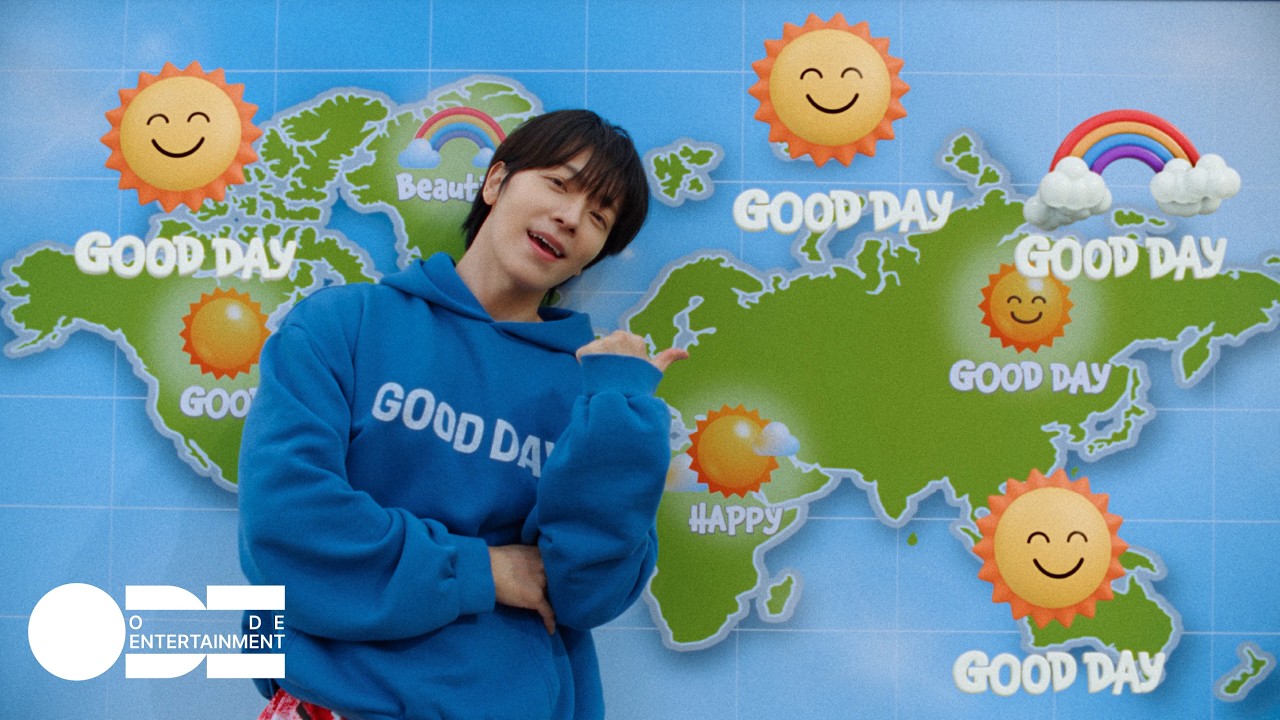
Donghae of Super Junior has delivered a masterclass in veteran artistry with his latest solo single, "Good Day." Featuring Jay Park and producer-vocalist 1iL, the track transcends being a mere seasonal release, positioning itself as a potent statement on artistic autonomy, genre fluency, and the unique competitive edge held by established idols. This analysis breaks down why this collaboration is a significant event, offering a blueprint for sustained relevance in an industry obsessed with the new.
- Why "Good Day" Matters Beyond the Charts
- Deconstructing the Sound: A Genre Fusion Breakdown
- The Collaboration Genius: Why Jay Park & 1iL Are Key
- Donghae's Solo Artist Journey: From Group Member to Auteur
- The New Era of Veteran Soloists: Where "Good Day" Fits In
- Industry Implications: A Case Study in Longevity
- Frequently Asked Questions (FAQ)
Why Does "Good Day" Feel Like More Than Just a Comeback?
In the constant churn of K-Pop releases, a solo from a member of a nearly 20-year-old group could be easily overlooked. Yet, "Good Day" commands attention. Its significance lies not in explosive virality, but in its embodiment of a hard-earned artistic phase.
It's a Statement of Artistic Confidence
Donghae is not chasing trends. The song's laid-back, groove-centric R&B shows an artist comfortable in his own skin, making music that reflects his personal taste rather than market algorithms. This confidence, born from decades in the industry, resonates with an audience craving authenticity.
The Power of Strategic Collaboration
Featuring Jay Park isn't just a name-drop; it's a strategic alignment. It bridges Donghae's idol foundation with the "authentic" hip-hop and R&B sphere Jay Park dominates, granting credibility and cross-pollinating fanbases. It signals a project built on mutual respect, not label mandate.
A Benchmark for Second-Gen Activity
As groups like Super Junior navigate military completions and individual pursuits, projects like this set the standard. They prove that group activity and mature solo careers can coexist and reinforce each other, a topic we frequently track on our Charts page.
What's in the Sonic Recipe of "Good Day"?
Sonically, "Good Day" is a meticulously crafted blend of warmth and rhythm. It forgoes the heavy EDM drops or aggressive trap beats common in title tracks for something more nuanced and enduring.
The Bedrock: 90s & Early 2000s R&B Influence
The production is steeped in classic R&B sensibilities. You hear it in:
- The warm, muted bassline that drives the groove.
- The use of crisp, finger-snap percussion.
- Atmospheric synth pads that create a lush, sunset-like ambiance.
- Melodic, unhurried vocal runs that prioritize feeling over technical showmanship.
1iL's Production Signature
Producer and co-vocalist 1iL imparts a distinct, modern clarity. His touch ensures the track feels nostalgic but not dated, clean but not sterile. The seamless blend of his voice with Donghae's in the harmonies is a highlight, creating a cohesive sonic palette.

A Focus on Vocal Texture
This is a song built for voices. Donghae's tone is relaxed and sincere, Jay Park brings his characteristic rhythmic swagger and ad-libs, and 1iL provides the silken, grounding layer. The arrangement gives each vocalist space to breathe and imprint their personality, much like the nuanced delivery explored in JAJUNG's "Spring Shines So Bright".
Why Are Jay Park and 1iL the Perfect Features for This Track?
The featured artists are not mere garnishes; they are structural pillars that define the song's identity and intent.
Jay Park: Bridging Two Worlds
Jay Park operates as a cultural keystone. His presence does several critical things:
- Authenticity Anchor: He validates the track's R&B/hip-hop credentials beyond the idol sphere.
- Dynamic Shift: His verse introduces a different rhythmic energy, preventing the groove from becoming monochrome.
- Strategic Alliance: It represents a powerful link between SM Entertainment's legacy and the indie/crew-centric world Jay leads.
1iL: The Producer-Auteur's Integral Role
1iL is the track's architect. By featuring him as a vocalist, Donghae elevates the producer from behind-the-scenes to co-artist. This reflects a growing trend in K-Pop valuing producer identity, suggesting the song was built collaboratively from the ground up around a shared vision, rather than having features tacked on later.
Comparative Table: Feature Impact Analysis
Artist Primary Role in "Good Day" What They Bring Strategic Value Donghae Lead Artist, Foundation Melodic sincerity, idol-star power, emotional core Connects Super Junior's massive fandom, establishes solo color. Jay Park Featured Rapper/Vocalist Genre credibility, rhythmic dynamism, street appeal Broadens audience, adds "cool factor," bridges idol/hip-hop scenes. 1iL Producer & Featured Vocalist Song's sonic blueprint, harmonic depth, modern texture Assures musical quality, attracts production connoisseurs, elevates creative narrative.How Does "Good Day" Fit Into Donghae's Evolution as a Solo Artist?
Donghae's solo journey, often intertwined with Eunhyuk's D&E subunit, has been a steady march toward this moment of clear, self-assured expression.
From Group Harmony to Solo Voice
Within Super Junior, Donghae often balanced vocal and rap roles, fitting into the group's grandiose, theatrical concepts. His early solo work, like "Sweet Dream," explored brighter pop. "Good Day" feels like a distillation, stripping away performative layers to reveal a more intimate, personal musical preference.
The Lyricism of Maturity
Gone are the exaggerated tropes of desperate love or heartbreak. The lyrics of "Good Day" are understated, focusing on a simple, positive connection and the desire to preserve a perfect moment. This mature, content-focused perspective is a hallmark of an artist writing from lived experience rather than concept briefs.
The song's appeal lies in its lack of desperation. It's the sound of an artist who has seen it all and chooses to celebrate a simple, good day—a narrative that resonates powerfully with an aging core fandom and younger listeners alike.
Creative Control and Ownership
Donghae's deep involvement in songwriting and production across his solo work is well-known. This track is the latest fruit of that control. It mirrors the artistic ownership seen in other veteran-led projects, such as the rebellious, self-directed energy in BTS's "Hooligan", proving that top-tier idols increasingly demand and receive creative agency.
What Does This Release Say About the Current Era for Veteran Soloists?
"Good Day" arrives amid a renaissance for second-generation idols as soloists, a trend with distinct characteristics.
The Anti-Desperation Principle
Veteran solos often succeed by not trying to "win" the comeback race in the traditional sense. They don't rely on shock, complex lore, or TikTok-ready challenge dances. Instead, they offer musical depth, vocal richness, and a sense of seasoned artistry that newer acts cannot replicate. This creates a sustainable, niche dominance.
Genre Specialization Over Idol Pop
Artists like Donghae, Taeyeon (ballad/R&B), Key (art-pop/funk), and others are moving deeper into specific genres. They build audiences as "an R&B artist who is an idol" rather than "an idol doing an R&B song." This shift is critical for long-term career viability beyond group affiliation.
A Different Kind of Competition
They aren't directly competing with 4th-gen monster rookies for music show wins. Their competition is for critical respect, playlist longevity, and fan loyalty. A track like "Good Day" is designed for repeat listens and playlist inclusion, aiming for a different metric of success, as often analyzed in our K-Pop Comeback Rankings.
What Can the Industry Learn from "Good Day"?
This release is a case study with actionable insights for agencies and artists at all levels.
Leveraging Legacy as an Asset, Not a Liability
SM Entertainment and Donghae smartly leverage his 19-year history not as a relic, but as a foundation of trust and skill. It allows for risk-taking within a safe space, as the core fanbase provides a guaranteed level of support. This is a stark contrast to the high-pressure debuts of new groups, like the intense scrutiny faced by KATSEYE's Manon.
The Value of Cross-Generational, Cross-Scene Collaboration
The Jay Park feature is a masterstroke in audience expansion. It’s a lesson in breaking out of label or generational silos to create culturally resonant moments. This mirrors other cross-pollination strategies, such as agencies scouting talent from non-traditional sources like reality TV, a pipeline examined in our article on Lee Jooyoung's signing to Cube.
Building a Solo Brand That Complements the Group
Donghae's calm, R&B-focused solo color perfectly contrasts Super Junior's vibrant, energetic group identity. This diversity strengthens the overall brand portfolio, giving fans multiple entry points and preventing artist fatigue. It shows that a group's "activity" in 2024 can be a multifaceted ecosystem of solo and unit work.
Frequently Asked Questions (FAQ)
Is "Good Day" a pre-release or the main title track?
While official categorization depends on the album's rollout, "Good Day" functions as a de facto title track for this promotional cycle. Its high-profile features and full music video treatment indicate it's the lead single from his new album.
How does this compare to Donghae's work with D&E (Donghae & Eunhyuk)?
D&E projects often lean into high-energy, performance-focused dance pop ("Bout You," "Bad Liar"). "Good Day" is distinctly more subdued, vocal-centric, and personally reflective, showcasing a different side of Donghae that is less about stage spectacle and more about sonic mood.
Why is Jay Park's feature seen as such a big deal?
Jay Park is a mogul in the Korean hip-hop/R&B scene who operates largely independently of the major idol agency system. His collaboration with an SM Entertainment mainstay like Donghae is a rare and symbolic bridging of two powerful, often separate, musical worlds, signifying mutual respect.
Who is 1iL and what else has he produced?
1iL (pronounced "ill") is a singer, rapper, and producer known for his work in the Korean R&B scene. He is a member of the crew Club Eskimo, founded by Dean, and has produced for artists like Punchnello, and notably, has a long-standing collaborative relationship with Jay Park.
Will Donghae promote this on music shows?
While possible, promotion by veteran artists of this stature often takes a different form—focusing on YouTube content, variety appearances, and fan meetings. The goal is less about winning trophies and more about engaging with the audience around the music's vibe.
What does this mean for Super Junior's future group activities?
It reinforces the "Super Junior 2.0" model: sustained, active group comebacks alongside flourishing, distinct solo careers. Donghae's solo success only adds to the group's overall legacy and gives fans more content, ensuring the brand's vitality. For more on all active artists, visit our Artists page.
Conclusion & The Path Forward
Donghae's "Good Day" is far more than a pleasant spring single. It is a resonant declaration of artistic maturity, a savvy lesson in collaborative strategy, and a compelling argument for the enduring power and relevance of K-Pop's veteran class. It proves that in an industry fixated on the next big thing, there is immense value in depth, experience, and authentic musicality.
The track sets a new benchmark for what a successful second-gen solo career can look like: confident, genre-specific, and built on genuine creative partnerships. For fans, it's a rich listen that rewards attention. For the industry, it's a playbook on leveraging legacy as a superpower. To stay updated on how this and other veteran releases perform and shape the conversation, keep your eyes on our News page for continuous analysis and insight.