

In the meticulously curated world of K-Pop, where "concepts" are king and perfection is the baseline, true vulnerability is often the rarest commodity. Idols show us polished performances, scripted variety moments, and gracious thanks, but the raw, unvarnished truth of their personal struggles usually remains behind a thick, company-managed veil. That's why when a veteran artist of Onew's stature chooses to open that door himself, the entire industry pauses to listen.
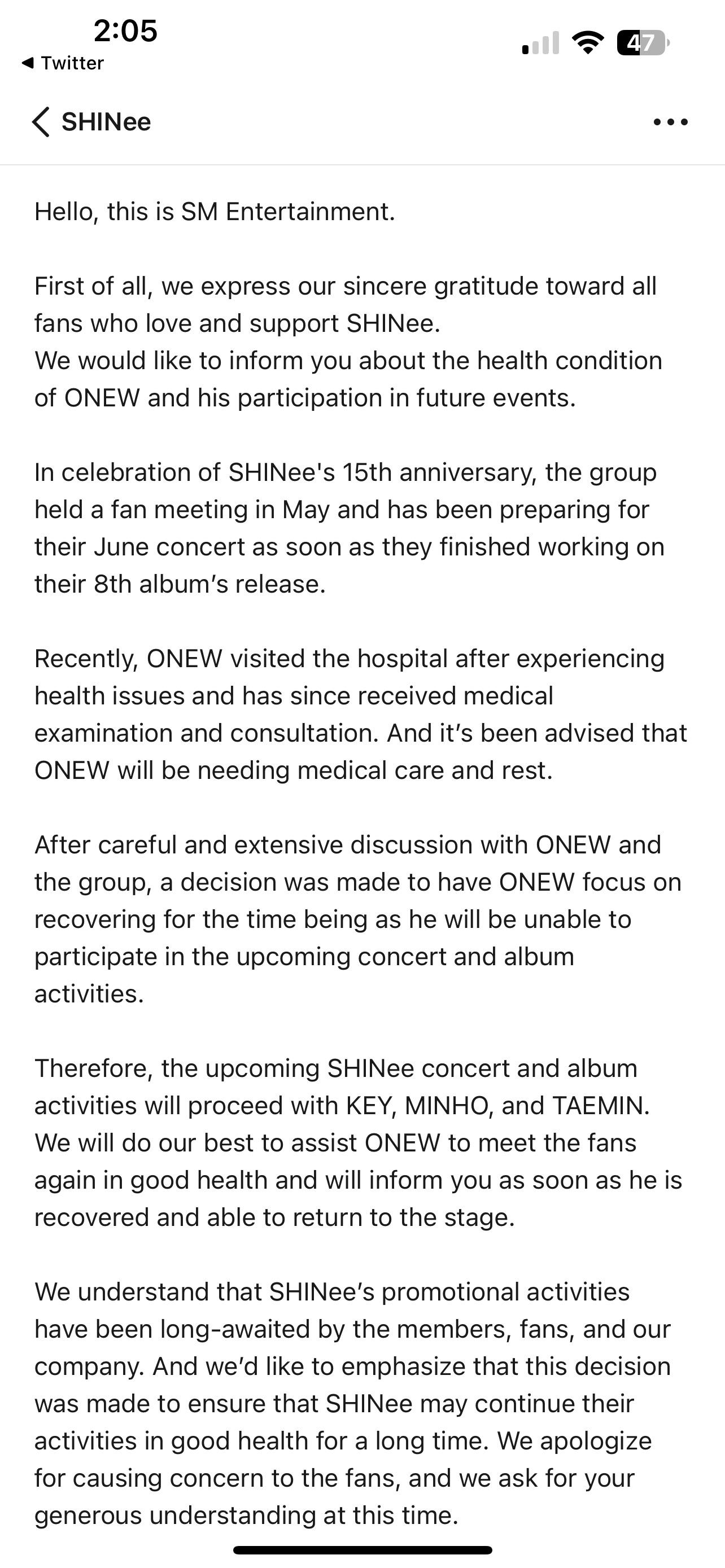
This week, the leader of the legendary group SHINee did precisely that. Moving beyond the standard, brief "health hiatus" announcements from his agency, SM Entertainment, Onew took direct control of his narrative. In a thoughtful, written statement shared with fans, he spoke with unprecedented candor about the reasons behind his extended break from activities in 2023, a period that saw him sit out the majority of SHINee's acclaimed "HARD" comeback and its subsequent world tour. His message was not one of lingering sorrow, but of hard-won clarity and recovery, culminating in a simple, powerful assurance: "I am doing much better now." For the Shawol fandom and industry watchers alike, this moment was more than an update; it was a masterclass in resilience and a poignant chapter in the ongoing story of second-generation idols navigating the marathon of their careers.
The Unshakable Foundation: Onew and SHINee's Enduring Legacy
To understand the weight of Onew's revelation, one must first appreciate the foundation upon which he stands. Debuting in 2008 under SM Entertainment, SHINee was immediately dubbed the "Princes of K-Pop," a title they would grow to embody and then transcend. In an era defined by explosive growth and experimentation, they were sonic pioneers, bringing genres like contemporary R&B, new jack swing, and deep house into the mainstream K-Pop lexicon with timeless tracks like "Replay," "Lucifer," and "View." For a deeper look at the powerful bonds formed in this era of K-Pop, explore our feature on Girl's Day's recent heartfelt reunion.
At the center of this whirlwind of innovation was Lee Jinki, known as Onew. Appointed as the group's leader, his role was never that of the loudest or most flamboyant member. Instead, he became the group's emotional keel—steady, warm, and possessing a vocal tone often described as "honey-like." His voice provided the soulful bedrock for SHINee's complex harmonies, while his gentle, often quirky demeanor on variety shows earned him the affectionate nickname "Dubuddy" (a combination of "dubu," meaning tofu, for his pale skin, and "buddy"). He was, and remains, the dependable constant.
This context makes his absence during the "HARD" promotions so profoundly felt. SHINee's 2023 comeback was a triumph, a bold, genre-blending statement that proved the group's relevance was undimmed 15 years into their career. Yet, the celebration was bittersweet. While members Key, Minho, and Taemin carried the torch with incredible strength and dedication, the visible emptiness where Onew should have been was a silent reminder of the immense pressures these artists withstand. His hiatus was officially attributed to "health reasons," a common but frustratingly vague term in K-Pop that can encompass anything from a minor injury to a significant mental health journey, leaving fans to worry in a vacuum of information.
The Burden of the Badge: Leadership in the K-Pop System
Onew's position adds a critical layer to this story. The role of a leader in a K-Pop group is notoriously burdensome. They are often the bridge between management and members, the first to shoulder blame, and the one expected to model unwavering commitment. For a group like SHINee, which has weathered the unimaginable loss of member Jonghyun in 2017, the weight on Onew's shoulders as the leader and eldest hyung (older brother) became exponentially heavier. The group's successful continuation and evolution into a new chapter was not just a career move; it was an act of profound love and resilience, with Onew likely feeling a deep responsibility to guide that ship safely.
This constant pressure, combined with the non-stop cycle of comebacks, solo activities, musical rehearsals, and public scrutiny, creates a perfect storm for burnout—a state of physical and emotional exhaustion that has ended or paused the careers of numerous idols. Onew’s decision to step back, therefore, was not a sign of weakness, but a necessary and brave act of self-preservation in a system that rarely encourages it.
Breaking the Silence: Onew's Candid Explanation
The news broke not through a tabloid scoop or a cryptic social media post, but through the artist's own hand on the fan community platform Bubble. This direct-to-fan communication bypassed the media filter, allowing Onew's voice to be heard exactly as he intended. His message was lengthy, reflective, and meticulously honest.

He revealed that his health issues were the cumulative result of extreme fatigue and burnout, compounded by a previously undiagnosed thyroid condition. This dual admission is crucial. It names both the psychological and physiological toll of his career. The thyroid gland regulates metabolism, energy, mood, and heart rate; a dysfunction can cause symptoms like severe exhaustion, weight fluctuations, anxiety, and depression—symptoms that would be debilitating for anyone, let alone a performer under the global spotlight.
"I pushed myself for a very long time, thinking it was just tiredness I had to overcome. I wanted to be there for every moment with SHINee and our fans. But my body and mind finally told me I had to stop and listen," Onew shared in his statement. "Finding out about my thyroid condition was actually a relief in a way. It gave me a real answer and a path for treatment."
He detailed a period of dedicated rest, medical treatment, and a conscious effort to rebuild his habits around sleep, nutrition, and mental peace. He expressed regret at missing the group's activities but also gratitude to his members, who fiercely protected his space for recovery, and to Shawols, whose supportive messages he saw and drew strength from even while offline.
The Human Behind the Highlight Reel
This level of detail is transformative. By specifying the thyroid condition, Onew demystifies his hiatus, moving it from the shadowy realm of "health issues" into the tangible world of manageable medical care. By citing burnout, he validates a experience countless idols and non-celebrities face but often feel pressured to hide. He painted a picture not of a dramatic collapse, but of a slow, insidious drain that finally demanded attention—a narrative far more relatable and humanizing than any scandal or gossip.
His statement also serves as a subtle but powerful critique of the "always on" idol culture. It implicitly questions the sustainability of a system that expects artists to function as perpetual-motion machines, where rest is a luxury rather than a necessity. In doing so, Onew aligns himself with a growing, albeit slow, movement within the industry where artists like Jongho of ATEEZ (who underwent major leg surgery) and others are being given the time needed for proper rehabilitation, signaling a potential shift in priorities. For the latest on how idols are balancing personal milestones with demanding careers, read our article on 4th-gen idol BELUGA's Sena announcing the birth of her child.
A Fandom's Sigh of Relief: The Shawol Response
The reaction from SHINee's global fandom, Shawols, was an overwhelming wave of empathetic support, relief, and love. Social media platforms, particularly Twitter and Instagram, were flooded with hashtags like #WelcomeBackOnew and #WeLoveYouOnew, trending worldwide. The sentiment was not one of pity, but of profound respect and solidarity.
"We always knew it was serious because he loves the stage and Shawol too much to ever leave without a critical reason," one long-time fan posted on an online forum. "Hearing him explain it in his own words, so honestly, makes me feel closer to him than ever. It makes his return that much more precious."
Many fans praised his courage in being so transparent, noting that his openness could help destigmatize discussions around both chronic illness and mental health in Korea. Fan projects quickly shifted from "get well soon" messages to celebrations of his recovery, with digital billboards in Seoul and other cities congratulating him on his return to health. This mature, compassionate response underscores the unique bond between SHINee and a fandom that has matured alongside them, having endured both unparalleled highs and devastating lows together.
"His voice was the first thing that drew me into SHINee 14 years ago," commented another fan. "To hear him speak now with this new layer of wisdom and self-awareness… it feels like we're starting a new, even more beautiful chapter. We waited because he is worth waiting for."
Industry Ripples: Beyond a Single Hiatus
Onew’s revelation resonates far beyond the SHINee bubble. It touches on several critical, evolving conversations within the K-Pop industry and its media coverage.
First, it challenges the narrative of invincibility around veteran idols. Second-generation groups like SHINee, Girls’ Generation, and Super Junior are rightfully celebrated for their longevity and enduring skills. However, this narrative can sometimes gloss over the immense physical and mental cost of maintaining peak performance for over a decade. Onew’s honesty peels back that layer, reminding the public and agencies alike that these artists are not superhuman. Their bodies and minds have limits, and respecting those limits is what enables true longevity. This is a crucial lesson as more groups from this era renew contracts and push into their second decades.
Second, it highlights the changing power dynamics between artists and agencies. The fact that Onew communicated this directly, in his own words, is significant. It suggests an artist taking authoritative ownership of his personal narrative, a move that reflects a broader trend of idols leveraging direct-to-fan platforms to bypass traditional media and speak their truth. This shift empowers artists and fosters a more authentic connection with their audience.
Third, it adds depth to the conversation about "health reasons." Media outlets and fans are often left to speculate when this term is used. Onew’s detailed explanation sets a powerful precedent. While not every idol is obliged to share private medical information, his choice provides a model for how transparency can build understanding and dismantle harmful speculation. It pushes the industry media towards more nuanced reporting, beyond simply echoing agency statements. For analysis on how K-Pop narratives are evolving in global marketing, see our breakdown of the groundbreaking McDonald's "KPop Demon Hunters" campaign.
The Duty of Care and the Future of Longevity
This incident inevitably turns the spotlight back onto entertainment companies and their duty of care. SM Entertainment has faced criticism in the past for its intensive scheduling and handling of artist health. Onew’s enforced hiatus and recovery period, however long it was, appears to have been effective. The question now is whether this will lead to more proactive, preventative health policies rather than reactive breaks after a crisis point. Can the industry build sustainable schedules that prioritize well-being as a core component of an artist's career, rather than an inconvenient interruption? The health of iconic artists like Onew is not just a personal matter; it is integral to the cultural heritage of K-Pop itself. Discover more about the artists shaping this industry on our comprehensive Artists page.
The Road Ahead: Onew's Return and SHINee's Unwritten Chapter
So, what does "doing much better now" look like in practice? For Shawols, the signs are already joyously visible. Onew has gradually resumed activities, making appearances at group events, participating in photo shoots, and, most importantly, smiling with a lightness that fans had missed. The expectation is not for him to immediately jump back into the grueling pace of a world tour, but to reintegrate at a sustainable pace.
The focus now shifts to the future. SHINee is a group built on mutual respect and deep friendship. The other members have consistently proven they can hold the fort with excellence, but their repeated, heartfelt expressions of missing Onew confirm that SHINee is, and always will be, five. His return to full group activities will be a carefully managed process, likely beginning with domestic schedules and perhaps special performances before considering another large-scale tour.
This experience may also influence SHINee's artistic direction. The group has never shied away from emotional depth in their music. Having navigated this period of struggle and recovery, it’s conceivable that future projects, whether group or solo, may carry a new resonance. Onew's unique vocal color, now tempered by lived experience, could bring even greater emotional weight to their music.
Ultimately, Onew’s story is one of modern K-Pop maturity. It is about an artist transitioning from a young man who absorbed pressure to a seasoned veteran who understands the necessity of setting boundaries. It is about a fandom whose love is conditional not on constant productivity, but on the well-being of the person they admire. And it is about an industry that must continue to evolve, learning that the true measure of an idol's value is not just in their stamina, but in their humanity. As SHINee continues to write their legendary story, this chapter of honesty and healing may well be one of their most important, reminding everyone that sometimes, the strongest thing an idol can do is to simply be human. For all the latest updates on comebacks and industry milestones, stay tuned to our News page.