
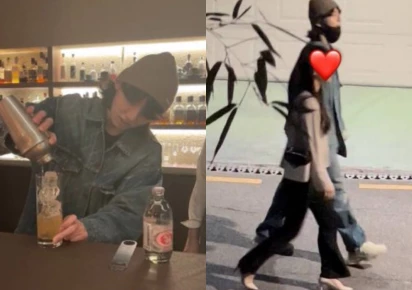

The Pixelated Proof: A Social Media Storm Erupts
In the eternally speculative ecosystem of K-pop, where a glance can become a narrative and a coincidence a conspiracy, the personal lives of idols remain the final frontier. This week, that frontier saw a seismic event, not from a dispatch photo or a leaked conversation, but from the kind of fandom deep-dive that defines modern celebrity culture. A now-viral post, dissecting the recent actions and social media presence of BTS's Jungkook, has set the online world ablaze with a singular, loaded accusation: that the star's behavior is subtle "proof" he is in a romantic relationship, interpreted by the original poster (OP) as him "bragging." The reaction was instantaneous and volcanic, splitting the fandom into forensic analysts, fierce defenders, and weary observers, and raising perennial questions about privacy, projection, and the price of superstardom.
The incident underscores a critical shift in how rumors are born and propagated. No longer reliant solely on tabloids, the court of public opinion now convenes on platforms like Twitter, TikTok, and online forums, where fans and anti-fans alike wield screenshot magnifiers and timeline cross-referencers as tools of judgment. This isn't just gossip; it's a crowd-sourced investigation with real-world emotional stakes. As Jungkook and his bandmates navigate their period of mandatory military service and individual ventures, this episode serves as a potent reminder that their every move, no matter how personal or innocuous it may seem, is subject to a global microscope waiting to connect dots that may not even exist.
Jungkook: From Golden Maknae to Global Solo Phenomenon
To understand the weight of this speculation, one must understand the trajectory of Jeon Jungkook. Debuting as the 15-year-old "Golden Maknae" of BTS in 2013, his growth has been soundtracked by the group's meteoric rise to becoming a world-dominating cultural force. Celebrated for his pristine vocals, powerful dance, and artistic versatility, Jungkook has long been viewed through a uniquely intense lens—the beloved youngest brother to millions. His recent chapter, marked by the group's decision to pursue solo projects alongside group activities, has seen him transform into a confident solo superstar.
His debut single "Seven (feat. Latto)" exploded records, showcasing a more mature musical and visual identity. His follow-up, "3D," and the album GOLDEN further cemented his status as a formidable chart force. This evolution from group idol to individual artist is a delicate pivot, often accompanied by increased public scrutiny of one's personal identity and life. As we explored in our analysis of fourth-gen groups navigating similar transitions in "Strategic Pause or New Chapter? Inside WEi’s Shift to Individual Promotions," the shift to solo work inherently invites the audience to see the member as a separate entity, often leading to heightened interest in their off-stage persona.
Throughout this, HYBE and Big Hit Music have maintained a firm, if sometimes strained, stance on protecting the artists' private lives. They have legally pursued malicious rumors and privacy violations, setting a clear boundary. Yet, the boundary is porous. Jungkook's own approach has been one of generous, often playful, fan communication through lives and Weverse posts, sharing snippets of his daily life, his creative process, and his hobbies. This curated authenticity is a double-edged sword: it fosters profound connection but also provides endless raw material for the kind of speculative analysis that has now sparked a firestorm.
Deconstructing the "Evidence": A Timeline Under the Microscope
The core of the controversy lies in a lengthy online post that did not claim to have paparazzi photos or insider testimony, but instead presented a psychological and behavioral case. The OP, and those who amplified the theory, pointed to a series of recent actions and social media updates by Jungkook, interpreting them through the specific lens of a person who is newly in love and, as they put it, "wanting to brag."
"It's not one thing, it's the pattern. The sudden change in his vibe, the specific songs he's been listening to and subtly referencing, the way he talks about his life now versus six months ago. It all points to someone who is incredibly happy and satisfied in a private area of his life, and that happiness is leaking into everything he does publicly. He can't say it, so he's showing it."
The "evidence" list, as circulated, typically included:
- Mood and Aesthetic Shifts: References to a perceived "softer," "more content" energy in his live broadcasts and behind-the-scenes content, contrasted with a more intensely focused "work mode" persona during earlier promotions.
- Musical & Cultural Clues: Analysis of songs he's mentioned liking, artists he's followed, or lyrics he's casually sung on live streams, interpreted as covert dedications or reflections of his personal state.
- Symbolism and Visual Teasers: Scrutiny of his fashion choices, jewelry, and even the color schemes in his personal posts, searching for hidden meanings or potential partner clues.
- The "Bragging" Accusation: The most contentious point. The OP suggested that showcasing a new skill, expressing satisfaction with his life, or sharing achievements in a joyful manner was not just confidence, but a form of indirect boasting tied to romantic happiness.
This method of analysis is not new. K-pop fandoms are expert semioticians, often finding narrative in abstraction. However, branding normal expressions of personal joy as "bragging" with a romantic subtext added a volatile, judgmental layer that triggered the intense backlash.

The "Bragging" Framing: A Loaded Interpretation
The choice of the word "bragging" is particularly incendiary. It transforms innocent joy or personal pride into an act of aggression or gloating. In the context of an idol presumed to be dating, it frames their happiness as something being flaunted in front of fans, potentially stoking feelings of jealousy or betrayal among the most possessive segments of the fandom. This taps directly into the fragile dynamics of parasocial relationships, where an idol's personal life is sometimes wrongly viewed as a communal asset. This phenomenon of fan entitlement over an artist's narrative and achievements can sometimes spill over into other toxic behaviors, such as the kind of organized "chart warfare" we've documented previously.
The ARMY Divide: Protectiveness, Passion, and Exhaustion
The reaction from the BTS fandom, ARMY, was immediate and multifaceted, showcasing the vast spectrum of perspectives within a fanbase of hundreds of millions. The debate raged across every platform, from Twitter hashtags to lengthy Qoo/Weverse blog posts.
The Protective Front: A significant portion of ARMY reacted with fierce defensiveness. They condemned the OP and spreaders of the theory for overstepping boundaries, engaging in delusional behavior, and attempting to police Jungkook's emotions. Their stance was clear: an idol's joy is not evidence; it is a cause for celebration. They argued that attributing his positive demeanor solely to a relationship undermines his personal growth, professional accomplishments, and right to simple happiness. Many pointed to his successful solo debut, his upcoming military service, and his general maturity as more than sufficient reasons for a positive outlook.
The "Let Him Live" Cohort: Another vocal group expressed profound fatigue. Their reaction was less about vehemently denying the speculation and more about lamenting its existence. Comments echoed sentiments like, "Even if he is, who cares?" and "This is why idols can't breathe." This group emphasized the need to respect the boundary between Jungkook the artist and Jungkook the private individual, a boundary he has meticulously requested through his "Artist's Request" segment on Weverse.
The Analytic Engagers: As with any online ecosystem, a subset engaged with the "evidence" on its own terms, debating the merits of each point not to condemn or support, but as a form of fandom puzzle-solving. This mirrors the intense but often respectful analysis fans apply to musical comebacks, like breaking down the sonic architecture in a track by Xdinary Heroes. However, when applied to personal life, the same analytical energy takes on a more invasive tone.
The split highlights a central tension in contemporary fandom: the desire for intimate connection versus the ethical imperative to grant privacy. It also shows ARMY is not a monolith, but a complex community navigating its own relationship with the artists it supports. For more on the diverse faces of fandom, you can always explore our Artists page to see how different fanbases interact with their stars.
Industry Echoes: The Systemic Pressures Behind the Speculation
This incident is not an isolated Jungkook or BTS phenomenon. It is a symptom of the K-pop industry's foundational structures and the global media landscape that consumes it.
The Parasocial Economy: K-pop's business model has historically leveraged the fantasy of accessibility and emotional connection. While companies like HYBE are increasingly moving towards models emphasizing artistic agency and "musician" identities, as seen with BTS's later chapters, the ghost of the "boyfriend idol" archetype lingers in fan expectations. Speculation about dating, therefore, isn't just gossip; it's seen by some as a breach of an implicit contract, however unfair that contract may be.
The 24/7 News Cycle and Content Void: With BTS in a focused period of military enlistment, the usual stream of group content is on pause. This creates a vacuum that fan communities, content creators, and even media outlets rush to fill. Speculative narratives, even those born on anonymous forums, gain traction because they offer engagement in a slower news period. Outlets that repackage this fan speculation as news further legitimize the cycle. Keeping up with legitimate, confirmed news requires checking sources like our News page.
The Double Standard of "Proof": The standards for "proof" in online courts are impossibly low and contradictory. A smiling photo is proof of happiness; a neutral photo is proof of hiding something. This mirrors larger issues in digital culture where, as discussed in our report on The Reverse Stream, narratives can be weaponized based on perception rather than fact, leading to serious fan wars and misrepresentation.
Media's Role: While some media responsibly report on fan reactions as a cultural phenomenon, others blur lines by presenting speculation as trending news, forcing the artist's agency to respond to baseless claims. HYBE's typical response to such invasive rumors is legal action, a deterrent that addresses malicious spread but not the initial, "innocent" speculation.
Looking Ahead: Service, Silence, and the Inevitable Return
As the initial wave of reactions settles, the path forward is shaped by pre-existing realities. First and foremost, Jungkook is currently serving his mandatory military duty. This enforced hiatus from the public eye is a temporary shield from the daily churn of speculation, but it also freezes this narrative in place, leaving it to simmer in online forums without the possibility of direct address or new content to shift the conversation.
Upon his eventual discharge and return to public activities, the industry and media landscape will have evolved. The focus for BTS will overwhelmingly be on their highly anticipated group reunion and next musical chapter. The intensity of this particular rumor will likely fade, replaced by excitement for new music. However, the underlying dynamic—the public's insatiable curiosity about his private life—will remain. How Jungkook chooses to navigate this post-enlistment will be telling. He may further refine his boundary-setting, perhaps sharing even less of his personal mood, or he may continue his current path of open, but carefully managed, communication.
Ultimately, this episode is a stark case study in the modern idol experience. It demonstrates that even for an artist of Jungkook's unparalleled stature—an artist who has topped our Charts page repeatedly and redefined global success—the line between public persona and private self is perpetually contested territory. The "proof" will never be in the social media posts or the perceived vibes; it will only ever be in a statement from the man himself. And until that day may or may not come, the storm of speculation, analysis, and reaction will continue to swirl, a perpetual background noise to the extraordinary life and career of a golden maknae who grew up, and into himself, in front of the world.