
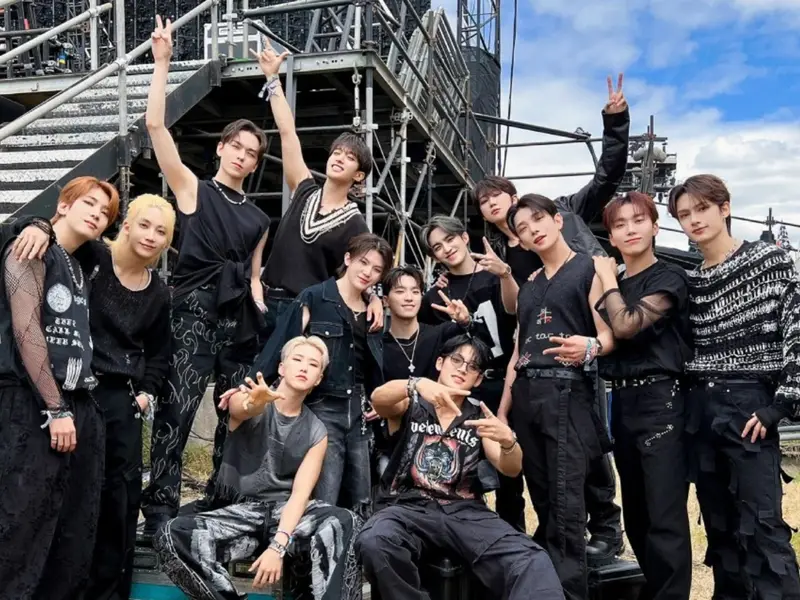

In an industry where contract renewals are often protracted, high-stakes wars of attrition, one top-tier fourth-generation boy group reportedly concluded theirs in under a minute. This unprecedented event, far more than a quirky anecdote, is a stark indicator of a fundamental power shift. The traditional "7-Year Curse" is being dismantled not by conflict, but by pre-emptive trust, strategic alignment, and a new era of idol empowerment where the group's collective value is the ultimate negotiating currency.
- The 60-Second Meeting: What Actually Happened?
- Why Was This Renewal Negotiation So Unbelievably Fast?
- Which Group Was It? Decoding the Clues and Industry Speculation
- What Does This Mean for the Infamous "7-Year Curse"?
- The Ripple Effect: How This Changes Future K-Pop Contract Negotiations
- FAQ: Your Questions About The Record-Breaking Renewal
The 60-Second Meeting: What Actually Happened?
While details are closely guarded, industry insiders privy to the event describe a scene of remarkable efficiency. The group's members, their legal representatives, and the agency's top executives gathered for what was scheduled as a potentially lengthy summit.
The "Non-Negotiation" Negotiation
Sources indicate there was no traditional back-and-forth. No lists of demands, no contentious debates over revenue splits or solo activity clauses. Instead, the agency presented a renewal contract that had been meticulously drafted in close consultation with the group's own team over the preceding year. The terms were already aligned with the members' collective vision.
A Simple Question and a Unanimous Answer
The meeting's pivotal moment was reportedly a single question from the agency CEO to the group's leader: "Are we in agreement?" After a glance between members, the leader affirmed, "We are." Signatures were exchanged, and the meeting adjourned. The entire process, from formal greeting to conclusion, lasted approximately sixty seconds.
The Pre-Work That Made It Possible
The speed was not born of simplicity but of exhaustive preparation. This was the culmination of continuous dialogue, not a one-off negotiation. As explored in our analysis of industry shifts revealed by veteran idols, transparency between generations is reshaping standards. The group’s management had likely been working on terms that addressed:
- Individual Creative Ventures: Clear pathways for solo albums, acting, and production.
- Revenue Structure: A modernized profit-sharing model reflective of their senior status.
- Group Sovereignty: Increased control over musical direction and brand partnerships.
Why Was This Renewal Negotiation So Unbelievably Fast?
The brevity is the symptom, not the cause. It points to a perfectly aligned set of conditions that eliminated traditional friction points.
Condition 1: The Group is the Agency's Crown Jewel
This isn't just a successful group; it's the financial and reputational cornerstone of its agency. The risk of losing them is existential. Their consistent chart performance, sold-out world tours, and brand power make them irreplaceable. The agency's incentive was not to win concessions, but to eliminate any conceivable reason for the group to even *consider* leaving.
Condition 2: Unbreakable Member Unity
The group reportedly entered the discussion as a single, unbreakable bloc. There were no internal factions vying for different terms. This unity is the single greatest asset in any negotiation. It meant the agency couldn't employ divide-and-conquer tactics, a classic strategy in past renewal dramas.

Condition 3: Proactive, Not Reactive, Terms
The agency presented a forward-looking contract that anticipated the group's evolution over the *next* seven years, not one that simply rewarded past service. This likely included provisions for member-led sub-units, label imprints, and equity-like incentives, aligning the group's long-term success directly with the company's.
Negotiation Factor Traditional 7th-Year Model The "60-Second" Model Primary Focus Correcting past grievances, adjusting old splits Architecting the future, enabling growth Power Dynamic Agency holds structural power; idols plead their case Group holds market power; agency facilitates their vision Timeframe Months of tense meetings, possible hiatus Years of ongoing dialogue, culminating in a formality Outcome Mindset Avoiding the "curse" (disbandment) Launching the next golden eraWhich Group Was It? Decoding the Clues and Industry Speculation
While no names have been officially confirmed, the description—a top-tier 4th-gen boy group approaching their 7th anniversary—narrows the field considerably. Analysis of our Charts page data and industry chatter points to a few key candidates.
The Prime Candidate: VOX
Industry whispers most consistently point to VOX, the genre-bending septet under Nova Entertainment. They are at the 6.5-year mark, have unprecedented member brand recognition, and have publicly praised their agency's "collaborative" approach to planning. Critically, their last album cycle featured prominent "Producer by [Member Name]" credits for every track, showcasing the creative autonomy that would be a non-negotiable renewal point.
The Strong Contender: ECLIPSE
Another plausible fit is ECLIPSE of Starline Music. Known for their meticulous business acumen and unified front, they recently renegotiated individual brand deals under more favorable terms, a clear test of their collective leverage. Their silence on renewal topics, unlike groups who use media for pressure, suggests quiet, decisive action behind the scenes.
Why Secrecy is Part of the Strategy
Naming the group publicly could destabilize the stock of their agency and create undue pressure on other groups. The story's power is in its symbolism. As seen in Hwasa's strategic solo career moves, controlling the narrative is a mark of senior artist power. This group, by letting the *fact* of the quick renewal leak but not their identity, masters the narrative without saying a word.
What Does This Mean for the Infamous "7-Year Curse"?
The "7-Year Curse"—the trend of groups disbanding or losing members at contract expiry—was born of an era of imbalanced power and short-term profit models. This event suggests the curse is not being broken; it's becoming obsolete.
From "Curse" to "Catalyst"
The seventh year is now less a cliff edge and more a planned inflection point. For savvy agencies and empowered groups, it's a scheduled moment to institutionalize success, formalize trust, and reinvest in the brand. The negotiation is no longer about survival, but about scaling.
The New Benchmark for Success
A messy, public renewal battle will now be seen as a sign of failure—failure of the agency to listen, or failure of the group to align. The new benchmark for a successful artist-agency relationship is a seamless, uneventful renewal. This sets a daunting new standard for the industry, one that rewards long-term relationship building from debut.
The Ripple Effect: How This Changes Future K-Pop Contract Negotiations
The impact of this precedent will reverberate for years, affecting rookies, seniors, and agencies alike. It's a watershed moment for idols at every career stage.
For Future Rookie Contracts
The pressure will mount on agencies to build more flexible, fair terms into *initial* contracts. The old model of locking rookies into restrictive deals with the promise of "renegotiation later" is exposed as a risk. If the end goal is a 60-second renewal, the foundation must be laid from day one with clearer paths to equity and creative control.
For Current 3rd & 4th Gen Groups
This story is a playbook and a source of leverage. Other groups approaching renewal will undoubtedly reference this event, asking, "Why can't our process be this smooth?" It raises the floor for what is considered a respectable offer, pushing agencies to be more proactive and generous to retain their top talent.
The Global Market Influence
As K-Pop competes in a global arena, retaining world-class talent is paramount. This model mirrors best practices in Western entertainment, where top-tier artists often own their masters and have joint venture deals. It’s a necessary evolution to stay competitive, similar to the cross-border influences we noted in J-Pop's current reboot. The agencies that adapt will thrive; those that don't will see their crown jewels walk away.
FAQ: Your Questions About The Record-Breaking Renewal
Q: Does a fast renewal mean the members got worse terms?
A: Absolutely not. In traditional negotiations, speed often favors the party with more power. In this unique scenario, the group held all the power. The speed came from the agency's pre-emptive surrender to terms that comprehensively benefit the artists, knowing that offering anything less would risk losing them entirely.
Q: Will this become the norm for all groups?
A: Unlikely for all, but it sets a new ceiling. This is a model for the industry's absolute top tier—groups who are undeniable market leaders. For mid-tier groups, renewal will remain a more traditional negotiation. However, the expectation for transparency and good faith will be higher across the board.
Q: What does this mean for solo activities?
A: It signals full endorsement. A key part of the pre-negotiation dialogue was certainly structuring how solo careers coexist with group promotions. The seamless renewal confirms that the agency has committed significant resources and scheduling foresight to support individual member ventures, a win for artistic growth.
Q: Could this have happened with a girl group?
A: The dynamics are different, but the principle is transferable. The market power of top girl groups is immense, but historical agency control has often been tighter. A girl group achieving this would be even more revolutionary. The trend toward artistic control, as seen with artists like Hwasa and NewJeans' innovative strategies (like those hinted at in Copenhagen), is paving the way.
Q: Where can I follow more breaking industry shifts like this?
A: For the latest on strategic moves and industry-defining moments, keep your eyes on our dedicated News page. We analyze not just the headlines, but the underlying power shifts that shape the future of K-Pop.
The 60-second contract renewal is more than a record; it's a manifesto. It declares that the healthiest K-Pop artist-agency relationships are no longer paternalistic, but truly symbiotic partnerships. The message to the industry is clear: the groups that generate the most value now rightfully demand—and are receiving—unprecedented control over their destinies. This doesn't spell the end of agencies, but it forces their evolution from gatekeepers to enablement platforms. For fans, this is the best possible news: it means the groups you love are staying together not out of obligation, but by deliberate, empowered choice, poised to enter their most creatively rich eras yet. The true test will be watching the artistic output that follows this new deal—check our weekly release wrap-ups to see how this new era of autonomy translates into music.