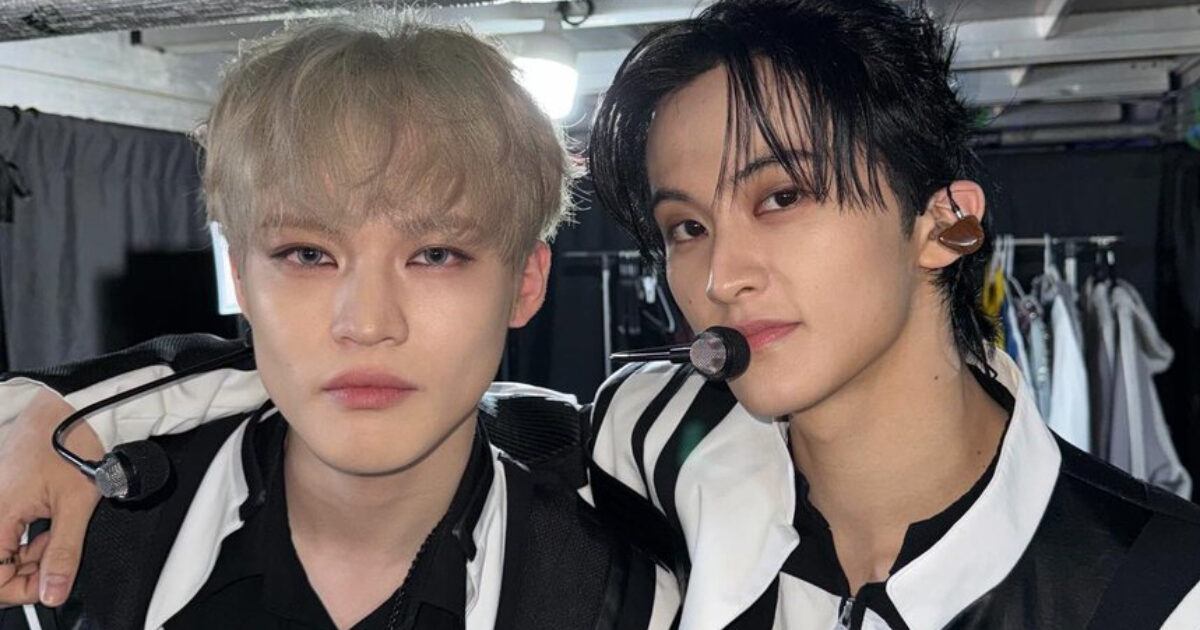

The live broadcast notification popped up without fanfare, a simple "CHENLE V LIVE" title that belied the seismic conversation about to unfold. For over an hour, NCT's Zhong Chenle, the group's effervescent "happy virus," sat in what appeared to be his practice room, his usual radiant smile replaced by a palpable, weary gravity. He strummed his guitar, spoke softly to the rolling comments, and then, almost hesitantly, addressed the elephant in the room that has haunted the NCTzen fandom for months: the official, quiet departure of leader Mark Lee from the NCT umbrella following the expiration of his contract with SM Entertainment. What followed was not a corporate statement, but a raw, human confession that cracked open the carefully maintained facade of idol-fan relationships, revealing a landscape of shared grief, unspoken resentment, and institutional fatigue.
"I’ve been reading your letters, the comments... I know. I think it’s a situation where you all can’t help but feel resentful, and honestly, so do we, in a way. But not at him. Never at him. It’s just... the situation," Chenle stated, his voice steady but laced with an emotion fans rarely hear from the always-positive idol. This moment of unprecedented candor served as a pressure valve for a community in mourning, transforming a standard V LIVE into a historic, tear-streaked session of collective therapy and a stark indictment of the system that brought them to this point.
The Foundation: NCT's Ambitious Dream and The Anchor Named Mark
To understand the cataclysmic impact of Mark Lee's exit, one must first understand the foundational role he played in the NCT project. Debuting in 2016 as the center of the first sub-unit, NCT U, and later as the leader of NCT 127 and a core member of NCT DREAM, Mark was the through-line—the human connective tissue—in SM Entertainment's most ambitious and complex experimental group. The "neo culture technology" concept relied on fluidity, but Mark was a constant. He was the English-speaking bridge for international fans, the diligent leader who memorized every member's parts, and the embodiment of the "hardworking idol" archetype, famously moving dorms and units with a single suitcase.
His journey mirrored the group's growth from a confusing concept to a global powerhouse. As discussed in our analysis of industry pressures in "Beyond the Pose: Kim Jaehyun's Editorial...", the weight placed on pioneering idols is immense. Mark carried the dual burden of explaining the limitless concept while shouldering its logistical and emotional weight. For younger members like Chenle and Jisung, who debuted as children in NCT DREAM, Mark was a steadying older brother and leader. His departure isn't merely a roster change; it feels like the removal of a central pillar from a carefully constructed architectural marvel.
The 7-Year Itch: SM's Renewal Crossroads
The timing of this exit is inextricably linked to K-Pop's infamous "7-year curse," the period when initial idol contracts typically expire. While groups like EXO saw renegotiations and partial departures, the NCT system, with its overlapping units, created a uniquely complicated negotiation landscape. Mark, as one of the earliest debuted members, hit this milestone at a pivotal time. Industry insiders whispered for a year about difficult negotiations, with Mark’s ambitions for solo musical direction—leaning more into his Canadian hip-hop and R&B influences—potentially clashing with SM's rigid group-focused scheduling and musical control.
This pattern of quiet, non-conflictual departures has become a tense hallmark of SM in recent years. The absence of dramatic press releases or blame games, while seemingly polite, often leaves fans in an informational vacuum, fostering speculation and hurt. It creates a scenario exactly as Chenle described: a "situation" to be resentful of, where the antagonist is a nebulous confluence of contract dates, corporate strategy, and artistic divergence rather than a single villain.
The Catharsis: Deconstructing Chenle's Landmark V LIVE
Chenle’s broadcast was a masterclass in emotional intelligence and unscripted authenticity. He did not come with talking points but with empathy. The session can be broken down into several key, hard-hitting messages that have since been transcribed and translated across every fan platform globally.
Acknowledging the "Rightful Resentment"
The most powerful moment was his direct validation of fan anger. In idol culture, fans are often expected to support all decisions unconditionally. By stating, "you all can’t help but feel resentful," Chenle legitimized a torrent of "negative" emotions the fandom had been suppressing or feeling guilty about. He reframed this resentment not as a personal attack on Mark, but as a natural response to loss and fractured expectations. "We built this together, you, us, him... and when part of that changes without you feeling prepared, it hurts. It’s supposed to," he implied through his words.
The "We" Versus "The Situation"
Repeatedly, Chenle drew a distinction between the personal bond of the members and the professional circumstances. "Mark hyung is our hyung, forever. That doesn't change because of a company piece of paper," he asserted strongly. This was a crucial delineation. It reassured fans that the brotherhood they invested in was real and enduring, even if its professional manifestation had altered. The "situation" was the enemy—the contractual limitations, the inevitable divergence of adult careers, the machinery of the industry. This echoes themes explored in "From Seoul To Script: How 'The Practical Guide To Love'...", which delves into idols navigating personal bonds within professional constraints.
A Plea for Continued Support (For Everyone)
Perhaps the most poignant appeal was Chenle’s request for fans to channel their love forward.
"Please, don't let this hurt turn your love bitter. Support him on his new path. And please, stay with us, NCT, as we learn to walk in this new way. We need you now more than ever, but we want you to be happy supporting us."This "dual support" plea is rare. It acknowledges that a fan's heart can (and should) be big enough to encompass an alumnus's solo journey and the original group's evolving path, a complex ask in the tribalistic world of K-Pop fandom.
The Fandom's Fractured Heart: From Grief to Action
The reaction from NCTzen was immediate, massive, and deeply emotional. Social media platforms became memorials and therapy sessions.
- Twitter/X: The hashtag #ThankYouChenle trended globally for over 24 hours. Fans posted lengthy threads analyzing his every word, sharing screenshots of his tearful eyes, and writing open letters thanking him for his bravery. "He gave us permission to grieve," one viral tweet with over 100k likes read.
- Weibo & Chinese Platforms: Chenle's home country fanbases, known for their formidable organization, launched coordinated projects. They flooded SM Entertainment's official posts with polite but firm demands for better communication and treatment of the remaining members, using the "protect Chenle's smile" mantra as a rallying cry.
- Forum Debates: On sites like Instiz and Nate Pann, discussions turned meta, analyzing the health of the entire NCT system. "Is the limitless concept ultimately unsustainable for the humans inside it?" one top-voted post questioned, linking to our previous report on "The Ghost of Debut Past..." which examined the psychological toll of the industry.
The overwhelming sentiment was gratitude mixed with renewed fury at SM Entertainment. Chenle’s vulnerability had redirected fan anguish from a passive sadness into a more targeted demand for corporate accountability and transparency, a significant shift in power dynamics. For more on how fandoms mobilize, check out our coverage on our News page.
Industry Analysis: A Reckoning for the "Family" Narrative
Chenle's broadcast sends shockwaves beyond the NCT fandom, touching on raw nerves within the entire K-Pop industry.
The End of the "Happy Only" Facade
Idols, especially those in active groups, almost never publicly acknowledge fan resentment or validate negative emotions toward the company's decisions. It's considered career suicide. Chenle, leveraging his unique position as a beloved member with a strong individual fanbase and the security of his activities in China, shattered that taboo. He spoke with the emotional honesty of a veteran artist, not a meticulously managed idol. This may empower other idols to bridge the communicative gap with their fans in more authentic ways, moving beyond canned, agency-approved messages.
SM's Structural Cracks Exposed
The incident highlights the growing tension within SM Entertainment between its legacy as a "talent family" and its reality as a publicly-traded corporate entity. The departure of a foundational, well-loved figure like Mark—following similar quiet exits from other senior artists—points to potential systemic issues in retaining veteran talent who seek more artistic autonomy. The company's traditional "one-size-fits-all" management style appears increasingly at odds with the individualized career aspirations of its mature idols. This moment functions as a stark case study for what happens when the "family" narrative meets the cold calculus of contract law.
The New Pressure on Remaining Leaders
With Mark's departure, immense pressure now falls on figures like Taeyong and the older members of each sub-unit. They must guide their groups through this transitional period while managing their own emotional whiplash. Chenle’s words, "We have to be strong for the younger ones now," hint at this internal shifting of roles. The industry will be watching closely to see how NCT 127 and the full-group projects recalibrate their leadership dynamics and group identity.
What's Next: Navigating the Neo World
The path forward is uncharted but begins with the solidarity forged in that V LIVE room.
For Mark Lee, the future is likely a carefully built solo career, potentially under his own label or a flexible partnership. His first solo releases will be scrutinized not just for quality, but for how much they reflect the artistic identity he fought to claim. The goodwill banked from his years of service is immense, as seen in the fan projects already funding congratulatory advertisements for his new beginning.
For NCT, the immediate task is the upcoming world tour and the next full-group album. All eyes will be on the group's chemistry and how they address Mark's absence in performances. Will they rework parts, or leave a symbolic space? More importantly, SM must now prove the "limitless" concept is resilient enough to withstand the loss of a key component, perhaps by finally giving more defined, center-stage roles to other members. Fans will be analyzing every line distribution and center moment with a forensic eye.
For the Industry, Chenle's moment is a benchmark. It proves that audiences crave and respect profound honesty. The era of the perpetually sunny, never-complaining idol may be giving way to a new age of nuanced, adult communication between artists and their supporters. As the K-Pop landscape matures, so too must the conversations within it.
Ultimately, Chenle did more than just address a departure. He held up a mirror to the entire ecosystem—the fans, the company, the system—and asked for grace, understanding, and continued love amidst unavoidable change. In doing so, he may have inadvertently written a new, more human chapter for how K-Pop navigates its most painful transitions. The story of NCT is no longer just about limitless expansion, but about the profound, limitless depth of the bonds that remain when the structure itself changes shape. For the latest on how groups are evolving, visit our comprehensive Artists page.