
Opening: The Pixelated Paradox
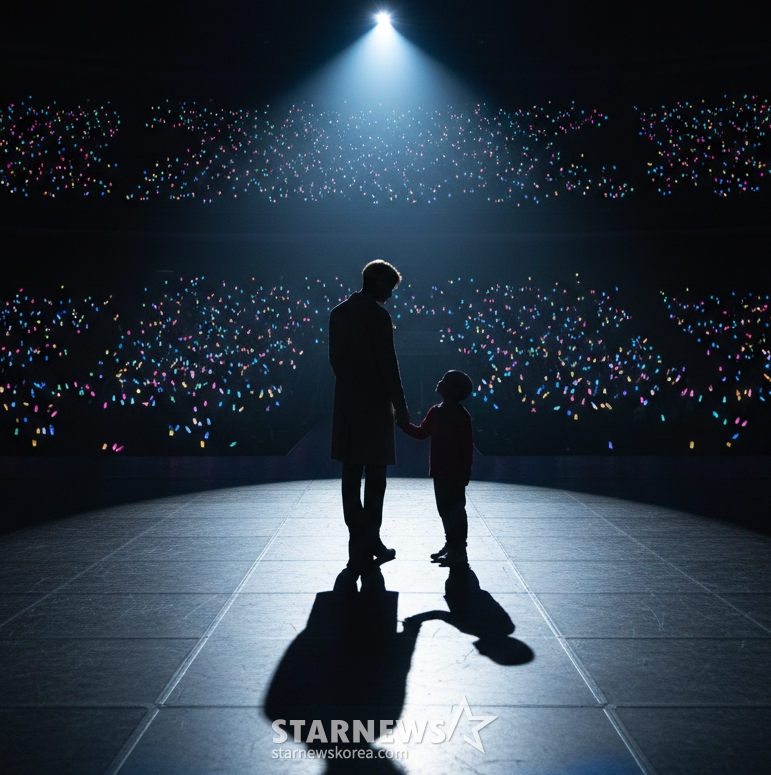
In the hyper-visual world of K-Pop, where every image is meticulously curated and every concept painstakingly planned, it is a rare occurrence for a major idol's photoshoot to genuinely baffle the very audience it aims to captivate. Yet, over the past 48 hours, that is precisely the digital maelstrom surrounding Kim Jaehyun, the lead vocalist and visual of the powerhouse third-generation boy group NOVA. A series of images from his latest editorial feature for the acclaimed fashion magazine Seoul Aesthetic have not just sparked discussion—they have ignited a fervent, divisive debate that cuts to the core of how idols are perceived, the limits of artistic expression, and the unspoken rules governing public image. The photos in question feature Jaehyun, now 28 and in the prime of his solo career, posed serenely alongside a cohort of young children, all adorned in matching, ethereal white linens against stark, minimalist backdrops. What was intended as a meditation on "pure form and timeless innocence," according to the magazine's teaser, has been met with a cacophony of online reactions ranging from ardent defense to profound discomfort, with the most frequent and piercing critique being a simple, loaded word: "weird."
This isn't merely about aesthetics; it's a case study in context. Jaehyun, known for his soulful ballads and gentlemanly persona, has deliberately steered his solo work toward more mature, artistically ambitious territory since NOVA's activities slowed following their military enlistment cycle. This photoshoot, previewed ahead of its full May issue release, represents a bold leap. However, in the intricate dance between idol and admirer, a misstep in tone can reverberate loudly. The conversation has rapidly spilled from fan forums like Pann and Nate Pann onto international platforms like Twitter and Reddit, becoming a Rorschach test for how fans interpret the relationship between an adult male idol and imagery involving children within the highly scrutinized K-Pop ecosystem. As the discourse evolves, it raises urgent questions: Where is the line between profound art and problematic perception? And what does this moment reveal about the evolving pressures on third-gen idols as they navigate their post-group identities?
Background: From Group Pillar to Solo Auteur
To understand the weight of this reaction, one must first understand the trajectory of Kim Jaehyun and NOVA. Debuted in 2014 under Star Glow Entertainment, NOVA quickly ascended to the upper echelon of boy groups with a signature sound blending symphonic pop with intense performance chops. Jaehyun, with his distinctive vocal color and classic Korean visual appeal, became a central pillar of the group's identity—reliable, emotionally expressive, and widely respected. For years, his public image was synonymous with the group's: polished, powerful, and safely within the boundaries of idol fantasy. As detailed in our retrospective on our Artists page, many third-gen idols like those from NOVA face a pivotal crossroads as their groups enter a new chapter.
The group's decision to pursue solo and unit activities following the members' return from military service marked a deliberate shift. Jaehyun's solo debut, the EP Mirror, showcased a moodier, more introspective side, earning critical praise for its lyrical depth. His follow-up collaborations with indie artists and ventures into acting solidified a rebranding from "idol Jaehyun" to "artist Jaehyun." This path is well-trodden by his peers; for instance, the recent solo work of Junghoon from VIBE, explored in Junghoon - DTT: What Just Landed, demonstrates a similar push towards sophisticated, personal concepts. Jaehyun's fashion endorsements and editorials have been a key component of this transformation, positioning him as a thoughtful trendsetter rather than just a performer. This context makes the Seoul Aesthetic spread not a random misstep, but a calculated risk within a larger campaign to redefine his public persona—a risk that has, for now, spectacularly backfired in the court of public opinion.
The Weight of the "Third-Gen" Label
The "third-generation" moniker is more than a chronological marker; it carries specific expectations. These idols, who debuted roughly between 2012 and 2017, are often seen as the bridge between K-Pop's global breakout and its current hyper-industrialized state. They are veterans navigating an industry that has dramatically accelerated since their debut. Fans have grown with them, leading to a relationship that is often deeply personal and fiercely protective, but also increasingly critical as idols step outside familiar roles. Jaehyun's situation echoes in the challenges faced by other seniors exploring bold new directions, much like the experimental sound embraced by MONSTA X in their latest project, detailed in our review of MONSTA X - Unfold: What Just Landed. The expectation for artistic growth clashes with a latent desire for the comfort of the known, creating a volatile environment for any conceptual gamble.
The News: Deconstructing the "Innocence" Framework
The controversial spread, titled "Echoes of Youth," was shot by renowned minimalist photographer Gwan Ji-hoon. Released in three initial teaser images on Seoul Aesthetic's social media channels, the visuals are undeniably striking from a technical standpoint. The first image features Jaehyun seated on a plain white cube, looking pensively at the camera, while a boy and a girl, both appearing around six or seven years old, stand on identical cubes to his left and right, mimicking his posture but with their backs to the viewer. All three wear identical, oversized white button-down shirts and loose trousers, their hair styled in soft, neutral waves. The lighting is flat and shadowless, creating a sense of timeless, clinical serenity.
The second image is more dynamic: Jaehyun lies supine on a white platform, one arm draped over his eyes. The children are arranged around him, one crouching near his shoulder, another sitting by his feet, all touching the platform but not him, their expressions blank. The third and most discussed teaser shows Jaehyun kneeling, facing a young boy who is also kneeling, their foreheads nearly touching as they both look down at a single, white origami crane held in their overlapping hands. The composition is intimate, symmetrical, and utterly silent in its narrative.
"The concept was to strip away narrative and celebrity, to find the common geometry of human form across ages. It's about essence, not identity," Gwan Ji-hoon stated in a brief caption accompanying the teasers.
However, the artistic intent has been largely lost in translation for many viewers. The critique centers on several interconnected elements. Firstly, the identical styling erases the natural distinction between adult and child, creating an uncanny, almost clone-like effect that some find unsettling. Secondly, the proximity and composition, particularly in the forehead-touching image, are read by a segment of the audience as implying an inappropriate intimacy or a forced emotional burden on the children. Thirdly, and perhaps most importantly, is the context of Jaehyun's established persona. Unlike an actor or a model known for provocative work, Jaehyun's brand is built on a foundation of safe, approachable warmth. This stark, ambiguous visual language feels like a dissonant, jarring departure that triggers discomfort rather than contemplation. "It feels like a concept for a perfume ad that got lost on its way to the gallery," one netizen famously quipped.

Fan & Community Reaction: A Chorus of Confusion and Conviction
The reaction has been fractured, passionate, and incredibly fast-moving. On platforms like Twitter and Instagram, the hashtags #JaehyunInnocence and #WeirdPhotoshoot have been trending with thousands of tweets, dividing into clear camps.
The Critical Cohort
A significant portion of fans and casual observers have expressed outright confusion and disapproval. Comments range from concerned to cynical. "Why does this give me such a creepy vibe? It's not the kids, it's the whole atmosphere. It feels morbid," wrote a user on a popular Korean forum. International fans have echoed this, with many noting that in Western media, similar imagery might be interpreted through a more suspicious lens. The word "uncanny valley" has been used repeatedly to describe the discomfort. Some criticisms are more pragmatic, questioning the judgment of his management team: "What was Star Glow thinking? This does nothing for his image or brand deals. It's just awkward." This camp often accuses the artistic team of being so absorbed in their vision that they failed to consider the public's inevitable, less charitable readings.
The Defensive Stand
On the other side, loyal NOVAs (NOVA's fandom) and art enthusiasts have mounted a vigorous defense. They argue that the criticism is puritanical and reflective of an inability to engage with art on its own terms. "People are so quick to sexualize or pathologize everything. This is clearly about form, light, and shape. It's beautiful and melancholic," argued a long-time fan on Weverse. Others point to Jaehyun's right to explore challenging concepts as part of his artistic growth, drawing parallels to high-fashion editorials that regularly feature unconventional themes. "He's an artist, not just your idol. This is what moving forward looks like. If you want cute concepts, go stan a rookie group," was a typical sentiment in this faction. They see the backlash as a symptom of a fandom culture that seeks to box idols into perpetually comforting, non-threatening roles.
The Analytical Middle Ground
Between the poles exists a more analytical group, dissecting the cultural and industry factors at play. Many note that in Korea's highly conservative public sphere, where family and child-related imagery are held to strict standards of purity, this photoshoot's ambiguous tone was always a risk. "The concept isn't inherently wrong, but the execution, particularly the matching clothes, creates a psychological discomfort that overshadows any artistic message," analyzed a user on the forum Pann-choa. This group often compares the situation to other recent idol controversies, wondering if the reaction would be different if the idol were female, or if the children were older. The debate has even spurred discussions about the ethics of using child models in such conceptually heavy adult-oriented fashion spreads, a topic rarely broached in K-Pop media.
Industry Analysis: Navigating the Perilous Crossroads of Reinvention
This incident is far more than a fleeting social media scandal; it is a microcosm of the existential pressures facing established idols in the late 2020s. For third-gen stars like Jaehyun, the path forward is fraught with peril. Remaining static risks irrelevance, but evolving too quickly or too strangely can alienate the core fanbase that sustains a solo career.
Brand Identity and Marketability: At its core, this is a crisis of brand alignment. Jaehyun's solo music, like the work of Donghyun explored in Donghyun - Happy Death Day: What Just Landed, has touched on dark, personal themes but always within a musical framework that felt authentic to his voice. Visuals, however, communicate faster and more viscerally than music. This photoshoot has created a cognitive dissonance that could temporarily damage his marketability for endorsements—particularly in family-oriented or mainstream commercial sectors. Companies vet idols not just on popularity, but on the consistency and safety of their image. A "weird" controversy, however superficial it may seem, can leave a mark on a corporate spreadsheet.
The Concept Arms Race and Artistic Legitimacy: K-Pop is in a perpetual concept arms race, with idols and their creative teams constantly seeking the next groundbreaking visual narrative to secure magazine covers and cultural cachet. This drive for legitimacy in the high-fashion world can sometimes lead to concepts that prioritize shock or obscurity over coherent communication. Jaehyun's team may have been aiming for the kind of avant-garde praise that greets top models, misjudging the different standards to which idols are held. The industry often forgets that an idol's relationship with the public is parasocial and deeply emotional; an ambiguous image is therefore not just art, but a message in that relationship. As seen on our Charts page, musical success can sometimes be decoupled from visual controversies, but the long-term image damage can be more insidious.
Gender, Perception, and Double Standards: An undercurrent in the analysis is the role of gender. Would a female idol in a similar shoot with young children face the same critique? The consensus among industry observers is that she might face even harsher, more gendered scrutiny, but the nature of the "weird" label might differ. Male idols, especially those known for gentle images, navigating concepts involving children enter a particularly sensitive zone where public trust is paramount. This incident highlights the unspoken, incredibly rigid boxes for male idol masculinity: they can be fierce, cute, boyfriend-material, or chic, but venturing into abstract, emotionally charged territory with minors is a minefield.
"The idol industry sells a fantasy, but part of that fantasy is a sense of safety. When visuals disrupt that safety—even intellectually—the contract feels broken," says Park Min-ji, a veteran pop culture critic. "Jaehyun's team challenged that contract without providing a clear new narrative, leaving a vacuum filled by public anxiety."
What's Next: Damage Control, Dialogue, and Defining a Path Forward
In the immediate aftermath, all eyes are on Star Glow Entertainment and Jaehyun himself. The standard playbook would involve a soft, diplomatic response. We can likely expect one of several moves. The first and most probable is a contextualizing interview. Jaehyun or the photographer might grant an interview to a friendly outlet, like a YouTube channel or a print interview, to elaborate on the artistic vision in accessible terms, aiming to reframe the narrative from "weird" to "misunderstood." This could be coupled with the release of behind-the-scenes footage showing a playful, normal atmosphere on set to dispel any notions of solemn discomfort.
Secondly, a strategic pivot in upcoming content is inevitable. His next solo release, rumored to be a single later this summer, will be scrutinized for its concept. The team may choose an exceptionally clear, upbeat, or personally vulnerable concept to recalibrate his image. Engaging directly with fans through a live broadcast to discuss his artistic journey—without directly apologizing for the photoshoot, which could alienate his defensive fans—might also be a savvy move. He could frame it as part of a broader exploration, similar to how artists like ISHA have tackled provocative themes in their music, as we saw in ISHA - F the Love: What Just Landed, but with more careful visual packaging.
Long-term, this episode will become a case study in agencies' risk assessment for solo projects. It underscores the need for idols transitioning to artist roles to manage that shift with graduated, clearly communicated steps. The "artistic vision" cannot exist in a vacuum; it must be translated for the audience that has funded the idol's career. For Jaehyun, this may mean a more collaborative approach with his fanbase in signaling changes, or partnering with creatives who understand the unique intersection of idol culture and high art.
Ultimately, the "weird" photoshoot controversy is a growing pain. It signifies a moment where an idol, his agency, and his fandom are negotiating the terms of his adulthood in the public eye. The noise will fade, but the lessons will linger: in the digital age, every image is a text, and every text is subject to a thousand interpretations. For Kim Jaehyun and his peers, the journey forward is not just about creating art, but about mastering the delicate art of context. As the industry continues to evolve, staying informed through sources like our News page will be key to understanding these complex narratives. The final measure of this incident will not be in this week's trending topics, but in whether Jaehyun can synthesize this experience into work that feels both authentically daring and fundamentally resonant—a challenge that now defines the next chapter for an entire generation of K-Pop stars.