
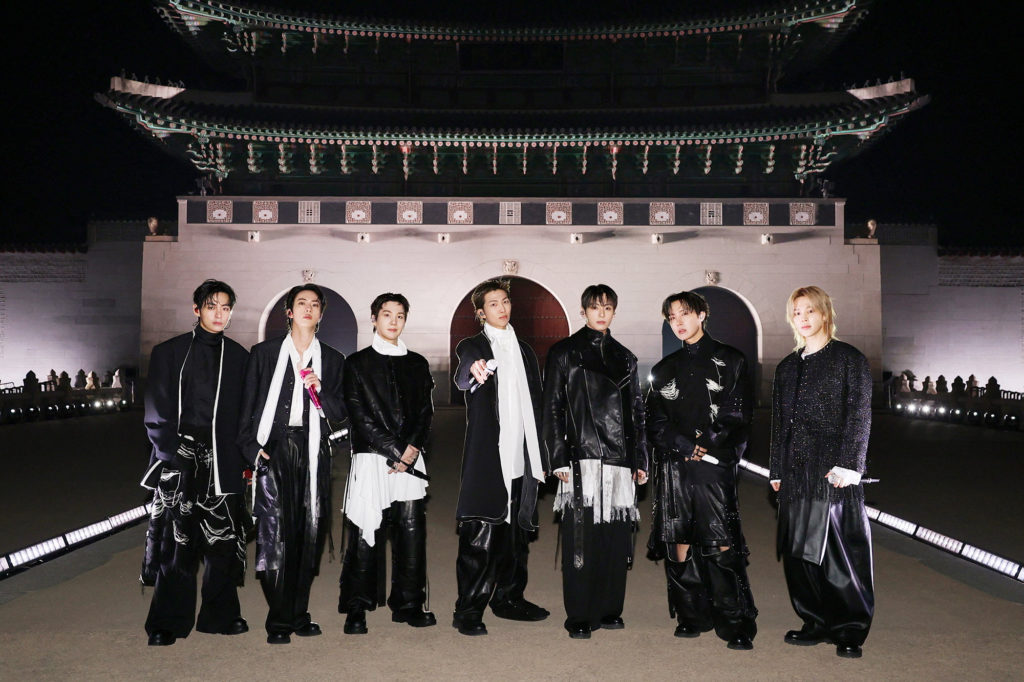

The air in Seoul’s Gangnam district crackled with a different kind of electricity this morning. It wasn’t just the usual hum of anticipation for a comeback; it was the thick, palpable tension of a long-awaited homecoming. For 728 days, the Korean music scene has operated with a noticeable void where one of its most formidable talents once stood. Today, that void is scheduled to be filled. An official notice, concise yet monumental, was posted on the newly minted website of KAIROS ENTERTAINMENT, a fledgling agency whose name—meaning the supreme moment for decisive action—now seems prophetically bold. It read: “To our beloved fans who have waited with unwavering hearts. We are pleased to announce the first official schedule of artist JINYOUNG in Korea. A ‘Homecoming Live’ broadcast will be held this Friday at 8 PM KST. From here, it begins.” With that, the clock on the most scrutinized non-compete clause in recent K-Pop history officially struck zero, and the game changed forever.
The Architect of an Era: Jinyoung's Legacy and the Great Departure
To understand the magnitude of this moment, one must first understand the artist at its center. Park Jinyoung was never just a member of EON, the globe-straddling boy group he helped build from the ground up. He was its chief architect. Debuted in 2014 under the behemoth Starcrest Entertainment, EON’s rise was meteoric, but their sound was distinctively Jinyoung’s. He was the primary songwriter and producer for virtually all of their biggest hits, crafting intricate sonic landscapes that blended hip-hop swagger with melodic melancholy. He wasn't just an idol; he was an auteur, a fact that both defined his career and sowed the seeds of his eventual departure.
The "Triple Threat" and the Burden of Genius
Fans and media alike coined the term “triple threat” for Jinyoung: a main rapper with a vocalist’s sensitivity, a dancer with imposing stage presence, and a producer with a Midas touch. While this made him invaluable to Starcrest, it also created a fundamental tension. As explored in our analysis of Beyond Genius: How HYBE's Sharpest Male Idols Are Redefining "Brains" in K-Pop, the industry has long grappled with how to manage idol-prodigies who outgrow the traditional confines of their roles. Jinyoung’s desire for full creative sovereignty and a greater share of the profits from his intellectual property became an open secret, culminating in grueling, year-long negotiations.
The Fracture and the "Golden Handcuffs"
In March 2025, the unthinkable happened. Jinyoung announced he would not be renewing his exclusive contract with Starcrest Entertainment. The news sent shockwaves through the industry and devastated the EON fandom, “Eclipse.” The split was officially described as “amicable,” but insiders spoke of a deep philosophical rift. Starcrest, however, was prepared. Buried in the fine print of his original contract was a formidable non-compete clause: for a period of two years following departure, Jinyoung could not engage in any promotional, broadcast, or commercial musical activities within South Korea. He could write and produce for others behind the scenes, but the face and voice of Park Jinyoung were barred from the domestic market. It was the industry’s version of “golden handcuffs”—a move designed to protect Starcrest’s investment and dampen the impact of a top asset defecting to a rival.
"It felt like watching a lion be put in a zoo enclosure a continent away from his pride. We could see him, but we couldn't hear his roar where it mattered most," said longtime fan-site manager Lee Hyejin.
Jinyoung’s response was strategic exile. He relocated his base to Los Angeles, collaborating with Western artists and releasing English-language singles on global streaming platforms. He maintained a fierce connection with his international fans but was a ghost in his homeland’s media. The clause was a calculated risk for Starcrest, betting that two years would be enough for the public to move on. For Jinyoung and his new partners, it was a period of silent, meticulous preparation.
The Announcement: Decoding the "Homecoming Live"
The announcement from Kairos Entertainment was a masterclass in minimalist hype. Devoid of flashy graphics or lengthy explanations, its power lay in its stark simplicity and its symbolic timing. The broadcast is set for the first minute of the first day the non-compete clause is legally void.
Kairos Entertainment: The New Kingdom
Little is known about Kairos, which has fueled intense speculation. Industry registries show it was incorporated just six months ago, with Jinyoung listed as the largest shareholder and co-CEO. This structure is revolutionary. He is not just a signed artist; he is the foundation and co-owner of the enterprise. This move mirrors a growing trend of top-tier idols seeking ownership, but Jinyoung has taken it a step further, building his own house rather than joining an existing one. The agency’s other named executive is veteran producer and former Starcrest A&R head, Kim Seung-hwan, whose defection alongside Jinyoung signals a deeper talent drain than previously assumed.
More Than a Livestream: A Strategic Declaration
The “Homecoming Live” is not positioned as a traditional comeback showcase. No new song or album has been announced. This is deliberate. Analysts believe it serves three core purposes:

- A Re-introduction: To re-establish his presence, on his terms, directly to the Korean public and media without filter.
- A Show of Force: To demonstrate that his fanbase, the “JY Foundation,” has not only waited but grown during his absence. Pre-registrations for the live stream crashed the Kairos site within an hour.
- A Vision Statement: Insiders suggest the broadcast will outline the artistic and commercial direction of Kairos Entertainment, potentially announcing not just his music, but his plans as a producer and mentor for a new generation of artists under his label.
This approach turns a potential vulnerability—two years of silence—into a strength, framing his return not as a mere comeback, but as the launch of a sovereign creative state.
The Fandom Awakens: Eclipse and the JY Foundation Mobilize
The emotional response from fans has been overwhelming, a tidal wave of pent-up support crashing onto social media. The hashtag #JinyoungHomecoming trended worldwide within minutes, amassing over 5 million tweets. The fandom, once fractured by his departure from EON, has seemingly unified in anticipation.
On fan community platforms like Daum Cafe and Weverse (where he notably does not have an account, a pointed omission), the mood is one of victorious vindication. “We kept the lights on for him,” one post read, accompanied by a trending graph showing his 2025 solo track “Exodus” has re-entered the Melon Top 100 in real-time, a purely fan-driven effort. Fan unions have organized coordinated projects, from funding celebratory billboards in Seoul’s digital media plazas to mass-streaming his entire discography to prepare for a potential chart takeover. This organic, powerful mobilization highlights a shift in the idol-fan dynamic, reminiscent of the intense, personal loyalty discussed in our report After the Storm: The Disappearance of Nova and the Unforgiving Calculus of K-Pop's Idol-Fan Boundary, but channeled into a collective, positive force.
"This is more than fandom. This is a reunion. We’ve spent two years defending his choice, analyzing his global work, and now we get to welcome him home. It’s emotional warfare in the best way," shared @JY_GlobalBase, a Twitter fanbase with 500k followers.
Interestingly, a significant portion of EON’s group fandom has also expressed support, hoping this new chapter could eventually lead to collaborative work, even if under different corporate banners. The narrative has shifted from “traitor” to “prodigal son returning as a king.”
Industry Tremors: A New Power Player and the Label Wars
The ramifications of Jinyoung’s return extend far beyond chart positions. It strikes at the heart of the industry’s power structure and could redefine contract negotiations for top-tier creative idols for years to come.
The Non-Compete Reckoning
Starcrest Entertainment’s strategy is now under a microscope. Was the two-year ban worth it? It successfully prevented Jinyoung from capitalizing on his peak EON momentum in Korea and allowed the group to stabilize with their subsequent “EON: Phase II” releases. However, it also created a formidable, self-owned rival and a martyr narrative that has galvanized his fanbase. If Jinyoung’s solo career under Kairos achieves immediate, substantial success, it will embolden other discontented major-label stars to consider walking away, knowing that a period of exile may be survivable. Legal experts predict agencies may begin to shorten non-compete periods or tie them to more specific, less blanket restrictions to avoid creating such potent rival entities.
Market Saturation and the "Auteur Idol"
Jinyoung re-enters a market more crowded than ever. Yet, his unique selling proposition is clearer than most. He isn’t just another soloist; he is the archetype of the “Auteur Idol.” In an era where artistic authenticity is increasingly valued, as seen in projects like Stitching the Soul, Jinyoung’s narrative of creative liberation is potent. His success will be a litmus test for whether a established idol’s artistic credibility, built over a decade, can translate into sustainable, label-defining power. Competitors like HYBE’s solo ventures and SM’s producer-idols will be watching closely. His move also disrupts the traditional agency model, proving a single star with a strong vision and loyal fanbase can be the core of an entire enterprise, challenging the resource dominance of the “Big Four.”
The Global-Local Nexus
Jinyoung’s two years abroad were not idle. He built a credible international portfolio, featuring on tracks with Grammy-winning producers and performing at major U.S. festivals. He returns not just as a Korean star, but as a global artist with proven cross-cultural appeal. This gives Kairos a unique advantage in the ongoing battle for international markets. He embodies the “glocal” strategy—global credibility paired with an undeniable Korean core—that every major label is chasing. His social media metrics, likely to see a Korean surge, will further cement his status. For context on the power of these digital platforms, our data dive in Digital Kingdom illustrates how follower count translates to commercial influence.
What's Next: The Dawn of the Kairos Era
The “Homecoming Live” is not the finish line; it is the starter’s pistol. All eyes will be on that broadcast for clues about the immediate future.
Musical Direction: Will he return to the signature moody hip-hop of his EON days, or showcase a new sound forged in his international collaborations? Will the first Korean release be a single, an EP, or a bold, full-length album? Given his history, it will almost certainly be a self-composed and produced body of work, making its chart performance a direct referendum on his artistry.
Kairos as a Label: The longer-term play is perhaps even more intriguing. Jinyoung and Kim Seung-hwan have the ears and the credibility to scout and develop new talent. Will Kairos become a boutique powerhouse for producer-idols, a safe haven for artists seeking the creative freedom Jinyoung fought for? An announcement of a trainee program or a first signed act could be imminent.
The EON Question: While an immediate group reunion is unlikely due to complex IP and label politics, the door for special collaborations or production work is now technically open. Jinyoung producing a track for EON in the future, while he remains at Kairos, is a possibility that would send the industry into a frenzy.
One thing is certain: the landscape has altered. A major star has broken the mold and returned, not under the banner of a larger guardian, but under his own flag. His success or failure will be his own. This Friday’s broadcast is more than a livestream; it is the first move in a high-stakes game that will challenge the very foundations of how K-Pop business is done. The period of exile is over. The era of Kairos has begun. For the latest developments on this and other groundbreaking stories, follow our continuous coverage on the K-Beats News page, and to see how his return impacts the music charts, keep an eye on our definitive K-Beats Charts page.