
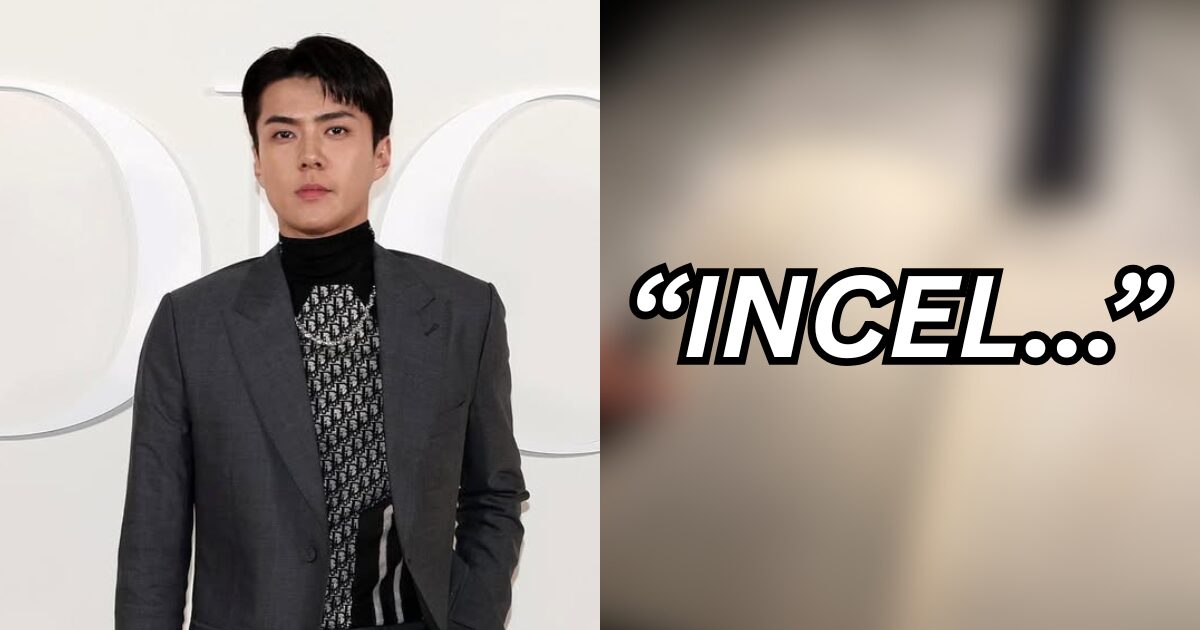

The serene, curated world of an idol's social media feed is often a sanctuary, a carefully managed space for fan service, artistic expression, and brand alignment. It is a digital extension of their stage persona, a place where control is paramount. But sometimes, a single post can act like a stone thrown into that still pond, and the ripples can reveal deep, turbulent undercurrents. This week, that stone was cast by EXO's Oh Sehun, and the resulting waves have washed over the entire K-Pop landscape, raising uncomfortable questions about privilege, perception, and the increasingly fragile contract between idol and fan.
On a seemingly ordinary Tuesday evening, Sehun shared a series of photos to his Instagram account, followed by over 14 million users. The images, shot in what appeared to be a luxurious hotel suite in Milan, were aesthetically flawless. Soft morning light, minimalist décor, and Sehun himself, dressed in casual but unmistakably high-end loungewear. The focus of the controversy, however, was not the idol, but the backdrop. In one photo, leaning against a designer side table, was a bottle of a well-known, ultra-premium Champagne, retailing for the equivalent of several thousand dollars. The caption was simple: a leaning tower emoji, likely a playful reference to the city's famous landmark.
To the casual observer, it was a postcard from a glamorous life. To a vocal segment of netizens and fans, it was a provocation. Within hours, the comment section transformed from its usual sea of heart emojis and adoring messages into a battleground. The post was screenshotted, dissected, and circulated on Korean community forums like TheQoo and Nate Pann, sparking a firestorm of criticism that rapidly escalated from mild disapproval to scathing, personal backlash. The idyllic image of EXO's cherished maknae had, in a flash, become a symbol of a much broader and more complex discontent.
A Foundation of Fame: Sehun and the EXO Legacy
To understand the weight of this reaction, one must first understand the stature of Oh Sehun. Debuted in 2012 as the youngest member of SM Entertainment's ambitious boy group EXO, Sehun was introduced as the group's "maknae on top," a visual and performance powerhouse who grew up in the relentless glare of the public eye. EXO's journey is the stuff of K-Pop legend: record-breaking sales, a fiercely loyal, multi-generational fandom (EXO-L), and a narrative that weathered unprecedented member departures and mandatory military enlistments to maintain a position of respected seniority.
Sehun's personal trajectory within this saga has been one of graceful evolution. From the sharp-featured teenager with a cool demeanor, he matured into a central pillar of the group, known for his sharp dance skills, improving vocals, and a fashion sense that made him a regular fixture at global luxury brand events. His public persona, especially post-military, has been one of quiet, almost reserved confidence. His social media, while showcasing a life of high fashion and travel, has typically avoided overt opulence, focusing more on artistic photography, fan interactions, and support for his members and labelmates.
This incident, therefore, strikes a dissonant chord. It interrupts a carefully maintained narrative. As explored in our analysis of BTS's own struggles with public perception, "The Weight of the Diadem: Inside BTS's Raw Confessional and the Fiery Reckoning It Sparked", the relationship between an idol's displayed lifestyle and their audience's reality is a delicate balancing act. Sehun, until now, has navigated this with notable finesse. His brand was "quiet luxury"—acknowledged but not flaunted. The Milan post, critics argue, crossed an invisible line from showing a lifestyle to seemingly celebrating an exclusionary level of wealth in a tone-deaf manner.
The Context of "Curb Your Enthusiasm"
The backlash did not occur in a vacuum. The current socio-economic climate in South Korea, and indeed globally, is marked by significant financial anxiety, particularly among the younger demographics that form the core of K-Pop fandoms. Rising costs of living, a competitive job market, and a pervasive sense of economic disparity create a backdrop where displays of extreme wealth can be met with resentment, not aspiration. Idols, whose careers are fundamentally built on the financial and emotional support of these fans, are held to an unspoken standard of humility.
This "contract" isn't about denying success, but about acknowledging its source. When fans purchase albums, stream videos, and vote tirelessly on music shows, they are investing in an idol's dream. Visibly extravagant consumption, without the contextual framing of gratitude or artistic purpose, can feel like a breach of that mutual understanding. It shifts the dynamic from "we built this together" to "look what I can afford."

Deconstructing the Digital Offense: Anatomy of a Backlash
The criticism levied against Sehun coalesced around several distinct, yet interconnected, points. The backlash was not monolithic, but a cascade of grievances that fed into each other.
The Symbolism of the Bottle
First and foremost was the Champagne itself. This wasn't just any beverage; it was a specific brand synonymous with unattainable luxury, often featured in music videos by hip-hop artists known for "flexing" wealth. Its prominent, casual placement in a "lazy morning" tableau was read by many as blatant, unnecessary ostentation. Critics argued that the post served no purpose other than to showcase access to a prohibitively expensive commodity.
"It's not about the money he has. Good for him. It's about the complete lack of awareness. People are struggling to pay rent, and this is the content he chooses? A thousand-dollar bottle as a prop? It feels disrespectful to the fans who made that life possible for him," wrote a top-voted comment on a popular forum thread.
The Timing and the Tone
Secondly, the timing was perceived as particularly insensitive. The post came during a period where several EXO members are actively serving in the military, a time when the group's activities are naturally subdued and the fandom is in a state of patient, supportive waiting. Furthermore, it followed closely on the heels of a publicized donation campaign by EXO-Ls to celebrate a member's birthday—a stark contrast that netizens were quick to highlight.
The minimalist caption—just a single emoji—also drew ire. It was interpreted as glib, adding to the perception of carelessness. Had the post been part of a branded partnership (which it was not confirmed to be), or accompanied by a caption expressing gratitude or reflecting on his journey, the reception might have been different. The absence of context left the image open to the most critical interpretation.
The "Spolit Maknae" Narrative
Finally, the incident resurrected and amplified a long-dormant, but never fully extinguished, narrative about Sehun: that of the "spoiled maknae." As the youngest member of a hugely successful group, Sehun has often been portrayed (both affectionately and critically) as being doted on by his older hyungs. This event allowed critics to frame the post as the action of someone out of touch, shielded by a bubble of privilege, and unaware of how his actions land in the wider world. This taps into a broader cultural scrutiny of celebrity behavior, similar to the sustained analysis faced by figures like Song Ji Hyo on "Running Man," where fan expectations evolve into intense scrutiny of every on-screen gesture.
The Fractured Fandom: EXO-Ls in Crisis
The reaction within the EXO-L community has been deeply divided, mirroring the polarized nature of online discourse. This schism is perhaps the most telling aspect of the entire episode, revealing how modern fandoms are not monoliths but ecosystems of conflicting opinions.
On one side, a segment of fans, particularly on international platforms like Twitter and Instagram, rushed to Sehun's defense. Their arguments focused on:
- Artist Autonomy: Sehun, a 30-year-old man and veteran of the industry, has the right to post about his life and enjoy the fruits of his labor.
- Misinterpretation: The post was an aesthetic choice, not a deliberate display of wealth. The backlash was seen as jealousy and over-analysis.
- Targeted Hate: Defenders framed the criticism as a coordinated attack by anti-fans, leveraging a slow news cycle to tarnish Sehun's reputation.
Conversely, the critical voices, concentrated more heavily on Korean forums and community sites, expressed a profound sense of disappointment. This wasn't mere hate; for many, it was a rupture of trust. Their sentiments included:
- Betrayal of Image: Sehun had cultivated a more mature, grounded image post-enlistment. This post felt like a regression to a clichéd, insensitive form of idol bragging.
- Concern for Group Harmony: With members in the military and the group at a delicate juncture in its career, such controversy is seen as unnecessary negative attention that affects all of EXO, not just Sehun. It adds to the already complex news cycle surrounding the group.
- The Principle of the Matter: For these fans, it was a lesson in PR and social responsibility. As one fan put it, "It's not about the Champagne. It's about knowing your audience and having basic emotional intelligence."
This internal conflict is exhausting for a fandom. It drains the energy usually reserved for supporting group activities and turns it inward. The episode serves as a stark case study in how a single action can destabilize the delicate unity of a fan community, forcing individuals to choose between unwavering support and principled criticism—a dynamic we've seen play out in various forms, such as in the debate sparked by audience behavior at IVE's concert.
Industry Echoes: The Broader Implications for Idol Culture
Beyond EXO and its fandom, Sehun's situation holds up a mirror to the entire K-Pop industry. It underscores a pivotal shift in the idol-fan power dynamic. The era where idols were distant, untouchable figures is long gone. The rise of social media, V LIVE (now Weverse), and reality content has fostered an illusion of intimacy and relatability. Fans feel they know their idols.
This perceived intimacy comes with heightened expectations for authenticity and conscientiousness. Idols are now expected to be both flawless performers and socially aware individuals. A misstep in either domain can trigger a backlash. The industry trains idols in dance, song, and interview etiquette, but the curriculum for navigating the minefield of socio-economic perception in the digital age is still being written.
Furthermore, this incident highlights the precarious position of senior idols from third-generation groups. They carry the legacy of a different era of K-Pop into a vastly changed present. The rules of engagement have evolved. What might have been seen as a cool, aspirational post in 2016 is now read through a lens of inequality and performative consumption. Agencies like SM Entertainment are now tasked with managing not just the careers of these veterans, but also guiding their digital personae through these new cultural norms. The challenge is to allow artists to express their individuality and success without alienating the fanbase that remains their economic foundation. For a look at how other artists navigate personal revelation, consider J-Hope's candid admission about swimming, which, while personal, was framed within a context of relatable honesty rather than luxury.
The Role of the Agency and Crisis Management
As of this writing, neither SM Entertainment nor Sehun has issued a public statement addressing the controversy. This silence itself is a strategy, but a risky one. The industry standard in such situations varies. Sometimes, a quiet deletion of the post is enough to let the storm pass. Other times, it requires a direct, albeit carefully worded, acknowledgment.
The calculation SM must make is complex: Does addressing it give the controversy more oxygen and formalize it as an "incident" requiring an apology? Or does silence imply arrogance, further fueling the backlash? This decision will be a telling indicator of how SM perceives the severity of the issue and the temperament of the core fanbase. It also reflects a broader industry trend of moving away from immediate, groveling apologies for every slight, toward a more measured, sometimes defiant, posture.
Looking Ahead: Sehun's Path Forward and the Lesson Learned
The long-term impact of this episode on Sehun's career is unlikely to be catastrophic. EXO's legacy is robust, and fan loyalty, though tested, is deep-rooted. The immediate fallout will likely be a period of heightened scrutiny on his social media activity and public appearances. His next few posts will be dissected for tone and content, and his interactions with fans will be watched for signs of contrition or defiance.
The more significant consequence is the collective lesson it imparts. For idols, it is a stark reminder that every post is a statement, loaded with potential symbolism. The line between sharing and showing off is thinner and more hotly contested than ever. For fandoms, it reveals the tensions inherent in supporting multi-millionaire celebrities while navigating one's own economic realities. It forces a re-negotiation of that unspoken social contract.
Ultimately, this may lead to a new form of digital curation. We may see a move away from "lifestyle" posts towards more overtly artistic or fan-focused content, a retreat into safer, more controlled forms of communication. The spontaneity that social media promises may become even more carefully choreographed. In the end, Sehun's "leaning tower" may stand not as a monument to luxury, but as a cautionary tale in the ever-evolving, unforgiving narrative of K-Pop stardom. As idols continue to navigate their careers, from group promotions to solo endeavors like Dreamcatcher's Gahyun's acting transition, the management of public perception remains their most constant and demanding role. For the latest on how all your favorite artists are faring, always check our comprehensive Artists page.
The dust will settle. The comment section will eventually return to hearts and adoration. But the memory of this backlash will linger in the industry's consciousness, a subtle but permanent adjustment in the calculus of what it means to be an idol in the public eye. The tower, momentarily shaken, still stands, but the ground beneath it has been proven less stable than it appeared.