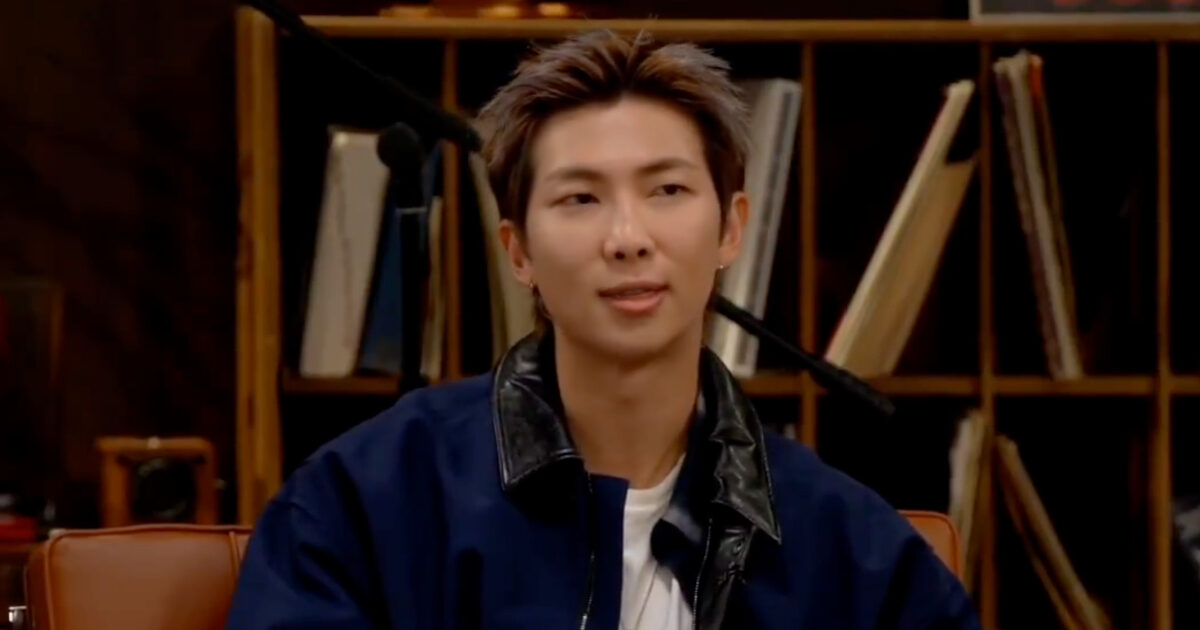

The live broadcast notification hit phones globally a little after 11 PM KST. For the BTS ARMY, any spontaneous live from a member is an event, but this one, titled simply “A talk from Namjoon,” carried a different, more somber weight. For nearly an hour, RM, the leader and intellectual cornerstone of the world’s biggest musical act, sat alone in what appeared to be a studio, his left foot conspicuously elevated on a chair, encased in a bulky black medical walking boot. What followed was not a lighthearted chat or a casual update, but a raw, introspective, and at times emotionally fraught monologue that laid bare the vulnerability behind the poised leader—a man grappling with a painful injury, the pressures of legacy, and the complex reality of life during BTS’s ongoing chapter two.
The Crack in the Armor: A Leader's Unvarnished Truth
In an industry where image is meticulously curated and vulnerability is often filtered through PR statements, RM’s decision to address his situation directly, visually, and in real-time was a significant departure. It wasn't an agency press release about "health concerns" or a vague Weverse post. It was the leader himself, showing the proof of his limitation and speaking from the heart. This immediate transparency set the tone for a broadcast that would resonate far beyond a simple health update.
The Context of Silence and Speculation
In the weeks leading up to the broadcast, observant fans had begun piecing together clues. His absence from certain public appearances, careful camera angles in official photos, and a noticeable lack of his usual long, brisk walks—a well-documented passion of his—had sparked whispers. The K-Pop rumor mill, forever churning, had begun its work. Was it just a strain? Something more serious? The absence of official word from Big Hit Music had created a vacuum, one often filled with anxiety. RM’s live was, first and foremost, an act of reclaiming the narrative. He moved to address his fans directly, cutting through the speculation with characteristic honesty.
“I know you’ve been wondering. I see the comments, I feel your worry,” he began, his voice calm but tinged with fatigue. “I wanted to come on here and just… tell you myself. It’s my ankle. I had a procedure. It’s not a simple twist; it’s something that has been building, and we finally had to address it properly.”
From Kim Namjoon to RM: The Weight of a Decade on One Ankle
To understand the gravity of this moment, one must understand the journey. RM debuted in 2013 not just as a rapper, but as the leader of a hip-hop-focused group under a small company, shouldering immense responsibility from the start. His role evolved from group spokesperson to lyrical visionary, to the diplomatic face of BTS in international media, and ultimately, to a steward of their cultural legacy. The physical demands of this journey are often overshadowed by their artistic and commercial heights.
The Accumulated Toll of Performance
BTS’s performances are legendary for their intensity, complexity, and sheer power. From the explosive choreography of “Dope” and “Fire” to the intricate storytelling of “Black Swan” and “ON,” the physical output required is athletic in the extreme. RM, while not always at the very center of the most demanding dance breaks, has always been a full participant, contributing powerful stage presence and his own rigorous movements. Over ten years, the repetition of jumps, landings, and rapid directional changes takes a cumulative toll on the body. As our analysis in a previous piece, "Beyond the Microscope: Jungkook's Viral Moment Sparks Critical Dialogue", explored, the public often forgets the physical sacrifices made for perfection.
RM revealed his injury is related to an “old issue” that was aggravated. This is a common refrain in the industry, where schedules often don’t permit adequate time for injuries to fully heal before an idol must return to practice or promotion. The pressure to perform—for fans, for the team, for the legacy—can lead to decisions that prioritize the short-term show over long-term health. “You think it’s okay, you push through, you have ice packs and tapes and you keep going,” he explained. “Because there’s always the next album, the next tour, the next performance that feels too important to miss.”
The Psychological Load of Leadership
The injury, however, is not merely physical. RM’s broadcast powerfully connected his physical state to his mental and emotional landscape during BTS’s hiatus for mandatory military service. This period, dubbed “chapter two,” was designed as a time for individual exploration, but for the leader, it seems to have also been a time of intense self-reflection and burden. With the group's activities paused, the weight of their collective past and future can feel acutely personal.
“When you’re moving all the time, performing, traveling, your mind is focused on the next thing,” he shared, looking directly into the camera. “But when you’re forced to be still… like this,” he said, gesturing to his boot, “everything else catches up. The thoughts about our music, what it means, what I should do now, what the members are doing… it’s loud. Sometimes, this quiet is the loudest place.”
This confession highlights a rarely discussed aspect of idol life: the psychological whiplash of going from a decade of non-stop, group-centric activity to a sudden, mandated solo focus. For a leader like RM, whose identity is deeply intertwined with the group's well-being, this shift can be destabilizing, a theme also touched upon in T.O.P's ambitious solo return, which we covered in "Through the Portal: T.O.P's 'ANOTHER DIMENSION' Marks a Pioneering Solo Return."

The ARMY Response: From Concern to a Movement of Support
The reaction from the global ARMY was instantaneous, massive, and multifaceted. Social media platforms, particularly Twitter and Weverse, were flooded with messages of love, support, and shared sadness.
Trending Hashtags and Digital Hugs
Within minutes, hashtags like #GetWellSoonNamjoon, #OurLeaderRM, and #WeLoveYouNamjoon began trending worldwide. Fans shared clips of his most comforting words, translated his message into dozens of languages, and created digital art depicting him resting and healing. The overwhelming sentiment was not pity, but profound respect for his honesty and a collective vow to support his recovery period without pressure. “You rest for as long as you need, we’ll be here,” became a common refrain, echoing across the fandom.
Focusing on the Message, Not the Malady
Significantly, the fan discourse quickly moved beyond the injury itself to engage with the deeper themes RM raised. Threads and discussion forums lit up with conversations about the unsustainable physical demands of K-Pop, the mental health of idols during hiatus periods, and the importance of long-term health over short-term schedules. Fans used the moment to advocate for a more humane industry standard, citing RM’s situation as a prime example of why change is needed. They rallied around his expressed feelings of guilt and pressure, assuring him that his worth is not tied to constant productivity. This mature, empathetic response highlights the unique, symbiotic relationship between BTS and ARMY, built on years of mutual honesty.
Industry Ripples: RM's Candor and the Idol Health Paradigm
When the leader of BTS speaks openly about a chronic injury exacerbated by the pace of the industry, the entire K-Pop ecosystem listens. This moment has significant implications beyond a single artist’s health update.
Pressure on Leaders and the "Superhuman" Expectation
Idol leaders carry an immense burden. They are mediators, motivators, and often the first point of contact between the group and the company or public. They are expected to be strong, resilient, and seemingly tireless. RM’s vulnerability punctures this “superhuman” expectation. By showing his limitation—both physical and emotional—he normalizes struggle for leaders across the industry. It sends a powerful message that leadership includes knowing when you are hurt and having the courage to address it, a difficult task in a competitive landscape where younger idols are constantly debuting.
A Catalyst for Conversation on Chronic Injury
The K-Pop industry has a recognized, if often quietly handled, issue with chronic injuries. From bad knees and backs to vocal node issues, the physical price of performance is high. Major agencies have medical teams, but the fundamental structure of comeback cycles, intensive practice, and lengthy tours often works against full recovery. RM’s high-profile acknowledgment of an “old issue” that required a “procedure” brings mainstream attention to this systemic problem. It may encourage other artists to prioritize long-term health and could push agencies to re-evaluate training and scheduling practices. This mirrors broader conversations about the treatment of idols, akin to the discourse sparked by issues like the one explored in "Behind the Gloss: The Unraveling of PIXCEL's Lee Hana," which examined the industry's harsh hierarchies.
What Comes After the Boot: Recovery, Art, and the Road to 2025
The immediate future for RM is clear: rest, rehabilitation, and a slow return to mobility. But the broadcast also offered hints about the longer road ahead, for him and for BTS.
RM's Solo Path in a New Light
Prior to his injury, RM had been active in his solo endeavors, releasing his acclaimed album *Indigo* and engaging in numerous artistic collaborations. This forced pause will undoubtedly impact his immediate plans. However, if his history is any indicator, periods of reflection have often yielded profound artistic output. The “loud quiet” he described could become the fertile ground for new music, writing, or other projects. His creative process, once fueled by constant movement and external stimuli, may now turn inward, potentially leading to a deeply personal next chapter in his solo journey.
The BTS Reunion Horizon
All roads lead to 2025, the slated year for the full group reunion after the completion of the members' military service. RM’s proactive approach to his health can be seen as a strategic investment in that future. By addressing a chronic issue now, he is working to ensure he can return to the stage with the other members at full capacity, ready to embark on the next phase of BTS’s story without being held back by an unhealed wound. This foresight underscores his leadership—making a difficult short-term decision for the sake of the group’s long-term vision.
The broadcast ended not with a dramatic farewell, but with a soft, grateful smile. “Thank you for listening. Thank you for letting me say this. I’ll focus on getting better. Please take care of your health too. Let’s all meet again in a better condition.” It was a quiet closing to an emotionally powerful hour, a moment that redefined strength not as the absence of weakness, but as the courage to show it. As RM steps into a necessary season of stillness, he does so with the unwavering support of a global community, turning a leader’s limp into a step toward a healthier, more honest conversation about the idols we cherish and the humanity they protect. For the latest updates on RM's recovery and all K-Pop news, stay tuned to our News page.