
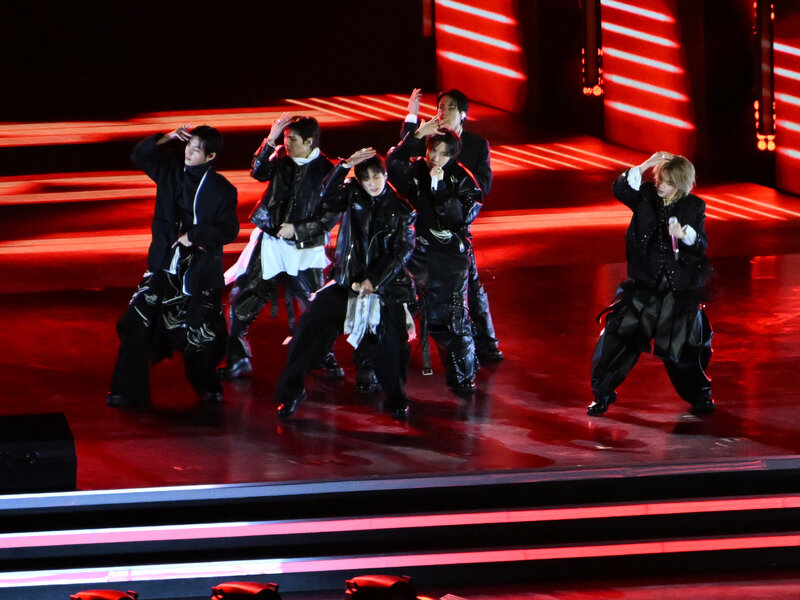

The air in the HYBE recording studio was thick with a silence that felt louder than any fan chant. It was late 2023, and the seven members of BTS were gathered around a single microphone, listening to a playback of a track that had just shifted the entire axis of their impending comeback. The song weaving through the speakers was not a bombastic hip-hop anthem nor a sleek pop confection. It was a haunting, modern reinterpretation of "Arirang," Korea’s millennia-old folk song of sorrow, longing, and resilience. RM, the group's leader, later recalled the moment to close confidants as one of simultaneous dread and profound clarity. "It felt like we were standing at the edge of a cliff we had built ourselves," a source close to the production team shared with K-Beats. "The song was breathtaking, but it asked everything of them. It asked them to be not just BTS of 2023, but artists carrying the weight of their entire journey and the path ahead." This moment inside the studio encapsulates the immense, multi-layered pressure BTS navigated as they prepared to reunite as a full group for the first time in four years—a pressure to satisfy global fan hunger, silence media doubt, justify corporate expectations, and, most crucially, to authentically redefine who they are.
The Hiatus and The Unseen Precipice
To understand the magnitude of this comeback, one must first appreciate the landscape BTS left and the one they returned to. Their decision in mid-2022 to embark on an official hiatus from group activities to fulfill mandatory military service was framed as “Chapter Two,” a period of individual exploration. The members delivered successful solo projects—from Jin’s astronaut-inspired balladry to j-hope’s headlining festival set at Lollapalooza, from RM’s raw indie collaborations to Jung Kook’s global chart-topping solo run. Yet, this very success raised the stakes exponentially. The ARMY, more dedicated than ever, had their appetites whetted by seven distinct artistic voices. The question looming was not if they could come back, but how they could possibly synthesize these evolved identities into a cohesive whole that felt like progress, not regression.
Simultaneously, the K-Pop industry itself had transformed. A new generation of "4th Gen" groups had solidified their dominance, breaking YouTube records and selling out stadiums with a velocity that often eclipsed the pace of BTS’s own historic rise. Media narratives, ever hungry for a shifting crown, began posing subtle questions about relevance in a fast-moving market. Internally, HYBE had grown into a sprawling entertainment conglomerate, its financial ecosystem still significantly buoyed by the group’s legacy. The return of BTS wasn't just a musical event; it was a corporate imperative with billions of won in market capitalization hanging in the balance. As we explored in our analysis of generational shifts in "An Era Ends: Legendary Girl Group HANEUL's 11-Year Journey Concludes", the public’s memory in pop culture can be fickle, even for the most legendary acts.
"The most dangerous expectation was the internal one," an industry insider familiar with HYBE’s strategic meetings told K-Beats. "The members weren't just fighting to meet external benchmarks. They were fighting to create something that felt true to the artists they had become. After such individual freedom, returning to the 'machine' of a global group comeback is psychologically and creatively complex."
"Arirang": The Anchor and The Albatross
The choice to build their comeback single around "Arirang" was the strategic and artistic gamble at the heart of this pressure cooker. The track, as described by those who have heard advance cuts, is a minimalist masterpiece. It begins with the familiar, mournful melody played on a solitary daegeum (Korean bamboo flute), over which Jin and V’s vocals intertwine with aching clarity. The production, led by a collaborative team including RM and SUGA (under his Agust D moniker), then subtly introduces a lo-fi hip-hop beat and layered, atmospheric synths, allowing the traditional Korean gugak elements to remain the focal point. Lyrically, it is a dialogue between the original folk lyrics—which speak of crossing mountains and overcoming hardship—and new verses penned by the members that reflect on their own journey: the mountains of expectations, the longing for the stage during their hiatus, and the resilience of their bond.
A Sonic Canvas of Heritage and Hip-Hop
Musically, "Arirang" represents the full-circle moment BTS has been subtly moving toward for years. Their early work was deeply rooted in hip-hop, a genre itself born of struggle and societal commentary. As they globalized, their sound incorporated pop, EDM, and R&B. Returning to "Arirang" is a return to the root of han (a Korean concept of deep, collective sorrow)—but through the sophisticated lens of world-class producers. j-hope’s influence is heard in the rhythmic, almost dance-like percussion that emerges in the song’s second half, a symbol of hope pushing through sorrow. Jimin and Jung Kook’s ad-libs in the final crescendo are described as "vocals that don't just sing the note, but cry it," according to a producer. This isn't a mere sampling of tradition; it is a conversation with it.
The Weight of Cultural Symbolism
However, with this deep cultural touchstone came immense risk. "Arirang" is considered Korea’s unofficial national anthem, a song of profound emotional significance. Using it as pop song fodder could be seen as disrespectful or opportunistic. BTS and their creative team were acutely aware of this. They engaged in lengthy consultations with gugak masters and cultural historians. "The intention was never to ‘modernize’ Arirang as if it needed saving," RM emphasized in pre-release materials. "The intention was to place ourselves within its long, long story. To say, ‘We, too, have known this feeling of an arduous road. Our journey is just another verse in this endless song.’" This reframing positions their own global struggle and military hiatus as a continuation of a timeless Korean narrative, a move of staggering symbolic ambition.
ARMY's Anxious Vigil and Critical Acclaim
As teasers and the concept for "Arirang" were released, the ARMY’s reaction was a fascinating study in a mature fandom’s nuanced response. Unlike the explosive, unbridled hype that might greet a more conventional pop single, the response was initially one of deep, sober reflection. On social media platforms and fan community forums like Weverse, discussions leaned heavily into analysis of the folk song’s meaning, sharing personal stories of what "Arirang" meant to their families, and dissecting every frame of the minimalist, heritage-focused teaser imagery.
This was not the fandom of 2017; this was a collective that had grown with the artists. "There was a palpable anxiety," noted a moderator of a large fan community. "Everyone wanted the comeback to be perfect, for the world to see their growth. Choosing ‘Arirang’ was so bold, so devoid of obvious commercial calculation, that it commanded a different kind of respect but also fear. Would the general public get it? Would the media criticize it as pretentious?" This echoes debates within the fandom about artistic legacy, similar to those captured in our global fan poll, "Beyond The Crown: ARMYs Debate BTS's Definitive Album Legacy."

- Respect for the Gamble: A dominant sentiment was pride in the group’s confidence to lead with artistic integrity over chart-chasing safety.
- Generational Connection: Many international fans embarked on learning journeys about Korean history and folk music, creating a secondary wave of cultural education.
- Emotional Preparedness: Teasers focusing on the members' solemn studio preparations signaled this would be an emotional, not just celebratory, return, preparing ARMY for a profound experience.
Initial critical reviews from domestic Korean media, often a tough crowd for idol groups leaning into traditional concepts, have been overwhelmingly positive, praising the sincerity and sophistication of the execution.
Industry Shockwaves: Redefining the "Comeback" Playbook
The impact of BTS’s "Arirang" strategy is already sending ripples through the K-Pop industry. For years, the blueprint for a major group comeback from hiatus or military service involved a "grand return" – a maximalist, high-energy title track designed to immediately recapture chart dominance and showcase powerful performances. BTS has effectively dismantled that playbook.
"They have changed the currency of success," says Park Ji-young, a veteran entertainment columnist. "By leading with ‘Arirang,’ they are saying that cultural impact, artistic statement, and emotional resonance are the primary metrics for this phase of their career. The charts and sales will follow, but they are not the driver. This elevates the entire conversation around idol music." It places BTS in a category often reserved for revered solo folk or rock artists in Korea, blurring the lines between "idol" and "national artist." This move also acts as a powerful shield against criticism about relevance; it is impossible to critique a group as "out of touch" when they are engaging with the most foundational touchstone of Korean culture in such a deliberate way.
Furthermore, it applies immense, positive pressure on the industry at large. How do other top-tier groups follow this act? It encourages a deeper consideration of heritage and authenticity in music production. The gamble also highlights HYBE’s unique position; few agencies have the confidence or the resources to greenlight a project with such apparent commercial risk, trusting the artist's vision and the fan connection implicitly. It’s a stark contrast to the often hyper-controlled, data-driven approaches seen elsewhere. For more on how agencies navigate public and private pressures for their artists, the legal stand for ZEROBASEONE’s Sung Han Bin detailed in "The Price of the Spotlight" reveals a different, but equally critical, facet of idol management today.
This moment also reinforces the group’s role as cultural diplomats. Following their historic UN speeches and White House visit, using their platform to spotlight "Arirang" on a global stage performs a soft power function no government campaign could match. It transforms their comeback from a pop culture event into a national cultural moment, witnessed by the world. You can track how this cultural moment translates on our Charts page, where the song’s performance will be closely monitored.
The Road Ahead: A New Chapter Forged in Tradition
So, what comes after "Arirang"? The single is confirmed to be the lead-in for a full album, tentatively scheduled for late Q1 of next year. Insiders suggest the album will be a journey from the traditional and introspective sound of "Arirang" out into more varied, but no less personal, musical territories. It will function as a bridge, connecting their deep roots to the diverse artistic directions they explored during Chapter Two. The promise is an album that feels cohesive not because every song sounds the same, but because every song carries the same weight of lived experience and intentional artistry.
The success of this comeback will not be measured in its first-week sales alone—though those will undoubtedly be record-shattering—but in its enduring legacy. Did BTS successfully redefine themselves for this new era? Did they satisfy the soul of the ARMY while commanding renewed respect from the industry? Early indications are that they have done more than that; they have shifted the goalposts. By embracing the immense pressure and channeling it into a work of profound cultural resonance, they have turned a moment of potential vulnerability into one of unassailable strength. They are no longer just the global K-Pop phenoms; they are artists using the fullest breadth of their platform to tell a story that is both intimately personal and universally Korean.
Their journey, much like the endless verses of "Arirang," continues. But with this bold move, BTS has proven that their next verse will be written on their own terms, with the wisdom of the past firmly in hand as they chart the future. The pressure was the crucible, and from it, they have forged not just a comeback, but a new artistic identity. For the latest on this evolving story and all movements in the idol world, stay tuned to our News page. The cliff’s edge they stood upon has become the foundation for their most daring chapter yet. The mountains of Arirang have been crossed, only to reveal the vast, new landscape beyond.