

The glittering world of K-Pop is built on a foundation of intense connection. Fans pour their hearts and resources into supporting their favorite idols, and in return, artists share curated glimpses of their lives, talents, and personalities. But this intimate, often parasocial relationship has a devastating dark side—a shadow world of malicious rumors, invasive privacy violations, and relentless digital harassment that can shatter the very humans behind the idol personas. This week, that shadow was thrust into the harsh light of official action, as one of the industry's most prominent rising stars became the focal point of a firm and potentially precedent-setting legal stance.
The Breaking Point: An Agency's Stern Declaration
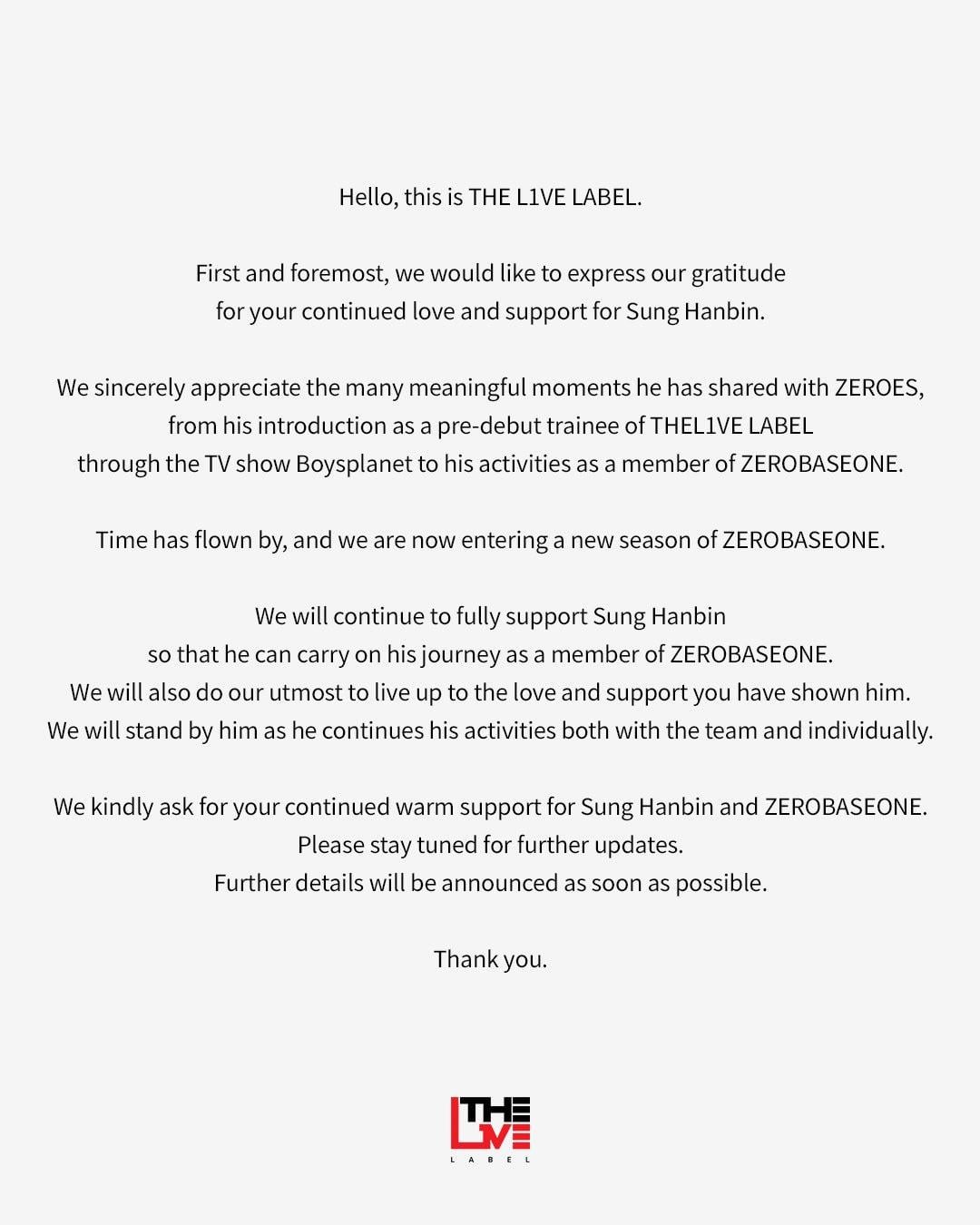
On March 27, THE L1VE, the agency managing ZEROBASEONE's center and leader, Sung Han Bin, released an official statement that moved beyond the typical, boilerplate warnings. It was a detailed, impassioned, and unequivocal declaration of war against the spread of malicious content targeting their artist. The statement, published on the agency's official communication channels, outlined a disturbing pattern of behavior that had crossed every conceivable line.
The agency cited the “manufacture and spread of groundless false information, personal attacks, defamation, and the leakage of private information that severely infringes upon the artist’s personal life.” This was not about criticism of his performance; this was a targeted campaign of character assassination and privacy invasion. THE L1VE emphasized that the nature of these acts had evolved from mere online noise to “clear illegal activities” causing “severe mental and emotional distress” to Sung Han Bin.
“We have been continuously monitoring and collecting evidence regarding the spread of malicious posts and comments, as well as the infringement of personal privacy. We inform you that we are taking and will take all possible legal measures without any settlement or leniency,” the agency’s statement read, marking a zero-tolerance policy.
This move signifies a critical shift from passive monitoring to active, legal retaliation. The agency confirmed it has already begun the legal process by filing complaints with law enforcement and is working with a specialized law firm to pursue both civil and criminal charges. They explicitly warned that not only the original creators of malicious content but also those who knowingly spread it would face legal consequences.
Beyond Rumors: The Anatomy of a Modern Smear Campaign
While THE L1VE did not specify the exact rumors, industry insiders and fan communities point to a toxic cocktail of allegations that have circulated in recent weeks. These typically follow a pattern seen in similar campaigns against other top idols: fabricated stories about pre-debut personal lives, manipulated images or out-of-context clips meant to imply scandal, and the malicious interpretation of innocent past social media activity. More egregiously, the mention of “leakage of private information” suggests doxxing—the public release of private addresses, family details, or non-public contact information—which represents a direct and dangerous threat to an idol’s physical safety and that of their loved ones.
From Boys Planet to Center Stage: Sung Han Bin's Meteoric Ascent
To understand the weight of this moment, one must understand the trajectory of Sung Han Bin. His rise is a textbook example of K-Pop's fairy-tale narrative, but one written with his own undeniable grit and charm. Prior to Boys Planet, he was a backup dancer and dance instructor, a fact that endeared him to fans as someone who honed his craft away from the spotlight. On the Mnet survival show, he didn't just compete; he defined the standard. His now-legendary “Kill This Love” fancam became a viral sensation, showcasing a blend of powerful precision and captivating expression that made him an immediate frontrunner.
He was crowned the #1 finalist, earning the center position for the resulting project group, ZEROBASEONE. As the group’s leader, he has shouldered immense responsibility, guiding the nine-member ensemble through a record-breaking debut with “In Bloom” and maintaining their status as a “monster rookie” group. His public image has been one of consistent warmth, professionalism, and impeccable skill—a “perfect idol” in the traditional sense. This very perfection, however, can ironically make him a target, as some malicious actors seek to tear down what is widely admired. His position also places him squarely in the upper echelons of public recognition, a fact highlighted in our analysis of the Power Plays & Paradigm Shifts: Inside the March Brand Reputation Rankings That Redefined the K-Pop Hierarchy.
The pressure on an idol in his position is astronomical. Every move is dissected, and every past moment is scrutinized under a million-microscope lens. For more on the artists shaping the industry, explore our comprehensive Artists page.

The Weight of Leadership in a Digital Fishbowl
As the leader of ZEROBASEONE, Sung Han Bin's role extends beyond performance. He is the group's representative, its emotional core, and a bridge to the fandom, ZEROSE. This leadership mantle means that attacks on him are perceived as attacks on the group's stability. The agency’s decision to defend him so aggressively is also a move to protect the entire group’s ecosystem and the significant investment in their future. It sends a message that the mental well-being of their cornerstone artist is non-negotiable.
A Fandom's Fury and Fear: ZEROSE Mobilizes and Mourns
The reaction from Sung Han Bin’s fandom, ZEROSE, has been a powerful mix of fury, heartbreak, and mobilized support. Across platforms like Twitter, Instagram, and the fan community app Weverse, the dominant sentiment is one of protective anger. Fanbases have launched coordinated campaigns to report malicious posts and hashtags, flooding official support channels with demands for stronger action, which likely contributed to THE L1VE’s decisive move.
“We’ve been reporting these accounts for weeks. Seeing the rumors get more vile and personal was sickening. We’re not just fans of an idol; we feel a responsibility to protect someone we care about from literal harm,” shared one longtime fan on a private forum. Another tweeted, “Hanbin always smiles for us, but what is this costing him? The agency’s statement finally acknowledges what we’ve been fearing—that this is causing him real pain.”
This incident has sparked deeper conversations within the fandom about consumption culture. Many are advocating for a stricter separation between the artist’s public and private life, urging fellow fans to reject unverified information and respect boundaries. The collective trauma from watching a beloved idol be targeted has, in some ways, strengthened the fandom’s internal resolve and ethical codes. However, it has also cast a pall over what should be a celebratory time for the group's continued success.
The Legal Landscape: A Growing Trend of Zero-Tolerance
THE L1VE’s action is part of a significant and growing trend in the K-Pop industry. Agencies are increasingly abandoning vague warnings in favor of specific, evidence-based legal threats. This reflects a broader societal shift in South Korea regarding online defamation and cyberbullying, with laws becoming stricter and enforcement more serious.
The precedent for such legal battles has been building. For instance, we recently reported on the landmark case in Justice Served: Moon Sua’s Landmark Legal Victory Over KBS Sets a Powerful Precedent for Artist Rights, which demonstrated that courts are willing to side with artists against powerful entities. While that case involved a broadcaster, the principle of defending an artist's rights and personhood is parallel.
Other major agencies like HYBE, SM, and JYP have all pursued—and won—cases against malicious commentators in recent years. The charges often fall under South Korea’s strict Acts on Promotion of Information and Communications Network Utilization and Information Protection, which can lead to hefty fines and even imprisonment for offenders. What makes THE L1VE’s statement notable is its timing and tone; it is a proactive, pre-emptive strike aimed at quashing a burgeoning campaign before it can cause further damage, rather than a reaction after months of escalation.
The Mental Health Imperative
Critically, the agency’s statement explicitly names the “severe mental and emotional distress” caused to the artist. This public acknowledgment is itself a powerful step. For too long, the mental toll of idol life was an open secret, with tragedies forcing the industry to confront its failings. By legally framing the harassment as a cause of this distress, agencies are building a stronger case and, more importantly, validating the psychological impact on their artists. It reframes the narrative from “dealing with rumors” to “preventing active harm,” which carries greater moral and legal weight. The industry is still grappling with the fallout from incidents where such distress was not adequately managed, a topic touched upon in our coverage In The Eye of The Storm: ECLIPSE's Yoo-jin's Dating Scandal Hiatus.
What This Means for the Future of K-Pop Fandom
The ramifications of this legal stand extend far beyond Sung Han Bin and THE L1VE. It is a signal flare to the entire K-Pop ecosystem: the era of unchecked digital harassment is facing its reckoning.
First, for agencies, this sets a new standard for artist protection. The cost of legal teams and constant monitoring is high, but the cost of inaction—a damaged artist, a fractured fandom, lost revenue—is higher. We can expect to see more agencies establishing dedicated digital forensics and legal affairs units, treating online hate campaigns with the same seriousness as physical security threats.
Second, for fans, the line is being clearly drawn. Supportive criticism and fan debate remain part of the culture, but fabrication, defamation, and privacy invasion are criminal acts. This may create a chilling effect on the most toxic segments of online communities, potentially driving them further underground but also making legal tracing more difficult.
Third, for the artists themselves, this offers a glimmer of institutional support. Knowing their agency will aggressively defend them can provide a crucial sense of security. However, it does not erase the pain of seeing such content in the first place. The pressure to maintain a flawless image amidst this background noise remains immense, as seen in the relentless scrutiny documented in articles like The Butterfly Effect: How Jungkook's Fan Event Sparked A Renewed Firestorm.
Looking ahead, the immediate next steps are clear. THE L1VE will proceed with its legal complaints, and the public may see updates if charges are formally filed or suspects identified—a move that serves as a public deterrent. For Sung Han Bin and ZEROBASEONE, the focus will professionally remain on their scheduled activities, including upcoming comebacks and global promotions. The group's resilience will be tested, but a strong, unified front from the agency, the artists, and the supportive majority of the fandom is their strongest defense.
Ultimately, this moment is a painful but necessary growing pain for the hyper-connected world of K-Pop. It underscores a fundamental truth: idols are not just content-producing entities, but human beings with enforceable rights to privacy, dignity, and peace of mind. The industry’s future health depends on protecting those rights as fiercely as it promotes the music. For ongoing coverage of this and other developing stories, follow our latest News page updates. As the legal process unfolds, it will write a new chapter in the ongoing struggle to balance immense fame with fundamental humanity—a story whose outcome will resonate with every artist who steps into the blinding, and sometimes brutal, K-Pop spotlight.