
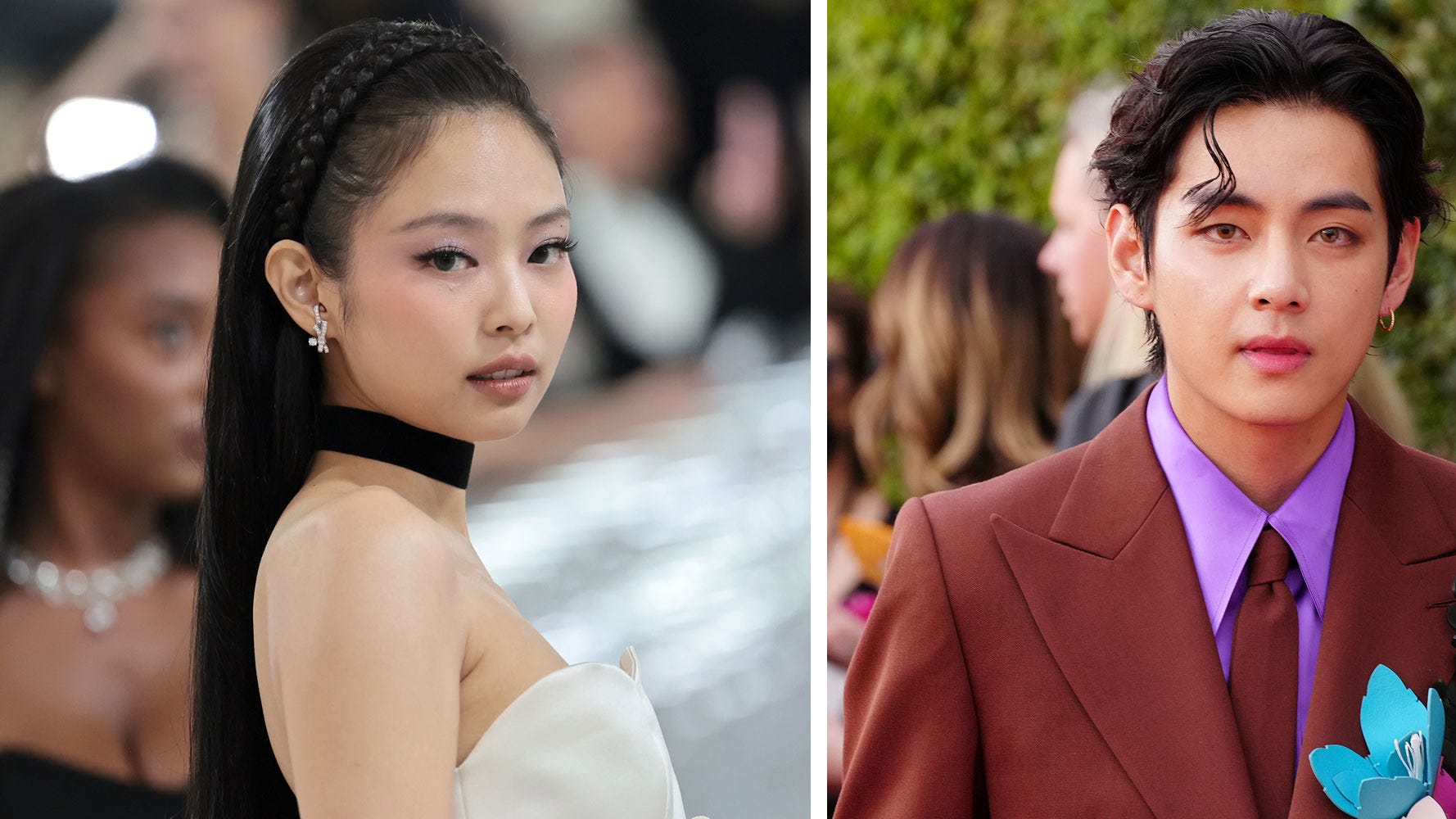

The Spark in the Powder Keg
In the meticulously managed universe of K-Pop, where narratives are often curated with surgical precision, it is the unscripted, human moments that hold the most power—and the most potential for chaos. This week, the industry was reminded of that potent truth, as a single, warm interaction between Jungkook and his fans at a casual send-off event became the unlikely catalyst that reignited a long-smoldering rumor mill. The subject? The persistently speculated, never-confirmed romantic link between his bandmate, BTS's V (Kim Taehyung), and BLACKPINK's Jennie (Kim Jennie). What began as a wave of misplaced criticism towards Jungkook for his genuine fan service quickly mutated into a sprawling, toxic discourse, pulling two of the world's biggest pop idols back into a vortex of invasive speculation and highlighting the exhausting, often illogical pressures faced by idols at their career peak. This isn't just another dating rumor; it's a case study in how modern fandom, armed with forensic-level scrutiny and interconnected social media narratives, can connect dots that may not exist, creating storms that even the mightiest agencies struggle to calm.
A Rumor Forged in Fire: The V & Jennie Timeline
To understand the weight of the current situation, one must revisit the origins of the "Taennie" rumor, a saga that has unfolded like a public thriller over several years. Unlike many idol dating rumors that flare and fade, the speculation surrounding V and Jennie has demonstrated remarkable endurance, fueled by a combination of ambiguous evidence, immense star power, and a fandom culture that treats coincidence as conspiracy.
The Initial Ignition
The whispers began in earnest in 2022, following a now-infamous series of social media clues that fans pieced together with detective-like fervor. From perceived similar travel itineraries and matching accessory choices to the ultimate flashpoint: an alleged private Instagram account, followed by both stars, that leaked intimate photos. While the legitimacy of that leak was fiercely debated and both HYBE and YG Entertainment maintained their standard "private lives" stance, the seed was irrevocably planted. The pairing made a perverse kind of sense to the public imagination: the charismatic, artistic "It Boy" of BTS and the iconic, trendsetting "Human Chanel" of BLACKPINK. They represented a collision of two K-Pop titans, a narrative almost too compelling to ignore.
A History of Silence and Speculation
What followed was a masterclass in evasion and ambiguity. Neither party ever directly addressed the rumors. Instead, their actions—or lack thereof—were parsed for meaning. Joint appearances at industry events, like the 2022 Grammy Awards after-party, were dissected frame-by-frame. Solo activities were scrutinized for hidden messages. This strategic silence, while standard operating procedure for agencies protecting their top assets, created a vacuum. And as we've seen time and again in K-Pop, nature—and fandom—abhors a vacuum. The space filled with theories, "proof" videos, and a constant, low-grade hum of speculation that never fully dissipated, even as both idols focused on solo projects during their groups' respective periods of activity adjustment. For a deeper look at how a single interaction can spiral, our analysis of a past Jungkook moment proves illuminating.
The Jungkook Catalyst: A "Simple" Act of Appreciation
The latest chapter began not with a clandestine photo, but with a very public act of affection. As Jungkook prepared to depart South Korea for an overseas schedule, he was greeted by a crowd of devoted ARMY at the airport. In a gesture that would typically be celebrated as peak idol-fan bonding, Jungkook took significant time to walk alongside the barriers, accepting letters, making eye contact, and offering his trademark bright, grateful smiles. He was present, engaged, and emotionally available to his fans—qualities that are often the bedrock of an idol's success.
"The criticism aimed at Jungkook was, at its core, a profound misunderstanding of the artist-fan contract. He was being punished for doing exactly what fans claim to want: authentic connection. It was a no-win scenario fabricated from the debris of other people's rumors." — Park Min-ji, Culture Critic for The Seoul Daily
The Misplaced Backlash
Almost immediately, a segment of online commentators—notably from certain international communities—began to critique his actions. The accusations were paradoxical: some claimed he was "too eager" or "performing" for the cameras, while others, in a more sinister twist, suggested his warm demeanor was a deliberate "distraction" or "smokescreen" designed to draw attention away from the renewed chatter about V. This latter theory gained traction in dark corners of social media, where it was posited that Jungkook, as V's close bandmate and friend, was engaging in a coordinated media play. The reality, as any level-headed observer could see, was far simpler: a young man thanking the people who support him. Yet, the narrative was twisted to fit a pre-existing saga, demonstrating how idols can become collateral damage in rumors that don't directly involve them.
Connecting the Unconnected
From there, the leap was short but dramatic. The heightened scrutiny on Jungkook's personal actions created a feedback loop. "If they're talking about Jungkook this much, what is V hiding?" the logic seemed to go. Old "evidence" was recirculated. New, grainy photos of V going about his daily life were analyzed for hints of a relationship status. Jennie's own activities with her group BLACKPINK were similarly mined. The renewed focus became a self-fulfilling prophecy, with Jungkook's innocent moment acting as the kindling that set the old rumor ablaze once more. It was a classic example of the "butterfly effect" in celebrity culture, where a flap of wings in one corner of the K-Pop world caused a hurricane in another.
Fandom Fractures: The ARMY-BLINK Dynamic in the Crossfire
The fan reaction to this renewed storm has been a complex tapestry of anger, exhaustion, defense, and division. It has laid bare the sometimes-fraught relationship between two of the planet's most powerful fandoms: ARMY and BLINKs.

- The Protective Brigade: A large contingent of ARMY mobilized to defend Jungkook, flooding social media with tags praising his fan love and condemning the "baseless" criticism. Their argument was clear: attacking an idol for being good to fans sets a dangerous precedent that hurts the entire industry.
- The Rumor Denouncers: Across both fandoms, many fans expressed loud frustration at the resurgence of the V-Jennie speculation. They view it as a tired, invasive narrative that disrespects the artists' privacy and undermines their individual careers and the group dynamics of both BTS and BLACKPINK.
- The Toxic Minority: Unfortunately, the event also unleashed a wave of toxic behavior. "Shippers" of the Taennie pairing clashed with "anti-shippers." Some solo stans used the moment to throw accusations at the other idol, perpetuating a cycle of blame. The conversation, in its worst moments, strayed far from Jungkook's original act into a messy, personal battleground.
- The Fatigue Factor: Perhaps the most common sentiment observed is simple exhaustion. As one fan posted on our News page forums: "We've been through this before. Can't we just let Tae and Jennie breathe, and let Jungkook thank his fans in peace? This constant detective work is draining for everyone."
Industry Under a Microscope: The Unsustainable Pressure Cooker
This incident transcends gossip. It serves as a stark indicator of the systemic pressures and evolving fan-idol relationship in fourth-generation and beyond K-Pop, impacting even veterans like BTS and BLACKPINK.
The Impossibility of "Right" Behavior
Jungkook's experience highlights a critical dilemma for idols: there is no universally correct way to behave. Had he kept his head down and rushed through the airport, he could have been criticized for being cold or arrogant. By being open and engaging, he was accused of ulterior motives. This "damned if you do, damned if you don't" reality creates immense psychological strain, forcing idols to calculate the potential fallout of every smile, wave, or post. It echoes the pressures discussed in our piece on the raw honesty of idols facing commercial challenges.
Agencies in a Bind
The non-response from HYBE and YG is a calculated, if frustrating, strategy. A denial could be seen as confirming the rumor's significance or sparking demands for more proof. A confirmation is, of course, off the table for artists of this magnitude, whose brands are intricately tied to personal mystique. This leaves agencies to manage the fallout indirectly—perhaps through increased security, tighter control over schedules, or the strategic release of unrelated, positive content. It's a relentless game of whack-a-mole with rumors. The internal strain such rumors can place on an artist-agency relationship is not to be underestimated, a topic we explored in depth regarding perceived tensions between BTS and HYBE.
The Commodification of Privacy
At its heart, this saga is about a fundamental conflict: the idol as a consumable product versus the idol as a private human. Fans invest emotionally and financially, and some feel this grants them a stake in the idol's personal narrative. This expectation, amplified by social media's 24/7 access, turns private life into public domain. The V & Jennie rumor, persistent and unproven, is the ultimate manifestation of this—a story so compelling that the public refuses to let it go, regardless of the human cost to the individuals involved.
Looking Ahead: Navigating the Uncharted Territory
So, where does this leave us? The immediate fallout will likely be a period of heightened caution. Fans can expect even more controlled public appearances from all parties involved. V, Jennie, and Jungkook may retreat further behind the professional walls of official schedules, music releases, and tightly managed content. For BTS, as they navigate their military service era and plan for a 2025 reunion, maintaining member solidarity and individual mental peace is paramount. This incident is an unwelcome distraction from that mission.
In the longer term, this event is another data point in the industry's ongoing struggle to redefine boundaries. Will there be a shift toward a slightly more transparent model, as some Western artists employ? Or will the industry double down on secrecy, creating even more distance between idol and fan? The recent, intense backlash against Jungkook for a positive act suggests a painful truth: a segment of the audience may not actually be prepared for the authenticity they claim to desire. The path forward requires a collective recalibration—from agencies in how they prepare their artists for these invasive cycles, from media in how they report on unconfirmed speculation, and from fans in managing expectations and respecting the line between supporter and claimant.
The final word, for now, belongs to the silence at the center of the storm. Until V, Jennie, or their agencies choose to speak—a decision entirely their own—the rumors will continue to swirl, fed by moments both connected and utterly disconnected. The hope, within the industry and among rational fans, is that the focus can return to what truly matters: the music and artistry that brought these individuals to global fame in the first place. You can explore the profiles and latest works of all artists involved on our dedicated Artists page. For now, the world watches, waits, and hopefully learns from the chaos that can erupt when a simple "thank you" gets lost in translation.