
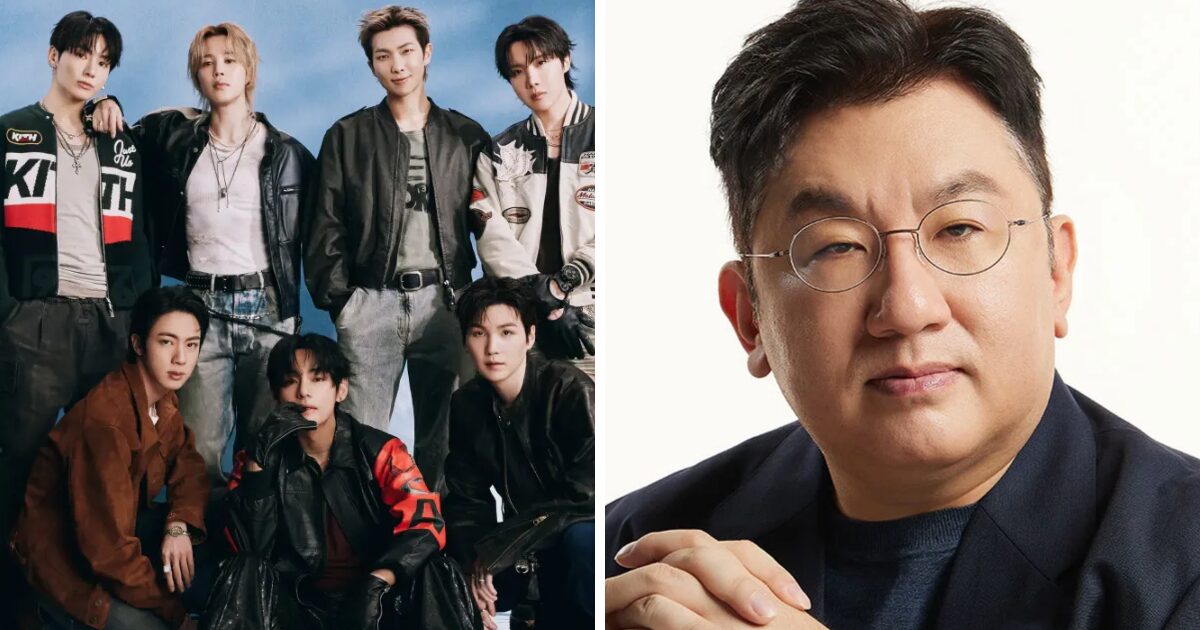

The air in the K-Pop universe, typically buzzing with the predictable rhythms of comebacks and fan wars, has grown thick with a tension so profound it threatens to reshape its very gravitational center. At the epicenter of this seismic shift is the relationship between global superstars BTS and the entertainment behemoth they built, HYBE. What was once heralded as the ultimate success story of mutual growth and unwavering trust has, in recent months, shown cracks so significant they can no longer be ignored. Whispers in industry corridors, cryptic social media silences, and a series of strategic missteps have coalesced into one viral, daunting question: Is it time for BTS to leave HYBE?
The Forging of a Dynasty: From Rags to Riches Together
To understand the magnitude of the current strain, one must first revisit the foundational mythos of BTS and HYBE, formerly Big Hit Entertainment. Their story is the bedrock of modern K-Pop legend. Debuting in 2013 under a small, nearly bankrupt company led by producer Bang Si-hyuk, BTS were the quintessential underdogs. The company's survival was intrinsically tied to the group's success, fostering an environment of intense collaboration and familial rhetoric. HYBE didn't just manage BTS; they grew symbiotically. Every record BTS broke fueled HYBE's expansion—from acquiring other labels like Source Music and Pledis Entertainment to its landmark IPO in 2020.
This period was characterized by a powerful narrative of "us against the world." Bang Si-hyuk was often portrayed not as a distant CEO, but as a mentor and creative partner. The members, particularly leader RM, frequently spoke about their direct involvement in creative direction and their trust in the company's support for their artistic vision, even when it defied conventional K-Pop formulas. This trust was the cornerstone, allowing them to explore themes of mental health, societal pressure, and self-love in a way that resonated on a global scale.
"We built this together. The company listened to us when we were nobody. That debt, that history, isn't something you can easily walk away from," an anonymous industry insider familiar with both parties told K-Beats. "But the company they built with their sweat is not the same entity they're dealing with today. It's a publicly traded conglomerate with shareholders and a dozen other groups to manage. The priorities have inevitably shifted."
The Cracks in the Monolith: A Timeline of Escalating Tensions
The current crisis is not the result of a single event, but a slow-burning accumulation of grievances that have come to a head. Insiders point to several key inflection points that have eroded the once-solid foundation.
The Enlistment Era and the "Chapter 2" Pivot
The mandatory military enlistment of the members, beginning with Jin in late 2022, marked a necessary pause for the group but a precarious moment for HYBE as a publicly traded company. HYBE's response was the official declaration of "Chapter 2," focusing on individual activities. While this yielded successful solo projects like Jungkook's "GOLDEN" and V's "Layover," a sense of strategic dissonance emerged. Fans observed what they perceived as a lack of cohesive, long-term vision for the group's identity during this hiatus, with individual promotions sometimes feeling rushed or mismatched to the artist's core fanbase.
Corporate Overreach and Brand Dilution
Perhaps the most vocal fan complaints center on HYBE's aggressive monetization and brand extensions, which many ARMYs feel commodify BTS's legacy. The controversial Weverse platform issues, the perceived low-quality merchandise, and the expansion into non-music ventures like the HYBE Insight museum and webtoons have led to accusations that HYBE is prioritizing profit over the artists' dignity and the fans' experience. The sentiment is that BTS's brand is being stretched too thin to prop up HYBE's entire corporate ecosystem.
This mirrors a broader industry pattern where an artist's personal life becomes corporate collateral, as seen in the frenzy surrounding The Social Media Avalanche: How a Watch, a Photobooth, and a Like Sparked a Cross-Company K-Pop Love Triangle Frenzy. When the line between artist and asset blurs, resentment builds.
The Silence Speaks Volumes
Most telling has been the change in communication. Where once BTS members would freely express gratitude and solidarity with HYBE, their public mentions of the company have grown sparse and notably generic. Conversely, moments of apparent friction have surfaced. Suga's pointed comments on such platforms as "Suchwita" about artistic control, and RM's like of social media posts critical of HYBE's business practices (later explained as "accidental"), have been magnified by a fandom hyper-attuned to subtext. The infamous "It seems like they can't..." quote, attributed to unnamed staff, has become a haunting mantra summarizing this era of strained relations.

ARMY in Anguish: A Fandom Divided and Speculating
The reaction from ARMY, BTS's global fandom, has been a torrent of anxiety, analysis, and anger. Social media platforms are battlegrounds of interpretation. One faction, the "Protect BTS" contingent, argues that HYBE has become a liability. They point to perceived inadequate security for the members, mismanagement of solo projects, and a failure to protect BTS's artistic legacy. For them, the idea of BTS establishing their own independent label, akin to what senior artists like Lee Hi have navigated (as detailed in our report on Against the Melody), is a dream of liberation.
The other faction, the "Pragmatists," fears the logistical nightmare and immense risk of separation. They argue that HYBE's vast resources, global distribution networks, and legal teams are indispensable, especially as BTS members navigate their military service and plan a future reunion. They warn that going independent could leave the group vulnerable in an industry riddled with complex royalties, licensing, and promotion challenges.
"#HYBEDontTouchBTS was trending for a reason," says Park Ji-won, a long-time ARMY and administrator of a major fan forum. "The emotion is raw. We feel every misstep because we've watched this relationship for over a decade. We celebrated when HYBE succeeded because it meant success for BTS. Now, when HYBE stumbles, it feels like BTS is the one paying the price. The trust is broken."
The divide is deep, sparking endless threads analyzing contract end dates (the group's exclusive contract is believed to be up for renewal around 2025-2026), copyright ownership of the BTS name and music catalog, and the feasibility of a partial or complete split. For more on how fans dissect every clue, explore our analysis in our News page.
The Industry Lens: Implications of a Potential Schism
Beyond the immediate shockwaves, a BTS departure from HYBE would represent an existential event for the K-Pop industry. The implications are staggering.
Financial Earthquake for HYBE
BTS, despite their hiatus, reportedly still contribute a significant portion of HYBE's revenue and an immeasurable amount of its market valuation and prestige. Their departure would trigger an immediate and severe stock crash, destabilize investor confidence, and force a complete corporate restructuring. It would call into question the viability of HYBE's multi-label system, which was fundamentally built on the capital generated by BTS. The crisis would dwarf current management challenges at subsidiaries, such as those examined in ENHYPEN in Flux.
A Paradigm Shift in Artist-Label Power Dynamics
If the industry's most valuable group can walk away, it empowers every other top-tier artist to renegotiate from a position of immense strength. The traditional label-as-absolute-authority model would be irrevocably damaged. It would signal that even the most "company-built" idols hold ultimate power if their brand transcends the corporation itself. This could accelerate the trend of senior artists establishing their own agencies, fundamentally changing the business landscape.
The Global Repercussions
Internationally, BTS is synonymous with HYBE and, by extension, South Korea's cultural export strategy. A messy, public divorce could tarnish the polished image of the "K-Pop system" that has been sold to the world. It would force global partners in music, fashion, and technology to choose sides, potentially fracturing the integrated global network HYBE has spent years building.
This situation underscores a harsh reality of the industry, where scrutiny is relentless, whether for musical giants or newly debuted groups facing the visual standards of a new generation, as seen with AURORA Faces Unprecedented Visual Scrutiny.
What Lies Ahead: Reconciliation, Revolution, or Stalemate?
Predicting the outcome is akin to reading tea leaves in a hurricane. Several paths forward exist, each with profound consequences.
The most likely scenario in the short term is a high-stakes renegotiation. As the group's contract renewal window approaches, BTS holds unprecedented leverage. The members could demand—and likely receive—a revolutionary new deal: a dramatically higher profit share, complete creative autonomy, their own dedicated label within HYBE with independent staff, and ironclad guarantees over the use of their intellectual property. This would be a "stay but on our terms" outcome, restructuring the relationship from one of paternalistic management to a true partnership of equals.
The complete independence scenario, while riskier, cannot be ruled out. The members have the capital, the experience, and the global connections to potentially form their own entity. This would be the cleanest break but also the most complex, involving negotiations for the BTS catalog and brand that would make headlines for months.
A third, more ominous possibility is a legal stalemate. If tensions cannot be resolved amicably, the situation could devolve into private legal battles over contracts, royalties, and trademarks, casting a long shadow over BTS's planned 2025 reunion activities. This would be the worst-case scenario for all, harming the artists' mental well-being, the company's stability, and the fandom's spirit.
Ultimately, the heart of the matter is not just business, but legacy and respect. BTS are no longer the trainees who needed HYBE to survive. They are global icons who need a partner that can match their vision and protect their heritage. HYBE, for its part, must decide if it can transition from being the architect of BTS's success to being the steward of it. The coming months will determine if this historic partnership can be mended, or if K-Pop is about to witness its most dramatic and consequential divorce. For continuous updates on this and all stories shaping the industry, follow our coverage on our Charts page and beyond. The world is watching, holding its breath for the next chapter in a story we all thought we knew.