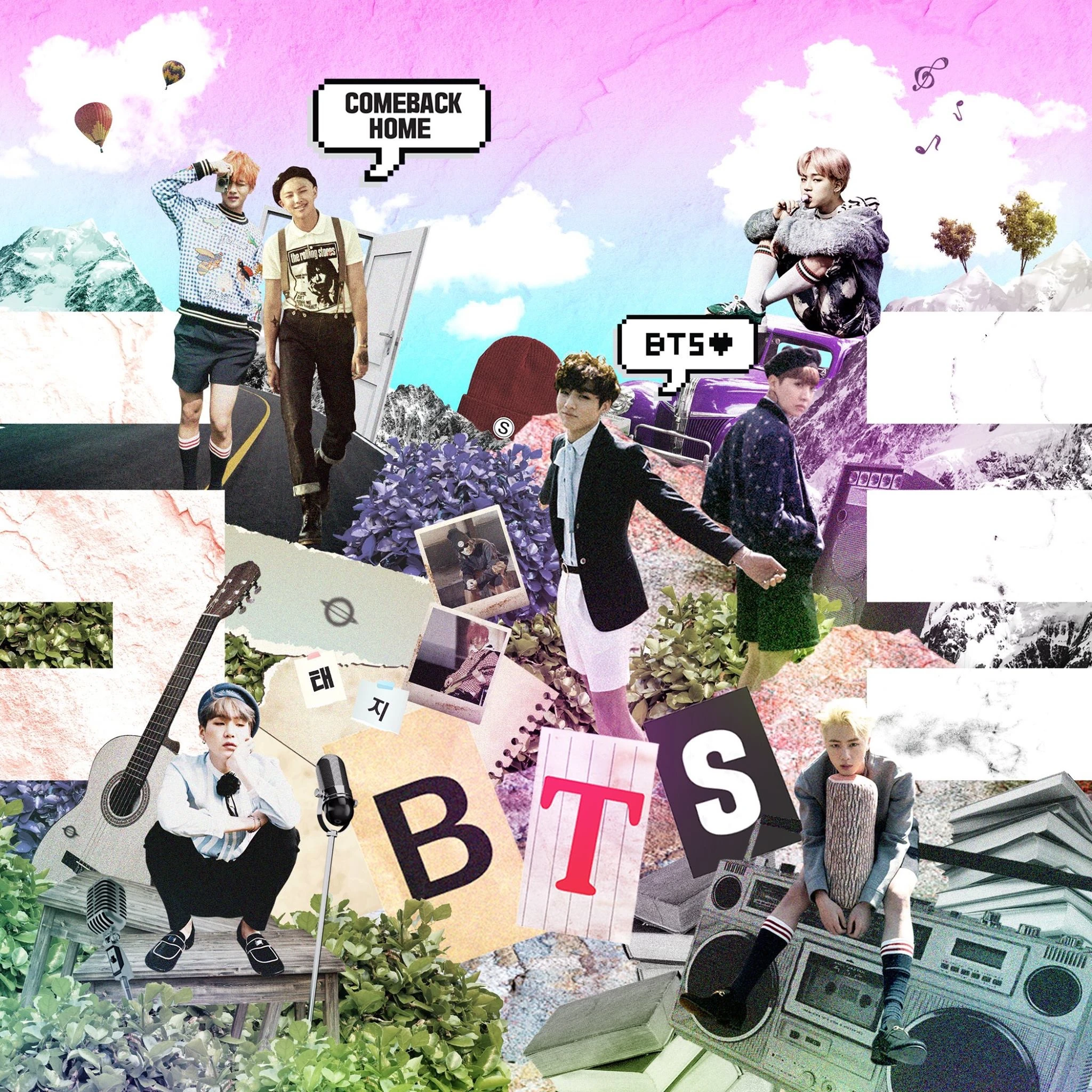
The digital halls of K-Pop fandom are once again echoing with passionate debate, but this time, the question is foundational, monumental, and deeply personal to millions: What is BTS's greatest album? Following a new fan-driven poll that has set social media ablaze, the conversation has moved beyond title tracks and music show wins to a profound examination of artistic legacy. Is it the raw, emotional intensity of ‘The Most Beautiful Moment in Life’ series? The polished, paradigm-shifting confidence of ‘Love Yourself: Tear’? Or the mature, introspective culmination of ‘Map of the Soul: 7’? This isn't just about picking a favorite; it's a collective reflection on a decade-long journey that redefined global pop.
A Sonic Odyssey: The Discography That Built a Universe
To understand the weight of this debate, one must first appreciate the unparalleled artistic evolution BTS has undertaken. Their discography is not merely a collection of songs but a sprawling, interconnected narrative—a Bangtan Universe in audio form. It chronicles the journey from anxious teenagers shouting against societal pressures to self-assured artists grappling with the dizzying heights of fame and the universal search for love and self-acceptance.
The Formative Years: Roots of Rebellion and Romance
Their early work, like ‘2 Cool 4 Skool’ and ‘Skool Luv Affair,’ established their identity as "hip-hop idols" with something to say. Tracks like "No More Dream" and "N.O" were direct challenges to rigid educational and social systems, resonating deeply with a generation feeling the same pressures. These albums were raw, both in production and emotion, laying the groundwork for their "underdog" narrative. As they moved into ‘The Most Beautiful Moment in Life’ series (2015-2016), the soundscape expanded. Incorporating rock, synth-pop, and R&B, they began exploring youth's bittersweet duality—the simultaneous joy and terror of growing up. This era birthed anthems like "I NEED U," "Run," and "Young Forever," creating an emotional language with ARMY that persists today.
The Global Breakthrough: Love, Recognition, and Reflection
The ‘Wings’ and ‘You Never Walk Alone’ era (2016-2017) marked a stylistic and conceptual leap. Drawing inspiration from Hermann Hesse's Demian, the albums delved into temptation, sin, and self-discovery through stunning solo tracks and complex, orchestral-infused production. It was a declaration of ambition, culminating in their first daesang sweep. This momentum catapulted them into the ‘Love Yourself’ trilogy (2017-2018), a meticulously crafted philosophical arc created in partnership with UNESCO. From the euphoric ‘Her’ to the synth-heavy, heartbroken ‘Tear’ and the healing resolution of ‘Answer,’ this series provided the linguistic and thematic backbone for their historic UN speeches and unprecedented global chart dominance.
"Our albums are like chapters in a diary we share with ARMY. Each one captures exactly where we were, what we feared, and what we dreamed of at that time. Choosing one would be like choosing a single memory to define a lifetime of friendship." — RM, in a 2020 interview.
The Poll That Divided (and United) a Fandom
The recent poll, sparking the current debate, presents a deceptively simple question with impossibly complex answers. While it mentions specific albums like ‘You Never Walk Alone’, the conversation among fans has exploded to encompass every cornerstone of their career. Social media platforms are flooded with meticulously designed infographics, lyrical analyses, and personal testimonies advocating for different eras.
The Case for the Concept Albums
Many long-time ARMYs are staunch defenders of the narrative-driven works. Proponents of ‘The Most Beautiful Moment in Life: Young Forever’ argue it represents the perfect fusion of their early hunger and their maturing musicality, a "golden age" where Bangtan lore and chart success found perfect harmony. Advocates for ‘Love Yourself: Tear’ highlight its cohesive darkness and experimental bravery, with tracks like the Grammy-nominated "Fake Love" and the disco-tinged "Paradise" showcasing a group at the peak of its creative confidence. "It's their magnum opus," one fan wrote on Weverse. "It's not just a collection of songs; it's a full emotional journey from denial to despair, with zero skips."
The Argument for Artistic Maturity & Legacy
Other fans point to later works as the undeniable peak. ‘Map of the Soul: 7’ (2020) is frequently cited for its profound depth, weaving Carl Jung's theories with the group's own personal and public history. Songs like "Black Swan," "Interlude: Shadow," and "UGH!" are held up as masterclasses in artistic introspection. Then there is ‘Proof’ (2022), the anthology album that serves as a deliberate capstone on their first chapter. For many, its curation—three new tracks looking back, alongside decades-spanning demos and hits—makes it the definitive choice, as it literally contains the proof of their evolution. This debate often intersects with discussions around their English singles and the ‘BE’ album, born from the pandemic, which some fans cherish for its intimate, raw, and comfort-focused sound.
The poll has also, interestingly, resurfaced discussions about how solo endeavors inform the group's legacy. For instance, the recent media storm detailed in our article "The Butterfly Effect: How Jungkook's Fan Event Sparked A Renewed Firestorm in the Enduring V & Jennie Dating Saga," reminds us that individual members' journeys now color how fans revisit group eras, adding another layer of personal connection to the music.

ARMY's Verdict: A Tapestry of Personal Connection
Scrolling through the fan response is to witness a masterclass in music criticism driven by pure, unadulterated love. The "best" album is rarely chosen for its commercial stats alone, though records are proudly cited. Instead, the reasoning is overwhelmingly emotional and autobiographical.
- The "Soundtrack to My Life" Voters: "‘HYYH: Young Forever’ came out when I was graduating high school. It’s not just BTS’s album; it’s the background music to my most formative memories," shares @Borahaeforce_ on Twitter.
- The "Musical Purists": "The production complexity, lyrical themes, and vocal performances on ‘Map of the Soul: 7’ are untouchable. It’s their most sophisticated work artistically," argues a lengthy Reddit post on the r/bangtan subreddit.
- The "Comfort & Healing" Cohort: Many newer ARMYs discovered the group during the pandemic, making ‘BE’ a pivotal touchstone. "Dynamite brought me in, but ‘Life Goes On’ and ‘BE’ healed me. That album feels like a warm hug, and in my book, that makes it the best," comments a fan on TikTok.
This poll has functioned less as a competition and more as a communal storytelling exercise. Each album acts as a timestamp, and fans are sharing the moments of their lives that these sounds underscore. It reinforces that BTS's legacy is as much about the community built around the music as the music itself. For more on how fandoms mobilize and interact in the digital space, explore our dedicated K-Pop News hub.
The Industry Perspective: Redefining the Album's Role in K-Pop
From an industry standpoint, this passionate public dissection of a full discography is a testament to a seismic shift that BTS helped engineer. In a market often driven by single-title tracks and high-concept music videos, BTS forced the album back into the spotlight as a complete, essential artistic statement.
"They restored the album format's prestige in the idol industry," says a veteran A&R executive at a rival agency, speaking on condition of anonymity. "Before, an album was often a vehicle for one or two promoted tracks and filler. BTS, especially from ‘Wings’ onward, made every track an event, with connected visuals, lore, and promotional content. They trained their audience to listen to the whole thing, to seek the narrative. This poll is the direct result of that."
This album-centric success has raised the bar for the entire industry, influencing how groups plan comebacks and construct their artistic identities. The commercial viability of deep-cut tracks from BTS albums on streaming platforms demonstrates a engaged listener base, a metric now coveted by labels. Their success story is inextricably linked to this holistic approach, a fact reflected in the recent "Power Plays & Paradigm Shifts: Inside the March Brand Reputation Rankings That Redefined the K-Pop Hierarchy," where individual BTS members continue to dominate, partly due to the sustained interest in their collective and solo catalogs.
The Anthology as a Cultural Artifact
The inclusion of ‘Proof’ in the debate is particularly telling. Anthology albums are often seen as contractual obligations or greatest-hits packages. Yet, BTS's ‘Proof’ was framed and received as a vital piece of their history—a self-curated museum exhibit of their journey. Its success proves that their audience values context and legacy as much as new material. This has implications for how veteran acts may choose to commemorate their careers moving forward.
Chapter Next: Legacy in Motion During an Era of New Beginnings
This heated debate arrives at a poignant moment: during the group's dedicated period for individual military service and solo exploration. The question of "the best album" is, in essence, a way for ARMY to navigate this transitional phase, to celebrate and solidify the past while eagerly awaiting the future. It is an act of collective memory.
The members themselves are actively adding chapters to this legacy. From Jin's viral astronaut ballad to RM's deeply personal indie collaborations, from j-hope's headlining festival sets to Jungkook's global pop domination, each solo release provides new lenses through which to re-interpret the group's prior work. The themes they explore individually—be it V's jazz-infused soul-searching or SUGA's raw confrontation with fame and mental health—echo and expand upon foundations laid in their group albums.
When BTS eventually reconvenes, the album they create will be informed by these individual journeys, promising a new synthesis of sounds and stories. The "best album," then, may still be unwritten. But until then, debates like this one serve a crucial purpose: they keep the shared history alive, dynamic, and passionately loved. They confirm that each album, from the gritty beginnings to the polished pinnacles, has earned its defenders and holds an irreplaceable spot in the constellation that is BTS's legacy. For fans and industry watchers alike, exploring the full spectrum of this artistry is made easier through resources like our comprehensive Artists database.
Ultimately, the poll may not crown a single, definitive winner. But in the passionate exchange of memories, analyses, and declarations of love for every era, it has already achieved something greater: a vibrant, living tribute to a discography that changed the world, one album, and one heart, at a time.