
Following BTS's historic ARIRANG concert, a viral clip alleging inconsistent live vocals has ignited a firestorm, exposing the intense, often contradictory, scrutiny faced by top idols. This analysis moves beyond the surface-level debate to examine the evidence's credibility, the evolving technical standards of live K-Pop, the strategic role of ARMY, and what this moment signifies for BTS and the industry at large. The controversy is less about a single performance and more a symptom of the immense pressure on artists navigating unprecedented global stages.
- What Exactly Happened at the ARIRANG Concert?
- Is the "Smoking Gun" Clip Credible Evidence?
- Why Is "Live Singing" Such a Contentious Standard in K-Pop?
- How Did HYBE and ARMY Respond? A Study in Modern Crisis Management
- What Does This Incident Mean for BTS's Artistic Legacy?
- FAQ: Your Burning Questions Answered
What Exactly Happened at the ARIRANG Concert?
The ARIRANG concert was a landmark event, billed as a celebration of Korean culture and BTS's journey. It represented a peak moment of national pride and artistic achievement for the group. The production was immense, featuring complex choreography, live orchestration, and high-concept staging designed for a global broadcast audience.
The Controversial Moment: A Timeline
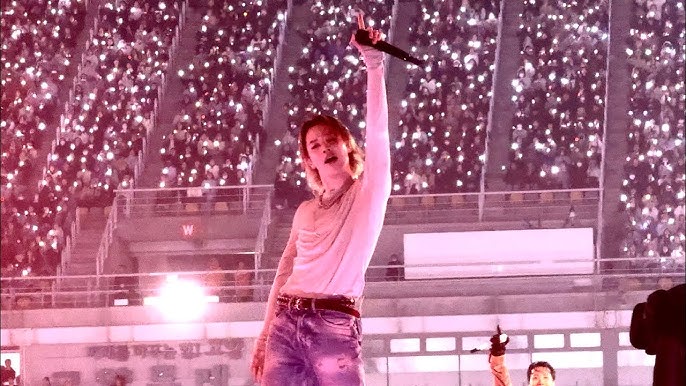
During a high-energy segment, a fan-focus camera clip from a specific angle began circulating. The clip, mere seconds long, appeared to show a discrepancy between the audio of a powerfully sustained note and the visible physical exertion of the member singing it. Within hours, the clip was isolated, slowed down, and amplified across social media platforms and online communities.
Immediate Fan Reactions: A House Divided
The ARMY fandom fractured along familiar fault lines. One segment declared it undeniable proof of heavy backing track reliance or post-production. Another segment mounted a vigorous defense, citing:
- Audio Sync Issues: Potential broadcast lag between video and audio feeds.
- Selective Editing: The clip being a fragment devoid of the full performance context.
- Pre-Recorded Safety Tracks: A standard industry practice for complex live broadcasts to ensure seamless viewing.
This division mirrors past industry debates, such as the scrutiny over stage presence versus vocal stability discussed in our analysis of KATSEYE's Coachella sound check strategy.
Is the "Smoking Gun" Clip Credible Evidence?
In the digital age, a clip is not proof; it's a starting point for forensics. The credibility of such evidence hinges on technical understanding and context, which are often the first casualties in a viral storm.
The Technical Pitfalls of Fan-Captured Video
Smartphone microphones and compression algorithms are not designed for concert acoustics. They can distort sound, flatten dynamics, and create artifacts that misrepresent the actual auditory event in the venue. A note that sounded supported live can appear "separated" on a poor-quality recording.
The "Lipsync" vs. "Live AR" vs. "LAR" Conundrum
The public's understanding of live performance technology is outdated. We must distinguish between:

- Pure Lip-syncing: Miming to a fully pre-recorded studio track. Live AR (Additional Recording): A live vocal reinforced by a pre-recorded guide vocal track at a similar volume. This is common for stability during intense choreography.
- Live with Backing Track (LAR): The idol sings live, but their voice is supported by a quieter backing track of their own vocals for harmony and fill. The live voice is the dominant sound.
The controversy often stems from an inability to audibly discern which of these techniques is being employed in a given moment.
Comparative Analysis: Industry-Wide Performance Strategies
This is not an isolated incident. The table below contextualizes BTS's situation within broader industry patterns and responses to similar scrutiny.
Artist/Group Incident Context Primary Fan/Public Argument Outcome & Industry Takeaway BTS (ARIRANG) High-stakes national broadcast, complex choreography. Debate over Live AR usage vs. technical glitch. Focus on legacy pressure. Ongoing. Highlights the scrutiny at the absolute top tier and the role of broadcast tech. aespa (Early Debuts) Music shows focusing on difficult live choreo. Criticism over heavy backing tracks for complex vocal parts. SM Entertainment emphasized "live presence" over pure vocal output, shifting fan expectations for performance-genre groups. BLACKPINK (Coachella) Major festival, global audience. Praise for audible live vocals despite choreography, setting a benchmark. Raised the bar for what international audiences expect from top-tier K-Pop live shows. ATEEZ (Kingdom) Competition show requiring extreme performance. Transparent use of pre-records for specific stunt moments, with clear live singing elsewhere. Demonstrated that strategic, transparent use of tech can be accepted if the overall live effort is undeniable.Why Is "Live Singing" Such a Contentious Standard in K-Pop?
The demand for "perfect" live singing in K-Pop clashes with the genre's core tenets of synchronized dance and visual spectacle. This creates an inherent performance paradox that few groups consistently solve.
The "Product" vs. "Artist" Tension
K-Pop is built on the concept of an idol as a multifaceted product: a singer, dancer, performer, and personality. The weight given to each facet varies. For some groups, dance precision is the primary product; for others, it's vocal prowess. BTS, especially in their earlier years, built their reputation on raw, emotionally charged live performance. As their choreography and production scale grew, maintaining that same vocal rawness became a monumental physical challenge.
The expectation isn't just to sing live—it's to perform a stadium-level dance routine while delivering studio-quality vocals. It's a superhuman standard that reflects the industry's relentless drive for perfection.
The Role of Broadcast Technology and Post-Production
Major broadcasts like ARIRANG use sophisticated sound mixing. Engineers often blend live mics, backing tracks, and sometimes apply gentle, real-time pitch correction for a "polished" broadcast sound. This is an industry norm worldwide, not a K-Pop secret. What fans hear on TV is a curated audio product, different from the raw sound in the stadium. This technological layer fuels speculation when the visual and auditory cues seem mismatched.
The Generational Shift in Audience Expectation
Second-generation K-Pop fans often prized visible, breathless live effort. The current landscape, amplified by TikTok and short clips, sometimes prioritizes a flawless aesthetic moment over evidence of the struggle. This shift in consumption dovetails with a similar obsession with visual perfection, a topic we explored in "The 'Pre-Debut Face' Obsession". The demand is for a perfect product, even if the means to achieve it involve technological support.
How Did HYBE and ARMY Respond? A Study in Modern Crisis Management
In the face of viral controversy, the actions (and inactions) of the agency and the fandom are a masterclass in modern public relations within the K-Pop ecosystem.
HYBE's Strategic Silence: Reading Between the Lines
HYBE issued no official statement. This silence is itself a powerful message. A direct denial gives the allegation weight and invites further technical dissection. Acknowledgment of standard practices (like Live AR) might be misconstrued as an admission of guilt by a public that doesn't understand the terminology. Silence allows the fandom's defense to dominate the narrative and lets the news cycle move on, protected by the group's immense goodwill.
ARMY's Multi-Front Defense: Organization as a Weapon
ARMY's response was not monolithic but highly organized. Different segments executed a coordinated strategy:
- Technical Counter-Analysis: Skilled fans created their own audio/video breakdowns highlighting sync issues and providing full performance clips for context.
- Flooding the Timeline: Mass-sharing of other, unedited clips from the same concert showcasing clear live vocals and stable singing.
- Narrative Reframing: Shifting the conversation to BTS's overall legacy of live performance, their current enlistment-era challenges, and the concert's cultural significance.
This mirrors the sophisticated, evidence-oriented fan responses seen in cases like "The Haechan Incident," where fans meticulously pick apart the credibility of so-called "proof."
The "Goodwill Bank" Principle
BTS has deposited decades of credibility into a "goodwill bank" through countless documented live performances, including iconic unstable yet emotional moments. For the core public and media, this incident is viewed through that lens. A group with a weaker live reputation would have faced more severe and lasting damage. The controversy tests the depth of that bank but, for now, does not deplete it.
What Does This Incident Mean for BTS's Artistic Legacy?
Legacies are not defined by single moments but by the arcs they reside within. This controversy serves as a critical inflection point, revealing more about BTS's current position than undermining their past.
A Sign of Transition, Not Decline
The members are in their late 20s and 30s, navigating military enlistment. Their performance style has logically evolved from the relentless, raw energy of their youth to a more controlled, theatrically mature presentation. The ARIRANG concert was a state-level production, not a club tour. The pressure to deliver a flawless national representation is immense, potentially incentivizing a risk-averse, highly polished technical approach over pure vocal risk-taking.
The Shadow of Indefinite Hiatus
With group activities on pause, every performance is magnified. It becomes a standalone data point for critics and a treasured relic for fans. This scarcity amplifies the stakes of every note, making perceived imperfections more vulnerable to attack. The pressure to create "perfect" archival content is a unique psychological burden, similar to the intense scrutiny faced by idols in high-profile personal transitions, as examined in our analysis of an A-list actor-idol divorce.
Reinforcing the Need for Nuanced Discourse
Ultimately, this moment may push the broader K-Pop conversation toward a more mature understanding of live performance. It exposes the need for a lexicon that goes beyond "live vs. lipsync" to acknowledge the spectrum of Live AR, backing tracks, and broadcast mixing. The true legacy may be a more informed public discussion about the art, technology, and human limits of performance at the highest level.
FAQ: Your Burning Questions Answered
Q: Did BTS lip-sync the entire ARIRANG concert?
A: Almost certainly not. Multiple full-concert fancams reveal clear instances of live vocals, audible breathing, and variations from the studio version. The controversy centers on specific, high-difficulty moments within a larger live performance.
Q: Is using a backing track or Live AR considered "cheating"?
A: Not within the industry. It is a standard technical tool for ensuring broadcast stability, especially during intense choreography or when managing vocal fatigue across long tours. The ethical line is blurred when it completely replaces the live effort, which is the core of the debate.
Q: Why don't companies just clarify the technology they use?
A: Transparency can backfire. As seen with HYBE's silence, explaining technical standards like Live AR to a general public that equates any support with "fakery" can worsen the narrative. It also locks them into a specific technical disclosure for all future performances. Sometimes, industry silence is the calculated PR move.
Q: Will this affect BTS's reputation long-term?
A: For the general public and industry, likely minimal. Their legacy is too established. However, within hyper-critical online circles and for some fans, it may become a recurring point of reference. It reinforces that they are subject to the same intense, microscopic scrutiny as all top-tier idols.
Q: How can fans discern what is truly live?
A: Look for consistent tells: breath sounds between phrases, slight pitch variations or cracks under strain, ad-libs that differ from the studio version, and the physical "mask" of singing (neck tendons, jaw movement) matching the audio waveform. Judge based on full performances, not isolated clips.
Conclusion: The Performance Paradox Endures
The ARIRANG controversy is a multifaceted mirror held up to modern K-Pop. It reflects the crushing weight of expectation on its biggest stars, the gap between public perception and technical reality, and the formidable power of organized fandom as both defender and critic. For BTS, this moment is less a stain on their record and more a testament to the impossible standards they are held to—expected to be both superhuman performers and authentically raw artists simultaneously.
The path forward requires a more sophisticated conversation. As fans and observers, we must move beyond binary "live or fake" judgments and develop an appreciation for the complex blend of art, athleticism, and technology that defines a contemporary K-Pop performance. The next time a clip goes viral, pause. Seek the full context, understand the technical landscape, and remember the human beings at the center of the spectacle. For continued deep dives into the pressures and strategies defining K-Pop, explore our full artist analyses and stay tuned to our charts and trends coverage.