
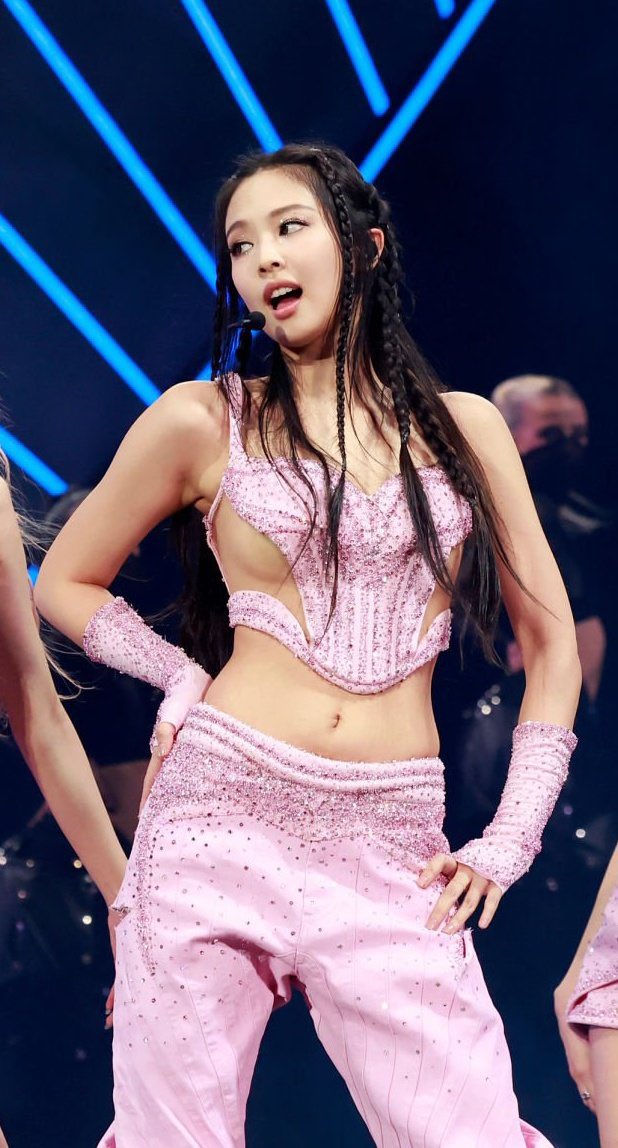
In the meticulously curated universe of K-Pop, where image is a currency and perception is managed down to the pixel, a moment of sartorial daring can ignite a global conversation faster than any comeback announcement. This week, the epicenter of that conversation was BLACKPINK's Jennie Kim. A series of candid photos and airport fancams, depicting the star in a cropped, open-knit top that artfully—and daringly—played with exposure, did not just trend. It detonated across social media platforms, fan forums, and news outlets, splitting discourse into fervent camps of admiration, critique, and deep cultural analysis. What was initially boiled down to a salacious "underboob" headline is, in truth, a multifaceted event revealing the evolving dynamics of power, fashion, and female autonomy in the upper echelons of global pop culture.
From "Human Chanel" to Architectural Fashion: Jennie's Style Evolution
To understand the weight of this moment, one must first appreciate Jennie's established position in the fashion firmament. Dubbed "Human Chanel" for her longstanding ambassadorship with the French maison, Jennie has long transcended the typical idol-endorsement model. She is a front-row fixture, a muse to designers, and her personal style—a blend of high-fashion edge, vintage flair, and effortless "cool-girl" nonchalance—is dissected and emulated worldwide. Her fashion choices are never accidental; they are extensions of her artistic persona.
Her journey, however, has been punctuated by sartorial controversies that have inadvertently charted the public's evolving tolerance. Recall the sheer, nude-illusion dress from BLACKPINK's early days that sparked "too revealing" debates, or the infamous "nip-slip" moment during a livestream that became a grotesque lesson in the violation of idol privacy. Each incident was a battle line drawn over the ownership of her image. Through it all, Jennie has maintained a poised, unapologetic demeanor. Her style evolution mirrors her group's trajectory: from a polished, YG-crafted "girl crush" aesthetic to a more assertive, individualistic, and architecturally bold expression of self. This latest look isn't an anomaly; it's a point on a continuum of increasing sartorial confidence and control.
The Agency Paradox: YG's Hands-Off Approach to Star Power
Notably silent amidst the latest uproar is YG Entertainment. The agency's typical strategy for its top-tier artists, especially the BLACKPINK members, has shifted from strict micromanagement to a more custodial role. This reflects a hard-won reality: at this level of fame, the artist *is* the brand. Jennie, through her successful solo venture SOLO, her founding of the label OA (Odd Atelier), and her unparalleled fashion clout, operates with a degree of autonomy rare in the industry. Her clothing choices, especially in casual, "off-duty" settings, are likely personal decisions, a statement of individual taste rather than a company-mandated concept. This very autonomy is what fuels the debate—every stitch is seen as a deliberate message from Jennie herself, not a costume assigned by a stylist.
Deconstructing The Moment: More Than a Flash of Skin
The images in question, primarily sourced from fan-taken airport footage and casual paparazzi shots, show Jennie in a relaxed, all-black ensemble. The focal point is a loosely knit, cropped black top worn without an inner layer, its design creating a strategic opening. The conversation, predictably, was immediately reduced to a single, sensationalized body part. But to stop there is to miss the artistry and context entirely.
Fashion analysts were quick to point out the top's lineage in high-fashion deconstruction. It echoes the work of designers like Marine Serre or the intentional disintegration seen on runways of Rick Owens, where fabric is treated as a fluid, architectural medium rather than mere coverage. The look was styled with an air of casual indifference—baggy, ripped jeans, minimal jewelry, and an unaffected posture. This nonchalance was a key component. It wasn't a red carpet gown engineered for a gasp; it was a piece of personal wardrobe worn with the confidence of someone utterly at home in their own skin and style choices. As one stylist commented on an industry forum,
"The power isn't in the reveal, but in the normalcy. She's treating a piece that borders on avant-garde as everyday wear. That's the ultimate flex."
The Paparazzi Lens vs. The Idol's Gaze
A critical layer to this event is the medium. These were not official photoshoot images, where lighting, angle, and consent are controlled. They were captured through the long lenses of paparazzi and fans, a dynamic that inherently shifts power and narrative. This recalls the intense scrutiny on idol bodies discussed in our previous analysis, "The Silhouette Seen Around the World". However, the reaction diverges. Where that article explored the pressure of idealized proportions, Jennie's moment flips the script—it's a seemingly uncontrolled exposure that she herself appears to own completely, challenging the very nature of the paparazzi's invasive gaze.

The Digital Agora: Fandom, Feminism, and Fierce Debate
The reaction across social media and fan communities was a seismic split, revealing generational, cultural, and ideological divides within the global BLINK fandom and the wider netizen sphere.
International fans and younger netizens largely championed the look as a emblem of body confidence, artistic freedom, and feminist expression. Hashtags like #JennieConfidence and #RespectJennie trended worldwide. Comments praised her for "breaking the mold" and "redefining K-Pop beauty standards." Many framed it as a powerful act of owning one's sexuality on one's own terms, a rebuke to the industry's often infantilizing and restrictive standards for female idols.
More conservative segments of the Korean online community expressed discomfort and criticism. On platforms like Nate Pann and the infamous "cabbage" community, posts argued the look was "inappropriate" for a public setting, "too sensational," and detracted from her artistic merit. Some echoed familiar, tired critiques about setting a "bad example" for younger fans. This friction highlights the ongoing cultural negotiation in South Korea between traditional modesty and rapidly globalizing, individual-centric expressions of identity.
A fascinating third perspective emerged from fashion-forward Blinks and industry observers. Their discussion bypassed the moral debate entirely, focusing instead on the garment's design, its place in contemporary fashion trends, and Jennie's role as a trendsetter. "She's not just wearing a top; she's validating an entire design language for a mainstream audience," noted a popular fashion-focused K-Pop Twitter account with millions of followers. This faction views the controversy itself as somewhat pedestrian, missing the larger point of fashion as art.
The OT1 Principle in a Group Dynamic
This incident also underscores the unique "OT1" (One True member) fan culture surrounding BLACKPINK, where each member commands a massive, fiercely loyal individual fandom. Jennie's "Nevies" mobilized not just in defense, but in celebration, flooding timelines with supportive edits and past examples of her bold style. It’s a dynamic of intense individual spotlight that can sometimes create friction, not unlike the sensitive group dynamics explored in our piece on "The 'OT6' Echo", though here it manifests as a unifying force of support for a member's personal expression.
Industry Ripples: Idols as Autonomous Fashion Entities
The significance of this event extends far beyond tabloid heat. It serves as a case study in the shifting power structures of the K-Pop industry and the global fashion ecosystem.
Firstly, it reinforces the commercial power of the individual idol as a fashion icon. Designers and brands pay attention to these moments. A look that generates this much buzz, regardless of its moral reception, is a potent marketing tool. It signals that an idol’s off-duty style can drive trends, move product, and generate media value equal to a formal advertising campaign. This further bolsters the negotiating power of top-tier idols like Jennie when engaging with luxury houses.
Secondly, it tests the boundaries of the "idol image." The traditional model demanded a parasocially approachable, often desexualized or carefully controlled sexuality. Jennie’s choice, and the massive support it garnered, pushes that boundary toward a more complex, adult, and self-determined image. It asks: Can a female idol be both a global fashion muse embracing avant-garde, sometimes provocative, style and maintain her mainstream idol status? The evidence suggests not only that she can, but that this very tension amplifies her influence.
This moment also connects to a broader pattern of viral, style-driven discourse in K-Pop. Much like how NCT 127’s "Sticker" used sonic polarization to cement a lasting legacy, Jennie’s fashion choice uses visual polarization to reinforce her brand identity as a fearless, boundary-pushing icon. Controversy, when navigated correctly, can cement status rather than diminish it.
Furthermore, it highlights the growing lane for idol-led entrepreneurship. Jennie isn't just a clotheshorse for other brands; with OA, she is building her own fashion infrastructure. Moments like this demonstrate her innate understanding of fashion as communicative performance, a vital asset for anyone looking to transition from ambassador to creator. It’s a similar trajectory of leveraging individual star power for solo success, as seen in the remarkable sales of solo projects from group members, detailed in our analysis of ASTROMA's Haneul's solo debut.
The Unstoppable Momentum: What Lies Ahead for Jennie and the Blueprint?
So, where does this leave us? The "hot topic" will cool, as all digital fires do, but the embers will continue to glow within the industry's structural foundations.
For Jennie, this is unlikely to be a deterrent but rather a reaffirmation of her modus operandi. We can expect her to continue pursuing fashion as a primary language of her artistry, both in her music career and her ventures with OA. Any upcoming solo music—highly anticipated by fans—will undoubtedly be accompanied by visual concepts that further this narrative of sophisticated, self-possessed edge. She has successfully separated her personal style from her group's activities, granting her a unique space to experiment. You can follow her ongoing career trajectory on our Artists page.
For the industry, this serves as another benchmark. Younger idols and their agencies will note the support that greets such assertions of style autonomy. While not every idol has the capital—both social and financial—to weather such scrutiny, the direction of travel is clear. The era of the idol as a purely compliant mannequin is fading, giving way to the idol as a curated, complex brand individual. The lines between idol, celebrity, artist, and fashion entity are blurring irreversibly.
For fans and cultural observers, the event is a reminder to look deeper. Reducing a deliberate fashion choice to mere scandal overlooks its function as a text—one about power, artistry, and the continual renegotiation of a woman's right to define her own image in the public eye. The true legacy of Jennie's knit top won't be in tabloid headlines, but in the subtle expansion of possibility it represents for the next idol who walks through an airport, wearing a piece of clothing that says more than fabric ever could.
As the industry watches and evolves, moments like these become critical data points. They influence everything from brand deals to concept planning, reflecting in the ever-changing charts of influence that matter most. The conversation has moved on from "was it appropriate?" to "what does it mean?" And in that shift, Jennie has already won.