
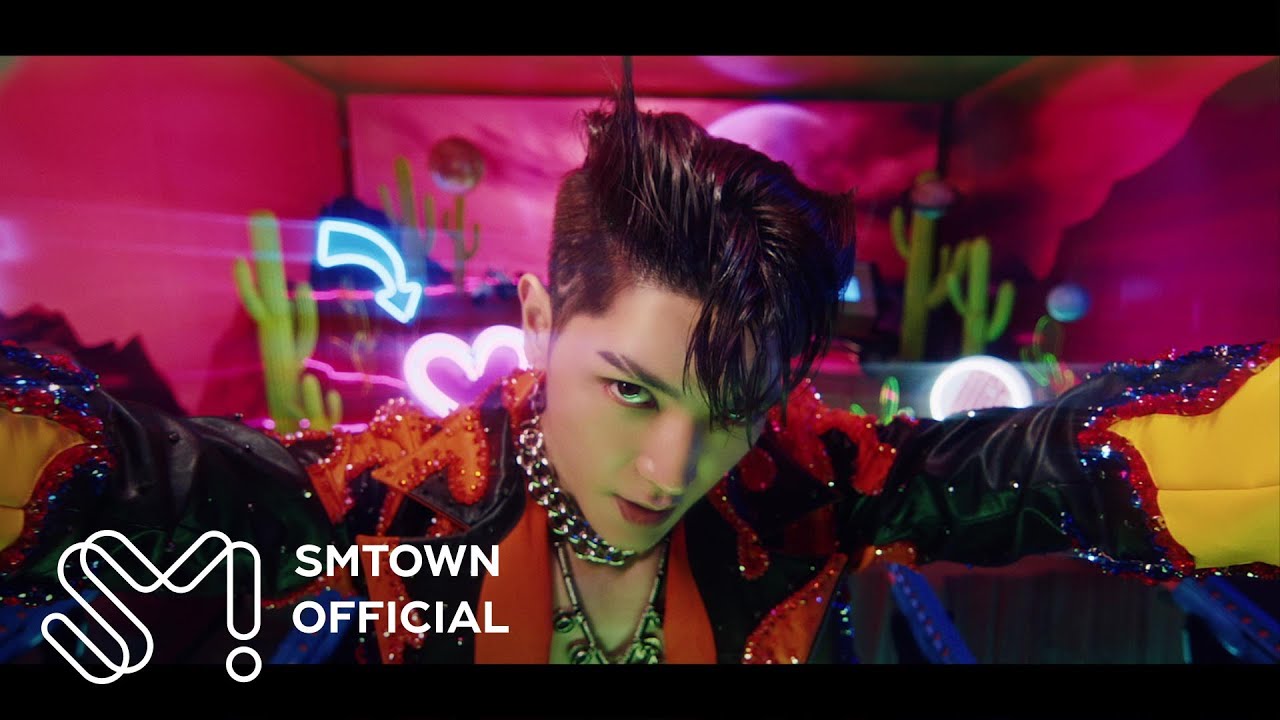

The path to 100 million YouTube views is well-trodden by K-Pop's biggest acts, a milestone that often signifies massive fanpower, catchy hooks, and widespread appeal. But when NCT 127's "Sticker" officially joined that club on April 1st, it did so carrying a unique and heavier baggage: its legacy as one of the most debated, dissected, and ultimately defiant K-Pop releases in recent memory. Surpassing the mark at approximately 7:51 p.m. KST, the music video for the group's 2021 title track became their fourth to achieve this feat, following "Kick It," "Cherry Bomb," and "Regular." Yet, unlike its predecessors, "Sticker"’s journey to nine-digit views is a masterclass in how polarizing art can galvanize a fandom, dominate discourse, and secure a permanent, albeit contentious, spot in the genre's history books.
From Neo Zone to the "Sticker" Shock: The Road to an Infamous Climax
To understand the seismic reaction to "Sticker," one must first appreciate the trajectory of NCT 127. As the fixed Seoul-based subunit of SM Entertainment's ambitious NCT consortium, 127 has built a reputation as the experimental vanguard. Their sound, dubbed "noise music" by some and "neo" by the company, thrives on dissonance, complex structures, and a willingness to alienate casual listeners in pursuit of a distinctive sonic identity. Prior to "Sticker," the group was riding a significant high. Their 2020 album Neo Zone and its repackage, led by the wildly popular "Kick It," marked a commercial and critical breakthrough, offering a slightly more refined—though still characteristically hard-hitting—take on their style.
Expectations for the follow-up were stratospheric. When the teasers for their third studio album, Sticker, dropped in September 2021, they promised a gritty, Western-inspired concept. The stage was set for another "Kick It"-level anthem. What arrived, however, was something entirely different. The title track, "Sticker," was anchored by two elements that would become instantly infamous: a sparse, whistling flute loop that many described as abrasive, and Taeyong's opening line, delivered in a conspiratorial whisper, "Like a sticker, stick it, stick it on..."
The Great Divide: Critical Reception vs. Commercial Success
The immediate reaction was a digital cacophony. On one side, critics and a portion of the general public expressed sheer bewilderment. Reviews called it "unlistenable," a "squeaky flute nightmare," and a misstep. Social media exploded with memes, reaction videos, and hot takes. It was a textbook case of a polarizing release. Yet, on the other side, the NCTzen fandom mobilized with ferocious intensity. The album, Sticker, shattered pre-order records, moving over 2.1 million copies in its first week—a monumental figure that underscored the disconnect between critical noise and fan devotion. The song achieved a "perfect all-kill" on Korean music charts shortly after release, proving its chart dominance. As documented in our analysis of chart phenomena, such instantaneous success amidst controversy is a hallmark of powerful fandom ecosystems, reminiscent of the patterns seen when BTS Secures Historic Fifth Win for "SWIM".
"Sticker" wasn't a song you felt neutral about. It was a litmus test for your entire relationship with NCT's philosophy. You either rejected its premise entirely or found yourself inexplicably addicted to its bizarre, repetitive groove.
Deconstructing the 100 Million View Milestone: More Than Just a Number
The recent achievement of 100 million views for the "Sticker" music video is significant not merely for its scale, but for its narrative. This wasn't a slow, steady accumulation over three years. It was a journey punctuated by waves of engagement: the initial explosive debut period, sustained fan streaming goals, and recurring viral resurgences as new listeners sought out the "controversial flute song." Each view represents a click driven by curiosity, fandom loyalty, or a desire to re-experience the shock.
The video itself, directed by Oui Kim, is a study in juxtaposition. It contrasts slick, cinematic cowboy aesthetics with glitchy, ASMR-inspired close-ups of the members applying stickers. This visual language mirrors the song's audio clash—the smooth, confident swagger of the performance against the jarring, minimalist instrumentation. The choreography, particularly the now-iconic "flute-playing" hand movements and the powerful group formations, became a major driver for fan-made content and dance covers, further fueling YouTube algorithms.
A Testament to Enduring Fandom Power
Reaching this milestone long after the promotional cycle ended speaks volumes about the dedication of NCTzen. It highlights a strategic, long-term streaming culture where fans revisit and champion older content to solidify the group's digital footprint. This persistent effort ensures that past releases remain relevant in YouTube's recommendation engine, a crucial tactic in the competitive K-Pop landscape. As we've seen with solo endeavors from members of other groups, such as the groundbreaking success explored in ASTROMA's Haneul Smashes Solo Ceilings, fan support is the ultimate engine for surpassing expectations.
This achievement also solidifies NCT 127's position as digital heavyweights within SM Entertainment and the broader boy group sphere. With four MVs now in the 100 million club, they join an elite tier, showcasing a consistent ability to generate massive online engagement across multiple eras and sonic experiments.

NeoCulture & Community: How Fans Transformed Critique into Cult Status
The fan reaction to "Sticker"’s 100 million views has been a victory lap tinged with vindication. Across platforms like Twitter, TikTok, and fan community forums, the mood is celebratory and defiant. Hashtags like #Sticker100M and #NCT127_Sticker100M trended globally, filled with edited videos, achievement graphics, and nostalgic reflections on the 2021 era.
Many fans express a "told you so" sentiment, highlighting how a song once widely mocked has now etched itself into K-Pop history through sheer staying power. Others frame it as a victory for artistic freedom. As one fan tweeted, "'Sticker' hitting 100M is proof that NCT 127 doesn't make music for everyone, they make music for themselves and their fans, and that's more than enough." This sentiment echoes the intense, often personal connections fans form with idol narratives, a dynamic we've examined in contexts like The "OT6" Echo in ENHYPEN.
The conversation has also evolved. What began as a debate over a flute sound has matured into deeper appreciation for the song's technical complexities: the vocal layering, the rhythmic precision of the rap verses, the daring emptiness of the instrumental break. Fans now proudly list "Sticker" as a quintessential example of NCT's "neo" sound, a badge of honor that distinguishes their taste.
Watching 'Sticker' climb to 100M feels like the final chapter in its redemption arc. We never doubted it. The song was always a masterpiece in boldness, and now the numbers are just catching up to what we felt.
Industry Ripples: The "Sticker" Effect on K-Pop's Sonic Landscape
The impact of "Sticker" extends far beyond NCTzen forums. Its release and subsequent journey have become a case study within the industry. For producers and creative directors, it demonstrated that "risk" and "mass appeal" are not always mutually exclusive, provided the artist has a strong, mobilized fanbase. It challenged the conventional wisdom about what constitutes a "public-friendly" hit in an era where fandom power can directly dictate commercial success.
Furthermore, "Sticker" intensified discussions about genre and acceptability in mainstream K-Pop. It pushed the boundaries of the "noise music" label to its extreme, prompting debates about artistic integrity versus listener comfort. In a way, it paved the psychological ground for other experimental releases that followed, normalizing the idea that a title track could be challenging and still be a centerpiece for a multi-million selling album.
This aligns with broader industry conversations about idol agency and artistic expression. Just as the public discourse has shifted to better appreciate idols owning their narratives—as seen in moments like Jeongyeon's Concert Moment—"Sticker" represents a group and a company sticking to a distinct vision, regardless of external noise. It proved that controversy, when managed and embraced, can be a potent tool for long-term brand identity and fan solidarity.
The Benchmark of Viral Engagement
In the metrics-driven world of K-Pop, "Sticker" also redefined what viral engagement can look like. It wasn't just about dance challenges or cute moments; it was about a sound going viral. The flute became an instantly recognizable audio meme, used in countless TikTok videos, YouTube compilations, and even reaction content from other idols. This type of organic, if sometimes mocking, spread contributes immensely to view counts and brand awareness, creating a feedback loop that brings in curious new viewers years after the fact.
Sticking the Landing: What This Milestone Signals for NCT 127's Future
The 100 million views for "Sticker" arrives as NCT 127 stands at a fascinating crossroads. The group is currently navigating its commitments amid the ongoing activities of the larger NCT universe and the military enlistments of older members. This milestone serves as a powerful reminder of their unique position and resilient brand. It reinforces to the industry and to fans that their experimental core is not a liability, but a legacy.
Looking ahead, this achievement will undoubtedly influence their creative direction. It grants the members and SM Entertainment's creative team a renewed confidence to pursue unconventional ideas, knowing their core audience will not only accept but champion bold choices. The success of "Sticker" in the long term provides a blueprint: create a strong, cohesive album (Sticker the album is widely praised by fans for its B-sides), back it with stunning visuals and performance, and trust the fandom to build the legacy.
As the group prepares for future comebacks, perhaps after the return of enlisted members Taeyong and Taeil, they will do so carrying the "Sticker" paradox as a badge of honor. They have proven they can achieve record-breaking sales, chart dominance, and viral milestones with music that refuses to conform. This freedom is invaluable. For the latest updates on all group activities, fans consistently check our Artists page for profiles and news.
Ultimately, "Sticker"’s place in the 100-million-view club is a testament to a fundamental truth in modern K-Pop: in an age of algorithmic sameness, the things that are different, difficult, and debated are often the things that are most remembered. The sticker, it seems, has been permanently adhered to the annals of K-Pop history. Its journey from divisive punchline to celebrated milestone is a compelling narrative of art, fandom, and the enduring power of sticking to your guns—no matter how unconventional they may sound. For those tracking the metrics of such success, the numbers continue to be catalogued and analyzed on our Charts page, where the story of "Sticker" is now permanently inscribed.