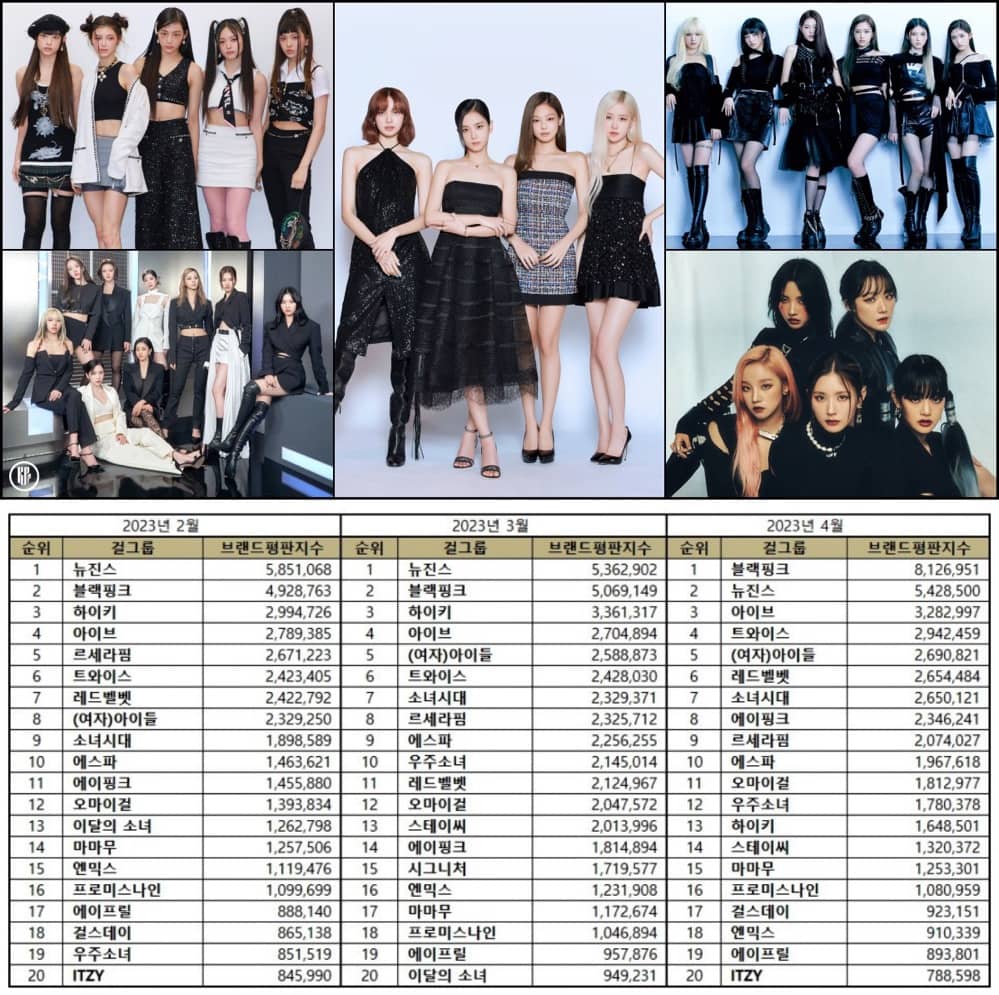

The Korean Business Research Institute's April brand reputation rankings have dropped, and the narrative isn't about who's on top—it's about seismic movement underneath. While IVE maintains a formidable lead, a surprising stagnation from LE SSERAFIM - PUREFLOW pt.1: What Just Landed" rel="internal">LE SSERAFIM and the explosive, controversy-fueled rise of (G)I-DLE reveal a market where musical momentum alone is no longer enough. This month's data tells a story of fandom mobilization, media play, and the high-stakes impact of a single viral moment.
- What Do These Brand Reputation Rankings Actually Measure?
- April 2024 Top 5 Breakdown: The Stories Behind the Numbers
- The Biggest Shifts: Who Gained, Who Lost, and Why It Matters
- The 3 Key Drivers Defining 2024's Reputation Wars The Limitations: What These Rankings Don't Tell You
- FAQ: Your Brand Reputation Questions, Answered
What Do These Brand Reputation Rankings Actually Measure?
To understand the drama, you must first understand the scoreboard. The Korean Business Research Institute (KBRI) rankings are not a simple popularity poll. They are a complex algorithmic analysis designed to gauge public perception and conversation velocity.
Beyond Likes: The Big Data Blueprint
The KBRI analyzes a massive pool of data from news articles, community forums, social media posts, and video content. They measure three core components: Consumer Participation (volume of mentions), Media Coverage (breadth and tone of news), and Communication Index (the spread of conversation across platforms). The final score is a weighted composite, meaning a viral news story can outweigh a million quiet fan tweets.
Why Agencies and Investors Watch This Closely
For entertainment CEOs and advertising directors, this isn't fan service—it's a business metric. A high brand reputation score correlates directly with CF (commercial filming) offers, brand ambassadorship deals, and even stock prices for publicly traded agencies like HYBE or SM. It's a real-time pulse check on an idol's marketability beyond their core fandom. For a deeper look at how unexpected moments can trigger massive data swings, read our analysis on how a simple shout-out to NCT created a data earthquake for a HYBE group.
April 2024 Top 5 Breakdown: The Stories Behind the Numbers
This month's top five creates a perfect case study in modern K-Pop positioning. Let's dissect the strategies and circumstances that landed each group in their spot.
1. IVE: The Unshakable Center
IVE’s continued reign is a masterclass in brand consistency. Their score is buoyed not by a single event, but by sustained, high-quality media engagement. Member Jang Wonyoung’s unmatched CF presence acts as a perpetual engine, generating constant non-music related news. The group’s clean, “expensive” public image minimizes negative community participation, keeping their data overwhelmingly positive.
2. (G)I-DLE: The Viral Juggernaut
The story of the month. (G)I-DLE’s meteoric rise to second place is a direct result of their “Wife” phenomenon and the ensuing, deliberate media storm. The song's provocative concept sparked unprecedented debate across online communities, blogs, and reaction videos. This wasn't just music consumption; it was cultural conversation, which the KBRI algorithm heavily rewards. Their data is a spike, but one built on undeniable impact.
3. LE SSERAFIM - PUREFLOW pt.1: What Just Landed" rel="internal">LE SSERAFIM: The Curious Case of Steady State
Here lies the most critical data point for analysts. LE SSERAFIM, despite a successful comeback with "Easy", did not see the expected ranking surge. This suggests their engagement is becoming fandom-centric. The conversation is deep within their existing fanbase but isn't breaking out into wider public discourse. It's a warning sign that their "cool" image may be becoming insular, a challenge HYBE will need to address strategically.
4. aespa: The Narrative Architects
aespa’s position is held aloft by brilliant pre-comeback narrative building. SM’s drip-feed of Karina’s dating news fallout and her handwritten letter, followed by the group's public display of unity, created a week-long media cycle of empathy and curiosity. This proves that even potentially negative news can be managed to fuel positive brand metrics if handled with careful PR, turning personal scrutiny into a story of group resilience. For more on how agencies manage dating scandals, see our piece on the viral playbook for navigating dating rumors.
5. BLACKPINK: The Legacy Power
The fact that BLACKPINK, with all members engaged in solo activities and no group promotion, remains in the top five is a testament to pure legacy power. Their brand is so monolithic that individual endeavors—Jisoo in acting, Jennie with her label—continuously feed the group's data stream. They are the exception that proves the rule: for most groups, absence means a ranking drop, but for BLACKPINK, they are the system.
GroupRank (vs. Last Month)Primary Driver This MonthRisk Factor IVE1 (→)Member CF Saturation, Consistent MediaOverexposure, Fan Fatigue (G)I-DLE2 (↑↑)Viral Song & Cultural DebateControversy Overshadowing Music LE SSERAFIM3 (↓)Solid Comeback, Strong FandomLack of Public Discourse Breakout aespa4 (↑)Managed Scandal & Group NarrativePotential for Narrative Backfire BLACKPINK5 (→)Individual Activity LegacyGroup Hiatus LengthThe Biggest Shifts: Who Gained, Who Lost, and Why It Matters
Movement outside the top five often signals future trends more clearly than the entrenched leaders.
The Quiet Ascension of NMIXX
NMIXX’s steady climb is a data-driven victory for JYP's revised strategy. Their move away from experimental "mixx pop" toward the public-friendly "Dash" has resulted in a significant increase in positive community sentiment and media coverage framing them as "improving" and "finding their sound." This rebrand narrative is powerful and sustainable.
The Harsh Reality for Older Groups
The continued decline of 3rd generation giants like Twice and Red Velvet in these rankings is less about popularity and more about activity cycles. Without a current comeback, media coverage dries up, and conversation shifts to dedicated fan spaces not fully captured by the algorithm. It highlights the ranking's bias toward immediate momentum over long-term legacy, a crucial point for fans to understand when viewing the lists on our Charts page.
The 3 Key Drivers Defining 2024's Reputation Wars
Our analysis of April's data points to three non-musical factors now dominating the brand reputation landscape.
1. The "Fandom Mobilization" Fallacy
A common misunderstanding is that organized fan projects to trend keywords directly boost these rankings. The KBRI algorithm is designed to filter out and discount coordinated, repetitive spam. Authentic, varied public conversation holds far more weight. This is why LE SSERAFIM - PUREFLOW pt.1: What Just Landed" rel="internal">LE SSERAFIM's fandom, while powerful, couldn't artificially lift them past the public-driven waves of (G)I-DLE.
2. Media Play as a Double-Edged Sword
April proved that calculated media narratives are a primary driver. aespa's handled crisis and (G)I-DLE's provocative rollout weren't accidents; they were media plans. However, this strategy risks fan and public backlash if perceived as manipulative. The public's appetite for authenticity is growing, and overly engineered stories can collapse, as explored in our analysis of how one actor's scene backfired due to audience expectations.
3. The Burnout Buffer (or Lack Thereof)
Idols showing human vulnerability, when framed correctly, can be a major positive data point. However, the system is ruthless. An idol on a legitimate health hiatus typically disappears from the data stream, causing a ranking drop. The narrative only turns positive if their return is managed as a triumphant recovery story. The industry's tension between human need and data demand is stark, a topic we've covered in depth regarding an idol's disappearance highlighting the silent burnout epidemic.
The Limitations: What These Rankings Don't Tell You
To interpret this data wisely, you must know its blind spots.
The International Fan Disconnect
The KBRI analysis primarily focuses on Korean-language sources and domestic media platforms. An idol dominating global Spotify charts or TikTok trends may see minimal direct impact on their brand reputation score. This creates a disparity between perceived global heat and domestic ranking, often confusing international fans.
The Album Sales & Touring Paradox
A group can sell 2 million albums and sell out world tours while remaining mid-tier in brand reputation. These rankings measure public conversation, not commercial consumption. A dedicated, purchasing fandom does not automatically generate the widespread media and community buzz the algorithm craves. Check the physical and digital sales figures on our Charts page for the full financial picture.
FAQ: Your Brand Reputation Questions, Answered
Q: Do these rankings predict future success?
A: Not directly. They are a lagging indicator of current buzz, not a leading predictor of future song performance. However, a consistently high ranking does correlate with stronger CF and variety show opportunities, which build long-term career stability.
Q: Why does my favorite rookie group not appear?
A: The rankings typically list the top 30-50 groups. Rookies need to generate a critical mass of media and public conversation to break in. A viral hit or major controversy is often the fastest, though not always the most desirable, ticket onto the list.
Q: Can a scandal actually help a ranking?
A: Temporarily, yes. The algorithm measures volume and spread of conversation, not just positivity. A major scandal causes a huge data spike. However, the ratio of positive to negative participation will ultimately determine if it's a net gain or a long-term brand injury, as seen in past data cycles.
Q: How often should a group promote to maintain a high rank?
A> There's no set rule. Groups like BLACKPINK defy conventional cycles. For most, a major comeback can fuel high rankings for 2-3 months through album promotions, followed performances, and award show appearances. Strategic solo or unit activities in the "off" period are key to maintaining baseline media presence.
Q: Where can I see the full list and historical data?
A> The Korean Business Research Institute releases a full report monthly. For ongoing analysis and context on what the numbers mean for your favorite artists, keep your eye on our News page for regular breakdowns and insights.
The Bottom Line & What to Watch Next
April's rankings reveal a K-Pop ecosystem where music release is just the opening move. The real battle is fought in news article headlines, online community debate threads, and meticulously managed personal narratives. The groups that will dominate the rest of 2024 are those who can pair musical credibility with this sophisticated media game.
Watch for two things in May: First, can LE SSERAFIM pivot their strategy to recapture public discourse, or will their brand solidify as a powerhouse for fans, but not the general public? Second, will (G)I-DLE’s viral moment translate into lasting brand equity, or will it fade as quickly as the next trending topic? The data is more than a ranking; it's the story of modern K-Pop being written in real time. For continuous, in-depth tracking of these stories and their impact on the idols, explore profiles and career timelines on our Artists page.