
The world of K-Pop is built on meticulously crafted personas, where every smile, every outfit, and every word is often part of a grand, company-managed narrative. Fans are invited into a carefully controlled version of an idol's life, one that typically excludes the profound, human milestones that define adulthood for most. Marriage and parenthood, in particular, have long been considered the third rail of an idol's career—a truth universally acknowledged but rarely spoken until crisis forces a confession. This week, that fragile façade cracked under a weight too heavy for one person to bear any longer.
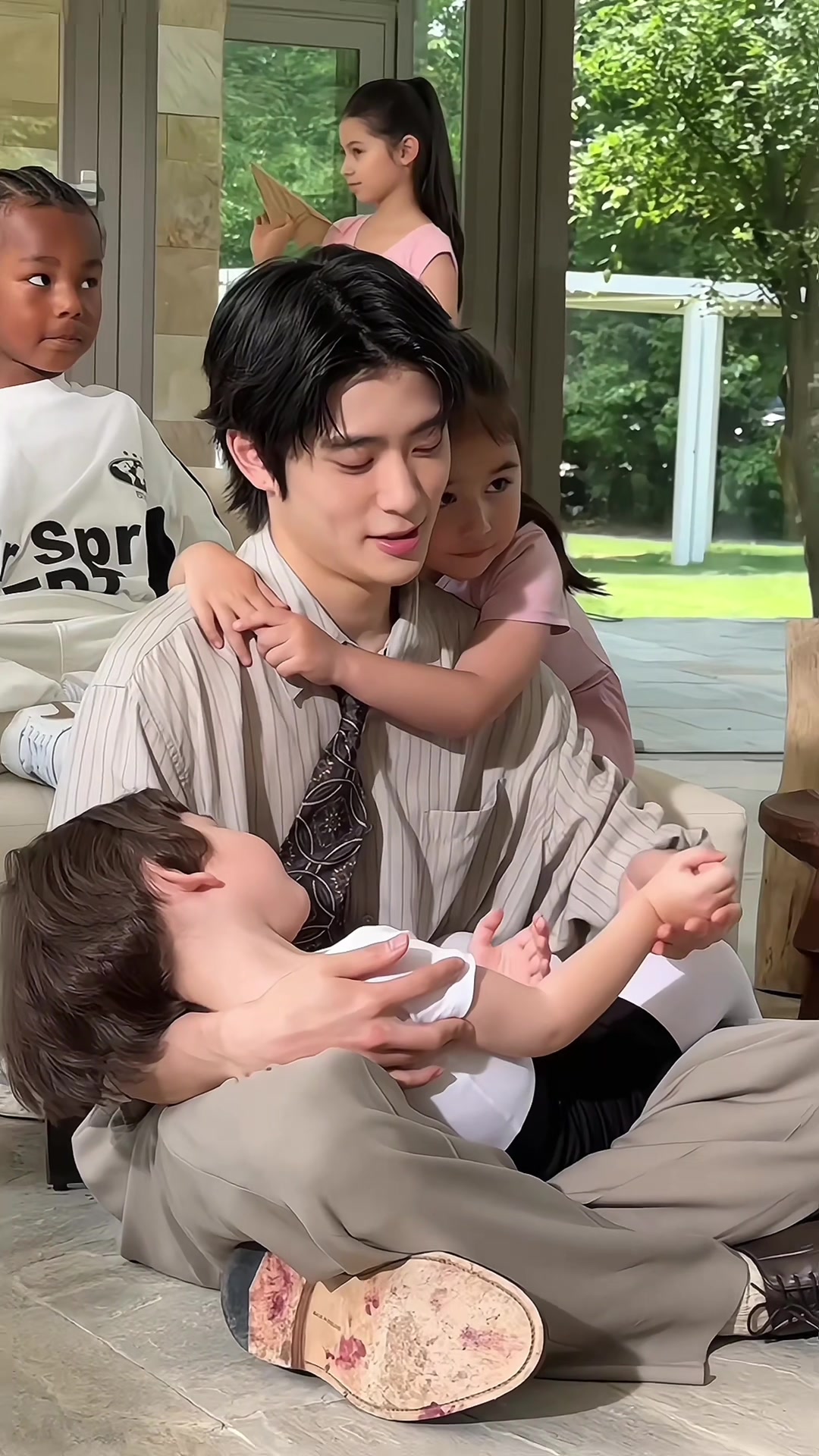
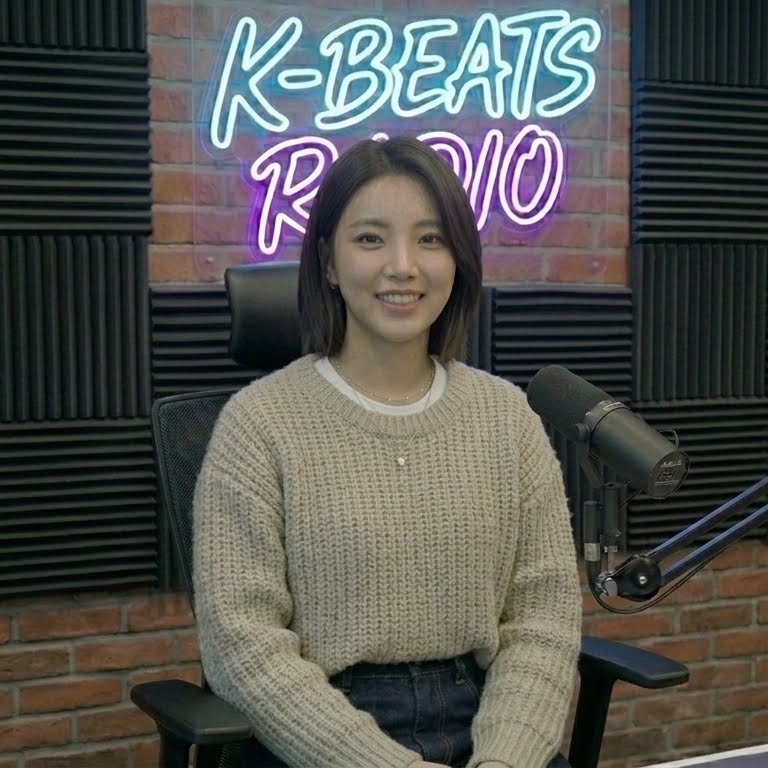
In a raw, emotional, and unprecedented livestream, Lee Ji-woo, the charismatic main vocalist of the top-tier girl group LUNAX, shattered the illusion. Through tears that she did not try to hide, Ji-woo revealed a secret she has carried for nearly ten years: she is a mother. Not just a mother, but a mother of two children, aged eight and five, whose entire existence has been shielded from the glaring public eye. Her confession was not a celebratory announcement, but a desperate catharsis, a story of living a double life so complete that it brought her, in her own words, "to the absolute edge." This is not just a scandal; it is a profound human story that holds up a mirror to the entire K-Pop system.
The Star Before the Storm: Lee Ji-woo and LUNAX's Meteoric Rise
To understand the magnitude of this revelation, one must first understand Lee Ji-woo's stature. Debuted a decade ago with LUNAX under the powerhouse agency Stellar Nexus Entertainment, Ji-woo was immediately pegged as the group's "golden voice." Her technical prowess and emotional delivery on hits like "Eclipse of the Heart" and "Neon Dream" propelled LUNAX from a promising rookie group to a perennial chart-topper. For years, they have dominated our Charts page, often going head-to-head with the industry's most established acts.
Ji-woo's image was that of the dedicated, slightly mysterious artiste. While other members cultivated bubbly "girl-next-door" or fierce "girl crush" personas, Ji-woo was the elegant, thoughtful anchor. She was known for her deep lyricism, often contributing to LUNAX's B-sides, and for a quiet, mature demeanor that fans admired. In an industry that often infantilizes its female stars, Ji-woo's maturity was a selling point. Little did anyone know just how deeply that maturity was rooted.
LUNAX weathered the typical industry storms—member changes in their fourth year, intense competition from newer groups—but emerged stronger, cementing a loyal fandom known as "Luneclipse." Ji-woo, in particular, was considered the group's irreplaceable core, her voice their sonic signature. Her personal life was a near-blank slate. There had been vague, quickly dismissed dating rumors years prior, linked to a fellow idol from a senior boy group, but nothing ever substantiated. Her narrative was one of singular devotion to her craft and her group, a narrative now revealed to have been a monumental half-truth.
The Engine of Secrecy: Agency, Culture, and Contract
The immediate question on everyone's lips is: how? How does a globally famous idol, under constant media scrutiny and fan surveillance, hide not one, but two pregnancies and the raising of two children? The answer lies in a complex web of complicit secrecy, industry logistics, and intense personal isolation. According to insiders who spoke to K-Beats on condition of anonymity, the structure was orchestrated with military precision.
Ji-woo's first pregnancy coincided with a period officially labeled as a "mandatory vocal rest hiatus" due to "severe vocal cord nodules." The eight-month break, filled with occasional pre-recorded voice messages and old photo updates managed by her agency, provided the physical cover. The birth and initial months of her first child's life were spent at a private family property overseas, with only her most trusted manager and immediate family aware. Her rapid return to the stage, looking slightly different but explained by "a new strict diet and training regimen," was accepted by the public.
The system repeated, with variations, for her second child. This time, a "sabbatical for creative inspiration and musical training abroad" was the public cover story. The infrastructure of the idol system—managers controlling schedules, stylists crafting loose-fitting outfits for specific "concepts," controlled access to idols—which normally serves to protect the artist from the public, was here weaponized to construct an elaborate fiction. It speaks to a terrifying level of control and a culture where confessing such a "transgression" was seen as career suicide, not just for Ji-woo, but potentially for her entire group.

The Breaking Point: A Livestream of Tears and Truth
The confession did not come via a sterile agency press release. It erupted. On a scheduled, casual "Goodnight with Ji-woo" livestream, intended to promote LUNAX's upcoming fan-meet, viewers noticed her puffy eyes and subdued demeanor almost immediately. Twenty minutes in, after halting responses to fan questions, she muted the background music, looked directly into the camera, and began to speak in a trembling voice.
"For almost ten years, I have lived every single day split in two. There is Lee Ji-woo the idol, who loves you all, who loves to sing, who is so grateful for this life. And there is the other Lee Ji-woo, a person you have never met. A mother. A mother who has had to whisper 'I love you' to her children over video calls from dorm rooms, who has missed first days of school and birthdays, who has had to lie to the people who give her so much love about the source of her greatest joy and her deepest pain. The guilt of lying to Luneclipse, and the pain of being away from my family... it has broken me. I can't carry this secret anymore. I am so sorry."
The 47-minute livestream became a historic moment in K-Pop. Ji-woo did not name the father, citing his desire for privacy and his existence outside the entertainment industry. She detailed the immense psychological toll: the constant fear of discovery, the preemptive sadness of knowing her children would one day have to understand the deception, the loneliness of celebrating personal milestones in shadows. She revealed that the recent, intense preparation for LUNAX's 10th-anniversary comeback was the catalyst; the pressure to be perfect, to maintain the lie while feeling her children needed her more, became unbearable.
"I realized I was becoming a ghost to my own children," she confessed. "And the persona on stage was starting to feel like the only real part of me. That terrified me more than any scandal."
Eruption of Emotion: Fan and Industry Reaction
The reaction was instantaneous and volcanic, splitting across multiple fronts. On social media platforms and fan communities, the primary emotion among Luneclipse was not betrayal, but an overwhelming wave of sympathy and support. The hashtag #WeLoveYouJiwooMom trended globally within an hour, accompanied by messages of gratitude for her honesty and anguish over her suffering.
"All these years we praised her for her 'mature' emotions in songs... she was singing her life," wrote one top-voted comment on the fan café. "We love the artist, but we must protect the human. Our support is not conditional on her personal life."
This supportive majority, however, was not the entire story. A vocal minority expressed feelings of deep betrayal, arguing that their financial and emotional investment was built on a false premise. Some accused the agency of fraud, while others turned their anger on Ji-woo directly, stating that her choice fundamentally broke the idol-fan contract of perceived accessibility and shared journey. This schism mirrors past controversies, though on a vastly more personal scale, highlighting the complex parasocial relationships at the industry's core.
The industry itself has reacted with a deafening, telling silence. No major agency or fellow idol has made a public statement—a stark contrast to the usually rapid shows of public support during scandals. Privately, according to our industry sources, the reaction is one of "palpable anxiety." Management companies are reportedly holding emergency meetings, not about Ji-woo, but about reviewing their own artists' contracts and crisis protocols. The precedent set is terrifying to the old guard: what if more idols, buckling under similar hidden burdens, decide to come forward? This incident follows other recent events where artists have pushed back against the system, such as the landmark legal victory for artist rights detailed in Moon Sua’s Landmark Legal Victory Over KBS.
The Legal and Ethical Quandary
Beyond the emotional fallout, legal and ethical questions are emerging. Did Stellar Nexus Entertainment coerce Ji-woo into this decade-long deception? While not illegal, the ethical implications of an agency enforcing such a life-altering secret are dark. Furthermore, does this constitute a breach of contract? Standard idol contracts often include morality clauses and requirements to maintain an image; Ji-woo's private life, though hidden, could be argued by some as a violation. The agency's single, terse statement—"We are discussing the matter internally with Artist Lee Ji-woo. We ask for your understanding."—does little to clarify their position or acknowledge their role.
A Paradigm on the Brink: What Ji-woo's Confession Reveals
Lee Ji-woo's story is not an isolated incident; it is the most extreme and detailed symptom of a systemic illness. It forces a brutal examination of the K-Pop industry's relationship with adulthood, particularly female adulthood. The "idol" concept is often predicated on a fantasy of availability and perpetual youth. Motherhood is the ultimate symbol of moving beyond that fantasy, into a private, autonomous adult life that the industry machinery often views as commercially toxic.
This case exposes the brutal hypocrisy of an industry that markets "healing" and "emotional connection" while forcing its artists to sever their most fundamental human connections. It also highlights the incredible pressure placed on group dynamics. Ji-woo alluded to the fear that her truth would "sink the careers of my members, my sisters who have worked just as hard." The weight of an entire group's future, and an agency's investment, became a chain keeping her silent.
The conversation is inevitably drawing parallels to the intense scrutiny and privacy violations faced by other idols, such as the recent digital harassment campaign against ZEROBASEONE's Sung Han Bin, which prompted serious legal threats from his agency. While different in nature, both situations stem from a culture that denies idols a private, human identity. Similarly, the public's appetite for every detail of an idol's life, from dating rumors as seen with ECLIPSE's Yoo-jin, to family matters, creates an environment where secrecy feels like the only option for survival.
This moment may serve as a critical inflection point, much like how discussions about BTS's legacy transcend music to discuss artist growth and public evolution. Can the industry evolve to accommodate the full human lives of its artists? Or will the pressure to maintain a marketable, youthful image continue to force secrets and exact a terrible psychological price?
The Unwritten Future: For Ji-woo, LUNAX, and the Industry
The immediate future is fraught with uncertainty. The first question is the status of LUNAX. Will the group continue? Will Ji-woo take a hiatus, or will she leave the group entirely? Their 10th-anniversary activities are undoubtedly in disarray. The group's brand reputation, so carefully cultivated, is now undergoing a drastic, unpredictable recalculation, reminiscent of the seismic shifts seen in the March Brand Reputation Rankings.
For Ji-woo, the path forward is personal before it is professional. She spoke of needing to "finally be a mother to my children" and to "seek peace." A long-term break from the spotlight seems not just likely, but necessary. Her career as a "traditional" idol may be irrevocably changed, but her powerful voice and songwriting talent could pave a new path as a respected solo artist—one whose artistry is now deepened by a publicly acknowledged lived experience.
For the industry, the alarm bells are ringing. The old model of demanding absolute personal sacrifice is showing catastrophic cracks. Agencies may begin to see that supporting artists through life transitions, rather than forcing them into labyrinths of lies, is not just ethical but potentially more sustainable. Fans are demonstrating that their loyalty can be more resilient and compassionate than previously assumed.
Lee Ji-woo's story is a tragedy of pressure and a testament to resilience. She didn't just reveal her children; she revealed the rotten foundations of a system that asks for everything and offers no room for a person to simply be. As the dust settles, her confession may be remembered not as a scandal that ended a career, but as the painful, necessary fracture that began to let the light in. The conversation has begun, and as always, you can follow its ongoing development right here on our News page. The world of K-Pop will never look quite the same.