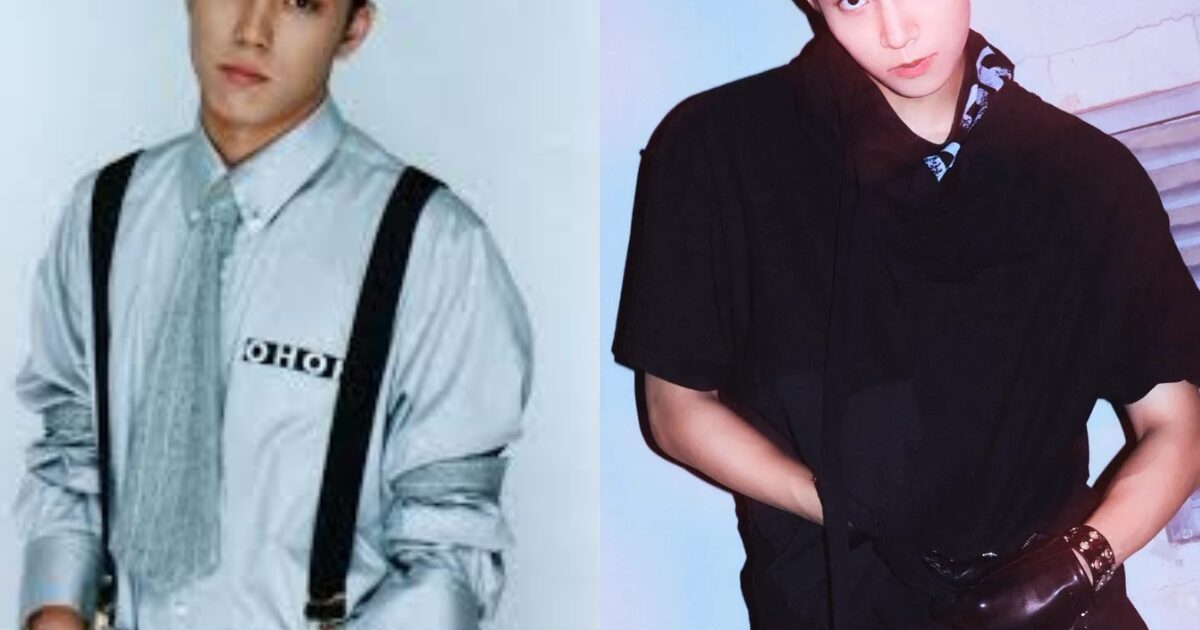

The K-Pop internet, a realm perpetually buzzing with trending topics, achieved a rare moment of unanimous awe this week. It wasn't a surprise comeback announcement, a chart-topping record, or a controversial fan interaction. Instead, it was a single, seemingly simple side-by-side photo comparison that froze scrolling thumbs and dropped jaws across platforms. The image placed a promotional shot of NOVA's 19-year-old maknae, Kenzo, next to a vintage magazine spread of legendary first-generation soloist Jeon Joong-hwan from circa 1998. The resemblance wasn't just close; it was, as thousands of comments declared, "genetic theft." The ensuing firestorm has done more than just make a young idol go viral; it has cracked open a fascinating dialogue about legacy, visual archetypes, and the invisible threads that bind K-Pop's past to its pulsating present.
Setting the Stage: From Debut to Discovery
To understand the magnitude of this moment, one must first understand the players involved. On one side is Jeon Joong-hwan, a name that evokes the raw, electric dawn of Korean pop as a cultural export. Debuting in 1995, Joong-hwan was not part of a large idol group but a powerhouse solo act whose rock-infused ballads and charismatic, rebellious image made him a national heartthrob. With his signature tousled black hair, intense yet melancholic gaze, sharp jawline, and a singular mole beneath his left eye, he was the blueprint for the "bad boy with a heart of gold" idol. His hits dominated the pre-digital charts, and his abrupt retirement in 2003 to pursue business—famously walking away at his peak—cemented his status as a mysterious, almost mythical figure in K-Pop lore. For older fans, he is a ghost of a formative era, a face frozen in time.
On the other side is Kenzo (born Kim Jin-woo), the youngest member of the rising 5th-generation boy group NOVA. The group, under Starline Entertainment, debuted just eight months ago with a sleek, futuristic synth-pop concept titled 'Eclipse'. While gaining steady traction for their polished performances and strong vocal line, they were still navigating the competitive mid-tier of rookies. Kenzo, as the main dancer and visual, was known within the fandom—NOVAs—for his sharp performance skills and a stoic, elegant handsomeness that fit the group's cosmic concept. His promotional photos showcased a clean-cut, modern idol: styled hair, flawless makeup, and expressions ranging from cool to subtly sweet. There was little in his public persona to immediately evoke the gritty, emotive rock star of the 90s.
"We knew Kenzo had a unique face, one that felt both modern and strangely timeless," a Starline Entertainment representative told K-Beats in a brief statement. "But this connection to a legend like Jeon Joong-hwan was never part of our strategy. It's a beautiful, spontaneous moment that has taken us all by surprise."
The Viral Spark: A Side-by-Side That Broke the Internet
The catalyst was an anonymous post on a popular Korean forum, Pann, titled "Am I going crazy, or did Jeon Joong-hwan have a son he never told us about?" The post contained no lengthy analysis, just two images. The first was a high-quality scan from a 1998 issue of Music Life magazine, showing a 22-year-old Jeon Joong-hwan in a leather jacket, staring directly into the camera with a smoldering, confident intensity. The second was a recently released individual teaser image for NOVA's latest fan meeting, featuring Kenzo in a structured black blazer. His head was tilted at a similar angle, his expression holding a similar complex mix of vulnerability and defiance.
The physical parallels were staggering: the exact same almond-shaped eye structure, the slope of the nose, the pronounced cupid's bow on the lips, and, most strikingly, the identically placed mole just below the left eye. Even the bone structure of the cheeks and jawline appeared to be a carbon copy, separated only by decades. The post exploded within hours, spilling over onto Twitter (X), Instagram Reels, and TikTok. The hashtag #SonOfJoongHwan began trending globally, and fan-edited videos splicing Joong-hwan's old performance footage with Kenzo's fancams went viral, set to Joong-hwan's classic track "Never-Ending Rain."
Beyond the Surface: Mannerisms and Micro-Expressions
What began as a visual comparison quickly deepened. Astute fans began digging deeper, noting not just static similarities but behavioral ones. They compared fancams, pointing out a shared habit of a slight, lopsided smile that appears just before a dance break, a particular way of tilting the head when listening to others speak, and even a similar posture when standing at ease. "It's in the micro-expressions," argued one viral tweet with millions of views. "Kenzo has that same fleeting look of melancholy that Joong-hwan would get in between his fiery stage performances. It's not just the face; it's the soul behind it." This narrative—of a spiritual, not just physical, resemblance—catapulted the story from fun curiosity to emotional phenomenon.
Media outlets scrambled to cover the trend. K-Beats' own News page saw a 300% spike in searches for both artists' names. Meanwhile, old interviews with Jeon Joong-hwan's former producers and stylists were unearthed, with one stylist remarking in a now-resurfaced 2001 interview, "Joong-hwan's face was a once-in-a-generation canvas. I haven't seen one like it since." The irony of that statement, made two decades before Kenzo's birth, was not lost on anyone.
A Fandom in Frenzy: Nostalgia Meets Newfound Passion
The reaction from both established fandoms has been a whirlwind of emotion, memes, and cross-generational bonding. Older fans of Jeon Joong-hwan, many now in their 40s and 50s, have flooded social media with a wave of nostalgia. "Seeing Kenzo feels like a time machine," one fan wrote on a Joong-hwan fan cafe. "It's bittersweet but beautiful. It's as if a part of that era we loved so much has been gently handed to a new generation." Many have begun streaming NOVA's music and watching their variety content, with some declaring themselves "halmeoni (grandma) fans" of the young group.

For NOVAs, Kenzo's sudden catapult into the mainstream spotlight has been surreal. The fandom, initially protective, has largely embraced the positive attention, using it as an opportunity to educate new fans about Kenzo's individual talents beyond his face. "Yes, he looks like a legend, but please watch his 'Eclipse' fancam and see why he's our main dancer," became a common refrain. The group's fanbase has swelled dramatically, with their latest single seeing a retroactive surge on music charts. This kind of sudden, fame-adjacent virality is not without its pressures, reminiscent of the intense scrutiny discussed in our analysis of idol interactions and parasocial boundaries.
The meme economy, of course, went into overdrive. Popular edits include "If Jeon Joong-hwan was in 4th gen groups," placing his face into clips of Stray Kids and ATEEZ, and a hilarious series of "POV: You're a 1st gen fan seeing NOVA's Kenzo for the first time." The collective joy has been palpable, a rare internet moment defined more by wonder than by conflict.
Industry Echoes: More Than Just a Coincidence?
Beyond the fan frenzy, the incident has sparked serious conversation within the industry. Analysts and insiders are looking at this through multiple lenses. Firstly, it's a masterclass in organic, uncontrollable marketing. No agency could have engineered a more perfect storm of positive publicity, linking a rookie to an untarnished legend. The narrative writes itself: legacy, rebirth, destined stardom.
Secondly, it highlights the powerful role of nostalgia in driving contemporary K-Pop consumption. The success of recent collaborations between older and younger artists, and the referencing of earlier generations' styles in modern concepts, shows a market hungry for connections to its past. Kenzo, completely unintentionally, has become the ultimate vessel for that nostalgia. He is a living, breathing "what if?"—a direct visual bridge that makes the legacy of 1st gen feel immediate and relevant to Gen Z fans.
"This isn't just about two people who look alike," says cultural critic Lee Ji-hyun. "It's about the cyclical nature of K-Pop. Certain visual archetypes—the heroic face, the melancholic beauty—are timeless. They re-emerge because they resonate on a fundamental level. Kenzo didn't just inherit a face; he inadvertently tapped into an iconic archetype that had been dormant. The public's reaction is a recognition of that archetype's return."
This event also throws a spotlight on the often-unspoken influence of casting and training. While no familial link has been found (and both agencies have politely declined to comment on private family matters), it raises questions about whether agencies subconsciously seek out trainees who fit historically successful molds. Is Kenzo's face, in a way, a testament to the enduring marketability of Jeon Joong-hwan's image, proven over time? The situation differs from a calculated mentorship like that seen in Zico's guidance of D.Ark on SMTM12, but it speaks to a similar transfer of intangible capital—in this case, the capital of iconic presence.
The Road Ahead: Navigating a Legend's Shadow
Now comes the crucial part: what happens after the viral moment fades? For Kenzo and NOVA, this is both an unprecedented opportunity and a significant challenge. The immediate benefits are clear: skyrocketing name recognition, a sympathetic influx of new fans, and immense public curiosity. Their next comeback will undoubtedly be one of the most anticipated releases from a rookie group this year.
However, the risk of being permanently pigeonholed as "the guy who looks like Jeon Joong-hwan" is real. The pressure on Kenzo's shoulders has multiplied overnight. Every performance, every expression, will now be scrutinized through the lens of this comparison. His agency, Starline Entertainment, must now execute a delicate balancing act. They must acknowledge and respectfully honor the viral phenomenon that has boosted them, perhaps through a subtle homage or a respectful mention, without letting it define Kenzo's entire career. They must aggressively showcase his own identity—his dancing, his potential vocal growth, his personality—as they have with artists forging their own path, similar to the artistic resilience shown by XngHan&Xoul.
Will they lean into the nostalgia, perhaps incorporating a rock-infused track or a 90s-inspired concept in a future release? Or will they deliberately pivot to a hyper-futuristic sound to distance themselves? The decision will be telling. Furthermore, the world now waits with bated breath for any reaction from the reclusive Jeon Joong-hwan himself. A simple, positive acknowledgment from the legend could solidify Kenzo's place in the industry's good graces. Silence, too, will speak volumes.
Ultimately, this viral saga is a testament to the living history of K-Pop. It proves that the icons of the past are never truly gone; they echo in the faces and talents of the new generation. For Kenzo, the path forward is about embracing the extraordinary coincidence that launched him into the stratosphere while diligently carving out his own legend. He has been handed a torch lit decades ago; the world is now watching to see if he can use it to ignite a fire all his own. This story is no longer just about resemblance; it's about inheritance, pressure, and the daunting, exhilarating task of building a future in the long shadow—and now, the glowing spotlight—of a ghost.