
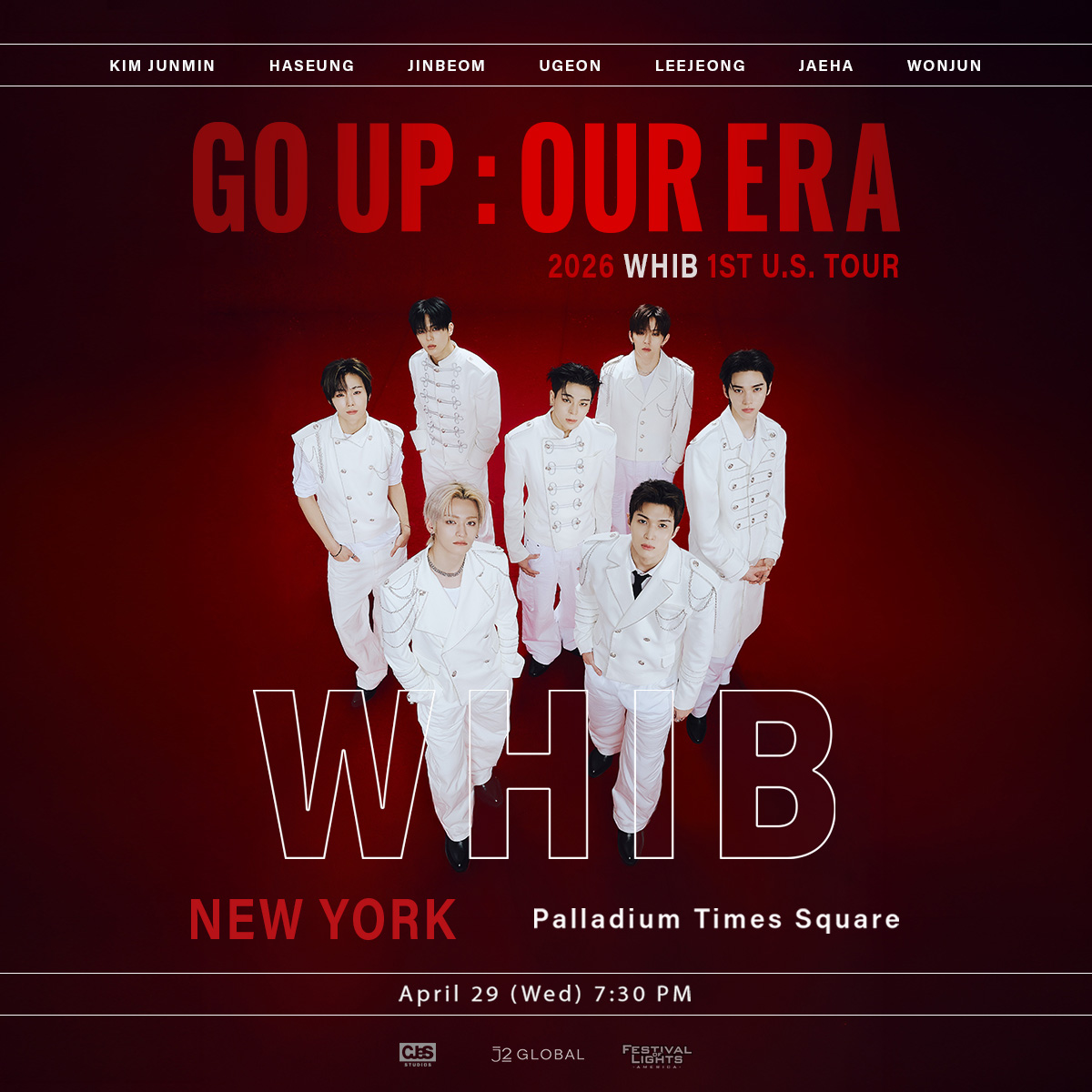

WHIB's "GO UP : Our era" U.S. tour has been abruptly postponed three weeks before its scheduled start, a decision rooted in a perfect storm of visa denials, venue logistics, and strategic recalibration. This isn't merely a scheduling change; it's a symptom of the intense growing pains K-Pop faces as it pushes for Western market dominance. Our analysis, drawing on industry sources and historical data, uncovers the operational breakdowns behind the delay and what it foretells for the entire sector's future.
- Why Was WHIB's "GO UP : Our era" Tour Postponed at the Last Minute?
- How Will This Delay Impact WHIB's Career Trajectory and Fan Loyalty?
- What Are the Systemic Challenges Behind K-Pop Tour Postponements?
- How Does WHIB's Case Compare to Past K-Pop Tour Disruptions?
- What's Next for WHIB and the U.S. K-Pop Scene?
- FAQ: Your Questions About WHIB's Tour Postponement Answered
Why Was WHIB's "GO UP : Our era" Tour Postponed at the Last Minute?
The Veneer of "Unforeseen Circumstances"
The agency's official statement was characteristically vague, citing "unavoidable circumstances." However, multiple booking agents and promoters familiar with the tour's planning confirm a cascade of failures. The primary culprit was not a single event but a critical mass of smaller, interconnected logistical failures that made proceeding impossible.
This opacity often protects negotiations and relationships but fuels fan speculation and mistrust. It contrasts sharply with transparent handling in other sectors, highlighting a cultural hesitation in K-Pop management to disclose operational weaknesses.
Visas: The Invisible Wall for K-Pop Crews
While WHIB's members likely secured P-1A visas for "internationally recognized artists," the backbone of any tour—the technical crew—faced a different battle. Dozens of Korean sound engineers, lighting directors, and stage managers applied for P-3 visas for "culturally unique" artists.
U.S. Citizenship and Immigration Services (USCIS) has reportedly tightened adjudication of these visas post-pandemic, causing severe delays and denials. "A tour of this scale needs 50-70 specialized crew from Korea," shares an anonymous tour producer. "If even 15 are stuck, the show cannot go on. It's that simple."
Venue Roulette and Contractual Dominoes
The tour was slated for major arenas in New York, Los Angeles, and Chicago. Securing these venues is a high-stakes game of timing and deposits. Our sources indicate that delays in finalizing one key venue, triggered by a competing arena event extension, created a domino effect.
This disrupted the entire routing schedule, making the previously locked-in dates at other cities untenable. The financial penalties for pulling out later would have been catastrophic, forcing the agency's hand to postpone early.
A Hidden Strategic Pivot?
Some industry analysts posit that weak advanced ticket sales in certain markets may have provided a covert rationale. Postponing allows for a rebranding, scaling down, or rerouting of the tour without publicly admitting to soft demand.

This aligns with a colder, data-driven approach now permeating major agencies. It’s a calculated risk: absorb the short-term PR hit to avoid a long-term financial loss and a potentially half-empty arena spectacle captured on social media.
How Will This Delay Impact WHIB's Career Trajectory and Fan Loyalty?
Momentum Derailment in a Hyper-Competitive Landscape
WHIB was at a crucial juncture, using the tour to cement their transition from a domestic hitmaker to a global touring act. This delay creates a dangerous vacuum in their promotional cycle. Momentum in K-Pop is ephemeral; fans and algorithms quickly move on.
This gap could depress their metrics on global charts, affecting future brand deals and collaborations. The agency must now scramble to fill this gap with substitute content to maintain visibility and relevance.
The Fandom Psychology: Disappointment vs. Devotion
Initial social media analysis shows a clear split in the WHIB fandom. A vocal segment expresses deep frustration over non-refundable travel plans, while the core fandom mobilizes under hashtags like #WeWaitForWHIB. This loyalty is powerful but not unconditional.
History shows that fandoms can withstand delays if handled with respect. The critical factor is transparent, consistent communication and tangible goodwill gestures. Silence or perceived disrespect, however, can cause permanent erosion of trust.
Financial Repercussions and Brand Equity Erosion
The direct costs are staggering: forfeited deposits, penalty clauses, and the operational cost of dismantling plans. Indirectly, the hit to brand equity can be more damaging. Luxury and consumer brands seeking K-Pop partnerships view reliable global execution as a key criterion.
A very public logistical failure makes WHIB appear a riskier investment for such high-stakes partnerships. The agency must now work doubly hard to demonstrate stability and professionalism to the corporate world.
What Are the Systemic Challenges Behind K-Pop Tour Postponements?
The Archaic Visa System vs. Modern Touring Demands
The U.S. visa system is not built for the rapid, large-scale movement of specialized entertainment personnel that K-Pop requires. The P-3 visa process, in particular, is subjective and slow. Agencies often rely on third-party expeditors, but this adds cost and another point of failure.
This is a sector-wide crisis, not a WHIB-specific issue. It necessitates industry-wide lobbying, something Korean agencies have been slow to prioritize collectively, often preferring competitive silos over cooperative solutions.
Market Saturation and Audience Calculation Errors
The U.S. market is experiencing a K-Pop concert glut. In 2024 alone, over 30 major K-Pop acts have announced U.S. tours. This fragments the audience and wallet share, making some tours financially unviable from the start.
Agencies, riding the wave of K-Pop's global popularity, have sometimes overestimated demand for mid-tier groups. This echoes the misallocation of resources seen in the grueling idol training system, a theme explored in our analysis of The LEAP Disbandment Decoded.
The "Spectacle" Trap: Unsustainable Production Models
K-Pop concerts are expected to be immersive, high-tech experiences mirroring the production value of music videos. Transporting these bespoke stages—often with custom LED, hydraulic systems, and intricate props—across continents is a herculean task.
Any disruption in the complex supply chain, from customs hold-ups to specialized freight carrier issues, can bring everything to a halt. The model itself may need scaling back for international viability, focusing more on artistic performance than overwhelming hardware.
How Does WHIB's Case Compare to Past K-Pop Tour Disruptions?
A Pattern of Pre-Pandemic and Pandemic-Era Disruptions
Long before COVID-19, K-Pop tours faced hurdles. Groups like EXO and BIGBANG have canceled dates due to a mix of internal issues, security concerns, and logistical snags. The pandemic, however, created a new normal where postponements became commonplace, masking deeper structural issues.
WHIB's situation is distinct because it occurs in a "post-pandemic" landscape where these issues are no longer universally excusable. The market and fans now expect seamless execution, raising the stakes for failure.
Comparative Analysis: Scale, Reason, and Recovery
The table below illustrates how WHIB's scenario fits into a broader history of K-Pop tour disruptions, highlighting common themes and divergent outcomes.
Group / Act Tour / Event Year Primary Reason for Disruption Scale of Impact Eventual Outcome WHIB GO UP : Our era U.S. Tour 2024 Logistical cascade (visas, venues) Full tour postponement, weeks before launch Pending; critical test for agency strategy BTS Map of the Soul Tour 2020 Global Pandemic (Force Majeure) Worldwide cancellation/postponement Successfully pivoted to online concerts; resumed touring years later BLACKPINK In Your Area World Tour (North America) 2019 Production & Scheduling Scaling Multiple date reschedules Completed successfully; used delay to upgrade production SM Town Live SM Town Live in Los Angeles 2012 Weak Ticket Sales Outright cancellation Canceled; major retreat from U.S. market for several years Various Mid-Tier Groups U.S. Showcases & Tours 2022-2023 Visa Issues for Crew/Members Individual date cancellations or last-minute artist substitutions Often led to scaled-back tours or reputational damageKey Takeaways from Historical Precedents
The groups that navigated disruptions best were those with unwavering fan loyalty (like BTS) or those that used the delay to strategically improve the product (like BLACKPINK). Outright cancellations, often tied to sales, typically led to prolonged market avoidance.
WHIB's path will likely lie between these points. Their agency's next moves—whether they communicate proactively, offer meaningful fan engagement, and reschedule credibly—will determine their placement in this historical continuum.
What's Next for WHIB and the U.S. K-Pop Scene?
WHIB's Probable Crisis Management Playbook
Expect a multi-phase response from the agency. First, concrete rescheduled dates within 4-6 weeks, paired with a fan apology video from the members. Second, a "make-good" offering, such as exclusive online content or first access to new merchandise.
Third, and most crucially, a potential strategic shift. The tour may return in a reconfigured format—perhaps as a theater-based "intimate" series in fewer cities, reducing logistical complexity and creating a premium, sell-able narrative.
The Broader Industry Reckoning
WHIB's postponement will force other agencies to scrutinize their own U.S. tour plans. We may see a trend towards:
- Co-promotion deals with established U.S. promoters to handle local logistics.
- Phased expansions, starting with festival appearances (e.g., Coachella, Lollapalooza) before committing to solo arena tours.
- Increased investment in virtual concert hybrids to build demand and mitigate physical touring risks.
Redefining Success Beyond the Arena Tour
The industry may begin to decouple "global success" from "U.S. arena touring." Sustainable growth could involve deepening strongholds in Southeast Asia and Latin America, while using strategic digital and chart campaigns in the West. The sustained UK chart success analyzed in Beyond the Numbers: How BTS Redefines K-Pop's UK Legacy demonstrates that legacy is built on consistent cultural penetration, not just touring.
Agencies might prioritize securing a viral cultural moment or a stable chart presence, as seen with Hwasa's recent impact, over the high-risk tour. This represents a maturation of the global strategy.
FAQ: Your Questions About WHIB's Tour Postponement Answered
1. Are refunds available immediately, or do we have to wait for new dates?
Official policy typically holds tickets valid for the new dates. However, most major ticketing platforms will open a refund window for a limited time once the postponement is officially logged in their system. Contact your point of purchase directly for the most accurate instructions. Do not resell tickets through unofficial channels during this uncertain period.
2. Could this postponement lead to outright cancellation?
While possible, cancellation is the agency's least desirable outcome due to the massive financial penalties and reputational damage. Postponement is a signal they intend to regroup and execute. Cancellation would likely only occur if insurmountable legal or financial barriers emerge during the rescheduling process.
3. How can the agency prevent this from happening again with the rescheduled dates?
Prevention requires a fundamentally different approach. This includes initiating visa applications 6-9 months in advance, securing venues with more flexible contract clauses, and potentially working with a North American-based production company to localize more of the technical crew, reducing visa dependency.
4. Does this affect WHIB's activities in other regions, like Asia or Europe?
Not directly. Regional tours are often planned by different local promoters and face distinct logistical landscapes. However, the financial loss from the U.S. postponement could theoretically impact the budget for future global projects, making the agency more cautious.
5. Should fans trust future tour announcements from this agency?
Trust must be earned back through action. Fans should adopt a "wait-and-see" attitude toward future U.S. tour announcements. A key indicator will be how transparent and detailed the agency is about planning when announcing rescheduled dates. Vague announcements should be met with healthy skepticism.
6. Is there precedent for a group bouncing back stronger after such a delay?
Yes. BLACKPINK's 2019 tour rescheduling is a prime example. The delay allowed for production upgrades and strategic marketing, culminating in a highly successful run. The hiatus also built fan anticipation. WHIB has the potential to replicate this if their agency manages the crisis intelligently and turns the delay into a narrative of overcoming adversity.
The postponement of WHIB's "GO UP : Our era" tour is far more than a isolated calendar change. It is a stark, real-time stress test of K-Pop's global operational infrastructure. It reveals critical vulnerabilities in visa logistics, market assessment, and risk management that the industry can no longer ignore. For WHIB, the coming months are a defining chapter—an opportunity to demonstrate resilience and strategic agility. For the industry, it is a mandatory lesson in humility and adaptation. The era of assuming infinite growth and smooth expansion is over; the era of strategic, sustainable global engagement has begun.
Next Steps for Fans & Observers: Monitor official channels for rescheduled dates, but also watch for broader industry announcements on touring partnerships. For continued in-depth analysis on K-Pop's evolving business landscape, explore our coverage on our News page and delve into artist profiles on our Artists page.