
In a candid revelation that resonated far beyond a simple fashion tip, a top-tier girl group member recently admitted to frequently buying children's clothing sizes to fit her petite frame. This seemingly innocuous confession has ignited a complex conversation about K-Pop's rigorous beauty standards, the practical realities of styling off-stage idols, and the intense scrutiny of female idols' bodies. This analysis delves into the industry mechanics, historical context, and fan ecosystem that transformed a shopping habit into a cultural flashpoint.
- Beyond the Headline: Deconstructing the Confession
- The Sample Size Ceiling: How Industry Logistics Dictate Ideals
- Fan Love vs. Fan Pressure: The Dual-Edged Sword of "Petite" Praise
- Not Alone: A Lineage of Petite Idols and Their Styling Battles
- The Unasked Question: Navigating the Delicate Line Between Petite and Health
- Your Questions Answered: The Petite Idol FAQ
Beyond the Headline: Deconstructing the Confession
The news broke not through a formal press release, but through the intimate, often unfiltered channel of a live broadcast or fan community post. This origin story is crucial. It frames the admission as a genuine, off-the-cuff moment of relatability, not a calculated PR move.
The Power of "Relatability" in Idol-Fan Bonds
Idols sharing mundane life details—like shopping frustrations—forges a powerful parasocial connection. It breaks the illusion of flawless, untouchable celebrity. Fans think, "She shops at the same stores, she faces fitting room woes too." This builds immense goodwill and loyalty, which can directly translate to album sales and streaming numbers.
Why Children's Sizes? The Practical Logistics
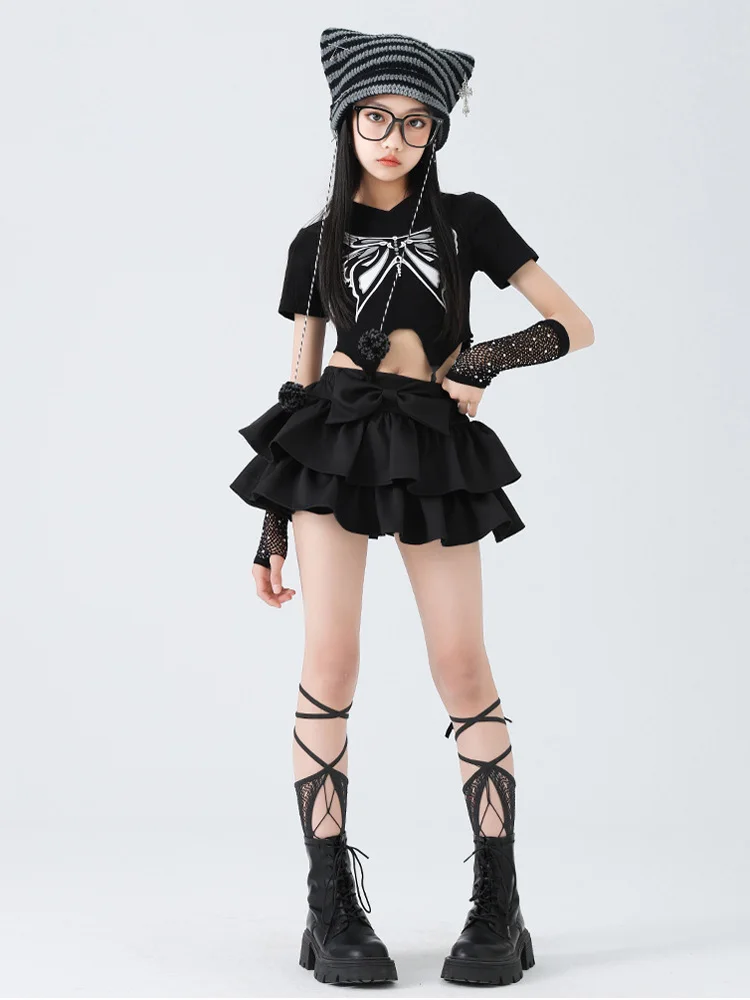
For the exceptionally petite, children's sections aren't just an option; they're a sartorial necessity. The benefits are tangible:
- Proportion: Sleeve and inseam lengths are cut for smaller statures.
- Fit: Shoulder and waist measurements align more closely with a very small adult frame.
- Cost: Children's clothing is often significantly less expensive than its adult designer counterpart.
This highlights a stark reality: mainstream adult fashion often fails to cater to the full spectrum of body types, even those idolized in media.
The Sample Size Ceiling: How Industry Logistics Dictate Ideals
This confession inadvertently pulls back the curtain on K-Pop's backend, where styling is an industrial process. The idol's off-the-rack solution contrasts sharply with her on-stage reality.
The Styling Room Reality: Clothes That Fit the Clothes
On-stage and in music videos, every outfit is meticulously tailored. Stylists often choose garments based on visual impact first, with the certainty that a team of seamstresses will alter them to fit the idol perfectly. This creates a distorted perception. Fans see flawless fits and assume that's the standard available in stores, when in reality, it's the product of skilled alteration.
The "Ideal" Measurement and Its Tyranny
While diversity is slowly increasing, a narrow range of measurements still dominates the industry's subconscious blueprint. Sample sizes provided by brands, especially for high-fashion photoshoots or early-stage styling, are typically a Korean size 44 or 55 (equivalent to a US XS/S). An idol who must shop in the children's department exists outside even this restrictive sample framework, highlighting just how extreme the expectation can be.

The pressure isn't always to be dangerously thin, but to be consistently, reliably a specific size—a mannequin-like form that simplifies and economizes the massive logistical operation of styling a group for countless promotions, videos, and appearances.
Fan Love vs. Fan Pressure: The Dual-Edged Sword of "Petite" Praise
Fan reaction to such news is never monolithic. It fractures into distinct, often opposing camps, each wielding significant influence in the digital arena.
The "Cute and Fairy-Like" Narrative
A dominant fan response is to aestheticize the idol's size. Terms like "pocket-sized," "fairy," "dainty," and "delicate" flood comment sections. This framing celebrates her petite stature as a core part of her charm and appeal, linking it to concepts of innocence and unreal beauty. It's a form of praise, but one that rigidly defines her identity by her physical dimensions.
The Concern and Critique Camp
Conversely, a vocal segment of the audience and media expresses immediate concern. This group views the confession not as a cute anecdote but as a potential red flag for unsustainable dieting or health issues. Their comments spark crucial, if often uncomfortable, conversations about the physical demands of idol life, reminiscent of discussions following other intense reveals about industry pressures.
How Media Amplification Shapes the Story
Outlets like Koreaboo serve as accelerants. By packaging the confession into a standalone, viral-friendly article, they remove it from its original context. The nuance of the live stream, the idol's tone of voice, and her subsequent comments may be lost, reducing a complex topic to a shocking headline. This cycle mirrors how Hwasa’s viral moment was dissected, where a brief awards show interaction spawned weeks of analysis about power and agency in K-Pop.
Not Alone: A Lineage of Petite Idols and Their Styling Battles
This idol is merely the latest in a long history of famously petite female artists. Examining this lineage shows how companies have navigated—or failed to navigate—styling and public perception over the generations.
Idol (Group) Reported Height Styling Strategy Public Narrative Gain (Brown Eyed Girls) ~160 cm Bold, conceptual, high-fashion; used height as part of a fierce, unconventional image. "Confident" and "powerful," redefining petite as imposing. Sunmi (Wonder Girls) ~164 cm Legacy-focused, often with heels and bold silhouettes that elongate; mix of cute and chic. "Iconic" and "stylish"; height rarely the central focus. Umji (GFRIEND/VIVIZ) ~165 cm Evolved from schoolgirl concepts to mature, tailored looks that emphasize proportion. Narrative of "glowing up" and gaining confidence. Chuu (former LOONA) ~162 cm Hyper-feminine, colorful, and playful styles that lean into a "bright" and cute image. Overwhelmingly "cute" and "energetic," with size central to brand.The Agency's Role in Crafting the Narrative
As seen in the table, the agency's styling and marketing choices directly shape whether an idol's petite stature becomes a defining gimmick or just one attribute among many. A strong, consistent concept can overshadow physical discussions entirely. Conversely, a company that constantly highlights "small" and "cute" risks pigeonholing the artist, a challenge many face when trying to transition to more mature concepts later in their careers.
The Unasked Question: Navigating the Delicate Line Between Petite and Health
Beneath all fashion and fandom discourse lies the perennial, tense question about health and well-being in an industry notorious for its physical demands.
The Impossibility of External Assessment
It is critical to state that a clothing size alone is not a diagnostic tool. Naturally petite body types exist. The issue arises when the industry's systemic pressures—grueling schedules, constant scrutiny, and the economic imperative to maintain a "look"—create an environment where unhealthy practices can be normalized in pursuit of maintaining that size. The recent disbandment of groups like LEAP, as analyzed in The LEAP Disbandment Decoded, reminds us that the industry's survival pressures are immense and multifaceted, with physical upkeep being a significant, if silent, factor.
A Shift in Conversation?
There are faint signs of change. More idols are speaking about balanced diets, weight training for strength over thinness, and rejecting extreme diets. Male idols, too, are discussing the pressures of extreme muscular definition. This confession, while sparking concern, also exists in this new, slightly more open environment where idols can hint at the realities behind the glamour. The conversation is evolving from pure praise towards a more nuanced understanding of the human inside the idol.
Your Questions Answered: The Petite Idol FAQ
Q1: Do idols really buy their own clothes off-stage?
Yes, frequently. While stagewear is handled by stylists, idols are often seen in airport fashion and personal social media posts wearing their own selections. High-end gifts from fans or brands are common, but everyday wear is largely personal, making these shopping confessions highly relatable.
Q2: Why is there so much focus on female idols' bodies compared to male idols?
Scrutiny exists for all idols, but it manifests differently. Female idols face intense pressure around thinness, youthfulness, and a narrowly defined "feminine" ideal. Male idols face equally rigorous, but different, pressures around muscularity and leanness. The public discourse, however, has historically been more vocal and critical regarding women's bodies.
Q3: Is the "petite idol" trend a K-Pop-specific phenomenon?
While ideals of slenderness exist globally in entertainment, K-Pop's particular blend of hyper-stylized visuals, cute ("aegyo") concepts, and the "girl/boy next door" accessibility factor amplifies it. The industry's systematic production, where idols are styled as coordinated units, also incentivizes a certain physical uniformity that can exclude larger body types.
Q4: Could this confession actually be a strategic move?
While likely genuine, all public idol communications are filtered through a strategic lens. This admission reinforces a "relatable" and "authentic" persona, strengthens the bond with fans, and generates harmless, viral media coverage—a positive cycle for the idol's personal brand. It’s a savvy piece of personal PR in an industry built on connection.
Q5: How can fans support idols without fueling unhealthy pressures?
Focus on talent, artistry, and personality over physique. Praise performance skill, vocal tone, or stage presence. Avoid constantly commenting on weight loss or gain. Support idols who speak about healthy habits and challenge narratives that reduce them to their body size. Be mindful that your comments, even meant as praise, contribute to the environment they operate in.
Conclusion: A Single Size Tag, A Multitude of Meanings
The revelation that a top idol buys children's clothing is far more than a quirky factoid. It is a lens focusing the harsh light of scrutiny on K-Pop's fashion logistics, its unforgiving physical standards, and the complex dance between idol authenticity and fan perception. It connects to broader industry patterns, from the viral moments dissected on our News page to the systemic challenges facing new groups.
This moment underscores that every public utterance from an idol is a text to be decoded, reflecting the pressures and realities of the world's most fast-paced entertainment industry. As audiences, moving beyond the initial shock of the headline to understand the systemic factors at play is crucial. It allows for a more empathetic and critical engagement with the art and the artists, recognizing the person behind the perfect, tailored image.
What to watch next: Observe how this idol's agency styles her in upcoming comebacks. Will they lean into the "petite" narrative, or consciously style her toward more powerful, size-neutral concepts? Follow the conversation on our Charts page to see if such viral moments impact digital metrics. And for deeper dives into the business behind the scenes, explore our ongoing analyses of how groups sustain success—or don't—in today's hyper-competitive landscape.