
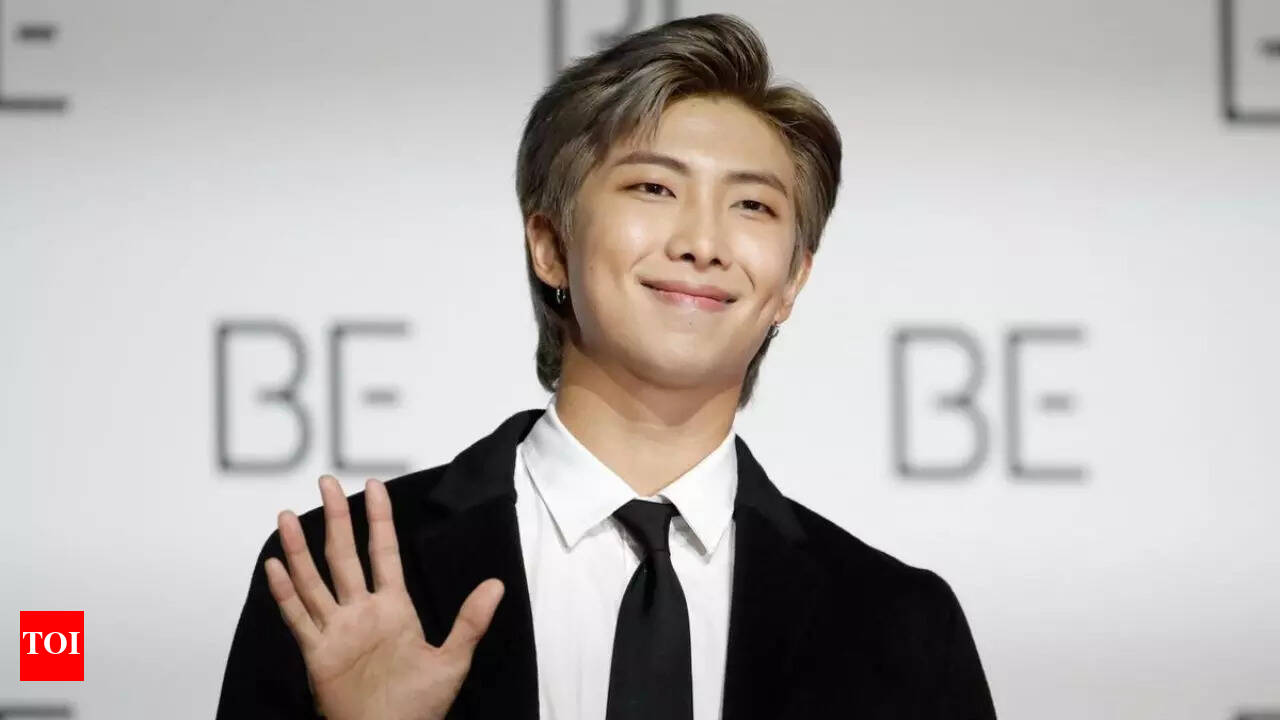

The world of K-Pop is no stranger to controversy, but few sparks ignite a firestorm quite like a perceived slight against its most towering figures. This week, a seemingly offhand remark from an unexpected corner of South Korea's elite has detonated a complex debate about respect, cultural identity, and the very metrics of global success. The incident, which began with a casual social media comment and quickly escalated into headline news, centers on none other than BTS’s leader, RM, and a question that many thought the group had definitively answered years ago: Can they speak English?
The source of the remark has added layers of social intrigue and media frenzy. It did not come from a rival industry figure or a foreign critic, but from the mother-in-law of top actress Park Shin-hye. The matriarch, who runs a popular Instagram account sharing lifestyle and family content, found herself in the eye of a hurricane after a now-deleted interaction. What was intended as a private opinion became a public litmus test for the nation's attitude toward its most famous cultural ambassadors, revealing fissures between generations, social classes, and visions of Korea's place in the world.
From Seoul to the Super Bowl: BTS's Linguistic Journey
To understand the weight of the comment, one must first appreciate the arc of BTS's global conquest. Their story is not just one of musical hits, but of deliberate, often arduous, cultural bridge-building. When they first began targeting international audiences, the language barrier was a palpable wall. Early interviews in the US were conducted through translators, with the members often smiling shyly as their words were filtered through a third party.
This changed not by accident, but through immense effort. RM, in particular, took on the role of linguistic spearhead. Having taught himself English largely through watching the sitcom Friends, he evolved from a capable speaker to the group's eloquent de facto spokesperson. His speeches at the United Nations, his thoughtful interviews with Western media giants, and his heartfelt communication with ARMY worldwide are testaments to a skill honed under the global spotlight's glare. Other members followed suit: Jin studied English diligently, Jung Kook and V showcased improving skills in variety content, and SUGA’s incisive lyricism often grappled with the nuances of expression across languages.
Their linguistic evolution mirrored their artistic one. Songs like "Dynamite," "Butter," and "Permission to Dance," performed fully in English, were strategic moves that catapulted them to unprecedented heights on global charts. Yet, they consistently balanced this with deeply Korean-centric albums like "Map of the Soul: 7" and "Proof," asserting that their English-language forays were expansions, not abandonments, of their identity. This nuanced navigation of globalization makes any critique of their language abilities not just a comment on skill, but on their core strategy and integrity.
The Backlash Before the Storm: RM's Vulnerable Moment
Curiously, the remark about "kids who still can't speak English" landed just as RM was facing a separate, unrelated wave of online criticism. Following a recent public appearance, a segment of netizens had taken to online forums to nitpick his demeanor and expressions, a common but exhausting reality for idols in the hyper-scrutinized digital age. This created a fragile context—a leader already feeling the weight of public judgment, now confronted with a reductive critique of one of his most publicly developed skills.
As we've seen in cases like the viral moment of a nugu group leader's raw emotion, the public is increasingly attuned to the psychological toll on idols. RM's own past candidness about the pressures of fame, the creative struggles during the pandemic, and the burden of representation have painted a picture of an artist deeply thoughtful about his role. An attack on his linguistic capability, therefore, isn't seen as just a critique of grammar, but as a dismissal of the immense personal effort invested in connecting with a global audience.
Deconstructing The Digital Fallout: A Comment Goes Viral
The incident unfolded with the rapid, unforgiving pace of modern social media scandal. The celebrity mother-in-law, in a comment section discussing global celebrities, reportedly referred to BTS as "kids who still can’t speak English properly." Screenshots were taken, shared, and translated within hours. The phrase "still can’t" was particularly inflammatory, implying a persistent failure or a lack of growth, directly contradicting the very public journey ARMY had witnessed.

The narrative wasn't just about a mistake in syntax; it was about wielding social privilege to diminish a cultural achievement.
The backlash was swift and multifaceted. International ARMYs flooded social media with clips of RM's UN speeches, his interview with Grammy Pro, and his fluid conversations on American talk shows, using the hashtag #RespectRM. Korean netizens engaged in heated debate on platforms like Nate Pann and theqoo, with many expressing embarrassment that a fellow Korean would undermine the group's historic achievements. The comment was framed as not only factually incorrect but also as a display of "눈치 없음" (noon-chi eobseum - lack of social awareness) and an outdated, elitist mindset.
Critics argued that the remark came from a place of generational and social disconnect. It echoed a sometimes-prevalent older-generation sentiment that measures sophistication by flawless, academic English, rather than viewing language as a functional tool for connection—a tool BTS has wielded to break barriers that traditional diplomacy could not. The narrative wasn't just about a mistake in syntax; it was about wielding social privilege to diminish a cultural achievement.
The Industry's Silent Language of Power and PR
Behind the public fury, the incident triggered a stark reminder of the unspoken rules of Korean celebrity culture. The connection to A-list actress Park Shin-hye added a layer of high-society drama. While the actress herself was not involved, the familial link meant the story blurred lines between entertainment news and chaebol-esque social gossip. It highlighted the precarious position of celebrity families who live in the public eye but may not be versed in the delicate optics of the hyper-connected K-Pop world.
The expected, and swiftly delivered, apology was a study in crisis management. The account owner stated the comment was made without ill intent and was a careless personal opinion, expressing deep regret for causing offense to RM and BTS. She emphasized her respect for their work. However, for many fans, the apology felt procedural, unable to retract the underlying sentiment that had been exposed. It sparked a parallel conversation about the sincerity of public apologies in an industry where they are a standardized currency. As explored in our analysis of idol burnout and public perception, the emotional labor of constantly facing and forgiving public critique is a heavy burden for artists to bear.
A Fandom's Fury: ARMY Mobilizes With Purpose
The reaction from ARMY was a powerful demonstration of the fandom's dual nature: fiercely protective and strategically intelligent. There was little of the chaotic infighting that sometimes plagues online spaces. Instead, the response was channeled into two clear avenues: education and celebration.
- Evidence-Based Defense: Fans created detailed video compilations titled "RM's English Proficiency: A Timeline," showcasing his growth from 2013 to the present. These were shared not as angry rebuttals, but as calm, factual records.
- Trending Positivity: Hashtags focusing on RM's intellectual contributions, his leadership, and his lyricism—in both Korean and English—dominated Twitter trends, deliberately shifting the conversation from defense to appreciation.
- Philanthropic Redirect: As is common in ARMY culture, fan unions announced donations to literacy and language education charities in RM's name, transforming negative energy into positive social impact.
This mature, focused response underscored how ARMY has evolved alongside BTS. They are no longer just fans reacting to gossip; they are stewards of a legacy, understanding that the most powerful rebuttal to reductive criticism is to highlight the artist's profound and documented work. It also served as a shield for RM, ensuring the dominant narrative online was one of support and respect, potentially insulating him from the direct sting of the original comment.
Beyond The Headline: What This Says About K-Pop's Global Anxieties
At its core, this scandal is a microcosm of the larger identity crisis facing Korea's cultural exports. BTS stands at the pinnacle of Hallyu, having achieved a level of global penetration once thought impossible. Yet, this incident reveals a persistent undercurrent of domestic anxiety about how that global success is perceived and validated.
Is the ultimate sign of "making it" in the West the complete mastery of English? Or is it the power to make the world listen, regardless of the language spoken? BTS has arguably proven the latter, yet the former metric still holds sway in certain segments of Korean society. This tension reflects a broader post-colonial linguistic complex not unique to Korea, but felt acutely by a nation whose cultural influence has skyrocketed in a generation.
Furthermore, the incident highlights the generational divide in valuing different kinds of capital. Older generations may prioritize formal education and traditional markers of elite status. Younger generations, and global ARMY, value authenticity, effort, and cultural impact—seeing RM's self-taught, communicative English as more impressive and genuine than flawless, accented perfection. This clash is visible across the industry, from the sounds of groups like P1Harmony who blend languages seamlessly, to the visual-album concepts of acts like CLOSE YOUR EYES that communicate through imagery beyond language.
It also touches on the precarious nature of idol reputation, as detailed in resources like our artist profiles. An idol's image is a carefully constructed asset, and public remarks from figures outside the industry can inadvertently damage it, affecting everything from advertisement model rankings to general public perception.
The Road Ahead: Scars, Lessons, and Unshaken Legacies
So, what comes next? In the immediate term, the cycle of scandal will likely follow its well-worn path: apology, quiet reflection, and a gradual fading from the news cycle, replaced by the next comeback or industry announcement. For the individuals directly involved, there will be personal lessons in the magnifying power of digital platforms.
For RM and BTS, this episode is unlikely to cause more than a momentary ripple in their trajectory. Their legacy is built on a foundation far stronger than one ignorant comment. If anything, the overwhelming support has reinforced the bond with ARMY and solidified his image as a respected leader. However, it may add another layer to his—and the group's—ongoing reflection on the costs and contradictions of their unprecedented fame. The pressure to be perfect polyglots, diplomats, and artists is immense, and this incident is a reminder that even their most diligent efforts can be unfairly minimized.
For the industry, it's a cautionary tale about the expanding sphere of influence. Scandals no longer originate solely from dispatch reports or competitive fandoms; they can spring from the comment sections of celebrity-adjacent family members. Public relations strategies must now account for a wider, more interconnected web of potential triggers.
Ultimately, the story that began with a jab about English proficiency ended up speaking volumes in a language everyone understood: the universal language of respect. It proved that BTS's success has transcended music to become a cultural touchstone, a mirror held up to society's views on class, age, and globalization. And in that reflection, the passionate, educated defense mounted by millions around the world showed that the true measure of an artist's impact isn't in the vocabulary they command, but in the connections they forge and the conversations they inspire—even, and especially, the difficult ones. The final word belongs not to a careless commentator, but to the enduring global dialogue BTS continues to lead, in every language under the sun.