
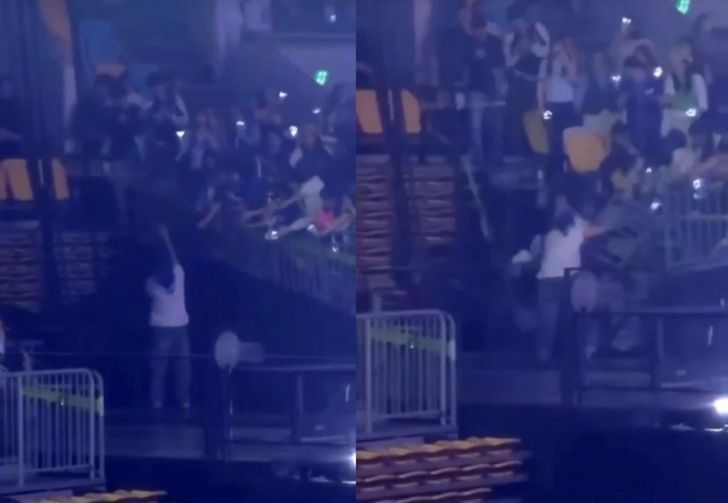

The Moment the Music Stopped: An Incident That Shook the Fandom
In the shimmering world of K-Pop, where precision and spectacle are often taken for granted, the stage is a sacred space. It's where dreams are realized, connections are forged, and artistry is displayed in its most vibrant form. But sometimes, that space can become a site of sudden terror. For fans of Super Junior attending a recent concert of the group's beloved main vocalist, Kim Ryeowook, that terror became a palpable reality. What was meant to be an evening of musical celebration swiftly transformed into a scene of confusion and fear when a significant technical failure led to a dangerous accident mid-performance. For days, the incident was shrouded in the quiet anxiety of unanswered questions, until Ryeowook himself, in a move that has defined this story, chose to break that silence. His personal, emotional address to fans has not only clarified events but has opened a profound dialogue about vulnerability, safety, and the unspoken pressures idols carry every time they step under the lights.
The details, as they emerged, painted a picture of a close call. During a dynamic segment of his solo concert, part of a broader tour, a malfunction involving stage apparatus or set pieces—reports suggest a possible issue with a moving platform or lighting rig—created a hazardous situation. While full specifics remain under internal review by the agency, SM Entertainment, it is confirmed that Ryeowook was directly involved, avoiding serious injury by mere chance. The concert was halted, and the idol was reportedly shaken but insisted on addressing the audience before the event was officially postponed. In the days that followed, official statements were brief, focusing on apologies and promises of investigation. It was the void left by these corporate communications that Ryeowook ultimately filled with his own voice, delivering a raw and introspective account that has resonated far beyond his immediate fandom.
Legends of the Stage: Super Junior and the Weight of Legacy
To understand the gravity of Ryeowook's statement, one must first appreciate the context of his career and the group he represents. Super Junior is not just a K-Pop group; they are institutions, often hailed as "Kings of Hallyu" for their pioneering role in spreading Korean pop culture globally since their debut in 2005. As part of the generation that laid the groundwork for the industry's current global dominance, their journey has been marked by immense triumph, reinvention, and resilience through personal and professional challenges. Ryeowook, who joined as a member of the subgroup Super Junior-K.R.Y. (focusing on ballad and R&B) before cementing his place as the group's main vocalist, embodies a specific kind of idol artistry: one built on technical vocal mastery, emotional delivery, and a deep, quiet dedication to his craft and fans, known as ELFs.
His career trajectory mirrors the evolution of the idol industry itself. From the rigid, system-trained idol of the 2000s to a seasoned artist navigating solo albums, musical theatre, and variety appearances, Ryeowook has grown in the public eye. This history matters because it informs the relationship of trust with his audience. When a veteran idol from a group like Super Junior speaks personally on a matter of trauma, it carries a weight that a newer artist's statement might not. It speaks to a legacy where the stage has been a second home for nearly two decades, making any violation of its safety particularly poignant. Furthermore, the incident taps into a broader, uneasy history within K-Pop of stage accidents, from falling props to dangerous choreography mishaps, a context that fans and professionals alike are acutely aware of. For more on the evolving roles and pressures on veteran idols, our analysis on the redefinition of idol-actors can be found here.
The Solo Path: Ryeowook's Artistic Identity Beyond the Group
Since his solo debut in 2016 with the album "The Little Prince", Ryeowook has carefully carved out a space for himself as a ballad and pop vocalist of great sensitivity. His concerts are known for their intimate atmosphere, where his powerful voice connects directly with the audience's emotions. This recent tour was a culmination of that work, making the accident not just a logistical failure but a disruption of a carefully fostered artistic dialogue. The psychological impact of such an event on an artist who trades in emotional authenticity is significant. It forces a confrontation with the physical risks that underlie the seemingly seamless performances fans adore, risks that are often hidden behind dazzling productions and smiling faces.
Breaking the Silence: Ryeowook's Candid Account and Its Raw Honesty
The core of this story lies in Ryeowook's decision to bypass solely agency-mediated communication and speak directly. Through a lengthy post on a fan community platform, he provided his perspective, not just on the facts, but on the emotional aftermath.
"To my dear ELFs who must have been so frightened... I am sorry. I am sorry for causing you worry, and I am sorry that I couldn't complete the stage for you that night. What happened was sudden, and in that moment, my first thought was not for myself, but for all of you in the audience. The fear in your eyes is what I remember most, and that is a memory that weighs on me heavily."
This excerpt from his message highlights a crucial dynamic: the idol's immediate concern for fan safety and experience, often placing audience well-being above their own. Ryeowook detailed the moments following the incident, describing a backstage environment of concern and chaos, but also of gratitude for the staff who acted quickly. He explicitly addressed rumors, asking fans not to blame specific crew members, emphasizing that live productions are complex endeavors where human error and technical faults can intersect unpredictably.
Perhaps most powerfully, he spoke of his own fear and the process of grappling with it. "For a few days, I questioned everything," he wrote. "The joy of performing, the excitement of the stage. It felt shadowed. But your messages, your letters, your unwavering support have been a light reminding me why I do this." This vulnerability is a marked departure from the often-curated resilience idols are expected to display. It echoes similar candid moments from other top artists, such as the conversation sparked by BTS's V regarding boundaries and fan communication, which we explored in this in-depth article. Ryeowook’s statement reframed the incident from a mere news item to a shared human experience between artist and fan.

Behind the Scenes: The Industry's Safety Protocols Under Scrutiny
While Ryeowook's focus was on emotional healing, his statement inevitably turned attention to the systemic issues of concert safety. K-Pop concerts are marvels of modern stagecraft, involving complex rigging, pyrotechnics, automated sets, and intricate choreography that often pushes physical limits. This accident has prompted renewed questions from media and fan unions alike about the rigor of safety checks, the working conditions for technical staff, and the pressure to execute increasingly spectacular shows without compromising well-being. Insiders suggest that while major agencies like SM have stringent protocols, the breakneck pace of tours and the demand for novelty can sometimes strain these systems. This incident serves as a stark reminder that behind every glittering performance is a network of human and mechanical elements that must function flawlessly.
A Tide of Blue: The Overwhelming Outpouring of Fan Support
The reaction from the global ELF fandom and the wider K-Pop community was immediate and immense. Social media platforms were flooded with messages of concern, relief, and love under hashtags like #StayStrongRyeowook and #WeLoveYouRyeowook. What began as shock quickly organized into acts of collective support.
- Digital Fan Projects: Fans organized coordinated trending events on Twitter and Instagram, sharing favorite performance clips, vocal highlights, and heartfelt letters to showcase their unwavering support and remind Ryeowook of his artistic impact.
- Charity Drives in His Name: In a move reflecting the philanthropic spirit of many K-Pop fandoms, fan bases initiated donations to charities related to mental health and performing arts safety, dedicating them to Ryeowook's recovery and safe return to the stage.
- Community-Building: Online spaces became hubs for fans to share their own experiences of the concert, offering comfort to one another and piecing together accounts to understand the event fully, always circling back to messages of patience and care for the idol.
This response highlights the mature, symbiotic relationship between a veteran group like Super Junior and their fandom. It's a bond tempered by time, through military enlistments, member changes, and now, shared adversity. The support wasn't limited to ELFs; fans of other groups and even fellow idols left comments on social media, expressing solidarity. This network of care is a foundational pillar of the K-Pop ecosystem, often activating in times of crisis to form a protective buffer around artists. For a broader look at how idols navigate their public and private selves, fans can explore profiles on our Artists page.
The Psychology of Fandom in Crisis
The fan reaction also provides a fascinating study in collective empathy. Unlike backlash over creative decisions or controversies, a physical accident triggers a universal, primal concern for safety. The messages focused not on the missed performance, but on Ryeowook's personhood—his health, his mental state, his need for time. This shift from consumer to caregiver within the fan dynamic is significant. It underscores how modern fandoms, particularly for long-standing groups, often operate as extended communities of mutual support, challenging simplistic narratives of obsession. They become stakeholders in the artist's well-being, not just their output.
Beyond One Stage: Industry-Wide Repercussions and Necessary Conversations
The ramifications of this incident extend far beyond Ryeowook's personal schedule or SM Entertainment's internal review. It has ignited a necessary, if uncomfortable, conversation within the K-Pop industry about performer welfare at its most fundamental level: physical safety on stage.
First, there is the direct impact on concert planning. Industry observers note that similar past incidents have led to temporary tightenings of safety measures, but sustained change is harder. This event, given the profile of the artist and his candid response, may serve as a catalyst for more transparent communication between agencies, production companies, and even fan representatives regarding safety audits. There are calls for more visible safety personnel, clearer emergency protocols for audiences, and potentially, industry-wide standards that go beyond the minimum legal requirements.
Second, it touches on the mental health of performers. The psychological trauma of a near-miss accident can lead to anxiety, stage fright, or post-traumatic stress, issues that the industry has only recently begun to acknowledge openly. Ryeowook's admission of fear and doubt is a powerful step in normalizing these conversations. It aligns with a growing movement where idols are increasingly vocal about the pressures they face, from unrealistic beauty standards—as discussed in our piece "Beyond the Scale"—to the intense scrutiny of their every move. An accident like this lays bare the fact that the "perfect idol" is a human being operating in a high-risk environment.
Finally, it affects the idol-fan contract. The unspoken agreement where fans offer devotion in exchange for artistry and accessibility is challenged when the stage itself becomes a threat. Ryeowook's approach—prioritizing transparency and shared emotion—has strengthened that contract through honesty. It sets a precedent for how agencies might handle future crises, suggesting that authentic communication from the artist can be more effective than sterile PR statements in maintaining trust and community cohesion.
Historical Context: A Pattern of Close Calls
Unfortunately, Ryeowook's experience is not isolated. Over the years, numerous K-Pop idols have suffered injuries from stage falls, equipment failures, or exhaustion during performances. Each event sparks temporary outrage and concern, but systemic change has been incremental. This incident gains additional resonance because it involves a senior artist from a flagship group, potentially giving advocates for better safety standards a louder voice. It raises the question: how many warnings does the industry need before comprehensive, enforceable safety reforms become a non-negotiable priority?
The Road to Recovery: What Lies Ahead for Ryeowook and Concert Culture
As the immediate shock subsides, the focus turns to the future. For Kim Ryeowook, the path involves both physical and emotional recovery. SM Entertainment has announced that all immediate solo concert schedules have been postponed to allow for a proper rest period and a thorough reassessment of production plans for the tour's resumption. The agency has pledged a full investigation into the accident's cause and a review of all future stage designs. More importantly, Ryeowook's own words suggest he will take the time he needs to reconcile with the event, likely with the support of his members, family, and professional counselors—a sign of the evolving support systems within agencies.
For the industry, the "what's next" is about prevention. This event may lead to:
- Increased Fan Advocacy: Organized fan unions may begin to formally include safety audits and transparency as part of their dialogues with agency fan meetings.
- Technological Safeguards: Greater investment in fail-safe mechanisms and redundant safety systems for moving stage parts and rigging.
- Artist Agency: Empowering artists with more direct input or veto power over stage elements they deem unsafe, moving beyond pure reliance on technical crews.
In the broader landscape, this incident reminds us that the magic of K-Pop is a collaborative illusion, one that requires not just talent and practice, but an unwavering commitment to the well-being of everyone involved—from the star in the spotlight to the technician in the wings. Ryeowook's courageous decision to speak his truth has turned a moment of fear into an opportunity for growth, empathy, and, ultimately, a safer stage for all. As Super Junior and their generation of idols continue to chart new paths, their legacy may well include advocating for an environment where the show can go on—without anyone having to pay for it with their safety. For continuing coverage on industry trends and artist news, readers can always visit our News page.
The final note is one of resilience. The blue ocean of ELF light sticks will wave again for Ryeowook, and when they do, it will be with a deeper understanding of the courage it takes to stand on that stage. His voice, which has delivered so much joy, has now also delivered a message of profound humanity—one that the K-Pop world would do well to heed.