
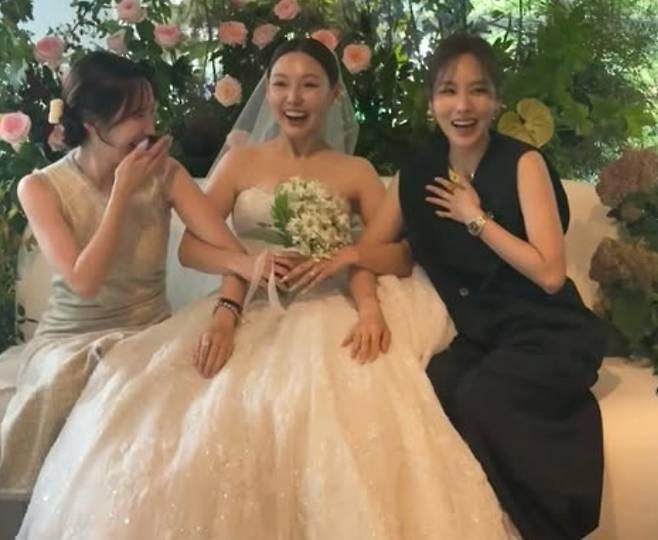

"My dearest GLAM-T Onces, my heart is so full to share that I have found my person. Please welcome my future husband, Park Min-jun, into your hearts as you have welcomed me."
With those words posted to her private Instagram account on a seemingly ordinary Tuesday evening, GLAM-T’s main vocalist Song Haneul (27) intended to share her joy. Instead, she ignited one of the most vitriolic and complex firestorms of fan-idol relations in recent memory. The announcement of her engagement to Park Min-jun (32), the publicly low-profile but widely recognized heir to the Jaewon Group conglomerate, was meant to be a fairy-tale moment. For a significant, vocal segment of her fandom, however, it was a betrayal. Within hours, the comment sections of GLAM-T’s official social media, the group’s fan cafe, and online communities like theqoo and Pann were flooded with accusations of deceit, financial betrayal, and shattered illusions, raising urgent questions about the unsustainable contracts idols make with their fans.
From Nugudom to Nation's Sweethearts: The GLAM-T Ascent
To understand the magnitude of the backlash, one must first understand the hard-won journey of GLAM-T and Haneul’s pivotal role within it. Debuted in 2017 under the now-defunct StarWeave Entertainment, the five-member group spent nearly three years in what fans dolorously refer to as the "dungeon." Their early days were marked by small-stage performances, sparse reality content, and a constant fight for visibility in an overcrowded market. The turning point came unexpectedly in 2020 with the viral success of their B-side track "Echo in the Rain," largely propelled by a fancam of Haneul’s emotionally charged performance during a music show encore stage, where she sang through visible tears of gratitude to a handful of fans.
This "underdog" narrative became the bedrock of their identity. Haneul, in particular, cultivated an image of profound, almost familial intimacy with the fandom, Once. She was the member who wrote long, handwritten letters for every fan sign, remembered fan names, and frequently spoke in interviews and livestreams about how "Onces are my reason to breathe" and "I live for the day we can all meet in a big concert hall." The group’s subsequent moderate success—a first music show win in 2021, steady mid-tier album sales, and a loyal fanbase—was framed not as corporate triumph, but as a mutual victory between the struggling idols and their devoted supporters. As explored in our analysis of solo potential, ASTROMA's Haneul Smashes Solo Ceilings, the bond between a mid-tier idol and their core fandom is exceptionally financial and emotionally co-dependent.
The Pillar of the Group
Haneul was never just a member; she was GLAM-T’s emotional core and primary vocal asset. Industry observers often noted that while other members brought visual or performance appeal, Haneul’s distinctive, husky-toned voice and her relatable, "girl-next-door" persona were the group's biggest draws. She was the most followed member on social media and consistently ranked highest in individual popularity polls. This disproportionate influence made her personal life not just tabloid fodder, but a matter of direct business concern for the group’s stability.
The Announcement and the Unraveling
The engagement post itself was a curated glimpse of paradise: a photo of Haneul and Park Min-jun’s interlocked hands, her delicate finger adorned with a spectacular, custom-cut diamond, against a backdrop of a sunset sea. The caption was heartfelt. However, the fairy tale crumbled in the court of public opinion with breathtaking speed. The issue wasn't merely that she was getting married—a taboo for many active, young female idols—but the specifics that began to surface.
Investigative netizens and media outlets quickly pieced together a timeline that painted a picture fans interpreted as duplicity. Park Min-jun was identified as the third son of Jaewon Group’s chairman. More damningly, social media sleuths found old, deleted posts from acquaintances hinting at the couple's relationship, suggesting it had been ongoing for over two years. This period directly coincided with GLAM-T’s most active and financially demanding promotional phases: their 2022 "Eclipse" comeback and the subsequent 2023 fan meeting tour, "Once Upon a Dream."
"We funded those comebacks. We bought hundreds of albums for video call chances, voted until our fingers were numb for their first win, and paid for that tour… all while she was secretly dating a chaebol heir. She sold us a dream of mutual struggle while living a secret luxury life." - Translated comment from the GLAM-T fan cafe.
The backlash crystallized around three central grievances:
- The "Poverty Fantasy": Fans felt Haneul had actively perpetuated a narrative of shared financial struggle and dedication to the group's success while being romantically involved with a man of extreme wealth.
- Career Betrayal: With GLAM-T’s contract up for renewal in early 2025, many fans saw the wedding (planned for this fall) as a sign she would not re-sign, effectively spelling the end of the group just as they were gaining momentum.
- The Nature of the Fiancé: The choice of a chaebol heir fueled accusations of "social climbing" and painted the relationship as transactional, further tarnishing the "pure," fan-centric image Haneul had built.
A Fandom Fractured: Love, Hate, and the Death of the Fantasy
The reaction was not monolithic, but the negative voice was deafening. On platforms like X (formerly Twitter) and Instagram, the hashtag #Haneul_Let_US_Down trended domestically. Photos of GLAM-T albums being cut up or thrown away were shared widely. More heartbreaking were the posts on the official fan cafe, where long-time fans wrote emotional "break-up" letters, detailing how they used money for part-time jobs to buy albums and now felt foolish.

"I skipped meals to save for the 'Eclipse' limited edition set because she said it was their most important album. Was she skipping meals? Was she riding in his chauffeured car?" one viral post read. This sense of financial and emotional betrayal echoes sentiments seen in larger-scale fan revolts, such as the controversy detailed in The Price of Purple: BTS's "NYEL" Merchandise Launch Sparks Unprecedented ARMY Revolt, where commercial exploitation severed a sacred trust.
However, a quieter, supportive contingent also emerged, primarily on more generalized news portals. They argued for an idol’s basic human right to a private life and happiness, criticizing the intense ownership some fans feel. "She’s 27, she worked hard for 7 years. Let her live," became a common refrain in these spaces. Yet, this voice was significantly drowned out within the group’s own dedicated fan spaces, which were in a state of mourning and rage.
The Agency's Deafening Silence
Adding fuel to the fire was the complete lack of official statement from GLAM-T’s current agency, Muse Interactive, which acquired the group’s contracts in 2021. Their silence was interpreted by angry fans as complicity or, worse, confirmation that the agency had been aware and complicit in hiding the relationship. It created a vacuum filled entirely by speculation and anger. This crisis communication failure highlighted a recurring industry blind spot, as explored on our News page covering various PR disasters.
Industry Analysis: A Tipping Point for the Mid-Tier?
Industry insiders speaking to K-Beats on background suggest this incident is a stark case study in the precarious economics of mid-tier K-Pop. "For top-tier global groups, fandoms are large and diversified enough to absorb a member's personal life news," one veteran entertainment reporter explained. "For groups like GLAM-T, survival depends on a smaller, intensely dedicated core fandom. That fandom's support is predicated on a perceived intimate, reciprocal bond. A dating rumor is damaging. A long-term, serious relationship with a chaebol, revealed *after* years of fan investment, can be catastrophic."
The analyst pointed out that this goes beyond the old "no-dating" rules. "It’s the perceived hypocrisy. The idol isn't just breaking a rule; they're seen as invalidating the very shared struggle that forged the fandom-idol contract. It makes every 'I love you Once' and 'we're in this together' feel like a scripted lie." This phenomenon is less about romance and more about the collapse of a carefully constructed parasocial narrative that mid-tier groups rely on for survival.
Furthermore, this situation places the other members of GLAM-T in an impossible position. Their careers are now inextricably yoked to a controversy they did not create. Any future group activities will be overshadowed by Haneul’s marital status and fan resentment. This dynamic forces a difficult question upon agencies: in the social media age, is it feasible—or ethical—to expect idols in their late twenties to indefinitely suspend real human relationships to maintain a marketable fantasy? The industry has grappled with polarizing artistic choices, like NCT 127’s Polarizing "Sticker", but personal life controversies cut to a far more visceral core.
What's Next for Haneul and GLAM-T?
The path forward is fraught. Several outcomes seem plausible, as per industry insiders we consulted:
- Immediate Damage Control: Muse Interactive must break its silence. A carefully crafted statement acknowledging fan feelings, clarifying the timeline (if possible), and outlining the future of GLAM-T is the bare minimum. A personal, handwritten apology from Haneul addressing the specific feelings of betrayal—not just for getting married, but for the perceived secrecy—may be necessary, though it risks further inflaming the situation.
- The Group's Fate: The upcoming contract renewal negotiations, already delicate, are now a minefield. It is highly unlikely the group can continue with its current dynamic. One scenario sees Haneul leaving the group preemptively, potentially pursuing a solo career or retiring from the industry entirely to focus on her new life—a path with precedent, but one that would leave GLAM-T without its vocal anchor.
- A Shift in Strategy: This incident may force a broader recalibration for agencies managing mid-tier acts. The "fake date" fan service and intense "us-against-the-world" messaging carry immense risk. There may be a move toward more authentic, less emotionally exploitative branding that allows idols a degree of personal agency without promising a false intimacy. For more on evolving idol careers, see our profiles on our Artists page.
- The Wedding Itself: The planned ceremony will now be a media circus. Every detail—the dress cost, the guest list, the absence or presence of her members—will be scrutinized and weaponized by both critics and supporters.
Ultimately, the saga of Haneul’s engagement is more than gossip. It is a painful, public negotiation of the boundaries between idol and fan. It challenges the very foundation of how mid-tier K-Pop is marketed and consumed. The devastating backlash is not merely about a wedding ring; it is the sound of a one-sided parasocial contract being ripped up by the very hands that once held it so dearly. The industry, and fandom culture at large, will be watching closely to see if any trust can be salvaged, or if this marks a permanent rift in the way idols' personal lives are perceived in the delicate ecosystem of K-Pop. As one final, poignant post on the fan cafe lamented: "We bought the dream she was selling. We just didn't know it had a different leading man." The fallout from this revelation will likely chart on our Charts page not in album sales, but in the indelible shift it may cause in fan-idol relations for years to come.