
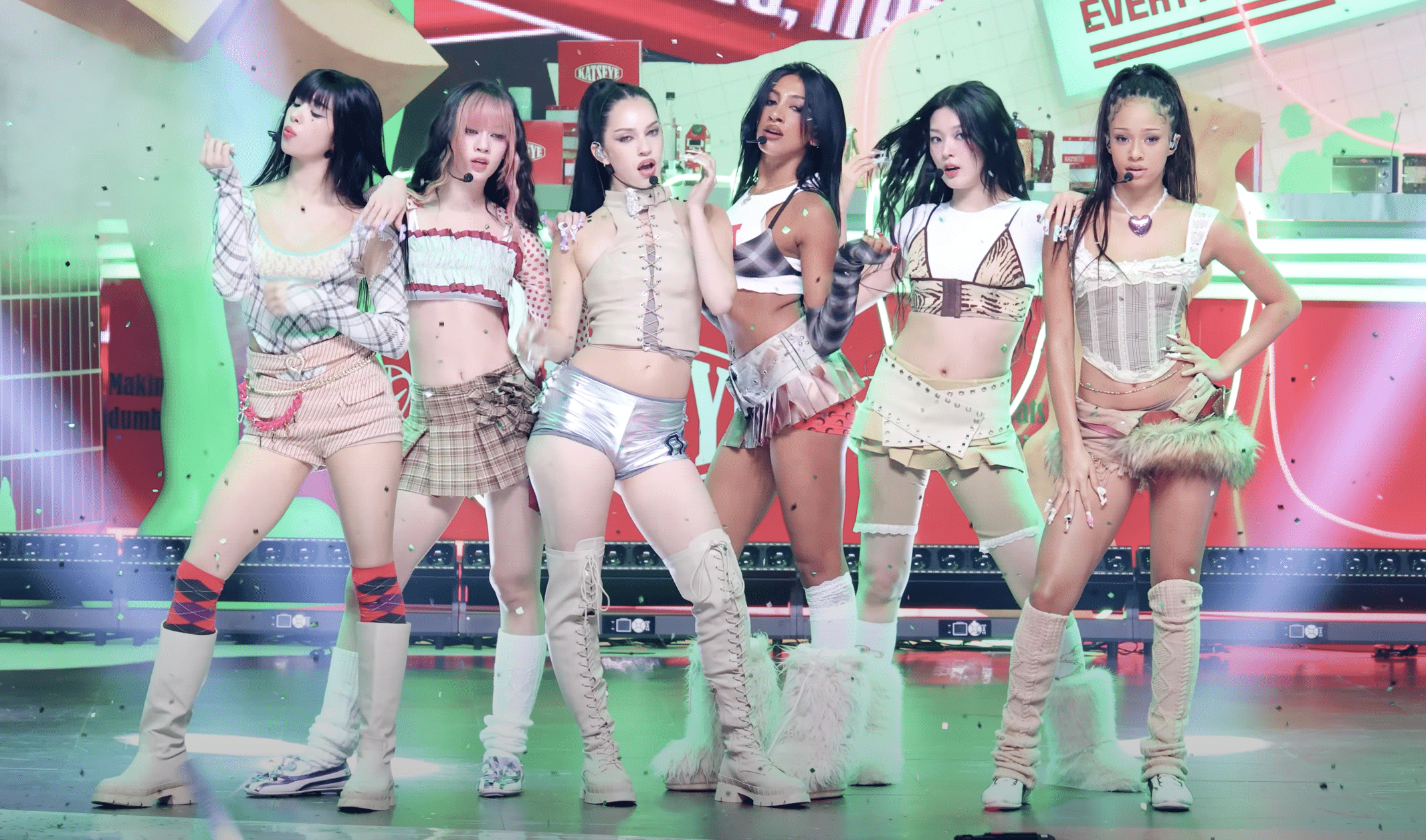

The recent firestorm accusing a top fifth-generation girl group of "dirty" dancing is less about a single performance and more a collision point for K-Pop's evolving identity. This in-depth analysis argues that the backlash exposes a fundamental tension: the industry's push for more complex, expressive, and mature choreography against entrenched, often conservative, expectations of idol conduct. The real story is in the gendered criticism, the strategic role of performance in a crowded market, and how groups navigate this high-stakes terrain.
- The Spark: What Actually Happened?
- Not a New Battle: A Brief History of K-Pop Choreography Controversies
- The Fifth-Gen Shift: Complexity vs. Perceived "Maturity"
- The Unavoidable Factor: Gendered Criticism in a Spotlight Silent Drivers: The Industry's Role in Pushing Boundaries
- Fandom Fractures: Defensive Stans, Critical Fans, and the Noise War
- FAQ: Your Questions Answered
The Spark: What Actually Happened?
A fancam from a recent music show encore stage went viral, but not for the usual reasons. Clips focused on a few seconds of improvised, rhythm-driven movement during a break in the choreography. The idol in question, known for her powerful and immersive stage presence, added body rolls and isolated hip movements to the song's beat.
The Anatomy of a Viral Moment
This wasn't part of the official choreography. It was a spontaneous moment of musical interpretation during a less-structured encore. However, isolated and looped on social media without the context of the full performance or the song's energy, it became the sole focus. The conversation swiftly moved from "vibrant performance" to a targeted debate on appropriateness.
From Critique to "Dirty" Label
The terminology is crucial. Critics didn't just call it "bad" or "sloppy" dancing; they labeled it "dirty," a term loaded with moral judgment. This frames the performance not as an artistic choice, but as a transgression. It shifts the critique from the technical (posture, timing) to the perceived ethical (propriety, intent), a common tactic in idol culture debates.
Not a New Battle: A Brief History of K-Pop Choreography Controversies
To see this as an isolated incident is to misunderstand K-Pop history. Each generation has faced its own version of this debate, often tied to female idols asserting a more confident, self-possessed image.
Second-Gen Pioneers and the "Sexy Concept" Era
Groups like Brown Eyed Girls with "Abracadabra" or Girls' Generation with "The Boys" faced scrutiny for sharper, more assertive movements. The late 2000s and early 2010s saw the rise and subsequent saturation of the dedicated "sexy concept," which often walked a tightrope between artistic expression and pandering, leading to its own set of critiques and eventual decline.
Third-Gen Refinement and the Power Concept
The third generation, with groups like BLACKPINK and MAMAMOO, shifted toward a "girl crush" or "powerful" aesthetic. Their choreography was sharp, fierce, and often portrayed a cool dominance. Controversies here were less about "dirtiness" and more about accusations of cultural appropriation or, occasionally, outfits deemed too revealing. The performance was about strength, not sensuality, which was more palatable to a wider audience.
The Bridge to Now
This historical context shows a gradual but clear trajectory toward female idols having more agency in their performance narratives. The current fifth-gen controversy sits on this timeline, but with a key difference: the choreography in question is often not explicitly "sexy" but is intricate, physically demanding, and incorporates styles like hip-hop and dancehall that emphasize body isolation and rhythm. The criticism conflates technical difficulty with intent.

The Fifth-Gen Shift: Complexity vs. Perceived "Maturity"
Fifth-generation groups are debuting in an impossibly competitive landscape. Simply being a good singer or dancer isn't enough; you need a defining performance signature. This has led to choreography that is arguably the most technically advanced in K-Pop history.
Skill Level at an All-Time High
Pre-debut training periods are longer, and companies recruit from a global pool of pre-trained dancers. The baseline skill is extraordinary. This allows choreographers to create pieces with:
- Micro-movements and isolations: Precise control of shoulders, ribs, and hips.
- Layered formations: Complex, weaving patterns that require spatial awareness.
- High-energy stamina tests: Routines that are athletic feats, barely allowing for stable live singing.
When Technical Nuance Gets Misread
The problem arises when this technical nuance—especially hip and torso isolations fundamental to street dance styles—is interpreted through a purely social lens. An idol executing a perfect body roll to hit a musical accent is demonstrating high-level dance skill. To a segment of the audience, however, that same movement is coded as inappropriately suggestive, regardless of artistic context.
Comparison: Generational Choreography Focus
GenerationPrimary Choreo FocusTypical Controversy TriggerExample Style 2nd GenCatchiness, "Point" MovesOvert "Sexy Concept" ThemesAfter School's "Bang!" 3rd GenSynchronicity, Power StagingOutfits, Cultural ReferencesBLACKPINK's "Kill This Love" 4th GenComplexity, "Killing Parts"Extreme Diet Culture, OverworkITZY's "WANNABE" 5th GenArtistic Expression, Genre Fusion"Inappropriate" Movement NuanceThe Controversy in QuestionThe Unavoidable Factor: Gendered Criticism in a Spotlight
It is impossible to discuss this without acknowledging the glaring double standard. Male idol choreography that is explicitly sensual—involving hip thrusts, crotch grabs, or simulated acts—is frequently described as "powerful," "charismatic," or "confident."
The Language of Judgment
Female idols are judged by a different lexicon. Similar movements are labeled "tacky," "desperate for attention," or "dirty." This reflects broader societal biases where female sexuality is policed, while male sexuality is celebrated as an expression of power. The idol industry, for all its progress, remains a microcosm of this dynamic.
The critique is never just about the dance. It's about policing the image and perceived purity of the female idol, a standard that is both impossible and archaic.
The Agency Argument
A key counter-argument from defenders is agency. They posit that these fifth-gen idols, often older at debut and more involved creatively, are making conscious choices about their performance style. They are embodying their music with a physicality they choose. The backlash, then, is seen as an attempt to strip them of that autonomy, to force them back into a more passive, "palatable" box.
Silent Drivers: The Industry's Role in Pushing Boundaries
While idols take the direct heat, the strategies of agencies and creative directors are the engine behind these performance choices. In the streaming and fancam era, going viral is currency.
The "Fancam Moment" Economy
Companies and choreographers design routines with specific, shareable "fancam moments" in mind. A shocking, powerful, or unique move can trend for days, bringing immense free promotion. This creates an incentive to push movements that are visually striking, even if they risk polarizing viewers. The recent backlash against RIIZE's performance style shows this pressure affects boy groups as well, proving it's an industry-wide pivot.
Differentiation in a Saturated Market
With dozens of talented groups debuting yearly, how do you stand out? For some, the answer is a performance identity that is unapologetically intense and physically expressive. It's a high-risk, high-reward strategy. It attracts fans who crave that raw performance energy but inevitably draws fire from more conservative quarters. This search for a unique playbook mirrors strategies we've seen elsewhere, like when idols leverage association with legends, as explored in our analysis of fifth-gen idols and legacy fandom.
Fandom Fractures: Defensive Stans, Critical Fans, and the Noise War
The controversy plays out most violently within fan spaces themselves, revealing a fractured ecosystem.
The Stan Defense Mechanism
For dedicated stans, any criticism is an attack on the idol they protect. Their response is immediate and total: flooding social media with alternate fancams highlighting "pure" moments, praising the idol's skill, and attacking the critics as "anti-fans" or "jealous." This creates a deafening echo chamber that can shield the idol from constructive feedback but also inflames the situation.
The "Critical Fan" Perspective
Another segment of the fandom may privately agree with some critiques, worrying that the controversy could harm the group's broader appeal or sponsor relationships. They might express this in closed forums, creating an internal rift. They aren't "antis," but they are concerned about long-term career trajectory, a tension familiar to fans of veteran artists navigating public and private life, as seen during Lee Hyori's personal trials.
How the Noise Shapes the Narrative
The online war between these factions amplifies the controversy far beyond its original scope. What might have been a fleeting comment becomes a week-long trending topic. This noise itself becomes part of the group's story, for better or worse. It tests the group's PR strategy and their ability to weather storms without explicit comment—which is usually the chosen path.
FAQ: Your Questions Answered
Q: Will this controversy actually hurt the group's career?
A: In the short term, unlikely. Controversy often drives engagement, and core fandoms rally. Long-term damage would only occur if it triggered a widespread public boycott or loss of major sponsors, which seems improbable. It may, however, make broadcast shows more cautious with camera angles for future performances.
Q: Why don't the agencies or idols just apologize to make it go away?
A: An apology would be an admission of wrongdoing, validating the critics' moral judgment. This sets a dangerous precedent and could invite further policing of every movement. Silence or continuing to perform as usual is the standard industry playbook, asserting that the performance itself is not improper.
Q: Is this related to the idols' ages or the "minor" debate in K-Pop?
A: Indirectly, yes. As the industry faces scrutiny over debuting very young idols, the maturity of concepts for all groups is under a microscope. This controversy, even involving adults, gets tangled in the larger, ongoing conversation about age-appropriate content in K-Pop, making the discourse more volatile.
Q: How can I judge the choreography for myself without the online noise?
A: Watch the full official performance video, not a looped clip. Then, watch a fancam of a different member during the same part. Finally, watch a performance of a previous song by the same group. This gives you context on the routine's intent, individual expression, and the group's artistic evolution. For more unfiltered performance analysis, check our dedicated Charts and Performance page.
Q: Are boy groups immune to this type of criticism?
A: No, but the threshold is different. Boy groups face backlash for being "too crude" or "lacking skill," but the moralizing "dirty" label is disproportionately applied to female idols. Boy group controversies tend to focus more on perceived laziness or inadequate skill, as seen in some reactions to certain performances.
The Final Pose: An Evolving Art Form in a Conservative Frame
The "dirty dancing" scandal is a symptom of K-Pop's growing pains. The art form—specifically female idol performance—is evolving faster than some societal and industry frameworks can accommodate. Choreography has become a primary language for artistic statement, and with that comes a desire from artists to use their full physicality to speak.
The backlash is a rearguard action from an old paradigm. However, the sheer volume of support for the idols, framing them as skilled artists pushing boundaries, suggests the paradigm is shifting. These controversies are the friction points of that shift.
What to watch for next: Observe how the group's next comeback choreography is received. Will it be a tactical retreat to safer movements, or a defiant doubling-down on their performance identity? The answer will tell us who won this battle in the long war over K-Pop's expressive boundaries. To follow the ongoing evolution of performance styles across the industry, from established legends to rising stars, keep your eye on our News coverage and explore the depth of artists on our Artists page.