

The Click That Echoed
In the meticulously curated world of K-Pop, where airport departures are treated as runway shows and every public appearance is a calculated component of a larger narrative, a single fashion choice can sometimes speak louder than a title track. This week, that reality crystallized around CHAESOL, the charismatic main dancer and vocalist of the rising 5th-generation girl group AURORA. A series of candid airport photos, disseminated with viral speed across social media platforms and fan communities, captured the idol in an outfit that has since divided opinions and ignited a complex discourse. At its center: a sheer, mesh top worn intentionally over a structured, lace-trimmed bra, a look boldly challenging the often-conservative sartorial norms applied to young female idols.
"It wasn't just an outfit; it was a posture. The confidence she exuded, staring directly into the lenses, transformed a fashion moment into a manifesto." — @StyleSeoul critic Park Ji-won on a late-night broadcast.
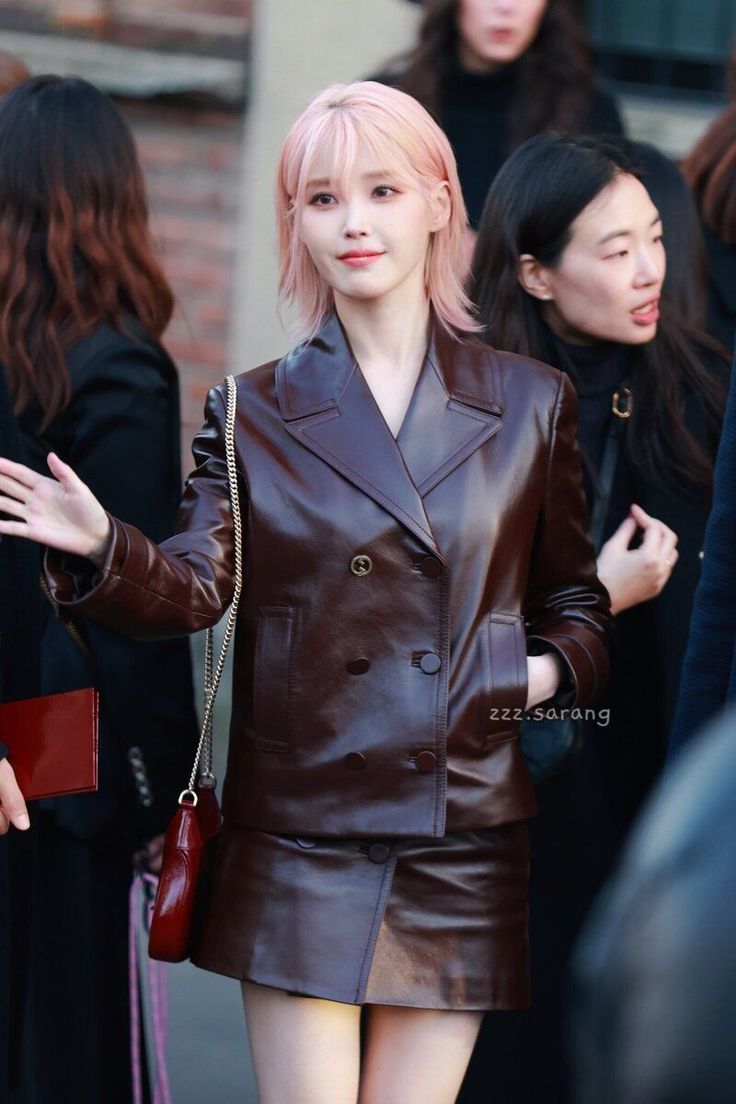
The images, far from the typical staged "airport fashion" pictorials, were snatched by press and fans in the kinetic chaos of Incheon International Airport. They show CHAESOL not as a shielded idol, but as a young woman in motion, her expression a blend of cool detachment and subtle defiance. The visual—a deconstructed blazer, tailored trousers, and the contentious transparent top—immediately transcended the gossip forums. It became a Rorschach test for the industry's current state, reflecting everything from evolving artistic freedom to the persistent, harsh scrutiny of the female form. For K-Beats, this moment is less about scandal and more about significance, a perfect storm highlighting the growing pains of a new generation.
AURORA and the 5th Gen Crucible
To understand the weight of this moment, one must first understand the perch from which CHAESOL launched it. AURORA debuted just under two years ago into the hyper-competitive, visually obsessed arena of 5th-generation K-Pop. The group, under the mid-tier agency StarWeave Entertainment, achieved a moderate breakout with their synth-heavy title track "Eclipse," but as we previously explored in "Beyond the Debut Spotlight", their journey has been marked by an unusually intense focus on the members' visuals from day one. CHAESOL, in particular, faced a polarized reception: hailed by many for her striking, sharp features and powerful stage presence, yet simultaneously subjected to relentless criticism from netizens about her "mature" look and perceived lack of conventional "idol-like" cuteness.
This background is crucial. CHAESOL has operated from within a pressure cooker of aesthetic judgment, making her recent fashion choices read not as naivete, but as a form of pointed communication. "From the beginning, CHAESOL has defied easy categorization," says Kim Do-hyun, a cultural critic specializing in idol trends. "While her group promotes a concept of ethereal, cosmic beauty, her personal style has consistently leaned toward high-fashion, androgynous, and architectural silhouettes. She has been building a separate, parallel identity through her fashion, and this airport moment feels like a culmination."
Her agency, StarWeave, has a reputation for granting its artists relatively more leash in personal styling compared to the draconian control of mega-agencies, a strategy likely employed to attract distinctive talent. This has allowed CHAESOL's fashion sense to become a key part of her public persona, garnering her features in niche fashion magazines and a devoted following among style-focused fans. It’s a calculated risk, situating her somewhere between a traditional idol and a budding fashion icon—a precarious but potent position. For more on the artists shaping this generation, you can always visit our comprehensive Artists page.
Deconstructing The Moment: More Than Mesh
The photos themselves are a masterclass in nuanced rebellion. This was not a red carpet stunt or a stage costume approved by a dozen creative directors. This was travel wear, positioned in the semi-public, semi-chaotic domain of the airport—a space where idols are often seen as "off-duty," yet are still relentlessly photographed. The power of the look lies in its intentionality.
The Anatomy of an Outfit
CHAESOL paired a sleek, black, oversized blazer with wide-leg, pleated trousers. The foundation, however, was a thin, black mesh longsleeve top. Underneath, clearly visible and integrated as a deliberate design element, was a black bra with delicate lace detailing along the edges. The styling avoided any hint of the salacious; it was chic, editorial, and rooted in a trend seen on international runways and on celebrities like Bella Hadid and Lily-Rose Depp. The statement was one of ownership—ownership of her body, her style, and the gaze of the public.
"This is 2024. The idea that a woman's undergarment is somehow scandalous when treated as fashion is a tired relic. CHAESOL isn't being provocative; she's being contemporary." — Stylist Min So-hee, who has worked with several 4th-gen groups.
Agency Silence and Strategic Leaks
In a telling departure from standard protocol, StarWeave Entertainment has issued no statement—no apology, no explanation, no defense. This silence is deafening and strategically ambiguous. It suggests either tacit approval, a decision to let the controversy fuel conversation, or a possible internal tension where the agency is choosing not to reprimand a prized asset publicly. Industry insiders whispering to K-Beats suggest this could be a "stress test," a way to gauge public reaction to a more autonomous, mature image for CHAESOL as AURORA plans their next musical comeback. The lack of containment is as much a part of the story as the images themselves, echoing the broader tensions about control explored in pieces like "At a Crossroads," which examined the fraying lines between artist vision and corporate management.

The Fandom Fracture: Praise, Panic, and Patriarchal Programming
The reaction from fans and the online community has been a tumultuous symphony of support, concern, and blatant misogyny, illustrating the diverse demographics within modern K-Pop fandom.
- The "Solstice" Vanguard: CHAESOL's dedicated fanbase, "Solstice," has largely rallied with fierce pride. Social media is flooded with hashtags like #ChaesolConfidence and #RespectHerStyle. They are championing the look as a sign of her growth, her connection to global fashion, and her personal bravery. "She's always been an artist, not just an idol. This is her art," read a viral tweet with hundreds of thousands of likes.
- The "Protective" Backlash: A segment of fans, including some within AURORA's broader fandom, have expressed anxiety. Their comments frame the choice as "risky," worrying it will attract "the wrong kind of attention" or harm the group's "pure" image. This perspective, while often well-intentioned, is frequently critiqued as being rooted in a paternalistic desire to police female idols' expressions.
- The Netizen Onslaught: On Korean community boards like Nate Pann and theqoo, the response has been predictably vitriolic. Comments range from accusations of seeking attention through "vulgarity" to body-shaming and vicious personal attacks. This backlash highlights the stark double standard in K-Pop, where male idols often receive praise for bold, revealing fashion, while female idols face condemnation for similar acts.
"The debate isn't about fabric," notes fandom analyst Lee Hye-rim. "It's about control. A portion of the audience still feels entitled to an idol—particularly a young female idol—presenting a non-threatening, palatable, and often infantilized image. CHAESOL's look directly challenges that entitlement, and the hostility is a reaction to that perceived loss of control."
Industry Ripples: A Bellwether for Change?
Beyond the fervor of fan forums, CHAESOL's style moment is being dissected in boardrooms and creative meetings across Seoul. Its significance operates on multiple levels.
Fashion as a Frontier of Autonomy
For years, an idol's "airport fashion" was a carefully branded extension of their group's concept, often provided and mandated by stylists. The rise of "idols as fashion icons" in the 4th generation, pioneered by the likes of BLACKPINK's Jennie and BTS's V, began to shift this. Now, in the 5th gen, personal style is becoming a critical tool for individual branding. CHAESOL's choice pushes this frontier further, using fashion not just for branding but for boundary-pushing. It asks the question: How much of an idol's body and choices are truly their own? This theme of artistic ownership is a thread running through the industry, as previously analyzed in our coverage of major group-agency dynamics.
The Maturation of the Female Idol Persona
The industry has long struggled with transitioning female idols from "cute" or "girl-crush" concepts into more mature, womanly images without facing public rejection. Often, this transition is managed through carefully controlled musical concepts. CHAESOL's move suggests an alternative path: using off-stage, personal aesthetic to signal that evolution independently, preparing the public for a potential shift in the group's future sound. It’s a risky, preemptive strike against being pigeonholed.
Media and the Double Standard
The media's role is under scrutiny. While some outlets framed the story with titillating headlines, others, including several prominent fashion magazines, praised her editorial nerve. This split mirrors the ongoing evolution of K-Pop journalism itself. Will the press perpetuate the scandalized narrative, or will it analyze the choice as a legitimate fashion and cultural statement? The conversation itself becomes part of the industry's growth, much like the intense scrutiny faced by other idols in pivotal moments, a dynamic we track closely on our News page.
What Comes After the Flash?
So, where does CHAESOL, and by extension AURORA, go from here? The immediate aftermath will be telling. The group is reportedly in the final stages of preparation for a summer comeback. All eyes will be on whether CHAESOL's bold personal statement translates into the group's new concept, or if it remains a powerful, isolated act of personal expression.
Industry predictors suggest several potential outcomes. A conservative rollback, with CHAESOL returning to safer styles, would be seen as a capitulation to pressure. A continuation of her high-fashion, boundary-pushing personal style would solidify her identity as an idol unafraid of the discourse. The most intriguing possibility is that this fashion moment was a deliberate soft launch for a more mature, sophisticated, and autonomous group concept, aiming to distinguish AURORA in the crowded 5th-gen landscape.
Ultimately, CHAESOL's "exposed bra" look will be remembered not for the garment itself, but for the conversation it forced. It highlighted the ongoing clash between tradition and evolution, control and autonomy, and the public's voyeuristic desire versus an artist's right to self-define. In a single, unflinching walk through an airport, she held up a mirror to the industry. The reflected image—of a young woman claiming her space, her style, and her narrative—may just be the most stunning visual of all. As the K-Pop world watches her next move, one thing is clear: the rules are being rewritten, one bold choice at a time, and the architects of this new era are the idols themselves.