
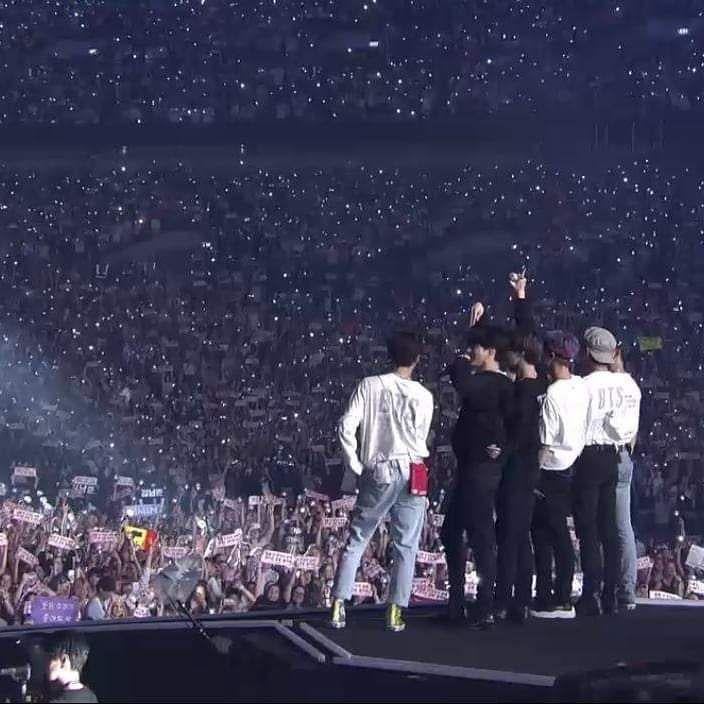

The final, reverberating chords of their hit single “Eclipse” had barely faded into the cavernous Seoul Olympic Stadium when the carefully constructed world of AURORA visibly shattered. What was meant to be a triumphant, celebratory encore for their record-breaking ‘The Deity’s Curse’ world tour finale transformed, in a matter of seconds, into one of the most raw and unsettling scenes in recent K-Pop memory. As the seven members stood before 70,000 adoring fans, the floodgates opened not of joy, but of overwhelming, gut-wrenching sorrow.
Multiple members, including the group’s typically stoic leader, Jaehyun, and their effervescent main vocalist, Seojun, collapsed to their knees, shoulders heaving with violent, audible sobs. The sight, broadcast live on streaming platforms and captured in frantic, shaky fan-cams that spread across social media within minutes, was not the gentle, grateful crying often seen at concerts. This was a visceral, full-body emotional rupture that halted the show, brought backup dancers to tears, and sent a wave of stunned silence followed by collective concern through the global fandom, instantly sparking massive fears for the idols’ well-being.
The Ascent of AURORA: From Rookie Sensations to Bearing the "Deity's Curse"
To understand the gravity of the moment, one must first appreciate the meteoric and pressurized trajectory of AURORA. Debuted in 2019 under Starline Entertainment, the group was conceived as a "concept powerhouse," blending intricate mythological lore with blistering hip-hop and ethereal vocals. Their trilogy of albums—‘Oracle,’ ‘Divergence,’ and the recent chart-topping ‘Pantheon’—crafted a complex universe where members embodied demigods wrestling with a celestial mandate, a narrative that fans, dubbed “Eclipsians,” devoured with fervor.
Their rise was not just successful; it was breakneck. They achieved a rare "perfect all-kill" with their sophomore album, swept year-end rookie awards, and within three years, were headlining dome tours in Japan. The ‘The Deity’s Curse’ world tour, launched eight months ago, was a testament to their global pull, selling out arenas across Asia, North America, and Europe. However, this narrative of relentless success came with a hidden cost. The group’s concept, while innovative, demanded a constant, intense performance of grandeur and otherworldly poise. The line between AURORA the artistic concept and the seven young men behind it had become perilously thin.
As documented in our analysis of industry pressures in pieces like "The Duality Trap", the strain of maintaining a flawless public persona can create unsustainable internal fractures. For AURORA, the pressure was compounded by their own story: they were literally performing under a "curse," a metaphor that increasingly seemed to mirror their real-world burdens. The tour schedule was notoriously grueling, with minimal breaks, while concurrent activities saw members like main rapper Taeyang composing for the latest album and vocalist Minhwan filming a drama. The pedestal they were placed upon, as explored on our Artists page, was becoming a cage.
The Night the Mask Broke: A Detailed Account of the Emotional Collapse
The Seoul finale, on paper, was a coronation. The two-night stint at the Olympic Stadium was the culmination of everything. Night one passed without visible incident—a high-energy, flawless spectacle. Night two, however, carried a different, heavier atmosphere from the start. Fans in attendance noted a palpable intensity, a rawness in the members’ vocal delivery during ballads like “Lunar Hymn.”
The breakdown occurred during the final ment segment, after the planned setlist was complete. As the members lined up to give their closing speeches, Seojun, known for his bright, calming words, began to thank the staff. His voice cracked. He paused, attempting to compose himself, before a choked sob escaped. He turned away, covering his face with both hands. This seemed to act as a trigger. Main dancer Kai, standing next to him, immediately welled up, wrapping an arm around Seojun as his own tears began to fall.
The most startling moment came from leader Jaehyun. Known for his unflappable, disciplined demeanor—a figure who once gave a coherent interview minutes after a severe ankle injury—he stepped forward to take the microphone, likely to steer the moment back. Instead, he opened his mouth, and no sound came out. His face contorted, and he dropped the mic to the stage floor with a thud, bending over as violent, shuddering cries wracked his body. The other members, initially trying to comfort each other, were soon similarly overcome, resulting in a tableau of seven young men in dazzling performance outfits utterly broken by emotion on the world’s stage.

The silence from the crowd was deafening, broken only by the echoing sobs from the stage and the distant, confused calls of a few fans. Then, a wave of supportive shouts began—"It’s okay!" "We love you!"—but the sheer force of the idols’ grief was overwhelming. Staff eventually rushed on stage, and the members were gently, hurriedly led off, the concert ending not with a bang, but with a devastating, unscripted whisper.
The Immediate Aftermath: Silence and Speculation
Starline Entertainment’s response was characteristically swift but opaque. An official statement released two hours post-concert read: "We thank the Eclipsians for their love at today’s concert. The members of AURORA were overwhelmed by their deep emotions and gratitude after completing their long and successful world tour. They are now resting. Please understand that no further schedules are planned for the immediate future so they may recover." The statement, focusing on "gratitude," did little to quell the growing alarm. Industry insiders, speaking on background, noted the immediate clearance of the group’s schedule for the next three weeks was highly unusual and suggestive of a more serious intervention than simple fatigue.
Fan & Community Reaction: From Fear to Fierce Advocacy
The reaction within the fandom and broader K-Pop community was immediate and seismic. Social media platforms became a battleground of emotion, analysis, and mobilization.
On platform X (formerly Twitter), hashtags like #ProtectAURORA and #AURORA_WeAreHere trended globally. While many fans expressed heartbreak and worry—“I’ve never seen Jaehyun cry, let alone like that. This isn’t gratitude, this is exhaustion of the soul,” read one viral tweet—the conversation quickly evolved beyond sympathy. Long-time fans pointed to warning signs: missed VLives, thinner appearances in recent fan calls, and an almost manic intensity in some performances. Eclipsians began meticulously compiling a timeline of the group’s activities over the past 18 months, creating a stark visual of non-stop work.
This advocacy took a more targeted turn as fans began organizing email and social media campaigns directed at Starline Entertainment. Their demands were specific: a mandatory, transparent, and extended rest period; a revision of future scheduling to prioritize health; and a commitment to providing the members with access to genuine psychological support, not just physical rest. "We bought tickets to see them perform, not to witness a public breakdown born from exploitation," wrote a fanbase leader in an open letter. The incident also sparked wider discussion on forums like Reddit and Pann Choi about the sustainability of the K-Pop industry’s "content machine," drawing parallels to past burnouts and hiatuses of other top groups.
Industry Analysis: A Symptom of a Systemic Crisis
What happened on that Seoul stage is far bigger than AURORA. It is a stark, high-profile symptom of a chronic illness within the K-Pop ecosystem. Music critic Park Ji-Won, in a phone interview, framed it bluntly: "This was a system failure. These are not just performers; they are the core asset of a multi-billion won enterprise. When your most valuable assets break down in front of the entire world, it is a catastrophic sign of managerial and systemic neglect. The industry’s model is built on maximizing output from young talents in a narrow window, but AURORA’s case shows we are hitting the absolute limits of human endurance."
The analysis points to several converging pressures. First, the post-pandemic scramble to reclaim revenue has led to hyper-aggressive touring schedules. Second, the demand for constant "content"—from reality shows and social media to fan calls and brand promotions—eliminates any off-switch for idols. Third, the weight of conceptual storytelling, as seen with AURORA, adds a layer of psychological performance that can be deeply taxing. As "The Full Circle" explored with BTS’s own journey, the process of reinvention and maintaining a narrative can become a crucible.
The incident also reignites the conversation about mental health pioneered by artists like BTS’s RM, who has publicly defended boundaries. The question now is whether AURORA’s breakdown will force a tangible shift. Will agencies see the long-term financial wisdom in preserving their artists’ health, or will the show simply go on after a brief pause? "Stock prices for Starline dipped 4% the next morning," notes business analyst Lee Min-Sung. "That is the language corporations understand. The fear now is whether the response will be genuine care or simply better crisis management to protect the brand."
What's Next for AURORA: The Path Forward from the Crucible
The immediate future for AURORA is, thankfully, quiet. The enforced hiatus is a necessary first step. However, the real work begins when the tears dry. The group and their company now face a critical juncture that will define the second chapter of their career.
First and foremost is genuine, comprehensive rest and recuperation. This means disconnection, not just a pause in public activities. Second, and more crucially, is an honest reassessment of their operational model. Will Starline have the courage to scale back? Can the intricate "Deity's Curse" lore evolve into something less psychologically burdensome? The group’s artistic identity, as tracked on our Charts page, is tied to this concept, but its cost has been laid bare.
The potential outcomes vary widely. An optimistic view sees this as a painful but necessary reset. The members could return with a renewed, healthier perspective, perhaps channeling this raw experience into even more powerful, authentic art. Their fanbase, now mobilized as protectors, would likely support a more sustainable pace. A darker path would see a rushed return, a glossing-over of the root causes, and a risk of deeper, more permanent damage to the individuals involved.
The Seoul finale was not the end of AURORA’s story, but it may be the end of an era. It was a moment where the meticulously crafted image shattered to reveal the vulnerable humanity at its core. For the industry, it is a deafening alarm bell. For the fans, it is a call to advocacy. And for the seven members of AURORA, it is the painful, public beginning of a journey toward healing—a journey that the entire K-Pop world will be watching with bated breath, hoping that from this breakdown, a stronger, healthier foundation can be built. The spotlight remains on them, but now, it must illuminate a path to wellness, not just the next performance.