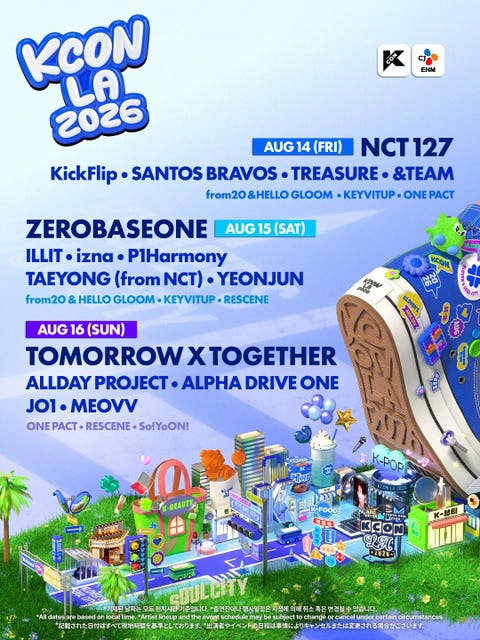

The air in the K-Pop fandom sphere crackled with a unique blend of anticipation and anxiety this morning. The annual ritual of lineup speculation, a months-long game of whispers and wishful thinking across social media platforms, has finally concluded. KCON LA 2026 has officially unveiled its performing artist roster, and the list is less a simple announcement and more a definitive statement. It is a meticulously curated snapshot of the K-Pop industry at a pivotal moment, honoring its powerhouse legacy while unequivocally anointing the generation poised to carry it forward. For three days this summer, the Crypto.com Arena and LA Convention Center will transform into a living timeline of Hallyu, pulsating with the energy of over two dozen acts representing every facet of the genre's explosive evolution.
Breaking from recent tradition, the organizers at CJ ENM opted for a single, massive reveal rather than a staggered rollout, sending shockwaves through online communities. The strategy ensured maximum impact, instantly painting a complete picture of the convention's musical ambition. This year's selection serves a dual purpose: it is both a triumphant victory lap for groups who have dominated the mid-2020s and a grand, global welcoming party for the rookie class that is rapidly redefining the scene. As one industry insider quoted in the release noted, "KCON LA has always been a bridge. This year, we're not just connecting Korea to the world; we're connecting the pillars of K-Pop's past decade to the architects of its next."
The Crucible of Culture: KCON's Evolution Into An Institution
To understand the weight of this lineup announcement, one must first appreciate KCON's journey from a novel experiment to an indispensable institution. Launched in 2012 in Irvine, California, it was a daring gamble: could a convention built entirely around Korean pop culture draw a significant stateside crowd? The answer was a resounding yes, and its growth has mirrored the global explosion of K-Pop itself. KCON is no longer just a concert; it is a pilgrimage. It's where fans (KCON-goers or simply CONys, as they've affectionately dubbed themselves) flock not only for the stage performances but for the immersive experience—the hi-touch events, the fan engagements, the industry panels, and the chance to simply exist in a space where their passion is the dominant culture.
Over the years, KCON's lineup announcements have acted as a barometer for the industry's shifting tides. Early years highlighted the then-dominant second and third-generation groups, solidifying their international footprints. As the fourth generation rose, KCON became their crucial North American proving ground, a place where groups like aespa, Stray Kids, and ATEEZ converted online buzz into tangible, screaming arena validation. The convention's role expanded from exposure to coronation. Now, in 2026, it faces a new, self-imposed challenge: how to balance an increasingly crowded field of worthy artists, honor the acts that built its legacy, and still make room for the thrilling, unpredictable new voices bursting onto our Charts page every month. This lineup is their ambitious answer.
The Lineup Breakdown: A Symphony of Generations
The 2026 roster is a masterclass in programming, designed to cater to every segment of the fandom spectrum while ensuring no night is without a headliner-worthy climax.
The Legacy Anchors: Icons Holding Court
In a move that sparked immediate euphoria among older fans, the lineup features what are being termed "legacy anchors." These are established acts whose presence guarantees a massive draw and a sense of historic continuity. Topping this list is the solo debut of Kim Seokjin (Jin) of BTS. Having completed his mandatory military service, Jin's anticipated solo album rollout is one of 2026's biggest music stories, and his KCON appearance will mark his first major solo performance in North America since enlistment. He is not alone in representing BTS's enduring legacy; the fiery hip-hop unit j-hope is also slated, promising a main stage set that will undoubtedly be a technical and artistic marvel.
They are joined by the timeless MAMAMOO, whose vocal prowess and stage command make them perennial KCON favorites, and the ever-energetic SEVENTEEN, whose unit performances—possibly from the BSS or Hip-Hop Unit—are a particular source of fan speculation. These artists provide a bedrock of familiarity and proven spectacle, assuring attendees of certain iconic moments amidst the newer faces.
"Securing artists like Jin and MAMAMOO is about respect for the journey. KCON's story is intertwined with theirs. Their performances are chapters in our shared history," stated a KCON executive in the official press briefing.
The Fourth-Gen Powerhouses: The Current Kings and Queens
The robust middle of the lineup is dominated by the groups who currently rule the charts and streaming platforms, the fourth-generation acts in their prime. The "performance powerhouse" moniker will be on full display with ATEEZ and Stray Kids, both known for concerts that border on athletic events. For girl group enthusiasts, the lineup is staggering: the avant-garde futurism of aespa, the polished musicality of IVE, and the charismatic force of (G)I-DLE are all present. Each represents a distinct sonic and visual philosophy, showcasing the genre's incredible diversity.

Notably, this section also includes groups like ENHYPEN, whose trajectory from survival show to global superstars embodies the modern K-Pop dream. Their intense, narrative-driven performances are a perfect fit for the KCON stage. Their inclusion also comes at a time when discussions about idol well-being and fan boundaries remain highly pertinent, a topic K-Beats recently explored in depth, highlighting the complex realities these young artists navigate even during triumphant periods.
The Fifth-Gen Vanguard: The Future Arrives
The most electrifying part of the announcement is the sheer number of artists from the nascent fifth generation. KCON LA 2026 is betting big on these rookies, offering them the most prominent platform imaginable. Leading the charge are monster rookie girl groups ILLIT and BABYMONSTER, whose debut songs shattered records and whose fanbases are fiercely dedicated. The boy group side is represented by sensations like TWS and RIIZE, whose bright, public-friendly "emotive pop" has captured a wide audience.
This decisive inclusion signals a clear industry directive. "KCON has a responsibility to be a tastemaker," said a veteran A&R manager familiar with the selection process. "By placing these rookies alongside legends, we're telling the world—and the industry—exactly who we believe has the talent and vision to lead for the next five to ten years. It's a transfer of energy, live on stage." For fans, it's a once-in-a-lifetime opportunity to witness the early, raw potential of these groups on an arena stage before they inevitably headline such venues on their own tours.
CONy's Verdict: Social Media Erupts in Joy, Debate, and Strategy
Within minutes of the announcement, social media platforms became a digital war room of celebration, analysis, and logistical planning. The hashtag #KCONLA2026 trended globally, with sub-fandoms creating their own dedicated tags for each artist.
The overwhelming sentiment is one of stunned satisfaction. "They actually listened!" tweeted user @Moomoo4Life, referencing years of fan campaigns for a MAMAMOO return. "This lineup feels like they looked at my Spotify Wrapped and just booked it," posted another. However, the classic KCON dilemma quickly emerged: the "conflict nightmare." With multiple fan-favorite acts spread across different days and likely overlapping convention schedules, attendees are already agonizing over impossible choices. Forums are flooded with posts titled "Who would you see: aespa or j-hope clash?" spawning thousands of speculative comments.
A more nuanced discussion is taking place around the pressure on the fifth-generation rookies. While excitement is high, there is a palpable sense of protective concern. "Seeing ILLIT and BABYMONSTER on the same list as these legends is incredible, but I hope fans remember they're still so new. The expectations will be insane," wrote a thoughtful fan on Reddit. This touches on the intense scrutiny young idols face, a subject we've examined regarding health and public perception. The KCON stage, while an opportunity, is also a high-pressure crucible.
Industry Analysis: More Than a Concert, A Strategic Map
Beyond the fan excitement, the 2026 lineup is a dense document for industry analysts. It reveals several key strategic priorities for CJ ENM and the agencies involved.
First, it underscores the "heritage strategy." In an era where the industry is constantly accelerating, there is immense value in leveraging the deep emotional connection fans have with established artists. Including BTS members and veteran groups isn't just nostalgia; it's a stability play that guarantees ticket sales and media coverage, providing a financial and reputational foundation that allows for riskier bets on rookies.
Second, it highlights the globalization of the "rookie launch." Major agencies now view a standout performance at KCON as a critical component of a new group's international rollout, as important as music show wins. The live audience reaction, the social media clips that go viral globally, and the networking opportunities with U.S. media and potential partners are invaluable. KCON is no longer just a promotional stop; it's a launchpad.
Finally, the lineup reflects the increasing segmentation and simultaneous blending of musical styles within K-Pop. From the pure pop of RIIZE to the hard-hitting sounds of ATEEZ to the genre-bending experiments of (G)I-DLE, the lineup celebrates divergence. This tells us that the industry is confident in the global audience's appetite for a wide spectrum of sounds, all under the K-Pop umbrella. It also encourages cross-pollination; a fan coming for SEVENTEEN might leave as a TWS enthusiast, and vice-versa.
This ecosystem of fandom and performance doesn't exist in a vacuum. It operates within a culture of intense scrutiny, where every idol action is analyzed. The recent discourse, such as the conversation sparked by RM's comments on industry pressures or the examination of public and private boundaries highlighted in viral moments, as covered in our articles on idol pressures and unspoken tensions, forms the backdrop against which these celebratory events occur. KCON is both an escape from and a magnification of that very reality.
What's Next: The Ripple Effects of a Summer Weekend
The announcement is merely the opening note. Now, the meticulous planning begins—not just for CONys scrambling for travel and tickets, but for the artists and their companies. For the legacy acts, it's about crafting a setlist that honors their journey while feeling fresh. For the fourth-gen powerhouses, it's an opportunity to test new material from upcoming releases and solidify their status as the present-day standard bearers.
For the fifth-generation vanguard, the next months will involve grueling, specific preparation. Their performances will be dissected frame-by-frame. A stellar showing can catalyze their international breakthrough, propelling their next comeback to new heights on global charts. A misstep, fair or not, could attract disproportionate criticism. The support system within their agencies will be crucial, a reminder that behind every glittering stage moment is a network of management, coaching, and mental health resources.
KCON LA 2026 will also be a fascinating study in fan culture intersection. How will the fandom dynamics play out in the shared spaces of the convention center? The potential for positive, cross-fandom interaction is huge, setting a template for communal celebration. The event also continues to evolve as a platform for broader Korean culture, with K-drama stars, webtoon artists, and food influencers sharing the spotlight.
In essence, this lineup sets the agenda for the second half of 2026. The conversations started on those stages in Los Angeles will ripple through comeback strategies, year-end award shows, and the very definition of what a "successful" global K-Pop act looks like. When the final encore fades and the lights come up at Crypto.com Arena, we won't just have memories of great concerts. We will have witnessed a living, breathing portrait of K-Pop in a moment of confident transition—a genre secure enough in its foundations to eagerly, loudly, and spectacularly welcome its future. To discover more about all the artists shaping this future, visit our Artists page for in-depth profiles and discographies.