
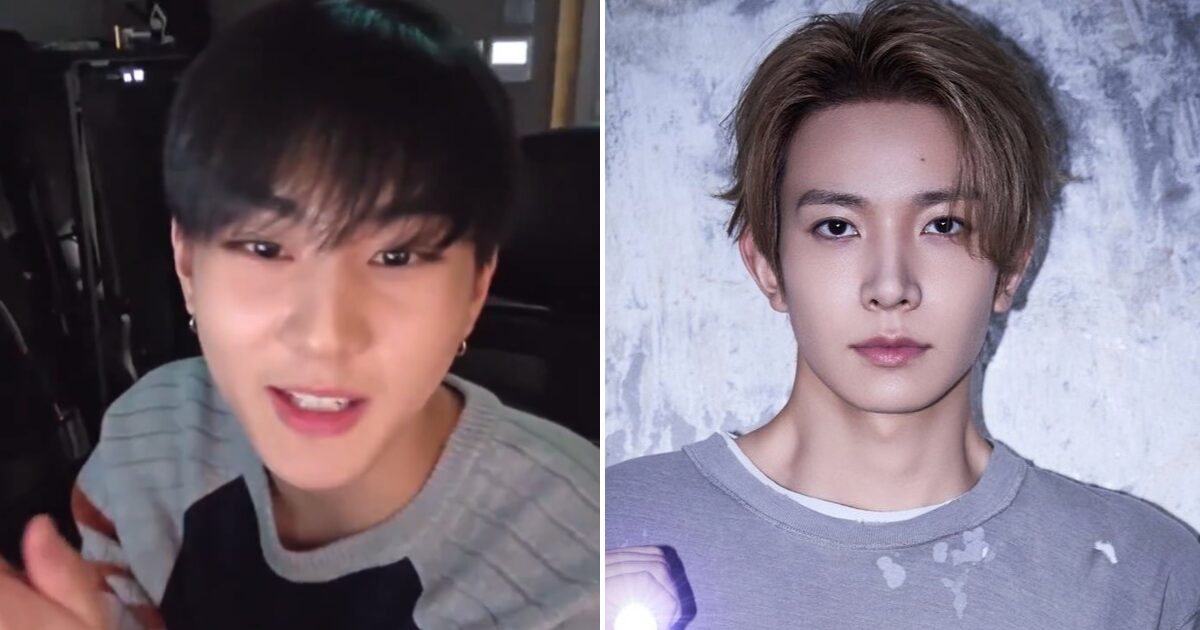

The live broadcast room is often portrayed as a sanctuary—a digital living room where idols can let their guards down and connect with fans in real-time. Yet, sometimes, the most candid moments arise not from relaxed confessions, but from subtle shifts in demeanor, carefully chosen phrases, and a palpable, unspoken tension. Such was the case this week when ENHYPEN's leader, Jungwon, found himself at the center of a swirling online discourse not for a new achievement, but for the quiet discomfort he exhibited on a routine Weverse Live session. The catalyst? Actions taken by a segment of fans following the departure of member Heeseung from a public schedule.
Introduction: When a Glimpse Behind the Curtain Becomes a Mirror
In the hyper-connected world of K-Pop, every pixel is parsed, every syllable scrutinized. For leaders of powerhouse fourth-generation groups like ENHYPEN, the pressure is twofold: they must guide their team to ever-greater heights while also navigating the intense, often invasive scrutiny of the public eye. The recent incident involving Jungwon transcends typical fan concern; it has become a case study in the modern idol-fan dynamic, the immense pressure on young leaders, and the often-blurred lines between supportive fandom and overstep. This isn't merely a story about a single live broadcast. It's a story about the silent labor of leadership, the erosion of private space, and a generation of idols learning to assert boundaries in an industry that has historically asked for none.
Background: The Meteoric Ascent and Inherent Pressures of ENHYPEN
To understand the weight of Jungwon's moment, one must first understand the trajectory of ENHYPEN. Formed through the intense survival show I-LAND under the joint venture of BELIFT LAB (a collaboration between HYBE and CJ ENM), the group debuted in November 2020 with an immediate and undeniable impact. Their concept, deeply rooted in vampire and coming-of-age lore, coupled with impeccable performance skills, carved them a unique space in the competitive landscape. Jungwon, despite being one of the youngest, was chosen as leader—a testament to his maturity, composure, and sense of responsibility.
The Weight of the Leader's Mantle
Jungwon's leadership style has often been described as quietly resilient. He leads not with booming authority, but with a steady, observant presence, often putting the team's harmony and the members' well-being above all else. This role, however, carries an invisible burden. As explored in our analysis of junior artists navigating the HYBE family legacy, being under such a prominent umbrella brings immense expectation. For Jungwon, every public statement, every reaction, is filtered through this lens of representation—for his team, his company, and his fans.
The "Heeseung Departure" Context
The specific incident that precipitated the fan actions occurred earlier in the week. Heeseung, the group's main vocalist and eldest member, was scheduled for a public appearance. Prior to the event, it was announced that due to sudden health concerns, Heeseung would not be attending. Official statements from BELIFT LAB emphasized the need for "precautionary rest," a phrase that has become sadly common in an industry pushing physical limits. This mirrors concerns raised in our reporting on the physical toll on idols during packed promotional cycles. While most fans expressed heartfelt concern for Heeseung's well-being, a subset embarked on a different mission.
The News: Decoding the Discomfort in Jungwon's Live Session
A day after Heeseung's schedule cancellation, Jungwon began a Weverse Live. Initially, the broadcast followed its usual pleasant course, with Jungwon answering questions and sharing casual thoughts. The shift was subtle but, to many longtime ENGENEs (ENHYPEN's fandom), unmistakable.
The Comments and The Reaction
The conversation steered towards the previous day's events. While Jungwon did not mention Heeseung or the cancellation directly, his responses to certain fan comments prompted the unease. When comments flooded in asking about "everyone's health" and "the mood back at the dorm," Jungwon's typically warm and fluid demeanor became measured. He offered a soft, closed-lip smile that didn't reach his eyes—a expression fans have come to associate with him choosing his words with extreme care.
"Everyone... is doing their best to be healthy. We always are. It's important to trust that. Sometimes, the best support is quiet support," he stated, pausing slightly before continuing. "It makes us happy when fans are happy and healthy, too. Let's all take care of ourselves, okay?"
It was this emphasis on "quiet support" and the reciprocal wish for fan health that listeners keyed in on. His tone was not scolding, but carried a thread of gentle exhaustion and a plea for understanding.

The Link to Fan Actions
So, what were the actions that seemingly prompted this response? Reports and fan community posts revealed that following Heeseung's cancellation, a number of fans had engaged in:
- Aggressive Information Seeking: Repeated, demanding questions on all members' social media about the exact nature of Heeseung's illness, perceived as invasive.
- Dorm Area Presence: An increase in speculative activity and potential intrusion near known group dormitories, fueled by a desire for "first-hand" updates, a severe breach of privacy.
- Circulation of Unverified Theories: Spreading narratives that blamed the company's schedule or other external factors without evidence, creating a climate of anxiety and mistrust within the fandom.
Jungwon, as leader and a perceptive individual attuned to his members and his fanbase, was likely aware of these actions. His live comments were interpreted as a diplomatic, yet firm, attempt to recalibrate the atmosphere—to redirect concern from a place of chaotic speculation to one of respectful distance and trust.
Fan & Community Reaction: A Fandom Divided by Concern
The reaction to Jungwon's live was immediate and multifaceted, playing out across Twitter, TikTok, Weverse, and online forums like Pann Nate and theqoo.
The Protective Majority
A significant portion of the fandom expressed heartbreak and anger—not at Jungwon, but at the situation. "We made our leader feel like he had to parent us instead of just relaxing on a live," one viral tweet lamented. Many praised Jungwon's maturity and echoed his sentiment, launching hashtags like #RespectENHYPENsPrivacy and #QuietSupport. These fans argued that true support means respecting boundaries, trusting the company's health protocols, and allowing idols the mental space to recover without feeling surveilled. They saw Jungwon's words as a necessary reminder of the human beings behind the idol personas.
The Defensive Minority
Another segment, however, reacted defensively. Some argued that fan concern was natural and being portrayed as malicious, stating that asking after a member's health is a fundamental part of fan-idol interaction. A smaller, more toxic subset accused those criticizing the invasive behavior of being "fake fans" or "company stans," claiming that intense scrutiny is the price of fame. This division highlighted the eternal tension within fandom cultures: the line between passionate support and entitled ownership.
The International Lens
International ENGENEs, while equally concerned, often framed the discussion through a cultural lens. Many pointed out that the extreme proximity allowed—and sometimes expected—in Korean fan culture can be jarring. "The idea of going near a dorm is so far beyond the line in most places," commented a popular translator on the platform. This incident sparked broader discussions on our Artists page about how global fandoms interpret and sometimes clash with the norms of Korean fan-idol relationships.
Industry Analysis: A Symptom of a Larger 4th Generation Ailment
Jungwon's experience is not an isolated event. It is a pronounced symptom of the environment in which fourth-generation idols operate. Unlike previous eras, the wall between idol and fan is not just glass; it's a constant, live-streamed interface with comment sections.
The Parasocial Pressure Cooker: Platforms like Weverse and Bubble have revolutionized fan access, creating unprecedented intimacy. However, this can foster a parasocial intensity where fans feel an inflated sense of involvement in idols' personal lives. When a health issue arises, that sense of "right to know" can curdle into demanding behavior, placing young idols like Jungwon in the impossible position of managing public perception of private matters.
Leaders as Shock Absorbers: Today's leaders are increasingly expected to be communicators, diplomats, and emotional pillars. They absorb external pressure to shield their members. Jungwon's delicate handling of the situation—addressing it without naming it, advocating for peace without causing further conflict—exemplifies this new, grueling form of emotional labor. He is effectively mediating between his team's need for privacy and his fandom's desire for reassurance, a task far beyond the job description of a performer.
Safety and Privacy as Recurring Themes: This incident joins a worrying pattern of safety and privacy concerns in the industry. From the alarming reports detailed in our coverage of on-set dangers for BTS to the constant battle against sasaengs, the industry is grappling with how to protect its artists in an age of omnipresent media. The fan movement to dorm areas, while perhaps not all malicious, exists on the same spectrum of boundary violation and raises serious security questions.
What's Next: Navigating the New Normal with Empathy and Respect
The fallout from Jungwon's live broadcast is unlikely to result in a formal statement. The true resolution will be cultural, evolving within the fandom itself. For ENGENEs, it is a moment of reflection. The most powerful response would be to heed Jungwon's implicit message: to demonstrate that "quiet support" is not passive, but powerful. This means celebrating public achievements, streaming music for the charts, and sending positive messages, while consciously choosing not to engage in speculative frenzy or invasive behavior.
For BELIFT LAB and HYBE, this is another data point in the critical need for clear, consistent communication about member well-being. While protecting privacy is paramount, proactive, transparent updates about health and schedule changes—when appropriate—can preempt the vacuum that misinformation and anxiety fill. Furthermore, reinforcing and publicly upholding strict security protocols for artist residences is non-negotiable.
For Jungwon and ENHYPEN, the path forward is one of continued artistry, shielded by a hopefully more mindful fandom. The group's upcoming schedules and musical releases will be the focus, as it should be. This incident may, in fact, strengthen the bond between the group and its core fandom, establishing a more sustainable, respectful dynamic. True support empowers idols to be artists and individuals, not just content providers for public consumption. As ENHYPEN continues to cement its legacy as one of the defining groups of their generation, the hope is that their story will be marked by groundbreaking music and performances, not by the weight of unsustainable fan expectations. The ball, as gently as it was served by their leader, is now in the fandom's court.
As this story continues to develop, stay tuned to our News page for the latest updates, thoughtful analysis, and a commitment to covering the K-Pop industry with the depth and respect it deserves.