
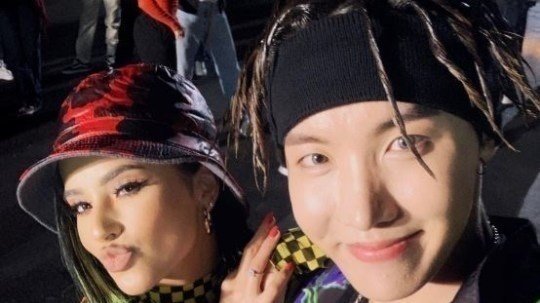

The world of K-Pop is built on a foundation of meticulously crafted narratives: the flawless performance, the unwavering gratitude, the unified group dream. So, what happens when a member of the world's biggest boy band steps slightly outside that narrative, voicing a personal, unfulfilled artistic wish? For BTS's J-Hope, the answer was a swift and unexpectedly fierce cyclone of online backlash, turning a moment of vulnerable sincerity into a case study in modern fandom dynamics. In a recent, wide-ranging interview for a yet-to-air documentary special, the rapper, dancer, and producer was asked about a "dream stage" he still yearned to conquer. His answer, seemingly innocuous, has ripped open a complex debate about authenticity, legacy, and the price of superstardom.
This isn't merely about a venue preference; it's a flashpoint. It touches on the very identity of BTS and ARMY, the pressure of representing a nation's cultural capital, and the eternal tension between an artist's individual muse and the group's monumental, shared history. The reaction, summarized crudely but virally online as "F*cking knew it…", speaks to a undercurrent of anxiety within a portion of the fandom, a fear that individual dreams might somehow diminish collective triumphs. To understand the weight of this moment, we must dive deep into the journey of both the artist and the institution he represents.
The Foundation: BTS, ARMY, and the Anatomy of a Shared Dream
To grasp the seismic nature of J-Hope's statement, one must first appreciate the foundational mythos of BTS. Their story, from underdogs at a small agency to global phenoms, is the bedrock of their connection with ARMY. Every stage—from tiny university festivals to the Grammys—has been framed as a shared victory, a step on a collective odyssey. The narrative has rarely been about individual "bucket lists," but about the group's soaring, unprecedented milestones: the first Billboard Hot 100 #1, the UN speeches, the stadium world tours.
J-Hope himself, as the group's main dancer and a vibrant solo artist with projects like Jack In The Box, has always embodied the BTS spirit of evolution. Yet, his artistic persona—the sunny "Hope of BTS"—has often been in dialogue with deeper, more introspective themes in his own work. This duality is key. He is both a crucial pillar of the group's unified front and an artist with a distinct, hip-hop-rooted vision. As we explored in our analysis of their evolving sound in "BTS Dives Deeper: 'SWIM' Remixes", the members are continually navigating their identities within and beyond the group framework. The interview question tapped directly into that personal, beyond-BTS artistic space.
The Weight of the Spotlight
Every word from a BTS member is analyzed under a hyper-powered microscope. Their influence is such that a casual comment can affect stock prices, ignite global trends, and shape cultural discourse. This immense pressure inevitably leads to a culture of extreme caution. Idols are trained to express gratitude, humility, and group-centric goals. To publicly name a stage they haven't performed on, especially one outside the traditional K-Pop award show or stadium circuit, is a subtle but significant deviation from that script. It admits a want, a gap, in a story that fans often prefer to view as complete and perpetually triumphant.
The Revelation: A Personal Wish Meets a Public Expectation
During the documentary interview, when prompted for a "dream stage," J-Hope reportedly paused, considered, and then named a specific, legendary venue known not for pop spectacles but for its raw, intimate, and historically significant connection to grassroots hip-hop and live music authenticity. It was not a stadium, nor a televised awards show stage. It was a hallowed ground for artists, revered for its acoustics and history rather than its sheer seating capacity.
"I think about it sometimes, not as BTS, but just as me... Jung Hoseok. There's a certain energy there, a history in those walls. To perform my music, just the way it sounds in my head, in that room... that's a dream that feels very personal," the idol was quoted as saying.
He was careful to frame it as a personal, "Jung Hoseok" dream, distinct from BTS's ambitions. He expressed profound gratitude for every stage the group has stood on, calling their journey "beyond my wildest dreams." Yet, this nuance was lost in the subsequent firestorm. The headline alone—"J-Hope Names BTS’s Dream Stage"—created a immediate misalignment. It framed a personal aspiration as a group shortcoming, a missing trophy on a shelf many fans consider already full.
The Catalyst of Misinterpretation
The backlash didn't erupt from a place of malice, but from a potent mix of misinterpretation and protectiveness. For a segment of fans, the statement was filtered through a specific lens:

- Perceived Ingratitude: With BTS having achieved what no other Korean act has, naming a "dream" stage could be misread as dismissing the historic value of their past stages, like their iconic UN address or sold-out Wembley and Rose Bowl concerts.
- Fear of Fragmentation: In the era of Chapter 2, with members focused on solo activities, any emphasis on individual dreams can trigger anxiety about the group's permanent priority. It echoes the sensitive navigation of solo careers we've seen across the industry, as detailed in our coverage of idol image and agency.
- National Pride vs. Personal Art: BTS's stages are often seen as victories for Korea itself. A dream rooted in a foreign, niche venue could be mistakenly interpreted by some as valuing foreign artistic validation over national celebration.
Social media algorithms then amplified the most extreme reactions, creating the illusion of a monolithic fandom outrage, encapsulated in that viral, cynical "F*cking knew it..." response—a sentiment implying a long-held suspicion that the members' individual artistic desires were at odds with the fandom's vision for the group.
Fandom in Flux: The Divided Echo Chamber of ARMY
The reaction across the global ARMY fandom was, in reality, profoundly divided, showcasing the complex, multi-generational and multi-faceted nature of a fanbase numbering in the tens of millions. The backlash, while loud, was far from universal.
The Defensive Front
On platforms like Twitter and certain Korean forums, a vocal contingent expressed disappointment and defensiveness. Comments ranged from, "After everything we've given them, this is the dream stage?" to more pointed criticisms about the choice being "too small" or "not prestigious enough" for BTS's stature. This faction viewed the statement through the lens of brand management, believing it inadvertently diminished the group's hard-won status. This protective, sometimes possessive, instinct is not uncommon in K-Pop, as seen when fans fiercely guard idols from scandals, real or imagined, similar to the dynamics in other high-profile entertainment controversies.
The Voice of Support
Conversely, a massive wave of fans rushed to defend J-Hope's right to have a personal artistic dream. They argued that his honesty was refreshing, that it highlighted the depth of his musician's heart, and that separating "Jung Hoseok" from "J-Hope of BTS" was a sign of his maturity as an artist. "He's given us everything. Let him have this one dream for himself," became a common refrain. This side of the fandom celebrated the vulnerability, seeing it as a testament to the very authenticity that drew them to BTS in the first place. They pointed to his solo work as evidence of this specific musical sensibility, arguing the dream stage was a perfect fit for that side of his artistry.
The Analytical Middle Ground
Many fans and industry observers took a meta-view, analyzing the backlash itself. They noted the impossible position idols are in: punished for being too curated and inauthentic, yet also punished for being too honest. Discussions flourished about the difference between a "goal" and a "dream," and why the latter seemed to trigger such a response. This segment of the conversation was less about the stage itself and more about the unhealthy expectations placed on idols to have no interior life separate from their public persona and group identity.
Industry Analysis: Beyond BTS – A Symptom of a Larger System
The J-Hope incident is not an isolated event. It is a extreme manifestation of a chronic tension in the K-Pop industry. The idol ecosystem is built on a paradox: it sells personality and connection ("idols you can become close to") while demanding a strict conformity to a managed narrative. When the facade cracks, even benignly, the system reacts.
The Price of Authenticity
Other idols have faced similar, though often smaller-scale, backlash for moments of perceived candor—wishing for different music styles, expressing fatigue, or mentioning personal role models outside the K-Pop sphere. Each incident reinforces a chilling effect. This climate makes genuine artist interviews rare, often leaving fans to parse heavily sanitized content or, conversely, to spin wild theories from crumbs, a cycle we dissected regarding the social media rumor mill. J-Hope's case is magnified a thousand-fold due to BTS's unprecedented scale, but the mechanism is identical.
ARMY's Unique Position and Pressure
ARMY is unparalleled in its organization and influence. This power brings immense support but also an immense, often unspoken, sense of responsibility and ownership. The fandom has been a direct partner in BTS's success, breaking records through coordinated efforts. This partnership can blur lines, leading some to feel that the group's trajectory is a joint project where their vision holds weight. A member expressing a personal dream that doesn't align with the fandom's perceived "next milestone" can feel, to some, like a deviation from the shared plan.
The Curatorial Dilemma for Media
Outlets like our News page face a constant challenge in covering these moments. The initial headline from the source material, "J-Hope Names BTS’s Dream Stage, Faces Massive Backlash," prioritizes conflict over nuance, feeding the very cycle it reports on. Responsible journalism in the K-Pop space requires contextualizing these statements within the artist's full body of work and the industry's systemic pressures, rather than amplifying fringe backlash as representative sentiment.
What's Next: Healing, Reflection, and the Unwritten Future Stage
In the immediate aftermath, the predictable K-Pop crisis playbook likely swung into action behind the scenes. Yet, for a group at the level of BTS, and a fandom as sophisticated as ARMY, this moment presents an opportunity for growth rather than just damage control.
First, the discourse itself has likely already fostered a deeper understanding within the fandom. The majority support for J-Hope's honesty is a powerful counter-narrative. It reaffirms that the core of ARMY values the members as multifaceted human beings and artists. This episode may serve as a corrective, reminding everyone that supporting BTS means supporting all their dreams, group and individual, big and small.
Second, for the industry at large, it's another data point in the evolving relationship between idols and fans. As artists gain more creative control and personal agency—a trend visible across our Artists page—these friction points will increase. The system must adapt to accommodate more complex, honest artist narratives. Fans, in turn, are on a learning curve, navigating how to support without smothering, to celebrate without claiming ownership.
As for J-Hope and BTS, their path forward remains their own. The dream stage he named may or may not ever be graced by his presence. But the very act of naming it has performed a different, perhaps more valuable function: it has challenged a stale script. It has reminded the world that beneath the title of "global icon," there is still Jung Hoseok, the dancer from Gwangju with a specific, heartfelt sound in his head, dreaming of a room where that sound can resonate perfectly. That honesty, in the long arc of an artistic career, is not a liability, but the foundation of longevity. The true "dream stage" for any artist is surely one where they can stand, unabashedly and authentically, as themselves. The current charts, which you can always follow on our Charts page, may measure popularity, but it is moments of raw sincerity like this that ultimately define a legacy.