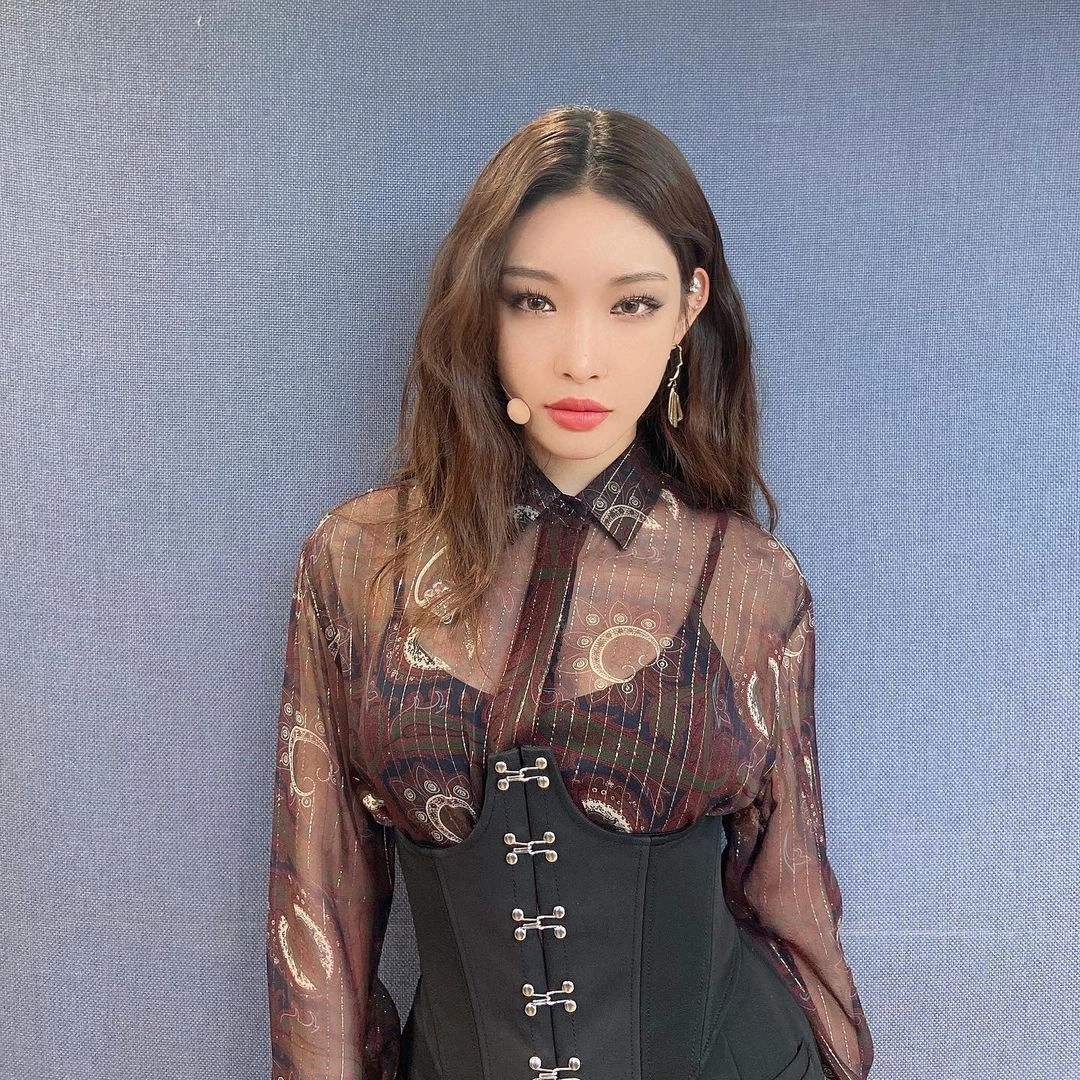

The air in the Olympic Hall, typically buzzing with anticipatory chatter, had shifted into a silent, electric charge. It was the finale of LUMI’s solo concert series “Glimmer in the Dark,” and the 25-year-old singer was bathed in a single, stark white spotlight. She had just delivered a heart-wrenching ballad, her signature crystal-clear vocals still hanging in the air. As the last piano note faded, she didn’t exit. She didn’t bow. Instead, with a stillness that commanded the arena, she reached for the buttons of her delicate, diaphanous gown. In a move that would detonate across social media within minutes, she let it fall to the stage floor, revealing a custom-designed, intricately structured black bustier—a piece of high-fashion armor—and matching high-waisted trousers. The silence broke into a collective gasp, then a wave of screams, as she launched into a powerful, previously unreleased track titled “My Own Skin.” The “nation’s angel” was gone. In her place stood an artist, bare-shouldered and breathtakingly in command.
This wasn't merely a wardrobe malfunction or a provocative stunt. For fans and industry watchers, it was a seismic event, a visual thesis statement delivered in real-time. LUMI, an idol cultivated for nearly a decade under the meticulous guidance of Starline Entertainment, had just publicly and permanently dismantled the pristine image that made her famous. The performance instantly became the most talked-about moment in K-Pop this month, sparking furious debate about female agency, the constraints of innocent concepts, and what it truly means for an idol to “slay.” This is the story behind the moment, the history that led to it, and the industry shockwaves it is sure to create.
From Trainee to "The Angel": The Making of LUMI
To understand the magnitude of this act, one must first understand the pedestal upon which LUMI was placed. Discovered at 15 through a nationwide singing competition, she was lauded not just for her technical prowess but for an ethereal, “pure” quality that executives at Starline quickly identified as her marketable core. Debuting at 17 as a soloist—a rare and risky path—her concept was built around classical crossover and lyrical, fairy-tale-inspired pop. Her visuals were soft-focus: flowing pastel dresses, lyrics about first love and starlight, and a public persona of gentle, almost otherworldly politeness.
LUMI quickly became a darling of the nation. She was the idol parents approved of, the one invited to sing at national ceremonies and charity events. Her social media, carefully curated, showed a life of studio sessions, teacups, and sunsets. For years, this image was unshakable. As detailed in our analysis of idol personas, "After the Storm: The Disappearance of Nova and the Unforgiving Calculus of K-Pop's Idol-Fan Boundary", the contract between a "pure" idol and their fandom is particularly brittle. LUMI’s entire career was the positive inverse of that scandal—a sustained, successful maintenance of a flawless facade.
But cracks, as they do, began to show for those looking closely. In her recent album “Mirror Talk,” the lyrics grew more introspective, hinting at confinement and a longing to be seen. In interviews, her answers about “what’s next” became more evasive. She started following avant-garde fashion designers and contemporary dance troupes on Instagram. The wardrobe in her concerts became progressively more architectural and less frilly. The “angel” was, it seemed, studying how to build her own wings—wings of a different kind.
The Performance: A Frame-by-Frame Revolution
The “Glimmer in the Dark” concert was marketed as a retrospective, a celebration of LUMI’s eighth anniversary. The setlist journeyed through her biggest hits, each arrangement subtly darker and more layered than the original. The staging was minimalist, focusing on lighting and her presence. It built a narrative of gradual awakening.
The Calm Before the Storm
The penultimate number was her debut song, “Angel’s Breath.” Performed in a simple white slip dress, it was a nostalgic, faithful rendition. It felt like a farewell. As she took her final bow for the song, the classic LUMI smile was on her face. The audience settled, expecting an encore of similar sentiment. The stage went completely black for an unusually long thirty seconds.
The Reveal and The Rebirth
The single spotlight clicked on. LUMI stood center stage, back straight, eyes directly confronting the crowd. Her expression was neutral, determined. The act of removing the gown was slow, deliberate, almost ceremonial. It was not seductive; it was declarative. As the fabric pooled at her feet, the reveal of the custom black bustier—featuring metallic threadwork resembling cracked porcelain—was met with stunned silence.

“It wasn’t about being sexy. It was about being structural. The bra was a garment, a piece of the performance art. It was about removing the expected, the floaty, the ‘angelic,’ to show the foundation beneath. That foundation is strong. It’s human.”
This statement, released by LUMI’s personal stylist and long-time collaborator Ji-eun two days after the concert, became the defining interpretation of the act. The subsequent song, “My Own Skin,” was a driving, synth-heavy anthem of self-reclamation. Lyrics like “I’ve worn your dream like a borrowed dress / Now I tailor my own truth, no more, no less” left little to the imagination about its meaning.
A Fandom Divided: Adulation, Anger, and Everything In Between
The reaction online was instantaneous and volcanic. The hashtag #LUMI_Brave trended globally within an hour, while the counter-hashtag #DisappointedAngel also gained traction.
On platforms like Twitter and fan cafe forums, the divide was stark:
- The Supporters: Long-time fans, particularly older female fans, erupted in proud applause. “She’s an adult woman, not a porcelain doll you bought,” wrote one fan with 50,000 followers. Many created side-by-side edits comparing her debut look to the concert moment, captioned “Growth.” They praised her courage and artistic evolution, comparing the moment to iconic Western pop star transformations.
- The Traditionalists: A segment of her original fanbase felt betrayed. Comments ranged from heartbroken (“I fell in love with the angel, where did she go?”) to outright anger, accusing her of resorting to “cheap tactics” for attention and disrespecting fans who loved her innocence. Some male fans in particular posted about feeling “deceived,” a troubling but predictable thread in such reactions.
- The Industry Peers: Perhaps more telling was the quiet but visible support from fellow female idols. A slew of them—from senior soloists to members of active girl groups—liked LUMI’s official concert photos on Instagram. None commented publicly, but in the high-stakes world of K-Pop, a ‘like’ can be a powerful statement of solidarity. It echoed the silent support network that exists behind the scenes, as explored in contexts like "The Solo Scoop", where artists navigate the tightrope of public expectation.
The debate raged beyond fandom, spilling into mainstream news shows and cultural commentary programs, questioning the very rules society imposes on its young female entertainers. For more on how idols navigate their public image, you can always visit our dedicated Artists page.
Industry Shockwaves: A Calculated Risk or a Liberation Play?
Behind the scenes, the event has sent executives and agencies into a frenzy of analysis. The initial question was: Was this approved?
Insiders at Starline Entertainment suggest the moment was a hard-fought compromise. LUMI, whose contract is up for renewal in six months, had reportedly been pushing for a dramatic image shift for over a year. The concert finale was her creative idea, presented as a non-negotiable piece of her artistic vision. The agency, faced with the possibility of losing their most profitable soloist, reluctantly agreed, likely calculating that the scandal would generate immense buzz—which it has.
“This is a landmark moment in the ‘idol empowerment’ narrative,” says cultural critic Park Min-ji. “For years, we’ve seen male idols gain more creative control and shed ‘flower boy’ images as they age. Female idols, especially those with ‘pure’ concepts, have been trapped in a perpetual youth. LUMI isn’t just changing her clothes; she’s challenging the economic model that commodities innocence. This is as much a business story as a cultural one.”
The move also reframes the conversation around fashion in K-Pop. Where outfits are often discussed as mere eye-candy or trend-following, LUMI’s choice elevates the stage outfit to a narrative device, a tool for storytelling as potent as lyrics or choreography. It follows in the tradition of artists using fashion for deep self-expression, a theme we examined in "Stitching the Soul" about BTS's meaningful attire. Her custom bustier, designed by an emerging Korean avant-garde designer, is now sold out everywhere, proving the commercial power of authenticity.
What Comes After the Gown? LUMI's New Path Forward
So, where does LUMI go from the center of the storm? All signs point to this not being an endpoint, but a new origin story.
- Contract Renewal: All eyes are on her negotiations with Starline. Will she renew under terms granting her unprecedented creative control? Or will she become one of the most sought-after free agents in the industry, potentially launching her own label? Her leverage has never been higher.
- Musical Direction: The studio version of “My Own Skin” is slated for release next week. Pre-orders have already shattered her previous records. The track is expected to debut high on every chart, signaling fan acceptance of her new sound. Her next album will be the true test of this new direction.
- The "Innocent Idol" Paradigm: LUMI’s act has irrevocably altered the landscape for every young female idol saddled with a “good girl” image. It provides a blueprint, however risky, for claiming one’s own narrative. It asks a piercing question of the industry: How will you handle the woman when the girl grows up?
In the end, LUMI’s stage is now bigger than any concert hall. She has turned her career into a live discussion about autonomy, artistry, and the painful, glorious process of shedding a skin that no longer fits. She didn't just take off a gown; she tried on a new future, and in doing so, gave a generation of artists and fans a new vocabulary for rebellion. The angel has not fallen; she has simply chosen to walk, powerfully and on her own terms, here on the ground. For continued coverage on this evolving story and more, stay tuned to our News page.