
The world of K-Pop is built on meticulously crafted narratives, where an idol's journey, personality, and even struggles are often presented with a clear, if curated, arc. So, when the narrative itself becomes the story, splintering into contradictory official statements, the resulting confusion isn't just a minor PR hiccup—it's a fundamental rupture in the contract between a powerhouse agency and its fans. This is the precise, baffling situation now engulfing KATSEYE, the groundbreaking global girl group born from HYBE's and Geffen Records' audacious reality show The Debut: Dream Academy, and specifically its member Manon. What began as whispered concerns over a member's reduced visibility has exploded into a full-blown controversy, not because of a scandal, but because of the agency's seemingly incoherent communication regarding her status, health, and future.
A Dream Forged in the Global Spotlight
To understand the weight of the current moment, one must revisit the groundbreaking genesis of KATSEYE. The Debut: Dream Academy was not just another survival show; it was a high-stakes experiment in forming the "first truly global girl group." Scouting talents from across the world, the project promised a new paradigm, free from the traditional trainee system's geographic constraints. From this crucible emerged KATSEYE: six members—Sophia, Lara, Megan, Yoonchae, Daniela, and Manon—hailed as the vanguard of a new era.
Manon, a Swiss-Senegalese contender, quickly became a focal point. Her striking visuals, poised demeanor, and compelling backstory—balancing her pursuit of this dream with her academic life—resonated deeply. She wasn't just a trainee; she was a symbol of the "global" promise. Her selection in the final lineup was met with euphoria from her dedicated fanbase, who had rallied behind her every step of the way. The group's debut was framed as the triumphant start of a seamless, borderless journey. However, the transition from survival show darlings to actively promoting idols has proven to be less than seamless, with Manon increasingly at the center of unspoken questions.
The First Flickers of Concern
Following their debut, astute fans began noting subtle discrepancies. While all members faced the grueling schedule of a rookie group, Manon's appearances in certain behind-the-scenes content, variety snippets, and even some promotional cycles seemed less frequent. At first, it was chalked up to editing, individual schedules, or the natural ebb and flow of group activities. The official social media accounts for KATSEYE and HYBE's affiliated labels maintained a steady stream of content, but the distribution of focus, as parsed by the devoted fan eye, felt uneven. Online communities like our News page began seeing threads titled "Is Manon okay?" not born from malice, but from a growing sense of protective confusion.
The Whispers Become a Shouting Match: HYBE's Contradictory Statements
The situation moved from fan forum speculation to mainstream news this week following a series of official and semi-official statements that directly contradicted one another, laying bare a startling lack of internal coordination.
Statement A: The "Personal Schedule" Explanation
It began when fans, concerned over Manon's absence from a series of group engagements, directly petitioned HYBE's community platform for clarification. An initial, informal response from a customer service representative—later cited by multiple fan reports—suggested Manon's sporadic visibility was due to "pre-planned personal schedules" that were "separate from group activities." This explanation, while vague, is a common and often accepted refrain in K-Pop, used for everything from family commitments to individual study.
Statement B: The Official "Health" Clarification
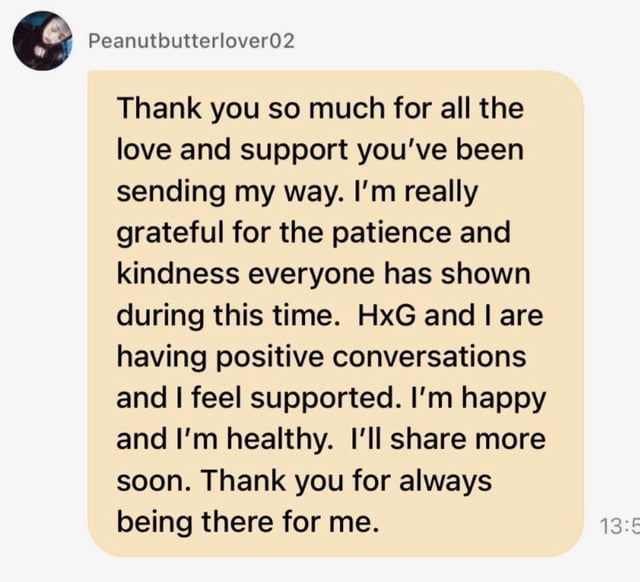
Within 48 hours, the narrative shifted dramatically. As media outlets like Koreaboo picked up on the fan reports, HYBE's communications team issued an official statement to news agencies. This statement explicitly contradicted the "personal schedule" claim. The agency asserted that Manon's activities were being adjusted "due to health reasons," emphasizing that the priority was the artist's well-being and that she was receiving rest and care. They urged fans not to speculate and to trust the agency's management.
“Manon is currently adjusting her schedule based on the advice of medical professionals for her health. We ask for the warm support of fans so she can focus on recovering her condition.”
This should have been the end of it. A health-related hiatus, while worrying, is understandable and typically met with an outpouring of fan support and patience. The story, however, was far from over.

Statement C: The Opaque "Official Position"
Perhaps most baffling of all was the third layer. Following the health announcement, some media outlets sought further detail on the nature of the adjustment and a potential timeline. In response, HYBE provided what they termed their "official position," which neither confirmed nor denied the health issues with clarity. Instead, it reverted to opaque corporate language, stating that "all members' activities are determined based on comprehensive considerations for the team and individual members," and that they "do not comment on the private matters of artists." This statement effectively nullified the specificity of the health announcement, plunging the situation back into ambiguity.
The sequence created a perfect storm of confusion: Personal Schedules → Health Issues → Private Matters. Each statement invalidated the one before it, offering no concrete timeline, diagnosis, or coherent reason for Manon's fluctuating presence. For fans, this wasn't just poor communication; it felt like being gaslit by the very institution they were supposed to trust.
The Fandom Erupts: From Concern to Conspiracy
The reaction from KATSEYE's fanbase, particularly Manon's supporters, has been a volatile mix of worry, anger, and deep-seated suspicion. Social media platforms are alight with the discourse.
#ClarityForManon and #HYBEExplain have trended worldwide, with fans dissecting every frame of recent content, comparing line distributions, and analyzing body language in a desperate search for clues the agency won't provide. The predominant emotion is one of betrayal. "We poured our hearts and votes into The Debut to see this group succeed together," one fan tweeted. "To now have one member treated like a ghost, and the company acting like we're crazy for noticing, is heartbreaking."
Dividing Lines and Dangerous Theories
This vacuum of information has, predictably, been filled with speculation. The fan community has fractured into several camps:
- The Health Advocates: Those who take the health statement at face value, criticizing HYBE for backtracking and failing to show adequate support for an ill artist.
- The Mistrust Cohort: Fans who believe the "health" claim is a smokescreen for deeper issues, perhaps creative differences, internal conflict, or even punitive measures from the label.
- The Systemic Critics: Observers who see this as a symptom of a larger problem in HYBE's structure, questioning whether the "global group" model is being mismanaged post-debut, much like how fans analyzed the complex dynamics inside NCT's heart-to-heart moments.
More dangerously, the lack of clarity has given oxygen to baseless but viral conspiracy theories. Some posit that Manon is being deliberately sidelined, drawing grim parallels to other K-Pop artists who faded from view. Others, noting the intense pressure on the group's "global" image, speculate about unspoken pressures regarding representation and marketability. Every day without a clear, consistent update allows these theories to grow more entrenched.
Industry Analysis: A Case Study in PR Self-Sabotage
From an industry perspective, HYBE's handling of the Manon situation is being viewed as a textbook case of crisis communication failure. "In the absence of a clear narrative, the audience will create their own, and it's often far worse than reality," says Lee Min-ji, a veteran K-Pop PR strategist unaffiliated with HYBE. "By issuing three contradictory statements, HYBE didn't just fail to control the story; they actively weaponized speculation against themselves."
The core principles of managing idol welfare controversies are transparency (within respectful bounds) and consistency. An agency can simply state, "The artist is experiencing health symptoms requiring rest and medical care. We will provide updates on her return schedule at a later date." This acknowledges the issue, shows care, and sets a vague but responsible timeline. What HYBE has done is the opposite: creating a narrative whiplash that suggests internal disarray.
The Shadow of Precedent and the "Black Box" Problem
This incident also taps into a growing frustration within the modern K-Pop fandom: the "black box" of agency decision-making. Fans invest immense emotional and financial capital into idols. When a member disappears or a group's direction shifts inexplicably, the silence from labels feels like a breach of an implicit partnership. We've seen this anxiety play out in discussions about member departures, like the viral theories sparked by Mark's exit from NCT, where patterns are sought to explain the unexplainable.
For KATSEYE, the stakes are uniquely high. They are HYBE's flagship Western-market gamble, a group meant to transcend K-Pop's traditional boundaries. This kind of opaque, confusing management at such a nascent stage doesn't just risk one member's career; it risks the credibility of the entire "global group" experiment. It signals to international fans—accustomed to different standards of artist communication—that they are subject to the same frustrating corporate opaqueness.
Furthermore, it threatens group dynamics. The other five members of KATSEYE are inevitably forced to navigate interviews and fan interactions with this unresolved tension hanging over them, potentially creating an unsustainable environment. The group's unity, their greatest asset, becomes the subject of scrutiny.
What's Next: The Path to Restoring Trust
The way forward for HYBE and KATSEYE is narrow but clear. The next move will be critical in determining whether this becomes a forgotten blip or a foundational crack in the group's story.
First and foremost, HYBE must establish a single, coherent narrative. This likely means reaffirming the health explanation with a slightly more detailed, humane update—perhaps a brief, written message from Manon herself (if she is well enough) expressing her gratitude for concern and her desire to return strong. This would mirror the direct artist communication that has helped other groups navigate turmoil.
Second, they must provide a transparent, if flexible, timeline. "Indefinite hiatus" is a term that breeds anxiety. A statement like "We anticipate a re-evaluation of her participation in two weeks" gives fans a horizon to look toward, even if it changes later.
Third, they must visibly support Manon's presence. Even during her absence, the group's official social media should include her in non-performance ways—mentioning her in posts, leaving a symbolic space for her. This maintains her as part of the group's fabric in the public eye.
The ultimate lesson here is about respect. Fans are not adversaries; they are stakeholders. They demonstrated their power by forming KATSEYE through The Debut. They are now demonstrating that their investment comes with an expectation of dignified communication. How HYBE responds will be a defining moment, not just for KATSEYE's future, but for the agency's relationship with the next generation of global K-Pop consumers. The dream of a global girl group remains, but for now, it is a dream clouded by a needless, self-inflicted fog. As the industry watches, one thing is certain: the path to healing this rift begins not with a new statement, but with unwavering consistency and the genuine transparency that fans deserve. The story of KATSEYE's debut should be one of triumph, not a case study in confusion—a fate that can still be avoided if the agency chooses to truly listen to the very fans who built this dream in the first place.