
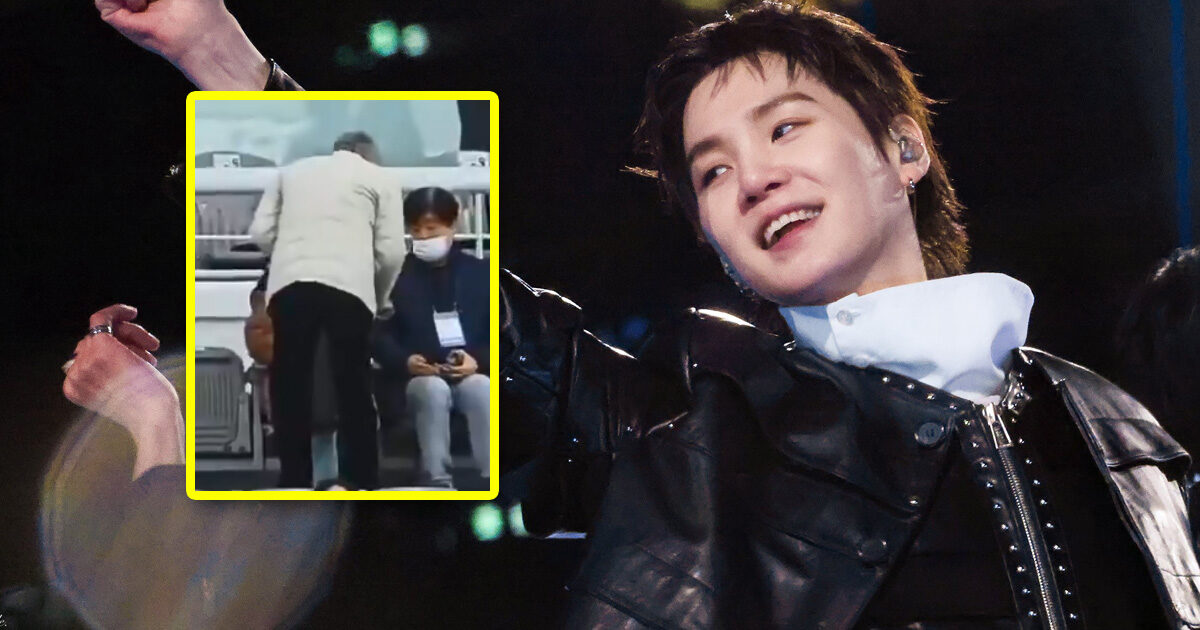

A recent, candid video from the "ARIRANG" concert showing BTS's Suga smiling warmly at his father in the audience has become a viral touchstone. This analysis explores why this fleeting moment transcends typical fan service, offering a profound look at artistic maturity, the evolving contract between senior idols and their fans, and how HYBE is strategically managing the next chapter for its flagship artists. It signifies a shift from manufactured mystique to authentic, lived-in legacy—a paradigm change for an entire industry built on carefully managed personas.
- Why This "Small" Moment Matters More Than a Press Release
- Decoding Suga's Reaction: From Agust D to Son Min-yoon
- The Family's Role in the K-Pop Machine: A Seismic Shift
- HYBE's Legacy Strategy: Curation Over Control
- The Broader Industry Trend: Authenticity as the New Currency
- Your Questions Answered: The Suga Family Moment FAQ
Why This "Small" Moment Matters More Than a Press Release
In an industry built on highly controlled images, an unscripted interaction between an idol and a family member is rare gold. This wasn't a staged VCR or a thank-you speech, but a genuine, mid-performance connection. It breaks the fourth wall in a way that feels intimate, not intrusive. Its power lies in its spontaneity and its stark contrast to the highly choreographed spectacle surrounding it. While a corporate press release about an artist's personal growth would feel sterile, this three-second glance conveyed volumes about identity, achievement, and personal history, achieving more genuine emotional resonance than any official statement ever could.
The Power of the "Real" in a Polished Universe
K-Pop excels at creating immersive, flawless worlds. Moments like these serve as deliberate "cracks in the façade," revealing the human being behind the persona. For a group as globally scrutinized as BTS, these glimpses are priceless. They reinforce authenticity in an era where fans crave it, moving beyond the idol-as-product narrative to idol-as-person. This craving is a direct result of the industry's own evolution; as fans have become more savvy to production and marketing, the currency of trust has skyrocketed. A moment of verified realness—such as a parent's proud, tearful reaction at a concert—becomes a bedrock of that trust. It’s a shared secret between the artist and the audience, a tacit acknowledgment that the grandeur on stage is supported by a very real, very human story off it.
A Narrative Pivot for Artists in Enlistment Era
With the group currently navigating their mandatory military service period, the public narrative around each member is in flux. This moment actively shapes Suga's individual narrative away from the stage: as a son, a family man, and an artist rooted in personal history. It's a soft launch of his next life chapter, witnessed by fans. The enlistment period forces a natural narrative pause in the "group" story, creating space for individual stories to breathe and develop. By allowing this family moment to become public, Suga (and HYBE) are proactively filling that narrative space with content that deepens his character rather than letting speculation define it. It signals that while BTS the group is on a scheduled hiatus, the members as individuals are experiencing growth, reflection, and personal milestones that will ultimately enrich the group's future story.
Decoding Suga's Reaction: From Agust D to Son Min-yoon
Suga's on-stage persona, particularly as his alter-ego Agust D, is famously intense, raw, and often guarded. The contrast between that and the soft, unguarded smile directed at his father is stark and deeply telling. It was not the smile of Agust D, the defiant hip-hop artist, nor of SUGA, the world-class BTS performer. It was the smile of Min Yoongi, the son from Daegu. This split-second expression offered a key to understanding the complex individual behind the artistry.
The Duality of the Artist
This moment perfectly encapsulates the duality Suga has always explored in his music. The fierce lyricist of "Daechwita" and the reflective producer of "People" coexist with Min Yoongi the son. Seeing both sides simultaneously enriches the audience's understanding of his artistic depth. It’s a visual representation of the themes he tackles solo. His Agust D mixtapes are autobiographical, grappling with mental health, societal pressure, and personal triumph. The father in the audience is a living connection to the pre-fame past referenced in those songs—a past of financial struggle and familial doubt that his music has often exorcised. The smile, therefore, isn't just personal; it's a silent resolution of a narrative thread in his own discography. It’s the victorious son showing his father the culmination of a difficult journey, similar to how other artists use their craft to process personal history, as seen in analyses of post-competition show releases like Jay Chang's "Higher".
What the Smile Communicates: A Non-Verbal Analysis
Non-verbal communication analysis is key here. The smile wasn't one of performance joy, but of recognition, pride, and a silent "I see you." It suggests a shared history and an understanding that his father comprehends the weight of the journey to that very stage—a journey far removed from the typical parent-child dynamic. Experts in micro-expressions might note the crinkling of the eyes (a Duchenne smile, often indicating genuine emotion) and the slight, almost imperceptible nod that accompanied it. This was an acknowledgment, not just an emotion. It communicated: "You are here. You see this. We made it." This layers the moment with profound significance, transforming it from a simple family visit into a symbolic passing of the torch from private sacrifice to public legacy.
The Family's Role in the K-Pop Machine: A Seismic Shift
Traditionally, idol families were kept firmly off-screen, part of the private life sacrificed for public fame. Their occasional appearances were often framed as emotional backdrops for competition shows, used to heighten drama rather than celebrate ongoing relationships. Today, their role is evolving from hidden supporters to acknowledged stakeholders in an idol's story. This is not merely a sentimental change but a structural one, reflecting the industry's maturation and the changing demographics of both artists and fans.

From Backstage to Beside: Acknowledging Sacrifice
We are seeing a strategic, respectful integration of family. Think of parental reactions to debut news, subtle acknowledgments in speeches, or, as here, their presence as honored guests. This shift does two things: it humanizes the idol exponentially, and it validates the family's immense, often unseen, sacrifice. The K-pop trainee system is brutal, often requiring families to financially and emotionally support a child through years of uncertainty with no guarantee of success. By bringing families into the light, the industry is, in a way, offering long-overdue credit. It acknowledges that an idol's success is not solely a corporate product but a family investment. This fosters a more sustainable and respectful ecosystem for artists, who no longer have to compartmentalize their identities so severely.
Comparative Table: The Evolving Role of Idol Families
Era Family Visibility Industry Driver Fan Perception & Example 2nd Gen / Early 3rd Gen Near-zero. Strictly private. Mentioned only in vague terms of "support." Appearance could be seen as a liability to the idol's marketable "availability." Maintenance of idol mystique and marketability as "accessible" boyfriend/girlfriend image. Protection of idol from personal scrutiny. Curiosity, but acceptance of privacy boundary. Families were a mysterious, almost mythical entity. (e.g., Early years of groups like TVXQ or Girls' Generation). Mid 3rd Gen (BTS Rise) Occasional, curated glimpses. Letters read on VLIVE, rare interview mentions, parents attending awards shows seated anonymously in the audience. Deepening artist-fan connection through shared vulnerability and "true" stories as part of a broader "idol as friend" narrative. Increased emotional investment; families seen as part of the struggle narrative. Fans felt grateful to them. (e.g., BTS members occasionally discussing their parents' early hardships). Current / 4th Gen & Legacy Acts Strategic, dignified cameos. Concert attendance in VIP sections, direct on-stage acknowledgments, parents featured in documentary content, treated as part of the artist's ecosystem. Building legacy, showcasing maturity, and reinforcing authentic life beyond idolhood. A key part of artist branding for seniors. Also a response to fan demand for holistic artist stories. Respect and reverence. Seen as receiving long-overdue recognition for their role. Viewed as integral to the artist's complete identity. (e.g., Suga's father at ARIRANG, BLACKPINK's parents in "BLACKPINK: The Movie").The Logistics and Ethics of Family Inclusion
This shift isn't without its complexities. Logistically, it requires new protocols for privacy and security, especially for families unused to the spotlight. Ethically, agencies and artists must navigate the fine line between respectful inclusion and exploitation. The key is agency—allowing the idol and their family to dictate the level and manner of involvement. The success of moments like Suga's lies in their feeling consensual and natural, not coerced or turned into a recurring reality-show subplot. It’s about dignity, not exposure.
HYBE's Legacy Strategy: Curation Over Control
HYBE didn't just allow this moment to happen; they likely facilitated it and understood its value. For a conglomerate managing artists in their late 20s and 30s, the narrative must evolve from perpetual youth to enduring artistry. HYBE's approach here is a masterclass in modern talent management for legacy acts, focusing on curation—setting the stage for authentic moments—rather than rigid control of every message.
Managing the "Chapter 2" Narrative
For BTS and senior groups like Seventeen, the story is no longer about explosive rookie growth but about sustained influence, artistic depth, and personal fulfillment. Showcasing an idol's family ties is a powerful way to signal growth, stability, and a rich life outside the company building—a stark contrast to the trainee narrative. This curated authenticity allows fans to grow *with* the artists, transitioning from a parasocial fantasy to a more mature supporter-artist relationship based on mutual respect for life's chapters. This strategy is evident across HYBE's handling of its senior roster, as seen in the nuanced, member-focused releases and personal content that characterizes this era, similar to the calculated artistic risk explored in Seventeen DxS's "Feel Me".
Asset Protection Through Maturation
Allowing artists to publicly embrace their familial roles protects their long-term brand. It transitions them from "idols" to "iconic artists" and "cultural figures," whose appeal is based on lasting talent and relatable humanity, not just youthful energy. This safeguards their marketability for decades, much like legacy artists in other genres. A 35-year-old artist who is publicly a devoted son or father has a relatable, durable narrative that a 35-year-old artist still forced to maintain a strictly "available" persona does not. HYBE is effectively future-proofing its most valuable assets by allowing their public personas to mature naturally, ensuring fan loyalty evolves from infatuation to legacy support.
Portfolio Diversification in Narrative
This strategy also allows HYBE to diversify the types of stories it tells. While younger groups like NewJeans or ILLIT cultivate a more enigmatic, concept-driven aura, legacy groups offer depth and autobiography. This creates a balanced portfolio for the label, appealing to different fan desires and demographic segments. The Suga moment is a premium product in this portfolio—a high-impact, low-cost narrative event that generates immense goodwill and media coverage.
The Broader Industry Trend: Authenticity as the New Currency
This moment is not an isolated incident. It fits a pattern across the industry where calculated glimpses of "real life" are becoming integral to branding, especially for artists moving beyond the traditional idol lifecycle. In a saturated market, authenticity has become a key differentiator.
The "Unfiltered" Content Boom and Its Limits
From casual live streams to vlogs showing daily routines, the demand for unpolished content is high. The Suga-father moment is a premium, organic version of this. It’s the ultimate "unfiltered" clip because it cannot be staged without losing its essence. However, there is a crucial distinction between constant oversharing and strategic revelation. The trend is not toward reality-TV style transparency, but toward the selective sharing of milestones and relationships that feel earned and meaningful. This calibrated approach maintains a necessary boundary while satisfying fan desire for connection. This trend even extends to virtual idols like PLAVE, where the "real" is constructed through the members' offline identities and interactions, serving a similar fan desire for genuine connection behind the avatar, as analyzed in "PLAVE's 'Born Savage' Decoded".
Legacy vs. Rookie Playbooks: A Strategic Divide
The strategy for new acts remains distinctly different. For rookies, mystery, group unity, and a focus on performance and concept are paramount. The individual's private life is often completely submerged to strengthen the group identity. For legacy acts, differentiated individual narratives grounded in real-world connections become vital for continued relevance. A rookie's family story might be a private detail; for a senior artist like Suga, it becomes a public chapter in a well-known biography. This moment is a masterclass in that advanced playbook, showing how personal, "ordinary" milestones can be seamlessly integrated into the public legend, transforming them into shared triumphs that deepen the artist's mythos rather than diminish it.
Your Questions Answered: The Suga Family Moment FAQ
Q1: Was Suga's father's attendance a planned HYBE publicity stunt?
A: While his seat was undoubtedly arranged by HYBE's guest management team, the captured reaction was almost certainly organic. The value of the moment lies in its genuineness. Staging a specific, viral-worthy interaction would risk appearing manipulative and would likely be detected by the savvy ARMY fandom, which can discern between authentic and forced emotion. HYBE's skill was in creating the *possibility* for the moment—ensuring family had access and a good view—not scripting it. They curated the environment for authenticity to occur, which is a more sophisticated and effective strategy.
Q2: Why is this getting more attention than other idols' family sightings?
A: Three key factors: Scale, Persona, and Timing. BTS operates at a global cultural level where every detail is amplified. Suga's specific, introverted and often fiercely private public persona makes such an open display of familial emotion rare and therefore more impactful. It contradicts and completes his public image simultaneously. Furthermore, occurring during his solo concert while the group is in enlistment, it became a defining individual moment in a period of collective hiatus, attracting focused attention.
Q3: Does this mean we'll see more BTS family members publicly?
A: Strategically, yes, but within clear boundaries. Expect dignified, controlled appearances that feel like natural extensions of the members' lives—perhaps parents at exhibitions (like V's for his photography), siblings supporting business ventures, or family acknowledged in documentary projects. The era of complete secrecy is over. However, HYBE and the members will fiercely protect their families' core privacy and autonomy, allowing glimpses only on their own terms to avoid overexposure or intrusion.
Q4: How does this affect Suga's musical output going forward?
A: It may not directly affect the *sound* of his music, but it profoundly enriches the lens through which we view his artistry. Future songs about growth, reflection, legacy, or even fatherhood will now be heard with this visible layer of his personal life in mind. It adds documentary depth to his narrative as a songwriter. For an artist who mines his personal life for material, this public moment becomes a new reference point in his lyrical biography, potentially making future introspective work feel even more resonant and grounded.
Q5: Is this part of a trend with other senior idol groups?
A: Absolutely. Across the industry, artists from 2nd and 3rd generation groups are more openly integrating personal milestones into their public personas. Examples include Super Junior's Heechul speaking openly about his family, SHINee's Key involving his mother in his variety content, or EXO's Chen being supported by fans as a father. It's a necessary and healthy evolution for career longevity, moving the fan relationship from fantasy to respectful support of a whole person.
Q6: Does the military enlistment context make this moment more poignant?
A: Unquestionably. Military service is a major life transition that often emphasizes family ties and personal reflection. For an idol, it's a forced step back from the spotlight and a return to a more "normal" life structure. Having a family moment highlighted just before or during this period serves as a powerful narrative bridge, connecting their idol identity to their private, civilian identity. It reassures fans that the person they support is grounded and has a strong, private support system during this time away.
Conclusion: The Ripple Effect of a Shared Glance
The video of Suga and his father is more than a heartwarming clip; it's a case study in modern K-Pop celebrity management at the highest level. It marks a continued pivot towards controlled authenticity, the strategic maturation of idol narratives, and the acknowledgment that an artist's strength can stem from their roots as much as their talent. This moment successfully operated on multiple levels: as a personal family memory, a gift of profound intimacy to fans, a strategic brand-building move for HYBE, and a signal to the industry about the future of legacy artist management.
For fans, it’s a gift of connection that deepens loyalty. For the industry, it’s a blueprint for managing the second act of an idol's career with dignity and intelligence. As BTS and their peers write their next chapters, these human moments will become the cornerstones of their enduring legends, proving that the most powerful stories are not just those sung on stage, but those lived off it. The glance between Suga and his father didn't just cross a concert hall; it bridged the gap between persona and person, between sacrifice and legacy, setting a new standard for what authenticity looks like in the global phenomenon that is K-Pop. To see how other artists are crafting their unique narratives through music, explore the latest analyses on our Charts page and stay updated with breaking insights on our News page.