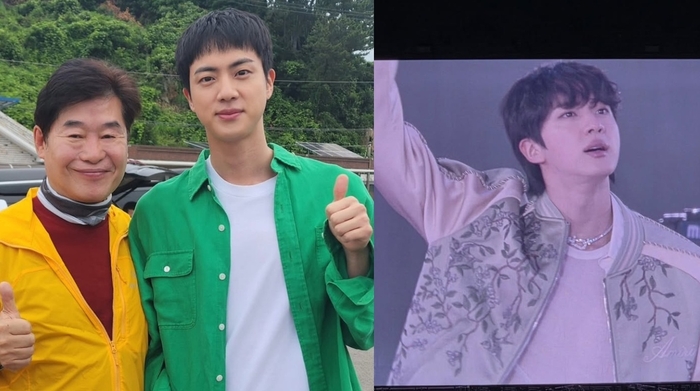
When legendary Chinese cuisine Master Chef Lee Yeon Bok, 67, took to social media to detail his profound emotional experience at a BTS concert, he served up more than a review; he provided a masterclass in the group's transgenerational power. This analysis delves into why the heartfelt reaction from a respected figure far outside K-Pop's traditional demographic is a critical data point for the industry. It signals BTS's evolution from idol phenomenon to a universal cultural touchstone whose appeal is built on timeless artistic principles, not just trend-based fanfare.
- Why A Chef's Opinion Matters More Than A Music Critic's
- Decoding The Review: The Four Emotional Pillars Lee Yeon Bok Discovered
- The "BTS Universal Appeal" Recipe: Breaking Down The Ingredients
- Beyond The Music: How BTS is Building an Unlikely Generational Bridge The Hard Truth For The Industry: What Lee's Review Reveals About K-Pop's Blind Spots
- FAQ: Chef Lee Yeon Bok & BTS's Cultural Impact
Why A Chef's Opinion Matters More Than A Music Critic's
In an era of hyper-specialized commentary, the perspective of an outsider—especially one of Lee Yeon Bok's stature—carries a unique, unvarnished weight. His lens is not clouded by chart numbers, streaming records, or fanwar discourse. He evaluated the BTS concert purely as a holistic human experience, much like one would assess a masterfully crafted dish.
The Credibility of a Master Craftsman
Chef Lee is not merely a TV personality; he is a recognized "Human Cultural Asset" in the field of Chinese cuisine. His life's work is dedicated to discipline, artistry, heritage, and the meticulous craft of creating experiences that resonate on a sensory and emotional level. When such a person praises another group's craft, it transcends pop music fandom. It becomes a peer review of artistic dedication.
The "Unbiased Audience" Factor
Unlike music journalists or critics embedded in the K-Pop ecosystem, Lee approached the concert with zero professional baggage. He had no album to promote, no agency relationship to consider, and no need to demonstrate "cool" credibility. His reaction was authentically personal, making his validation arguably more powerful than a perfect review score from a media outlet. This mirrors moments when non-industry figures validate art, similar to how HyunA's shocking return to Cube as a Creative Director was validated by business analysts, not just fans.
Decoding The Review: The Four Emotional Pillars Lee Yeon Bok Discovered
By parsing Chef Lee's reported impressions, we can isolate the specific elements that catalyzed his deep emotional response. These pillars form the bedrock of the live BTS experience, often overshadowed by discussions of scale and spectacle.
Pillar 1: Synchronized Artistry as "One Flavor"
A master chef understands the harmony of ingredients. Lee specifically noted the group's perfect synchronization, not just in dance, but in their collective energy and intention. He perceived seven individuals operating as a single, cohesive artistic unit. In culinary terms, he witnessed a dish where no single element overpowered another, creating a perfect, unified "flavor" of performance.
Pillar 2: Emotional Sincerity Over Technical Spectacle
While the production value is immense, Lee's review highlighted the members' genuine emotion and connection with the audience. He saw past the lasers and pyrotechnics to the raw, human exchange happening on stage. This speaks directly to BTS's core strength: their ability to project authenticity, a quality that resonates regardless of age or background.
Pillar 3: The Communal Ritual of the Audience
As someone who values tradition and communal experience, Lee was deeply moved by the collective behavior of ARMY. The fan chants, the coordinated light sticks (ARMY Bombs), and the shared emotional waves were not seen as chaotic fandom but as a participatory ritual. He recognized this as a key ingredient in the overall "experience," much like the shared atmosphere of a cherished dining hall.

Pillar 4: The Narrative Arc of the Concert
A great tasting menu has a progression. Lee intuitively felt the curated emotional journey of the concert setlist—from high-energy anthems to introspective ballads. He didn't just see a series of songs; he experienced a story told through performance, which is a foundational principle of BTS's discography and concert design.
The "BTS Universal Appeal" Recipe: Breaking Down The Ingredients
Chef Lee's reaction is a case study in BTS's unique market position. Their appeal operates on multiple levels, allowing different demographics to connect with different layers of their artistry.
Appeal Layer What It Offers Younger Fans What It Offers Older/Mainstream Observers (Like Lee) Kinetic & Visual High-energy performance, fashion, choreography, "stan" culture participation. Appreciation for athletic discipline, synchronized artistry, and large-scale production value. Emotional & Lyrical Relatable themes of youth, anxiety, love, and self-discovery. Universal themes of resilience, passion, human connection, and artistic sincerity. Narrative & Conceptual Deep engagement with the "BU" (BTS Universe) lore, music video symbolism, and long-term story arcs. Appreciation for cohesive album design, intellectual depth in themes, and artistic ambition beyond pop norms. Communal & Experiential A sense of identity and belonging within the global ARMY fandom. Observation of positive communal spirit, cultural movement, and shared joy.The "Dual-Coding" Success Strategy
BTS's content is effectively "dual-coded." A song like "Spring Day" functions as a melodious pop track while also serving as a profound meditation on loss and perseverance. This allows a teenager and a senior to enjoy the same song for different, yet equally valid, reasons. Chef Lee connected primarily with the latter coding—the timeless artistic and humanistic elements.
Beyond The Music: How BTS is Building an Unlikely Generational Bridge
Lee Yeon Bok's experience is not an isolated incident. It represents a growing, often under-reported, phenomenon of older demographics engaging with BTS not as a "guilty pleasure," but as respectable art.
Erosion of Preconceived Biases
Figures like Chef Lee act as cultural validators for their peers. When a respected authority in one field endorses an artist from a seemingly disparate field (youth-oriented pop), it gives permission for others to look past their own biases about "idol music." This helps dissolve the rigid generational barriers that often confine K-Pop's perceived audience.
The "Artisan Recognizes Artisan" Effect
There is a mutual recognition of mastery. Lee, having spent decades honing a craft, can recognize the same level of dedication, practice, and precision in BTS's performance. This forms a connection that bypasses genre. It’s a reminder that the group's current chapter, including members' solo endeavors and military service, is part of a larger narrative of growth that even outsiders follow, much like the public's intense scrutiny over military enlistment timelines.
The Hard Truth For The Industry: What Lee's Review Reveals About K-Pop's Blind Spots
If the K-Pop industry views Chef Lee's review merely as a cute viral moment, it misses the monumental lesson. His reaction underscores a strategic gap in how most groups are built and marketed.
The Over-Emphasis on "Snapshot" Virality
Many agencies prioritize moments designed to go viral on TikTok or Twitter: a killer dance break, a stunning visual cue. These are "snapshots." BTS, as evidenced by Lee's holistic review, invests in the full-length feature film. Their appeal lies in the sustained emotional journey, which is harder to market but creates deeper, more lasting connections. This depth is what protects an artist's narrative, even when facing challenges like the invasive scrutiny highlighted in our report on sasaeng culture.
The Neglect of "Grown-Up" Narrative Layers
K-Pop often targets the immediate tastes of younger audiences. BTS, especially in their later work, has consciously added narrative layers that resonate with lived experience—themes of burnout, systemic critique, existential search. These layers are what Chef Lee, a man with a lifetime of experience, connected with. They provide a gateway for adult audiences who typically dismiss pop as frivolous.
Authenticity as a Non-Negotiable Core
Lee sensed sincerity. In an industry sometimes criticized for overly manufactured personas, BTS's perceived authenticity is their ultimate brand equity. This is a fragile asset, as seen when contractual or interpersonal authenticity breaks down, leading to moments like Zuu's departure from SECRET NUMBER, which fans immediately framed as a breach of genuine trust.
FAQ: Chef Lee Yeon Bok & BTS's Cultural Impact
Q1: Who exactly is Chef Lee Yeon Bok, and why is he famous?
A: Lee Yeon Bok is a South Korean master chef specializing in Chinese cuisine, designated as an "Important Intangible Cultural Asset" (a living national treasure) for his skills. He is widely respected as an authority in his field, known for his deep knowledge, discipline, and appearances on culinary television programs.
Q2: Is this just a publicity stunt, or was his reaction genuine?
A> While any public figure's social media post has an element of publicity, the specific, nuanced language of emotional resonance he used aligns more with a genuine personal reflection than a promotional plug. His stature also reduces the need to leverage a pop group for clout; his endorsement holds more risk to his traditional reputation than it offers benefit, suggesting authenticity.
Q3: Does this mean BTS is "for older people" now?
A: Absolutely not. This phenomenon is about expansion, not replacement. BTS's core remains incredibly strong with their original demographic. Chef Lee's experience demonstrates their unique ability to add audience layers without alienating their base, a rare feat in pop culture.
Q4: What does this mean for the future of K-Pop?
A: It sets a challenging precedent. It suggests that for a group to achieve truly transcendent, decade-spanning status, they must build artistry with multiple access points. The lesson is to craft music and performances with emotional and narrative depth that can resonate on a human level, far beyond trending dance challenges. For the latest on how top artists are navigating their careers, follow our analysis on K-Beats News.
Q5: How can I see BTS's artistry from this perspective?
A: Try watching a full concert film (like "BTS Permission to Dance on Stage") or a cohesive album's music videos in sequence, focusing less on the individual moments and more on the overarching emotional tone and lyrical themes. Listen as you would to a classic album from any genre.
Conclusion: The Lasting Flavor of Legacy
Master Chef Lee Yeon Bok's BTS concert review is a cultural document. It proves that at their peak, BTS transcended the mechanics of the idol system to operate as pure, impactful artists. Their concert was not just a show; it was a communal human experience crafted with the precision of a master artisan—an artistry recognized by another master.
For the industry, the takeaway is clear: sustainable legacy is built on universal human truths, not just viral metrics. As BTS members navigate their solo paths and military service, this episode reaffirms that their collective foundation is rock-solid, built to appeal to the senses of a teenager and the soul of a seasoned expert alike. To explore the artistry of BTS and other groups shaping this narrative, visit our dedicated Artists page for in-depth profiles and discography breakdowns.