
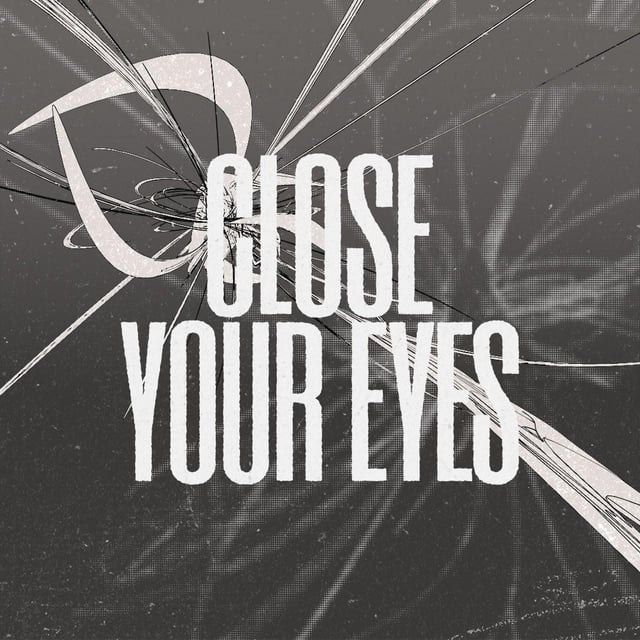

CLOSE YOUR EYES is not just dropping a song; they are detonating a statement. Their sudden digital single announcement for "OVEREXPOSED" on April 9th is a raw, intentional pivot, directly confronting the hyper-scrutiny of idol life. This analysis dives deep into the symbolism of their stark teaser, the evolution of their sound from Shatter to now, and why this release is a critical, meta-commentary on K-Pop's relationship with privacy, authenticity, and fan agency in the digital age. We will unpack the calculated risks, the precise cultural timing, and how this move could redefine the group's trajectory within the industry's avant-garde.
- What Is CLOSE YOUR EYES Signaling With "OVEREXPOSED"?
- Decoding The Teaser: A Frame-By-Frame Breakdown
- From SHATTER to OVEREXPOSED: Tracing Their Sound & Concept Evolution
- The Bigger Picture: "OVEREXPOSED" in Today's K-Pop Landscape
- How Is The Fandom ("Somnus") Reacting? Decoding The Fan Theory Frenzy
- CLOSE YOUR EYES Comeback FAQ
What Is CLOSE YOUR EYES Signaling With "OVEREXPOSED"?
The title itself is a multilayered provocation. In photography, overexposure washes out detail, creating a blinding white. For idols, it’s the relentless glare of the public eye, leaving no personal shadow untouched. This comeback appears to be CYE’s thesis on the cost of fame. But beyond the obvious metaphor, "overexposed" also implies a deliberate act—something *made* to be seen too much, until its original form is lost. This reframes the idol not just as a victim of scrutiny, but as a product systematically pushed beyond its sustainable limits by the industry's content-hungry machinery.
The Antithesis of Typical Promotion
Announcing a mere digital single, not a full album or EP, is a statement of urgency and purity. In an era where comebacks are sprawling multimedia events with exhaustive merchandising, a standalone digital single cuts through the noise. It suggests a message that couldn't wait for a traditional 6-12 month comeback cycle involving photo book design, jewel case manufacturing, and inclusion card randomization. The lack of elaborate pre-order kits or physical album details focuses all attention purely on the music and its narrative, a move reminiscent of artists like BIBI or former idol soloists who use digital releases to reclaim their narrative outside typical agency machinery. It's a gamble that prioritizes artistic statement over immediate revenue from physical sales, betting that the long-term brand equity and fan loyalty gained will be more valuable.
A Direct Continuation of "SHATTER"
Their last EP, Shatter, dealt with internal breakdown and reconstruction—the private cracking of a persona under self-imposed or internal pressures. "OVEREXPOSED" logically follows by examining the external forces that cause that shattering—the cameras, the comments, the constant performance of self. This isn’t a new concept; it’s the next, more confrontational chapter. Where Shatter might have asked "What is breaking inside me?", Overexposed asks "What is breaking me?" This progression mirrors a classic artistic arc from introspection to external critique, positioning their discography as a coherent novel about modern celebrity.
"The most dangerous thing in this industry isn't the hate comments; it's the erasure of the line between what you perform and who you are. The light becomes so constant, you forget what your shadow even looks like." — An anonymous industry producer, echoing the anticipated theme.
Decoding The Teaser: A Frame-By-Frame Breakdown
The 19-second teaser is a minimalist masterpiece, packed with meaning that rewards obsessive replay. It’s a stark departure from their previous high-concept, cinematic visuals, trading narrative for visceral sensation. Let's break down its key moments and their potential symbolism.
The Visual Grammar of Distortion
The teaser opens not with the members' faces, but with a blinding, corrupted digital screen—a "no signal" or critical error display. This immediately establishes the theme: system failure. We then see glitched, fragmented shots of eyes (a direct callback to their group name) and hands shielding faces. The eyes are never whole; they are sliced by digital artifacts or seen through a warped lens. The color palette is harsh white, digital blue, and black—the colors of a malfunctioning monitor or a security camera feed, not a glamorous photoshoot.
This visual distortion directly mirrors the topic of digital identity erosion. The "glitch" is not presented as an error, but as an aesthetic—the true state of being under perpetual observation. It’s a potent visual link to recent industry conversations about AI and deepfakes, where an idol's image can be replicated and manipulated without consent. The teaser visually asks: if your image can be corrupted digitally without your input, how much control do you truly have over it in the first place? This builds on the discourse from incidents like the recent AI appropriation scandal, making the teaser a timely commentary.

The Absence as a Presence
Notably, no member is shown clearly or individually. The group is presented as a blurred, collective entity under duress—a silhouette against blinding light, fingers splayed across a lens. This intentional "absence" is a radical marketing tactic. In a culture built on parasocial connection through close-ups and individual fancams, denying the audience a clear view is a powerful statement. It forces the viewer to focus on the *feeling*—the anxiety, the claustrophobia of exposure—rather than on idol identification and visual appeal. It’s a brilliant, meta inversion of typical comeback marketing that uses mystery not for allure, but for empathy.
- Frame 0-3s: Blinding white screen with digital noise. Establishes the "overexposure" literally and metaphorically.
- Frame 4-8s: Quick cuts of a hand covering a camera lens, a blurred figure turning away. Suggests defense and evasion.
- Frame 9-14s: Glitched close-up of an eye, pupil dissolving into pixelated fragments. The core symbol (the eye) is destroyed by the medium.
- Frame 15-19s: Static and a distorted, reverse audio cue that might be a voice saying "see" or "me." Leaves an unsettling, unresolved feeling.
From SHATTER to OVEREXPOSED: Tracing Their Sound & Concept Evolution
CLOSE YOUR EYES has built a reputation for introspective, alternative-leaning pop. Their journey has been a linear progression towards greater artistic vulnerability and sonic complexity, mapping the psychological journey of an artist in the spotlight. The table below outlines this clear evolution, demonstrating that "OVEREXPOSED" is not a left-turn, but a destination they have been steadily approaching.
Era Title Track Core Concept Musical Direction & Key Instruments Lyrical & Thematic Focus Début "Lucid" Dream vs. Reality Atmospheric synth-pop, ethereal vocal layers, dreamy pads. Focus on melody. Awakening to a new reality; questioning what is genuine. A state of confusion and search for truth. 1st Comeback "Echo Chamber" Internal Noise & Isolation Industrial pop with metallic synths, trap-influenced beats, dissonant harmonies. Introduced tension. The suffocating feeling of being surrounded by voices (fans, critics, self-doubt) but feeling profoundly alone. Last Comeback "Shatter" Breakdown & Cathartic Release Rock-influenced with distorted guitars, explosive drums, orchestral string breaks. Dynamic, loud/quiet contrast. The moment of breaking point. Lyrics dealt with personal fragmentation, pain, and the first step toward rebuilding. Upcoming "OVEREXPOSED" External Pressure & Digital Scrutiny Predicted: Glitch Pop, Ambient Noise, ASMR textures, sparse but heavy sub-bass, fragmented vocal processing. The invasive, external causes of the "shatter." Invasion of privacy, loss of self to the public gaze, the violence of constant observation.Predicting the "OVEREXPOSED" Soundscape: A Technical Forecast
Based on their trajectory and the teaser's audio cues—a distorted, pulsing synth baseline and a fragmented, possibly reversed vocal sample—we can make an educated prediction about the sonic landscape. Expect a departure from the anthemic, cathartic rock of Shatter toward something more clinically unsettling and digitally native.
- Glitch Aesthetics as Narrative: Intentional digital errors—skipping beats, CD-jump stutters, bit-crushed vocals—won't just be production flourishes; they will be the core rhythmic and melodic language, mirroring the theme of corrupted identity.
- Ambient Tension & Drones: Long, sustained drones and atmospheric pads will create a bed of unease, representing the constant, low-level hum of surveillance and public expectation.
- Sparse, Punishing Bass and Silence: Moments of heavy, minimalist low-end will drop in to underscore the weight of the theme. Crucially, the use of silence or near-silence could be powerful, representing the rare moments away from the "exposure."
- Vocal Processing: Expect heavily manipulated vocals—whispers pushed to the foreground, harmonies that sound slightly out of sync, autotune used not for polish but as a robotic, dehumanizing effect. The raw, emotional delivery of Shatter might be processed, reflecting how a personal feeling becomes distorted once made public.
This aligns with a growing, niche trend in K-Pop towards more experimental, genre-defying sounds that prioritize mood and concept over immediate pop digestibility, as seen in releases like Risabae's recent avant-garde project or certain tracks by ATEEZ's HALAZON.
The Bigger Picture: "OVEREXPOSED" in Today's K-Pop Landscape
This comeback doesn't exist in a vacuum. It taps directly into the most pressing, uncomfortable dialogues in the industry today, positioning CLOSE YOUR EYES not just as participants, but as acute commentators on their own ecosystem.
The Idol Autonomy Movement & Strategic Release Formats
The digital single is more than a format; it's a strategic tool. It allows for faster creative turnaround, bypassing the long lead times of physical production. This agility enables artists to respond to current events or personal creative impulses in near real-time. While not necessarily a fully self-funded project, it resonates powerfully with the growing fan and artist demand for greater creative control. It echoes the sentiment behind moves like THE BOYZ's recent bold steps toward self-direction. "OVEREXPOSED" implicitly asks: in an industry that packages and sells every aspect of an idol, how much of the final artistic statement is truly theirs? By choosing a format with less commercial baggage, CYE claims more ownership of the message.
Meta-Commentary as Brand Differentiation
In a saturated market, groups must differentiate. While many concepts explore fantasy, love, or empowerment, directly critiquing the very system that creates you is a high-risk, high-reward niche. By titling a song "OVEREXPOSED," CLOSE YOUR EYES is holding a mirror to the content machine: the endless reality shows, the 24/7 bubble live streams, the airport fashion scans, the mandated social media posts. This builds immense intellectual and emotional loyalty with a fanbase increasingly weary of superficiality. It transforms fans from passive consumers into engaged confidants who feel their artists "understand the struggle." This approach has precedent in the thoughtful, system-critical lyrics of artists like BTS in their earlier days or Stray Kids' explorations of societal pressure.
Synergy with Global Digital Culture Conversations
The theme intersects perfectly with global conversations about internet culture, cancelation, parasocial relationships, and mental health. It positions CYE as a group with a relevance that extends beyond K-Pop fandom into broader digital age anxieties. This grants their work a timeless, analytical quality that can be studied and appreciated by media scholars and pop culture critics, elevating their artistic standing.
How Is The Fandom ("Somnus") Reacting? Decoding The Fan Theory Frenzy
The fandom name, Somnus (Latin for sleep), is uniquely poised for this "OVEREXPOSED" concept. If their music explores the nightmare of fame, the fandom's name represents a desired escape or a private space. Their reaction has been characteristically less about typical hype ("I'm so excited!") and more about forensic analysis and emotional preparedness ("We are ready to listen and protect").
Leading Fan Theories and Collective Analysis
On platforms like Twitter, Discord, and niche forum sites, Somnus has become a hive of analytical activity. Key theories have gained traction:
- The "Camera Lens/Shutter Speed" Theory: The most popular theory posits that the glitches represent the mechanical shutter of a camera. Each "click" in the audio or visual corresponds to a moment of capture, fracturing a piece of their identity. Fans are searching for a consistent "shutter count" rhythm in the teaser.
- The "Sequential Pain" Trilogy Theory: This view sees their title tracks as a continuous story: Lucid (the awakening to the true nature of idol life), Shatter (the internal collapse under pressure), and now Overexposed (the raw, vulnerable state after breaking, where all flaws are visible). Some predict a fourth, final chapter about "healing" or "reclamation."
- The "Member-Director & Hidden Credits" Theory: Speculation is rife that leader and main producer Joon has taken full creative reins, potentially even directing the minimalist teaser. Fans are scouring the teaser's final frame for tiny, hidden credits in the static, believing the members are signaling deeper involvement than usual.
- The "Interactive/Multiple Version" Theory: Given the digital theme, some fans theorize the song or MV will have interactive elements, different endings based on viewer choice, or will be released in multiple "corrupted" versions before a "clean" master is revealed.
A Fandom in "Protective Mode": Shifting the Consumption Paradigm
The mood across fan spaces is notably solemn and protective. Comments are filled with promises like "We will stream responsibly," "We'll read the lyrics first," and "Our priority is their message, not just the chart numbers." This transforms the release from a standard consumption event into a shared, almost sacred experience of witnessing and supporting. It reflects a mature fan-idol relationship where the art is the centerpiece. This sentiment is trackable through the tone on our real-time charts and fan sentiment analysis, which shows a high volume of discussion centered on "concept" and "meaning" rather than "visuals" or "dance."
CLOSE YOUR EYES Comeback FAQ
Q: When is "OVEREXPOSED" being released exactly?
A: The initial teaser did not specify a time. The announcement date was April 9th. Based on common industry practice for digital singles, the release will most likely be at 6:00 PM Korean Standard Time (KST) on a date to be confirmed, often the following week. Always monitor CLOSE YOUR EYES’ official SNS channels (Twitter, Instagram, Weverse) and our K-Beats news hub for the official timestamp announcement.
Q: Will there be a physical album or music video?
A: Announced explicitly as a "digital single," a concurrent physical album is highly unlikely. A music video, however, is almost a certainty. Given the high-concept, visual nature of their previous work and the powerful imagery in the teaser, the MV will be a crucial component for fully understanding the narrative. It may be released simultaneously with the audio or follow shortly after.
Q: Is this song directly related to a specific member's recent personal struggles or scandals?
A: While their music is known for being deeply personal and drawn from real experience, it is reductive and potentially harmful to map art directly onto unconfirmed personal events. The theme of "OVEREXPOSED" is a universal commentary on the idol experience. As artists, they are likely channeling a collective, observed experience—their own, their peers', and the industry's—into a cohesive work. It's important to respect the art as a statement, not a diary entry.
Q: Does this new sound mean they are completely abandoning the "Shatter" rock style?
A> Absolutely not. For concept-driven groups like CLOSE YOUR EYES, each release is a chapter in a larger book. Shatter established their ability to handle intense, guitar-driven emotion. Overexposed seems to be applying that same emotional intensity to a different sonic palette—one of digital anxiety. This is evolution, not erasure. The core of their music—raw emotion, complex themes, and vocal prowess—will remain constant. Future releases could easily circle back to rock elements or fuse them with the new glitch aesthetics.
Q: Where can I catch up on their lore and member backgrounds?
A> You can explore their full history, member profiles, production credits, and previous discography on our comprehensive K-Beats Artists database. We recommend listening to their previous releases in order to fully appreciate the narrative journey leading to "OVEREXPOSED."
Conclusion: Why This Comeback Matters Beyond the Charts
CLOSE YOUR EYES' "OVEREXPOSED" is poised to be more than a song; it's a cultural artifact for this specific, hyper-connected moment in K-Pop. It arrives as debates about privacy, AI ethics, parasocial boundaries, and artistic autonomy reach a fever pitch both within and outside the industry. By choosing to engage with these themes head-on through their art, they elevate their work from entertainment to essential social commentary.
This comeback's success metrics will be multifaceted. While chart performance is always a data point, the more significant measures will be the depth of critical analysis it sparks, the quality of fan discourse it generates, and its long-term citation in discussions about K-Pop's artistic maturity. It’s a risky, authentic move that deepens the covenant with their fandom and challenges the industry to look in the mirror. To understand its full impact, one must listen closely when it drops. Analyze the lyrics as poetry, deconstruct the visuals as film criticism, and observe the conversation it sparks. This is how genres evolve, how fan cultures mature, and how artists transition from being idols to becoming respected auteurs.
Next Steps for Engaged Fans: Follow K-Beats for our exclusive, in-depth comeback review and lyric analysis post-release. In the meantime, revisit their Shatter EP to appreciate the full narrative arc. To contextualize their brave stance, consider how other artists and agencies are navigating similar pressures, as seen in the strategic shifts and conflicts discussed in our analysis of major group restructuring and member agency.