
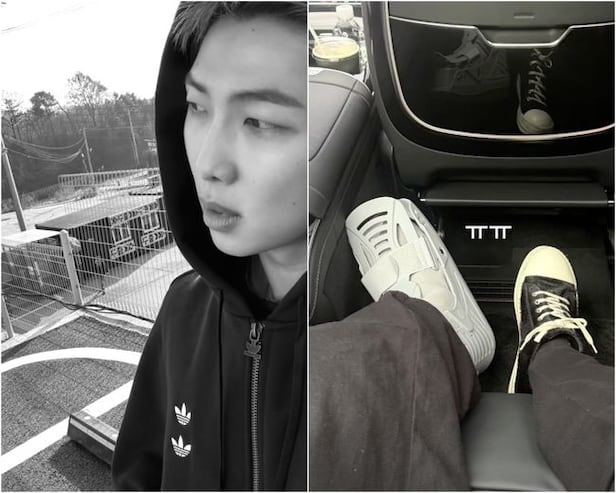

Opening: The Image That Launched a Thousand Takes
In the high-velocity world of K-Pop, an airport arrival hall is more than a transit point; it is a runway, a press conference, and an unofficial fan meeting rolled into one. Every step, every item of clothing, every facial expression is captured, magnified, and disseminated for global analysis. So, when BTS leader RM (Kim Namjoon) arrived at Incheon International Airport recently, aided by a sleek black crutch and sporting a protective boot on his left foot, the response was predictably instantaneous. However, the ripple that followed was less about concern for his wellbeing and more a disturbing wave of suspicion. Within hours, corners of the internet lit up with accusations that the injury was fabricated—a performative ploy for sympathy or perhaps a strategic narrative for his upcoming activities. The core sentiment, distilled into a viral, dismissive phrase, was simple: "...so weird...". This moment, seemingly minor in the grand arc of a decade-long career, has inadvertently become a stark lens through which to examine the fractured, often toxic relationship between idol, image, and audience in the modern era.
Background: Kim Namjoon, The Architect and The Artifact
To understand the weight of this accusation, one must first understand the weight of the man. RM is not merely a K-Pop idol; he is the foundational pillar and philosophical compass of the most successful global group of this generation. His journey from a teenage underground rapper to the articulate, museum-curating, UN-speech-giving leader of BTS has been documented in relentless detail. He has built a reputation on raw, intellectual honesty, often using his platform to discuss mental health, artistic insecurity, and the pressures of fame. His solo work, particularly his Indigo album, was hailed as a deeply personal, artistically pure statement, a "record of my twenties."
This history of vulnerability is crucial. RM has consistently torn down the "impenetrable idol" facade, most notably during BTS's period of collective exhaustion prior to their chapter-two solo activities. In a poignant revelation that resonated with millions, he openly discussed the brink of burnout, a story we explored in depth in our article The Crossroads at Seven. This context makes the current accusations not just baseless, but ironically cruel. The very authenticity he has painstakingly cultivated is now being weaponized against him. He exists in a paradox: he is praised for showing the cracks in the idol persona, yet when a physical manifestation of human fragility appears, it is met not with the empathy he himself has modeled, but with cynicism.
The News: Anatomy of an Airport "Controversy"
The "news" broke not through a press release, but through the fragmented, often-anonymous ecosystem of social media forums and viral tweet threads. High-definition photos and fancams of RM's arrival showed him moving cautiously, using the crutch for support as he navigated the crowded terminal. His expression was neutral, focused on the path ahead. There was no waving, no staged photo-op, just a man traveling with an injury.
The accusations coalesced around a few shaky pillars:
- The "Convenient" Timing: Skeptics pointed to RM's ongoing solo activities and upcoming potential projects, suggesting an injury narrative could be used to drum up publicity or explain any future alterations in schedule.
- The "Aesthetic" of the Injury: In a bizarre twist, some commentators fixated on the cleanliness and style of the boot and crutch, implying they looked "new" or "staged," as if a real injury requires a dirty, worn apparatus.
- The Lack of "Proof": A dangerous and increasingly common demand emerged: Where was the doctor's note? The X-ray? The official, notarized medical history? This expectation for private health documentation to be made public to satisfy fan curiosity represents a terrifying new frontier in entitlement.
Notably, Big Hit Music has remained silent, issuing no statement about the airport appearance—a standard practice for non-scheduled, personal travel moments. This silence was interpreted by the conspiracy-minded as further "evidence." The source article from Koreaboo, while primarily aggregating the online reaction, captured the surreal, dismissive tone with its summary quote:
"...so weird..."This phrase became a banner for the movement of doubt, reducing a complex human moment to a glib judgment.
The Dangerous Precedent of "Faking"
This is not an isolated incident in the K-Pop landscape. The industry has a fraught history with idol health, from companies forcing performers onto stage with IV drips to artists collapsing from exhaustion. To accuse an idol of faking an illness or injury inverts this abuse, turning the idol from a potential victim of a demanding system into a cunning manipulator of fan emotion. It echoes the toxic rhetoric seen in past scandals where idols' very realities are questioned, much like the expose detailed in The Curtain Falls: CLOUD 9's Zion Exposed by Former Manager, though the contexts are vastly different. In Zion's case, it was an alleged gap between persona and private action. For RM, the accusation is a gap between a visible physical state and the public's belief in its truth—a demand for performative suffering to be deemed "real enough."

Fan & Community Reaction: A Chorus of Outrage, Concern, and Division
The ARMY fandom, typically a unified force, showcased its complex multitudes in response. The reaction was a spectrum, illuminating the different ways fans engage with their idols.
The Protective Majority: The overwhelming response from the core fandom was one of fierce protection and concern. Hashtags like #GetWellSoonNamjoon and #RespectRM trended globally. Fans flooded timelines with past instances of RM discussing his chronic ankle issues, photos from earlier in his career showing him wearing ankle supports, and logical arguments about the irrationality of faking an injury for a low-key airport arrival. "He's been dancing complex choreography for over a decade; of course his body has wear and tear," became a common refrain. This faction viewed the accusations as a profound betrayal of the trust RM has built.
The "Skeptics" and Anti-Fans: Operating primarily on forums like Nate Pann and certain Twitter circles, this group drove the narrative. Their comments often blended concern-trolling ("I just think it's strange, that's all") with outright malice. This ecosystem thrives on contrarian takes and the sense of superiority that comes from "seeing through" the perceived artifice of the industry. For them, RM is not a person but a text to be deconstructed, and their reading was one of bad faith.
The Exhausted Observers: A significant segment of the wider K-Pop community expressed weariness. "When did we start needing forensic evidence for an idol's sprained ankle?" one fan wrote on Weverse. This group laments the hyper-analytical, suspicious culture that has grown around idols, where every action is a calculated move in a grand, fictional chess game. The airport incident became a symbol of this exhausting dynamic.
Industry Analysis: The Parasocial Contract and Its Broken Bones
This incident is a symptom of a far deeper malaise within contemporary celebrity culture, particularly acute in K-Pop's highly curated, access-driven model. The "parasocial relationship"—the one-sided, intimate bond a fan feels with a celebrity—has reached a new, pathological stage. It is no longer just about feeling close; it is about asserting ownership and demanding accountability on a microscopic level.
"The idol, in the fan's mind, becomes a character in a never-ending drama they co-write," says Dr. Lee Min-kyung, a cultural studies professor at Seoul National University. "When that character acts in a way that doesn't fit the fan's script—whether it's dating, taking a break, or even getting injured in a non-heroic context—the fan doesn't update their script. They accuse the character of breaking kayfabe, of going off-book. The demand for an X-ray is a demand for proof that the plot twist is 'canon.' It's a profound confusion of reality with narrative."
Furthermore, the incident highlights the impossible position of male idols, particularly those like RM who are viewed as intellectual and "strong." There is an unspoken expectation for them to endure pain silently. A visible aid like a crutch disrupts that image of strength, and for some, the cognitive dissonance is resolved not by accepting his humanity, but by rejecting the reality of the injury. This connects to deeper cultural conversations about masculinity and performance, not unlike those unearthed in the backlash discussed in The Unraveling Of A Scandal, where perceptions of BTS were weaponized along lines of language and maturity.
From a business perspective, the silence of Big Hit Music is a calculated, albeit risky, strategy. To address every rumor legitimizes a cycle of endless response. By ignoring what they likely deem a non-event, they attempt to starve the narrative of oxygen. However, in the age of viral misinformation, this can allow falsehoods to solidify into "alternative fact" for a small but vocal minority.
What's Next: Healing More Than Just an Ankle
The immediate future will likely see one of two paths: either RM's injury will heal, he will discard the crutch, and the naysayers will move on to their next target, or—should the injury be longer-term—an official statement may eventually be forced, medical details laid bare to satisfy a public inquisition no other professional would face. Neither outcome is a victory. The former normalizes this cycle of suspicion; the latter sets a dangerous precedent for privacy invasion.
The more significant "what's next" pertains to the industry and fan culture itself. This event is a cautionary tale in the ongoing dialogue about boundaries. Idols like RM, through projects like Indigo, are increasingly seeking artistic sovereignty and personal space. The fan response to this airport moment is a direct pushback against that evolution, a reassertion of the demand for total, unquestionable access, both physical and narrative.
As other groups navigate their own paths—whether it's the conceptual storytelling of bands like Xdinary Heroes (whose eerie narratives we analyzed in Decoding the Dirge) or the chart-breaking successes of groups like P1Harmony on the Billboard charts—the question of fan-idol relationship will remain paramount. Will the culture mature towards a model of respectful support, or will it descend further into a paranoid game of "gotcha"?
For RM, a man who has spent his career searching for and speaking his truth, this episode is a bitter irony. The crutch was a simple support for a physical burden. The controversy it sparked, however, reveals a far heavier burden: the crushing expectation to constantly prove one's authenticity in an arena where reality itself is constantly disputed. The healing that needs to happen next isn't just in an ankle; it's in the broken contract of faith between an artist and the world that watches his every step.