
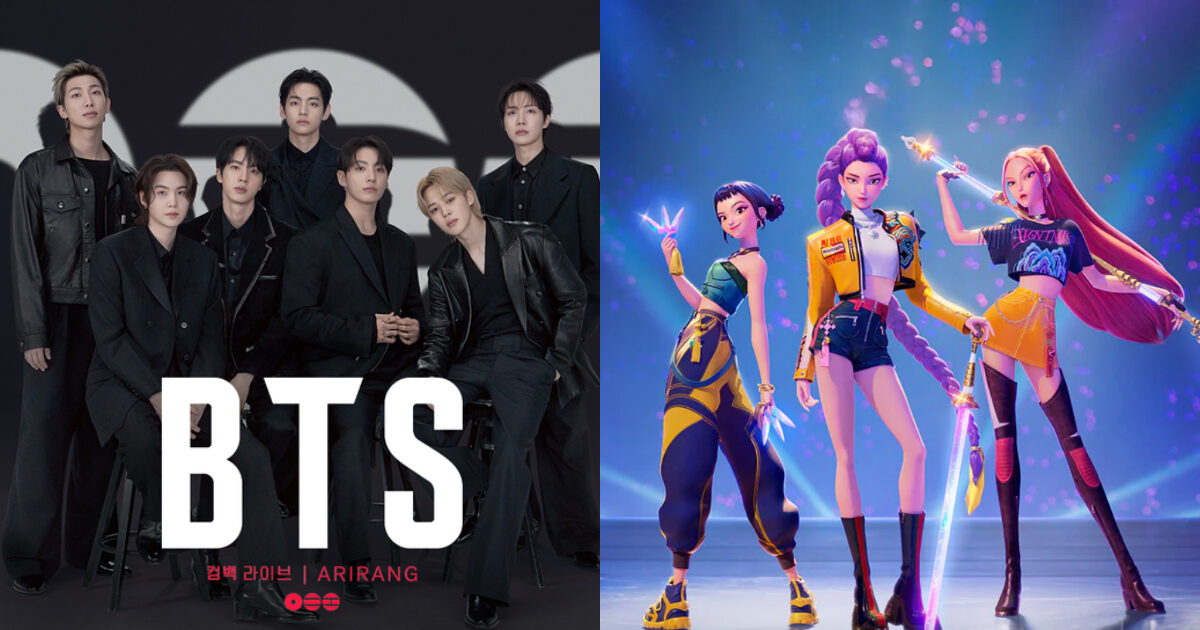

The release of a new BTS album is typically a global event of unity, a celebration marked by record-breaking charts and an outpouring of love from their devoted ARMY. However, the group's latest, highly anticipated artistic statement, “UMBRA,” has ignited a different kind of fire—one of intense debate, moral panic, and a phrase now echoing ominously across social media platforms: “K-pop demon hunters.” What began as a niche online critique has snowballed into a significant cultural moment, forcing a conversation about artistic interpretation, the boundaries of idol-fan relationships, and the very narratives that shape the industry. This isn't just about music; it's about meaning, and who gets to define it.
From Bulletproof to Beyond: The BTS Legacy and the "Chapter 2" Crucible
To understand the weight of this moment, one must appreciate the unique pedestal BTS occupies. Their journey from underdogs to UNESCO speakers is the stuff of modern legend. For over a decade, their discography has served as a generational compass, navigating themes of self-love (“Love Yourself”), societal pressure (“Map of the Soul”), and pandemic-era isolation (“BE”). Their message was a beacon, and their relationship with ARMY was framed as a symbiotic, protective partnership against a world of cynicism.
This dynamic entered a new, complex phase with the announcement of their hiatus for mandatory military service, a period dubbed “Chapter 2.” While the members pursued solo projects, the fandom's focus often turned inwards, grappling with the absence of the full group while fiercely defending each individual's endeavors. This period has been marked by both stunning artistic successes—like the solo albums from j-hope, RM, and Jungkook—and moments of heightened sensitivity, where any perceived slight against a member triggers immense collective action. It is within this context of a fandom in a state of vigilant waiting that “UMBRA” landed.
The "UMBRA" Prelude: Shadows and Speculation
The rollout for “UMBRA” was a masterclass in atmospheric storytelling. The teasers were steeped in neo-noir and gothic symbolism: rain-slicked cityscapes, mirrors reflecting fractured selves, iconography that hinted at internal struggle and duality. The title itself, meaning the darkest part of a shadow, signaled a turn inward toward more personal, potentially darker themes. This was a far cry from the anthemic, unifying pop of “Dynamite” or “Butter.” HYBE’s marketing framed it as BTS’s most cinematically ambitious and conceptually dense project to date, a "film for the ears" exploring the shadows one casts in pursuit of light. The stage was set not for a party, but for a psychological journey.
Anatomy of a Controversy: When "Cinematic" Meets "Concerning"
The controversy did not stem from the music's quality—early critical reviews praised its sonic innovation and lyrical depth—but from a specific narrative framework applied to its concept by a segment of online commentators. The “K-pop demon hunter” theory is not new; it is a conspiratorial lens used by a small but vocal subset of netizens who interpret certain K-pop music videos, choreography, and symbolism as literal depictions of occult rituals or battles against dark forces, often tying them to imagined secret societies.
With “UMBRA,” this fringe analysis found a potent new subject. Proponents of the theory pointed to a confluence of elements:
- Visual Symbolism: Specific, recurring imagery in the lead track’s music video—inverted crosses used in a architectural, non-religious context, ocular motifs (the "all-seeing eye"), and scenes interpreted as "ritualistic" due to their choreographed, ceremonial pacing.
- Lyrical Interpretation: Lines about “fighting inner demons,” “casting out ghosts of the past,” and “walking through the valley” were taken not as metaphorical explorations of mental health and legacy, but as literal admissions of a supernatural battle.
- Choreography: Sharp, aggressive formations and hand signs were isolated and recontextualized, stripped of their artistic intent and analyzed as coded signals.
The leap from “art exploring darkness” to “idols as demon hunters” was made on platforms like Twitter and niche forums. A single viral tweet comparing a screenshot from the “UMBRA” video to a scene from a popular supernatural horror film acted as a catalyst. The phrase began to trend, not among fans, but among those outside the traditional K-pop sphere, leading to headlines on sites like Koreaboo that reported on the “backlash” with the succinct, shocking summary: “Netizens were appalled.”
"It's a profound misreading of artistry," stated culture critic Park Ji-won in a recent column. "It reduces a complex meditation on fame, memory, and self-identity to a sensationalist, almost medieval, literalization. BTS aren't hunting demons; they're documenting the human condition, which has always been their project."
The Fandom Fracture: ARMY's Defensive Mobilization and Internal Debate
The reaction from ARMY was swift and multifaceted, showcasing the fandom's immense power and its current internal tensions. The dominant response was one of furious defense. Hashtags like #RespectBTSArtistry and #UMBRAisMasterpiece flooded timelines. Fans created detailed threads deconstructing the album's actual themes, linking them to BTS's established literary and philosophical references, from Carl Jung to Hermann Hesse.

Many expressed exhaustion at what they saw as a recurring pattern of their idols being subjected to bad-faith analyses. They pointed to past incidents where symbolism in K-pop was grossly misinterpreted, noting that such controversies often seem to disproportionately target the industry's biggest acts. As one fan put it on Weverse: “They gave us ‘Spring Day’ about grief and were called political. They gave us ‘Black Swan’ about artistic fear and were called dark. Now they give us ‘UMBRA’ about introspection and they’re called demon hunters. What art are they allowed to make?”
However, a quieter, more concerned undercurrent also emerged among a minority within the fandom. Some older fans expressed discomfort not with the “demon hunter” theory itself, which they dismissed, but with the album's palpable tonal shift and the intensity of the surrounding discourse. “It feels like we’re in uncharted territory,” one long-time fan commented on an online community. “The concept is so heavy, and now with this weird backlash, it doesn’t feel like the hopeful, empowering BTS space I’m used to. I support them unconditionally, but I’m also just... emotionally tired.” This sentiment highlights the delicate balance between an artist's evolution and the foundational emotional contract with their audience—a tension explored in our analysis of idol scrutiny and fan protection.
The Role of "Sasaeng Pappers" and Conspiratorial Echo Chambers
Fueling the fire were accounts often labeled “sasaeng pappers”—a portmanteau of ‘sasaeng’ (obsessive fan) and ‘papper’ from ‘conspiracy theorist’. These accounts traffic in stitching together out-of-context clips, manipulated imagery, and pseudoscientific claims to construct alternative narratives about idols. For them, “UMBRA” was not an album but a “confession” or a “reveal.” Their content, though marginal, is algorithmically amplified by controversy, drawing curious onlookers and lending a veneer of grassroots discovery to what is essentially a fabricated narrative. This ecosystem creates a feedback loop where the controversy itself becomes proof of the theory’s significance.
Broader Industry Implications: Parasociality, Symbolism, and the New K-Pop Landscape
This incident is a symptom of a larger shift within the K-pop ecosystem. The industry has long thrived on carefully managed parasocial relationships—the illusion of a close, personal connection between idol and fan. BTS, in particular, mastered a more authentic-feeling version of this through their deeply personal lyrics and communication. However, as concepts grow more abstract and artistic ambitions expand beyond pure pop, that bond can be strained. Fans who expect consistent emotional validation may find avant-garde cinema or grim metaphors disorienting.
Furthermore, the “demon hunter” phenomenon reflects a globalized, internet-age hermeneutic of suspicion applied to pop culture. It shares DNA with QAnon-adjacent thinking and the hyper-symbolic analysis of everything from celebrity Instagram posts to cartoon shows. K-pop, with its dense, high-production-value symbolism, becomes a perfect canvas for such projections. This isn't the first time; similar theories have dogged other groups, but the scale is magnified when it involves BTS.
The controversy also throws a spotlight on the intense pressure on male idols, particularly, to maintain a specific image. As explored in our piece on fashion and interpretation, a single accessory can trigger outsized discourse. For BTS to embrace the “shadow” in such a bold, visual way challenges the industry's often rigid boundaries of acceptable idol masculinity and expression. It is a defiant claim to complex, adult artistry.
From a business perspective, HYBE finds itself in a bind. How does a corporation respond to a narrative that is both absurd and damaging? Do they ignore it and risk it festering, or address it and grant it legitimacy? Their current strategy appears to be the former, focusing promotional energy on the music's artistic merits and the overwhelming positive critical reception, while relying on ARMY to act as the first line of defense—a dynamic that further entrenches the fandom's siege mentality. For more on how established artists navigate complex comebacks, see our coverage of T.O.P's pioneering solo return.
Looking Beyond the Shadow: What Comes After the Inferno?
So, where does this leave BTS, ARMY, and the industry? In the immediate term, the commercial success of “UMBRA” is likely insulated. Pre-order records were already shattered, and the streaming numbers are colossal. The controversy, for all its noise, exists largely in a specific online stratum. For the majority of the global audience, “UMBRA” will be remembered for its music and its visuals, not for a fringe theory.
However, the long-term cultural residue is more uncertain. This event may deepen the sense of “us vs. the world” within a segment of ARMY, potentially making future, even more challenging artistic left-turns harder to navigate collectively. For the members themselves, particularly as they look toward their post-military group reunion, it serves as a stark reminder of the microscopic, often unforgiving lens through which their every move is examined. Will it cause them to pull back, or will it galvanize them to push their art even further into uncharted, perhaps even more provocative, territory?
Ultimately, the “K-pop demon hunter” backlash against “UMBRA” is a distorted mirror held up to the modern K-pop phenomenon. It reflects the terrifying speed of misinformation, the fragility of interpretation in the digital age, and the immense, sometimes overwhelming, weight carried by its biggest stars. BTS set out to explore the umbra—the darkest part of the shadow. In doing so, they inadvertently exposed the dark corners of the very ecosystem that made them stars. As the industry continues to evolve, the challenge will be to create space for profound, complicated art without it being consumed by the very demons it seeks to understand. The conversation is far from over, and we will continue to follow its developments on our News page, tracking the pulse of an industry at a crossroads.