
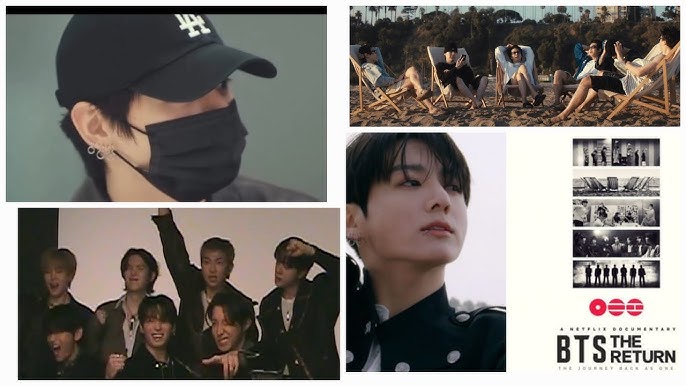
In the meticulously curated universe of K-Pop, where image is sovereign and narrative is tightly controlled, a crack has appeared in the facade. This week, the global music community was rocked not by a scandalous rumor or a chart-topping release, but by a wave of protective fury emanating from the fandom of the world's biggest boy band. The catalyst? A newly released documentary segment focusing on BTS's youngest member, Jungkook, which has been met not with adoration, but with anguish and outrage. Phrases like "Get him out of that hell..." and "They are exploiting him" have trended worldwide, transforming what was likely intended as a behind-the-scenes glimpse into a flashpoint for a critical conversation about idol welfare, agency influence, and the often-invisible cost of superstardom.
The footage, part of a larger documentary project chronicling the members' activities during their ongoing military enlistment period, depicts Jungkook in a series of high-pressure, isolating professional scenarios. While the full context is debated, the cumulative effect on viewers—particularly the fiercely devoted ARMY—has been one of profound distress. This is not merely fan overreaction; it is a collective response from an audience that has grown with Jungkook from a talented teenager to a global icon, and who now perceives a stark disconnect between his established persona and the person presented on screen. The incident forces us to ask: at what point does documentary authenticity cross into exploitative intrusion, and who holds the power to define an idol's story?
The Maknae's Journey: From Busan to Global Stardom
To understand the depth of the current reaction, one must first appreciate the unique trajectory of Jeon Jungkook. Debuted at just 15 years old as the "Golden Maknae" of BTS, he was quickly singled out for his all-rounder prowess: a powerhouse vocalist, a mesmerizing dancer, and a performer with an almost tangible stage presence. His growth was public property, chronicled in countless Bangtan Bombs and reality series. Fans witnessed his evolution from a shy boy who hid behind his hyungs to a confident, tattooed artist who commanded stadiums with his solo single "Seven" and his debut album, GOLDEN.
This narrative, however, has always been double-edged. Jungkook's role within BTS often placed him in a position of being both immensely powerful and vulnerably young. The hyungs' doting protection of him became a cornerstone of the group's dynamic, a story fans cherished. Yet, as the group ascended to unprecedented global fame, the pressure on Jungkook's shoulders intensified. He was no longer just the talented youngest; he was a central pillar of a cultural and economic juggernaut. His every move, from a solo musical venture to a casual live broadcast, generated seismic waves across the industry. This background is crucial, as documented in our analysis of his individual ventures in BTS Dives Deeper: "SWIM" to Receive Seven Distinct Member Remixes, which highlights the creative weight carried by each member.
The Constructed Self and the "Real" Jungkook
Like all idols, Jungkook navigates a space between his private self and his public persona. For years, through VLIVE streams and In the SOOP segments, fans felt they were granted authentic glimpses—a young man passionate about gaming, art, and music, who loved his members and his fans with a fierce, if sometimes quiet, loyalty. This perceived authenticity is the currency of modern K-Pop fandom. The new documentary footage, by allegedly showing a starkly different reality—one of exhaustion, intense solitude, and immense pressure—threatens to shatter that carefully built, yet deeply felt, connection. It confronts fans with the possibility that the "hell" referenced is not a temporary situation, but the inherent condition of his stratospheric fame.
Deconstructing the Documentary: What Exactly Sparked the Fury?
The controversial segments are reportedly part of a broader series intended to update fans on the members' activities. However, specific scenes focusing on Jungkook have been described by viewers as "visibly distressing." While K-Beats has not viewed the unreleased full film, based on widespread fan reports and curated clips, the concerns center on several key depictions:
- Extreme Physical and Emotional Isolation: Scenes purportedly show Jungkook working for extended periods in sterile, solitary environments—recording studios and practice rooms—with minimal interaction, framed in a way that emphasizes loneliness rather than dedication.
- Narrative of Relentless Pressure: The editing and selected soundbites are said to craft a story of unbearable expectation, with emphasis on the weight of representing BTS during the group's hiatus and the need for continuous, flawless output.
- Absence of Agency: The footage, as presented, reportedly minimizes Jungkook's own artistic voice and control, instead framing him as a passive subject fulfilling grueling schedules dictated by an unseen machinery.
"This isn't the Jungkook we know. This is a narrative being imposed on him. They are showing us exhaustion and calling it dedication, showing us isolation and calling it professionalism. We refuse to accept that."

This sentiment, echoed across social media platforms, points to a fundamental clash of interpretation. Where the production team may see a gritty, realistic portrait of an artist at work, fans see a violation of trust and a harmful misrepresentation. The anger is directed less at the existence of challenge—fans know the idol life is demanding—and more at the sensationalized portrayal of that challenge, which they feel serves to generate drama at the expense of the subject's well-being and image.
ARMYs in Arms: A Fandom's Protective Fury Goes Global
The reaction from ARMY has been swift, coordinated, and multifaceted. Unlike the frenzy surrounding baseless rumors, such as those we analyzed in The Echo Chamber of Proof, this response is rooted in a perceived visual and emotional truth. The hashtag #ProtectJungkook has dominated Twitter timelines, while lengthy, analytical threads dissect the documentary's editing choices, comparing them to past content to highlight discrepancies in portrayal.
Petitions have circulated demanding the footage be edited or removed, and a coordinated email campaign has targeted HYBE's ethics and communications teams, calling for greater sensitivity and respect in portraying artists. This is not a boycott of Jungkook's work; it is a direct challenge to the corporate narrative control exercised by his agency. Fans are leveraging their immense collective power—the same power that drives songs to the top of our Charts page—to advocate for his dignity. They are essentially stating that their consumption of content is contingent on the ethical treatment of its subject.
Beyond One Idol: A Resonant Industry-Wide Anxiety
The outcry transcends BTS's fandom. Support has poured in from fans of other groups, who see in this situation a reflection of their own fears for their biases. The conversation has quickly expanded to encompass the overall treatment of idols in documentary and reality content, the ethics of "stress porn" storytelling, and the mental health ramifications of such portrayals. It touches the same nerve as discussions sparked by Beyond the Lens: How Jennie's "Effortless" Vacation Sparks a Conversation, which examined the pressure of maintaining a perfect image. The question arises: when does content cease to be fan service and become emotional exploitation for clicks and views?
Industry Under the Microscope: HYBE's Dilemma and a Shifting Paradigm
This incident places HYBE, BTS's agency, in an incredibly delicate position. On one hand, they have a commercial product—a documentary—that has generated immense, if controversial, engagement. On the other, they are facing a revolt from the very fanbase that constitutes their most valuable asset. The situation exposes the inherent tension in modern K-Pop management: the drive for authentic, compelling narrative content versus the duty of care owed to the artists who are the source of that content.
Industry analysts suggest this may represent a tipping point in fan-agency relations. The fourth-generation fan is increasingly media-literate and socially conscious. They are quick to identify and call out manipulative editing, as seen in various survival shows, and are deeply invested in the well-being of idols as individuals, not just as entertainers. The era of passive consumption is over. Agencies can no longer assume that any content featuring their stars will be gratefully received; it must now pass a test of ethical representation.
This scrutiny extends to how agencies handle all aspects of an idol's life, from private matters to public controversies, a theme explored in our coverage of From Darling to Defendant. The backlash suggests that for companies like HYBE, maintaining fan trust requires a new level of transparency and collaboration in storytelling, potentially even granting artists greater editorial oversight over how their personal and professional struggles are framed.
What Comes Next: Reconciliation, Re-edits, and Lasting Repercussions
The path forward is uncertain but fraught with significance. HYBE's response—or lack thereof—will be closely scrutinized. A simple statement dismissing fan concerns could irrevocably damage the sacred trust between ARMY and the company. A decision to re-edit or contextualize the footage, while logistically complex, could be seen as a historic acknowledgment of fan agency and a commitment to responsible storytelling.
For Jungkook himself, currently serving his mandatory military duty, this storm is likely something he will have to address upon his return. His relationship with ARMY has always been profoundly intimate and direct. How he chooses to frame this experience, whether in a future live stream or through his music, will be pivotal. It may inspire raw, personal artistry, much as his earlier solo work has done.
Ultimately, this controversy is about more than a few minutes of film. It is a referendum on the soul of contemporary K-Pop fandom. It proves that the connection between idol and fan is not a shallow commodity but a deep, empathetic bond that fans will fiercely defend. They are not just consumers of a product; they are stakeholders in a person's story. This event will undoubtedly influence how all agencies, from HYBE to smaller companies, approach documentary content moving forward. The message from ARMY is clear: the story of BTS, and of Jungkook, is not solely HYBE's to tell. It is a shared narrative, and its telling must be done with respect, consent, and care. As the industry continues to evolve, the voices from the fan community, as showcased daily on our News page, will only grow louder in demanding a seat at the table.
The "Golden Maknae" may be in the military, but the battle for his narrative, and by extension the narrative of all idols, is being waged right now. And it is a battle that may finally force the industry to look beyond the lens and truly see the person standing in front of it.