
Opening: A Storm in a Champagne Glass
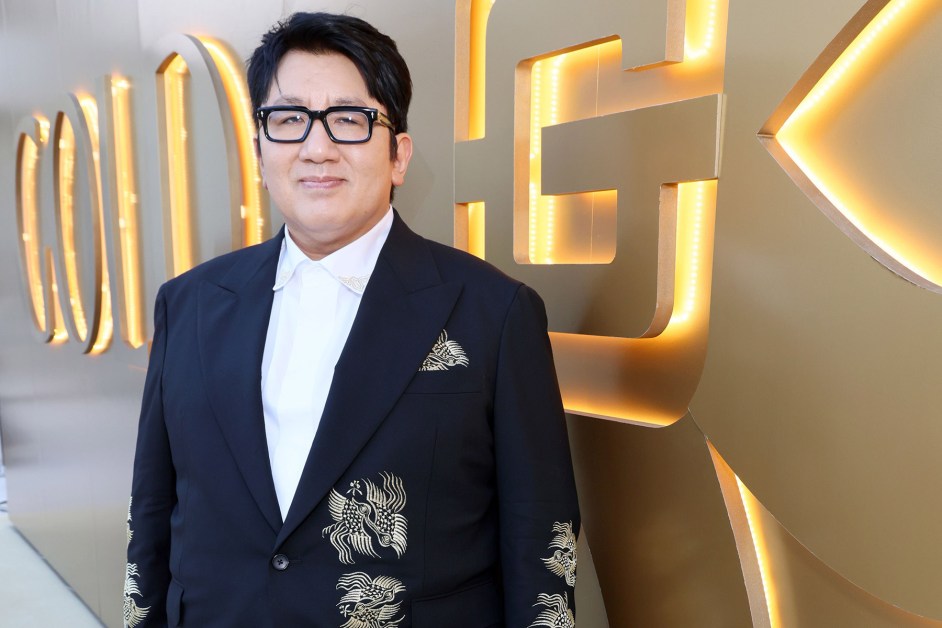
In the meticulously curated world of K-Pop, where every smile is rehearsed and every word is weighed, authenticity is a rare and volatile currency. Sometimes, it arrives not in a heartfelt ballad or a candid interview, but in an unguarded, three-second glance. This week, the global ARMY fandom—and the entire industry—found itself dissecting one such moment, a clip so potent it has ignited a firestorm of controversy, criticism, and deep introspection about the very foundation of the house that BTS built. The clip, extracted from a celebratory V LIVE, doesn't feature a scandalous remark or a shocking revelation. Instead, it captures Bang Si Hyuk, the revered founder and Chairman of HYBE, casually taking a seat in a chair just vacated by RM, while the BTS leader stands momentarily behind him. The internet’s verdict was swift and brutal: a glaring metaphor for corporate disregard, a moment where the artist was seemingly “gaslit” and displaced by the architect of his own empire.
The video, originally shared on the community platform Weverse before splintering across Twitter, TikTok, and every major K-Pop news outlet, has become a Rorschach test. What some see as an innocent, space-saving move in a crowded room, millions interpret as a profound symbolic slight. The accompanying caption from the original poster, “The type of leader you find in every slowly failing company,” crystallized the narrative, transforming a personal interaction into a public referendum on HYBE’s leadership and its treatment of its flagship artists. This is more than gossip; it’s a cultural moment that taps into longstanding fan anxieties, corporate power dynamics, and the precarious journey of idols transitioning from trainees to partners. To understand why a chair caused such an uproar, we must look at what lies beneath the plush leather: a decade of history, unspoken tensions, and a fandom whose protective instincts are unmatched.
Background: From Basement to Boardroom – A Partnership Forged in Fire
The story of BTS and Bang Si Hyuk (affectionately known as "Hitman" Bang) is the modern mythos of K-Pop. It’s a tale of audacious vision meeting unparalleled work ethic. In the early 2010s, Bang, a successful songwriter and producer, founded Big Hit Entertainment with a philosophy that diverged sharply from the industry’s rigid, factory-like systems. He sought artists who could be co-authors of their narrative, embedding their personal stories and social commentary into their music. From a small office in Seoul’s Nonhyeon-dong, he bet on seven young men—RM, Jin, SUGA, j-hope, Jimin, V, and Jung Kook—who would become not just idols, but global icons.
For years, the narrative was one of a close-knit, almost familial struggle. Bang was portrayed as the believing father figure, supporting the group through years of hardship before their stratospheric rise. He was the producer in the studio with them, the strategist who championed their social media savvy and narrative depth. This shared history is what makes the current discourse so emotionally charged. The relationship was never a simple employer-employee dynamic; it was a symbiotic creative partnership that built an empire. As we explored in our analysis of their artistic journey in The Full Circle: How BTS’s ‘Arirang’ Became the Crucible for Their Most Daunting Reinvention, their evolution has been deeply intertwined with Bang’s overarching vision.
The HYBE Transformation: When Family Business Becomes Global Conglomerate
The pivotal shift began with Big Hit’s explosive growth and subsequent rebranding to HYBE in 2021. This wasn’t just a name change; it was a fundamental restructuring from a music-centric agency into a sprawling, publicly-traded multi-label entertainment and tech platform. Bang’s role evolved from hands-on producer and CEO to Chairman of the board, focusing on corporate strategy, acquisitions (like Ithaca Holdings and QC Media), and future-facing technology. The day-to-day management of BTS and other artists shifted to dedicated label CEOs like Park Ji Won of Big Hit Music.
This corporate maturation, while a business success, inherently created distance. For ARMY, observations began to accumulate: the intense focus on launching new groups like LE SSERAFIM - PUREFLOW pt.1: What Just Landed" rel="internal">LE SSERAFIM and NewJeans under other HYBE labels, the controversial rollout of the enlistment announcement, the perceived over-commercialization, and the immense pressure on the members during their Chapter 2 solo activities. The fandom’s loyalty is first and foremost to the seven members, not the corporation. Every business decision is now scrutinized through a single lens: is this in the best interest of BTS? The chair incident, therefore, did not happen in a vacuum. It landed on fertile ground of existing concern, acting as a visual shorthand for a fear that the artists had become assets on a balance sheet, their comfort and stature secondary to corporate expediency.
The News: Deconstructing The 3-Second Clip That Shook HYBE
The source video is from a relaxed, post-event V LIVE following a company gathering, believed to be related to HYBE’s annual New Year’s ceremony. The atmosphere is congenial, with multiple artists and executives mingling. At one point, RM is seated in a chair, engaged in conversation. As he stands up, presumably to adjust his position or speak to someone else, Chairman Bang, who is standing nearby chatting, almost absentmindedly takes the now-empty seat. RM turns, finds his seat occupied, and remains standing for a moment before another chair is seemingly procured off-camera. The entire exchange is wordless, lasting mere seconds.
On the surface, it’s a trivial social interaction. However, the power of context and framing is absolute. The clip was isolated, slowed down, and reposted with specific captions highlighting RM’s momentary pause and expression. The narrative crafted was one of disrespect: the Chairman failing to acknowledge the leader of BTS, assuming his space, and forcing him to stand. The term “gaslighting” entered the chat, implying a manipulation meant to make RM (and by extension, the fans) question their perception of a disrespectful act. The original Korean forum post and its translated counterparts on sites like Koreaboo and Pann Choa fueled the flames, with thousands of comments dissecting body language and corporate hierarchy.

"It’s not about the chair. It’s about the principle. That moment was a perfect, silent snapshot of how HYBE now sees them: interchangeable, displaceable, and secondary to the corporate machinery," wrote one viral Twitter thread with over 100k likes.
HYBE has maintained a strict no-comment policy on the issue, a standard corporate PR stance for what they likely deem a non-issue. However, in the court of public opinion, their silence has been deafening. The outrage is not confined to international fans; Korean forums and communities are alight with similar debate, though often with more nuanced references to Confucian hierarchies and corporate culture. The incident has also dovetailed with other recent criticisms, such as perceived inadequate security for members during solo activities and disputes over creative direction, creating a perfect storm of fan discontent. For a deeper look at how leaked moments can fracture public personas, the industry is no stranger to such scandals, as seen in The Duality Trap: A Leaked Video, A Fractured Persona, and the Unraveling of Three Top-Tier Idols.
Fan & Community Reaction: ARMY’s Protective Fury and Fractured Perspectives
The reaction from ARMY has been a tidal wave of emotion, but it is not monolithic. It spans a spectrum from white-hot anger to pragmatic dismissal, revealing the complex relationship between a fandom and the corporate structure that manages its idols.
The Outrage Camp: Symbols Matter
For a significant portion of the fandom, the video was the last straw. Hashtags like #RespectBTS and #HYBEProtectBTS trended globally. Long, detailed threads catalogued past grievances, framing the chair incident as the tip of a systemic iceberg. “This is what happens when you forget who pays for your building,” one comment read, referencing BTS’s contribution to an estimated 90% of HYBE’s historical revenue. This camp views the act as a profound symbolic betrayal, proof that the “family” narrative is dead and the members must navigate a corporate environment where even their founder does not afford them baseline ceremonial respect. The anger is deeply protective, rooted in a decade of watching the group fight for every ounce of their success.
The Pragmatic & Defensive Camp: Reading Too Much Into Nothing
Another vocal segment, including some older fans and industry observers, urges caution. They argue that the clip is a classic example of context collapse—a split-second, innocuous moment ripped from a longer, friendly interaction and weaponized. They point to the full V LIVE, showing laughter and camaraderie before and after. “Bang PD-nim has known them since they were teenagers. He probably didn’t think twice about it. RM didn’t look upset; he looked like he was in the middle of a conversation,” argued a post on the more analytical forum, r/kpopthoughts. This camp warns against projecting corporate grievances onto a personal relationship and cautions that such narratives can ultimately strain the very artist-executive dynamic fans want to protect.
The Korean Netizen Perspective: Hierarchy and Face
On Korean platforms like the notorious Pann Nate, the discussion incorporates distinct cultural layers. While there is sympathy for BTS, there is also analysis of “noonchi” (social awareness) and hierarchy. Some Korean comments suggest that while Bang’s move was socially clumsy, the public outrage might inadvertently cause RM and BTS more discomfort by forcing a public reckoning with their boss. The concept of “kibun” (mood/face) is at play; the incident has now publicly challenged Bang’s and HYBE’s kibun, creating an awkwardness that extends beyond the initial act.
Amidst this, a poignant sentiment resonates across all factions: a collective exhaustion. As one fan beautifully put it: “We just want them to be treated with the reverence they’ve earned. Not as gods, but as the partners who built this house. Every brick has their name on it.” This incident touches on a universal workplace feeling—the desire for respect from leadership—amplified to a global scale.
Industry Analysis: A Symptom of K-Pop’s Growing Pains
Beyond the ARMY bubble, the “chairgate” controversy is being watched closely by industry insiders as a case study in the evolving power dynamics of modern K-Pop. It highlights several critical, intertwined issues.
The Idol-as-Shareholder Conundrum: BTS members renewed their contracts in 2023 and are themselves significant shareholders in HYBE. This blurs traditional lines. They are both employees and partial owners, artists and key stakeholders. This incident raises questions about how that dual status is navigated in everyday culture. Is the Chairman’s behavior towards a junior artist, or towards a major co-owner? The modern K-Pop industry is still writing this etiquette book.
Fandom as Corporate Watchdog: ARMY has evolved from a fanbase to a potent media watchdog and accountability mechanism. They analyze stock reports, dissect corporate structures, and lobby for better treatment with the force of a minority shareholder activist group. This event demonstrates their willingness to critique the highest levels of management, a shift that every entertainment conglomerate, from SM to JYP, must now factor into their operations.
The Peril of the “Family” Narrative: HYBE, like many agencies, initially promoted a familial atmosphere. This builds intense loyalty but sets unrealistic expectations for when the company scales. Growing from a family to a corporation of thousands inevitably introduces formalities and distance. The backlash is, in part, a mourning of that lost intimate narrative. As seen when RM fiercely defended his private life, the members themselves are drawing boundaries between their personal and corporate selves.
Leadership Under the Microscope: Bang Si Hyuk’s leadership style is now under unprecedented scrutiny. The “slowly failing company” barb, while hyperbolic for a market leader like HYBE, speaks to a perception of cultural decay. Can the visionary founder successfully transition to the detached Chairman without alienating the core human capital—the artists—that made his success possible? This is a challenge facing every founder-led creative business. For a look at how other industry veterans are navigating public perception, one can look at the surprising pivot of figures like Kim Seung Soo & Kim Hyung Mook, who have successfully reinvented their narratives.
What’s Next: Reconciliation, Recalibration, or Radio Silence?
Predicting the fallout from this incident is complex, as it lives almost entirely in the realm of perception and morale. No official legal or contractual violation occurred, meaning any resolution will be symbolic and internal.
Short-Term: Expect continued radio silence from HYBE. A public statement would legitimize the controversy as a real issue, which they are keen to avoid. Behind the scenes, however, it would be naive to think the viral discourse hasn’t reached the highest offices. There may be internal communications aimed at reassuring the BTS members and a renewed, albeit unspoken, emphasis on public comportment from executives around artists. The focus will swiftly shift to upcoming releases and events, using the powerful engine of new content to divert attention. Fans will be watching future interactions between Bang and the members with a forensic eye, looking for any sign of adjusted behavior.
Medium-Term: This incident will become a part of the ongoing negotiation—both literal and figurative—between BTS and HYBE as the group moves toward a full-group reunion in 2025. It has reinforced the fandom’s role as a vigilant guardian, which will influence how the company handles the next potential crisis. It may also encourage the BTS members themselves to assert their agency and preferences more firmly within the corporate structure, knowing their fanbase’s support in such matters is unequivocal. As they and other artists navigate their careers, resources like our comprehensive Artists page become vital for fans to understand the broader ecosystem.
Long-Term Legacy: The “chair incident” will likely be remembered as a cultural footnote, but a significant one. It captured a specific moment of transition in K-Pop’s history: the moment the world’s biggest band and the corporation they created faced the uncomfortable, public realities of their own success. It underscored that in the digital age, leadership is performed 24/7, and that symbols hold immense power. For HYBE, the path forward lies in balancing ruthless corporate ambition with the graceful, visible respect owed to the artists whose dreams remain the company’s bedrock. For ARMY, it was a reaffirmation of their mission: to defend not just the music, but the dignity of the seven individuals who made it all possible. As the industry charts its course, with groups constantly shifting on the global charts, the human element—respect, recognition, and partnership—will remain the most volatile and crucial ingredient of all.