
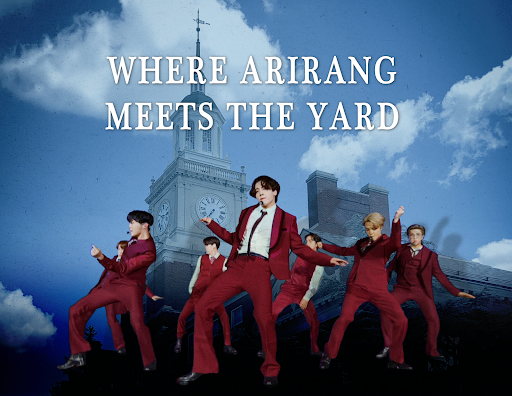

The release of a new BTS project is typically a moment of global unity, a synchronized celebration across continents where chart records are preemptively doomed and social media feeds turn a uniform shade of purple. However, the group's latest, unexpected offering—the digitally released album “ARIRANG”—has shattered that consensus, triggering one of the most vitriolic and intellectually charged debates in recent pop memory. At the center of the storm is a single, brutally candid review from a respected Korean music critic, whose assessment has not just criticized the music but has framed the project as a symbolic unraveling, a verdict so severe it has forced a fundamental conversation about artistic evolution, national heritage, and the very purpose of pop superstardom.
From Stadium Anthems to Folk Melodies: The Unprecedented Pivot
To understand the seismic shockwaves of the “ARIRANG” release, one must first appreciate the sheer altitude from which BTS chose to step. Following the conclusion of their mandatory military service era—a period of reflection and individual projects—the group had been the subject of frenzied speculation. Would they return with the bombastic, hip-hop-infused anthems of their early days? Would they continue the sleek, disco-pop of “Dynamite” and “Butter”? The industry, and the charts, were braced for a commercial juggernaut.
Instead, BTS presented “ARIRANG,” a nine-track album deeply and unreservedly rooted in traditional Korean music (gugak). The title track itself is a radical re-imagining of the centuries-old folk song “Arirang,” a melody so ingrained in the Korean psyche it’s considered a unofficial national anthem. The album features instrumentation like the gayageum (a zither-like string instrument), daegeum (bamboo flute), and janggu (hourglass drum), with vocals often employing traditional folk singing techniques like sori. The production, handled in collaboration with revered gugak masters, deliberately strips away the layered synthscapes and polished beats of their previous work, opting for a raw, acoustic, and spiritually resonant sound.
“This isn't a comeback; it's a retreat. It's the sound of their collapse—not as artists, but as the defining pop prophets of a generation. They haven't evolved forward into a new sound; they've dissolved backward into a museum piece.”
The above quote, from critic Park Ji-woong’s now-infamous review in The Sonic Lens, captures the incendiary core of the backlash. Park, known for his unflinching and scholarly approach, argued that the album represented an “artistic surrender.” His critique posited that by fully immersing themselves in tradition without the filter of contemporary fusion, BTS had abdicated their hard-won role as innovators who bridge cultures. He called the project “curated cultural austerity,” suggesting it was a safe, prestige play that lacked the daring and relevance of their earlier genre-blending work.
The Genesis of "ARIRANG": More Than a Side Project
Contrary to narratives framing this as a sudden whim, sources close to Big Hit Music indicate the seeds of “ARIRANG” were sown years ago. Members, particularly RM and j-hope, have long expressed interest in their musical heritage. The group’s 2018 performance at the National Gugak Center was a pivotal moment, described by RM in a past interview as “humbling and inspiring.” This project is understood to be a post-military, pre-full-group-commercial-comeback passion endeavor, greenlit with full artistic freedom. It was never positioned as the grand “Chapter 3” flagship, but rather a sincere, standalone offering to their Korean fanbase and heritage—a fact many critics of the review argue was willfully ignored in the rush to judge its pop merits.
The Review That Broke The Internet
Park Ji-woong’s review did not merely pan the album; it deconstructed its existential premise. Published in a niche but highly influential criticism journal, its impact was amplified exponentially when key phrases were shared, devoid of context, across social media. The piece methodically attacked several pillars of the project.
First, it questioned artistic integrity: “The move feels less like an organic exploration and more like a calculated atonement or a bid for legacy-polishing, a step into the safe, state-approved realm of ‘high culture’ after years of globalized pop.” Second, it lamented the abandonment of BTS’s global narrative: “In turning so decisively inward, they sever the connective tissue built with international ARMY. The ‘Bangtan’ that preached self-love in a universal language now speaks in a dialect inaccessible to most of their audience.”
Most damningly, Park criticized the execution: “The reverence is palpable, but the spark is absent. The members sound like guests at their own concert, their distinctive vocal colors smoothed into a homogenized, respectful whisper against the ancient instruments. It lacks the tension, the conviction, that made even their most experimental pop forays compelling.”

A Counter-Critique from the Traditional Arts World
In a fascinating twist, the review has been fiercely contested not just by fans, but by scholars and practitioners of gugak. Master musician Kim Il-ryun, who consulted on the album, published an open letter calling Park’s perspective “profoundly colonial.”
“To dismiss this as ‘the sound of collapse’ is to assert that the only valid artistic direction is forward into Western-centric pop modernity. It frames our traditional sounds as a graveyard, not a living, breathing source of inspiration. What BTS has done here is not a retreat; it is an act of profound confidence. It requires more courage for a global icon to present something this culturally specific than to release another global pop single.”This defense reframed the debate from “Is the album good pop?” to “By what standards are we judging this, and who gets to set them?”
A Fandom Divided: The ARMY Civil Discourse
The reaction from ARMY has been spectacularly fractured, revealing generational and philosophical splits within the world’s largest fandom. On platforms like Twitter and Weverse, the battle lines are drawn.
The Purist Defenders: A significant segment, including many long-time Korean and older international fans, have embraced the album as BTS’s most mature and meaningful work. They see the criticism as philistine and disrespectful of Korean culture. “They’ve given us everything. Now they give us their roots, and you call it a collapse?” reads a typical, highly-liked post. These fans actively promote the album’s cultural nuances, creating educational threads about the instruments and lyrical references, framing support as a patriotic and intellectual duty.
The Disappointed Pop Consumers: Conversely, a vocal subset of fans, often more accustomed to BTS’s chart-dominating side, have expressed quiet disappointment or confusion. Their sentiment isn’t anger, but a sense of disconnect. “I support them unconditionally, and I’ll stream, but I can’t connect with this music. It doesn’t make me feel the way ‘Spring Day’ or ‘Black Swan’ does,” shared one fan on a private forum. This group feels caught between loyalty and a genuine lack of engagement with the material.
The Anti-Critic Militia: Then there is the faction that has mobilized entirely against Park Ji-woong and any media outlet perceived as supporting his view. His professional history is being scoured, and his past reviews of other artists are being mass-quoted to paint him as a perpetual contrarian. This has echoes of past controversies where fan sentiment turned against media figures, such as the fallout from presidential praise sparking political firestorms, though now the target is cultural criticism rather than politics.
The schism is so profound it has disrupted typical fandom mobilization. Streaming numbers for “ARIRANG” are strong in Korea but anomalously modest by BTS standards on global platforms like Spotify. The unified “goal-setting” and mass-streaming campaigns that characterize a major comeback are conspicuously absent, replaced by heated ethical debates about “the right way” to be a fan.
Industry Tremors: Prestige vs. Popularity in the Post-Military Era
Beyond fan forums, the “ARIRANG” debate is being closely watched by industry insiders as a crucial test case. For years, the trajectory for top-tier male idols post-military service has been a carefully managed return to proven commercial formulas. BTS, by seemingly rejecting this playbook, has thrown a wrench into the industry’s conventional wisdom.
“This is about legacy management on a scale we’ve never seen,” says Lee Hye-ju, a veteran entertainment analyst. “Big Hit and BTS are making a conscious statement: that their artistic capital is now so vast they can spend it on projects with more cultural ROI than commercial ROI. They are buying prestige. The furious reaction proves how rare and risky that is.”
The situation also highlights the precarious position of critics in the K-Pop ecosystem. Park’s review has drawn both acclaim for its boldness and accusations of elitism. It raises the question: in an industry driven by fan power and streaming numbers, is there space for harsh, traditional criticism that doesn’t function as promotional content? This tension between critical authority and fan sovereignty is not new; we saw it in the nuanced discussions around idol image and artistic autonomy in the wake of Taemin’s own transformations.
Furthermore, the episode forces a reckoning with how K-Pop engages with Korean tradition. “Fusion” has always been safe—a traditional instrument riff in a dance break, hanbok-inspired stage outfits. “ARIRANG” commits fully, creating a jarring experience for those expecting mere aesthetic garnish. It places BTS in a new, politically delicate category alongside national treasures rather than pop peers, a space where, as seen when idols brush against political figures, the rules of engagement are entirely different.
The Silent Metric: Digital vs. Physical and the "Success" Paradox
Interestingly, while digital performance is mixed, industry sources report that the limited-edition physical package of “ARIRANG,” designed as a high-art object with scholarly liner notes, sold out its pre-orders instantly and commands steep prices on the secondary market. This suggests a success metric detached from the Melon Top 100: the album as a coveted cultural artifact. It succeeds not as a “comeback” but as a statement piece, complicating the narrative of failure that the critical review implied.
What Lies Beyond the Crossroads?
The fallout from “ARIRANG” and its most brutal review will linger long after the streaming numbers stabilize. For BTS, the path forward is now laden with heightened scrutiny. Their next global, full-group pop release will be dissected for signs of either a course correction or a doubling down on artistic independence. The pressure is immense.
For the industry, the lesson is multifaceted. It demonstrates the limits of fan unity when artistic direction diverges sharply from established brand identity. It also showcases the growing power of cultural discourse around K-Pop, moving beyond gossip and chart data into debates about authenticity, post-colonialism, and artistic maturity. You can explore more on these evolving artist narratives on our Artists page.
Ultimately, the “ARIRANG” controversy may be judged not by today’s tweets, but by tomorrow’s hindsight. Was it a brave, foundational work that re-rooted the group in their identity, enriching all future projects? Or was it a well-intentioned but misguided detour that revealed the irreconcilable gap between a global pop empire and a niche traditional homage? The truth, as in all art, likely lies in the ear of the beholder. But one thing is certain: by provoking this firestorm, BTS has once again proven that their most powerful product is not merely music, but conversation—even, and especially, when that conversation is painfully divided. As the industry absorbs this moment, all eyes will be on what chapter they choose to write next, and whether the echoes of the daegeum will find a place within it.