
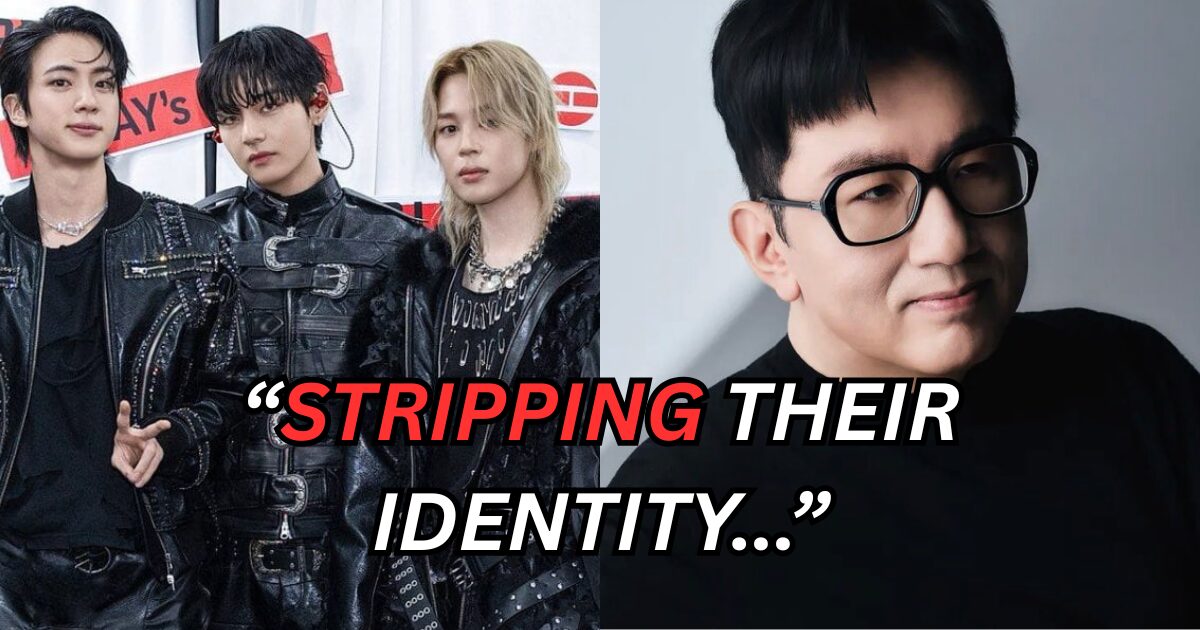

In the volatile ecosystem of K-pop, few rumors strike a nerve like accusations of internal sabotage against its brightest stars. Following BTS's monumental "ARIRANG" concert series in Seoul, a narrative has erupted online, alleging founder Bang Si-hyuk is intentionally hindering the group's trajectory. This analysis dives beyond the headlines, separating emotional fan reaction from the complex realities of corporate strategy, artistic evolution, and the immense pressure of steering a global phenomenon. The situation presents a critical case study in what happens when an artist outgrows not just their company, but the very archetype of the K-pop "idol group," forcing a painful and public reevaluation of every relationship within its ecosystem.
In This Deep Dive:
- What Exactly Is Bang Si-hyuk Being Accused Of?
- The Architect's Hand: A History of Creative Control
- HYBE's Corporate Engine: Business vs. Band?
- BTS in Chapter 3: Evidence of Stifling or Strategic Freedom?
- The ARMY Divide: Protectionism vs. Distrust
- FAQ: Unpacking the "Sabotage" Theory
What Exactly Is Bang Si-hyuk Being Accused Of?
The term "sabotage" is incendiary, suggesting deliberate harm. In the wake of the emotionally charged "ARIRANG" concerts—seen by many as a poignant, homecoming celebration and a potential capstone to a record-breaking era—certain fan factions point to a pattern they believe reveals Bang's shifting priorities. This isn't about a single misstep, but a perceived systemic shift in philosophy at the highest level of HYBE.
The Core Allegations
Accusations are not about one action, but a perceived pattern. Critics claim Bang, through his outsized influence at HYBE, is deprioritizing BTS's group activities to focus resources on newer label acts and HYBE's corporate expansion. Specific grievances include:
- Promotional Neglect: Perceived inadequate marketing budgets and strategic push for recent group releases compared to the colossal, multi-platform launches for newer HYBE acts.
- Musical Direction: Influencing BTS's sound towards more commercially safe, "GP-friendly" tracks, allegedly at the expense of the lyrical depth and genre experimentation that defined their rise.
- Enlistment Narrative Control: Orchestrating the timing and PR around the members' military service to minimize "downtime" for HYBE's stock price, rather than prioritizing the members' individual readiness.
- Resource Diversion: Allegedly moving top-tier producers, songwriters, and creative directors who were once dedicated to BTS projects onto the development of rookie groups.
This paints a picture of BTS being gradually transitioned from HYBE's creative centerpiece to a reliable, but slowly fading, legacy asset.
The "ARIRANG" Catalyst
The concert itself was a technical and emotional triumph, a showcase of peak performance. However, the alleged sabotage narrative gained traction from what happened—or didn't happen—in the strategic silence that followed. The absence of an immediate, high-profile follow-up group plan (like a world tour announcement or a new album teaser) post-concert, contrasted with the relentless, coordinated promotion for other HYBE artists (like a LE SSERAFIM - PUREFLOW pt.1: What Just Landed" rel="internal">LE SSERAFIM comeback or a NewJeans global campaign), fueled the fire. It created a vacuum of information, which in hyper-connected fandom spaces, is rapidly filled with anxiety and speculation, interpreted by some as a quiet sidelining. The concert felt like a finale, and the lack of a clear "next" felt, to some, intentional.
"When you have a say in almost everything, you're blamed for almost everything. The transition from a founder-driven company to an institutionalized corporation is always messy. Every decision is now seen through the lens of stock valuations and market competition, not just artist development." — Industry insider on the Bang Si-hyuk dilemma.
The Architect's Hand: A History of Creative Control
To understand the present tension, one must fully acknowledge Bang Si-hyuk's foundational, almost mythic, role. He was never a distant, suit-and-tie CEO; he was "Hitman" Bang, the producer-architect who personally sculpted BTS's early sound and identity, from the rebellious hip-hop of "No More Dream" to the therapeutic anthem "Spring Day." His fingerprints were on the lyrics, the composition, and the overarching narrative.
From Hitman Bang to Chairman Bang: An Inevitable Evolution
The relationship has fundamentally evolved from atelier to conglomerate. Bang transitioned from hands-on producer and mentor to the Chairman of a publicly traded multinational with over 10 subsidiary labels. His creative input, while still significant, is now filtered through layers of professional management, dedicated A&R teams, and—critically—the members' own vastly matured artistic voices. The accusation of musical "sabotage" often ignores the group's own stated, repeated desire for growth and experimentation. Can one blame Bang for a perceived shift in sound when members like RM and Suga have openly discussed their evolving musical tastes and the desire to tackle new genres? Tracks like the innovative "BTS - SWIM (Underwater Remix)" demonstrate a willingness to explore sonic boundaries that likely required, not resisted, corporate approval.
A Comparative Lens: The Producer's Dilemma Across the Industry
This tension is a recurring theme in music history. Founders who are also creators—like Berry Gordy at Motown, or J.Y. Park at JYP—often struggle to relinquish creative control as their artists and company scale. The question is whether Bang's influence remains a guiding hand or has become a stifling gatekeeper. Evidence suggests a more nuanced mix: he sets the broad strategic vision and retains final-approval authority on monumentally important BTS milestones (like a full-group comeback concept), while empowering the dedicated BTS production team and the artists themselves with day-to-day creative execution. The real friction may stem from this very transition; when an artist no longer needs "crafting," what is the producer's role?
 The Duality of Bang Si-hyuk's Role: Perception vs. Practice
PerspectiveEvidence Cited by SupportersEvidence Cited by Critics
Creative VisionMaintains songwriting credits on major albums, acts as a respected "final ear" to protect group's core identity, approved high-risk projects like the "Love Yourself" series.Allegedly rejects member-submitted tracks that don't fit a commercial mold, pushes for "radio-friendly" singles over introspective unit tracks, limits radical experimentation deemed too niche.
Business PriorityBuilt HYBE's multi-label system explicitly to protect BTS's legacy and ensure the company's survival beyond them, diversifies revenue to ensure long-term financial stability for all artists and staff.Redirects top producers (e.g., Pdogg) and marketing resources to new groups, treats BTS's brand as a cash cow to fund aggressive acquisitions (e.g., Ithaca Holdings, QC Media).
Artist FreedomGreenlit ambitious solo debuts across wildly different genres (j-hope's grunge-hip-hop, Jin's ballads, V's jazz-pop), supports individual ventures in acting, fashion, and art curation.Controls solo rollout timing and scope to avoid overshadowing HYBE's newer acts' schedules, maintains veto power over collaborations or concepts that might conflict with HYBE's broader partnerships.
The Duality of Bang Si-hyuk's Role: Perception vs. Practice
PerspectiveEvidence Cited by SupportersEvidence Cited by Critics
Creative VisionMaintains songwriting credits on major albums, acts as a respected "final ear" to protect group's core identity, approved high-risk projects like the "Love Yourself" series.Allegedly rejects member-submitted tracks that don't fit a commercial mold, pushes for "radio-friendly" singles over introspective unit tracks, limits radical experimentation deemed too niche.
Business PriorityBuilt HYBE's multi-label system explicitly to protect BTS's legacy and ensure the company's survival beyond them, diversifies revenue to ensure long-term financial stability for all artists and staff.Redirects top producers (e.g., Pdogg) and marketing resources to new groups, treats BTS's brand as a cash cow to fund aggressive acquisitions (e.g., Ithaca Holdings, QC Media).
Artist FreedomGreenlit ambitious solo debuts across wildly different genres (j-hope's grunge-hip-hop, Jin's ballads, V's jazz-pop), supports individual ventures in acting, fashion, and art curation.Controls solo rollout timing and scope to avoid overshadowing HYBE's newer acts' schedules, maintains veto power over collaborations or concepts that might conflict with HYBE's broader partnerships.
HYBE's Corporate Engine: Business vs. Band?
HYBE is no longer just Big Hit Entertainment, BTS's nurturing home. It's a publicly listed corporation (410060:KS) with fiduciary duties to shareholders, a sprawling multi-label system, and an existential need to grow beyond reliance on one act, no matter how legendary. This is the cold, hard reality that fans' emotional narratives often clash with.
The Inevitable and Necessary Diversification
Sabotage implies malice. Strategy acknowledges necessity. From a business standpoint, HYBE's aggressive development and promotion of acts like LE SSERAFIM - PUREFLOW pt.1: What Just Landed" rel="internal">LE SSERAFIM, NewJeans, and &TEAM is not an attack on BTS, but a survival imperative. BTS's enlistment period presented a clear and present danger to HYBE's revenue stream. The "ARIRANG" concert itself, while a revenue generator, likely consumed a colossal percentage of the company's top-tier logistical, creative, and managerial resources for months. A subsequent operational cooling-off period for the group's core team is not inherently suspicious; it's a practical reality. Meanwhile, the solo chapters allow for a continuous, diversified revenue flow from seven individual brands.
Market Saturation and the "Less is More" Principle for a Global Phenomenon
BTS exists in a rarefied space where overexposure can be a genuine risk. The music market, even for the biggest act in the world, has a capacity for absorption. Strategic pacing of colossal group events maintains their prestige and turns each release into a global event, not a routine occurrence. Flooding the market with constant BTS content could dilute its impact. Conversely, the solo chapters serve multiple purposes: they satisfy fan demand for content, allow individual members to build sustainable careers that will outlast the group, and let the global audience discover new artistic dimensions. This is akin to fans exploring K-Pop's buried B-side treasures—the solo work deepens the appreciation of the whole.
BTS in Chapter 3: Evidence of Stifling or Strategic Freedom?
The most compelling counter-argument to the sabotage theory is the vibrant, diverse, and deeply personal output of the BTS members themselves during their group hiatus. Their solo careers are a live experiment testing the boundaries of their agency within HYBE.
Solos as a Testament to Institutional Support
Each member's solo work reflects distinct personal tastes, often far removed from the "typical" BTS sound or a prescribed "HYBE sound." Examine the evidence:
- j-hope's "Jack In The Box": A dark, grunge-influenced hip-hop album with a cohesive artistic vision, launched with a visceral "BBC Radio 1 Live Lounge" performance. This was not a safe, commercial pop play.
- RM's "Indigo": A collaborative art project featuring indie and legacy artists (e.g., Erykah Badu, Paul Blanco), functioning more like a curator's notebook than a traditional idol album.
- Jin's Acting Debut & "The Astronaut": A foray into television and a collab with Coldplay, leveraging his individual celebrity outside the K-pop ecosystem.
- V's "Layover": A jazz-pop EP helmed by acclaimed producer Min Hee-jin, prioritizing mood and aesthetic over chart-topping formula.
Such projects require significant budget, logistical support, and, crucially, corporate permission. Their existence suggests a framework of supported freedom, not stifling control. This mirrors the artistic authenticity seen in bold soloists like BIBI in "Perfect Crown Pt.1", who also navigates the line between personal art and commercial system.
The Power of "No" and the Reality of Corporate Structure
Do the members have absolute, unfettered freedom? No, and no major artist in a large global corporation does. Budgets, timelines, contractual obligations with global partners (e.g., Spotify, Apple), and overall brand alignment are non-negotiable realities. A member likely can't spontaneously drop a politically charged diss track if it violates a broad corporate partnership. However, the scope, personal nature, and varied genres of their projects suggest a high degree of negotiated agency. Perceiving necessary corporate structure as "sabotage" fundamentally misunderstands how the global entertainment industry operates at this scale. The question isn't "is there any control?" but "is the degree of control unreasonable for artists of their stature and tenure?"
The ARMY Divide: Protectionism vs. Distrust
The fanbase reaction is a profound case study in modern fandom psychology. The deep, protective love for BTS manifests in two opposing ways: fierce protectionism that views any corporate action with skepticism, and a profound distrust of corporate power that sees conglomerates as inherently exploitative.
The Protective Instinct: From Underdogs to Untouchables
For many ARMY, BTS's journey is a sacred narrative of overcoming immense industry obstacles and bias. This history has wired the fandom to be hyper-vigilant against any perceived new threat. Bang Si-hyuk, once celebrated as the protective father figure who shielded them, has, by virtue of his ultimate power as Chairman, become the focal point for all corporate anxieties. He transforms from "our founder" to a symbol of the very "system" they fear might now exploit the artists it created. When HYBE's stock price fluctuates, a segment of the fandom reads it not as market dynamics, but as a metric of the company's commitment to BTS.
Echo Chambers and Narrative Acceleration in the Digital Age
Social media algorithms are engineered to amplify engagement, which often means promoting extreme or emotionally charged viewpoints. A nuanced discussion about resource allocation strategy morphs into a viral "sabotage" narrative at lightning speed within isolated online communities. The lack of immediate, transparent communication from HYBE—a standard, if frustrating, corporate practice—creates an information vacuum perfect for conspiracy to thrive. This is exacerbated by the sheer scale of ARMY; a theory embraced by even a small percentage represents hundreds of thousands of vocal voices. For broader context on how new media narratives emerge and solidify, our dedicated News page tracks these patterns across the industry.
FAQ: Unpacking the "Sabotage" Theory
Q: Did something specific happen at the "ARIRANG" concert to spark this?
A: Not directly. The concert was widely praised for its scale and emotion. The spark was the strategic aftermath—the perceived lack of a grand, immediately announced "next step" for the group (like a world tour), contrasted with HYBE's bustling, highly publicized activity for other artists. In the past, monumental BTS concerts often preceded major announcements. The silence this time was interpreted as a deliberate downshift in priority.
Q: Does Bang Si-hyuk really have "a say in almost everything" at HYBE?
A: His influence is vast at the macro-strategic level, but not on daily minutiae. As Chairman and the largest individual shareholder, he likely signs off on major capital investments, key executive hires, acquisitions, and the overarching 5-year brand strategy for BTS. He is almost certainly not involved in choosing the daily wardrobe for a music video shoot for a new rookie group like Hyukjin. His role is that of a visionary board chairman, not an operating officer.
Q: Is HYBE neglecting BTS to push newer groups?
A: "Neglect" is an emotional word. "Strategic reallocation of active promotional focus" is more accurate from a business lens. HYBE must grow its portfolio to ensure its survival. This requires investing heavily in new assets. BTS, in their Chapter 3 solo phase, naturally require a different, more decentralized type of resource—more logistical, legal, and advisory support for seven individual global careers, rather than fueling one massive, unified group promotional machine. The investment is there, but it's distributed differently.
Q: What would actual, concrete sabotage look like in this context?
A: Concrete, provable examples would be: contractually blocking member solo projects, refusing to renew exclusive contracts without cause, deliberately underfunding and understaffing album productions, slandering members in media backgrounds, or actively burying their releases in internal schedules. None of this is occurring. The current debate is almost entirely about the degree of promotional push, perceived priority in internal meetings, and symbolic gestures—all of which are subjective interpretations of corporate strategy, not acts of obstruction.
Q: How does this compare to other K-pop founder-artist dynamics (e.g., J.Y. Park & JYP groups, Yang Hyun-suk & BIGBANG)?
A: The scale and stakes are unique. Few K-pop founders are as publicly, intimately tied to their artist's foundational sound and identity as Bang is to BTS. The tension mirrors universal struggles in entertainment conglomerates (artist maturation vs. founder's vision, legacy acts vs. new investment). However, it is magnified exponentially by BTS's unprecedented cultural weight, HYBE's rapid IPO, and the founder's enduring, almost mythical, creative profile. It's a first-of-its-kind problem in K-pop.
Conclusion: A Clash of Narratives, Not Sabotage
The "Bang Si-hyuk sabotage" narrative is ultimately a painful collision between two powerful, emotionally charged stories: the story of a fiercely protective, historically-minded fandom guarding its heroes against a world perceived as hostile, and the story of a corporation navigating the impossible, uncharted task of stewarding a generation-defining cultural icon while ensuring its own future viability in a cutthroat market. It is a crisis of communication, perspective, and the natural grief that accompanies change, not a crisis of malicious intent.
Evidence points not to sabotage, but to the complex, often uncomfortable, and rarely elegant realities of scaling, diversification, and artistic adulthood. BTS's members are actively leveraging their hard-won agency within the HYBE system, using its infrastructure to explore solo paths that will ultimately enrich and prolong their collective story. The true test of HYBE's commitment will be visible in the quality, budget, and global promotional heft behind their eventual full-group reunion—a project that will require the full, coordinated might of the corporation they helped build.
What's Next? Watch for the members' continued solo outputs and the specific, tangible resources HYBE allocates to them (e.g., production quality, playlist pitching, partnership deals). Judge by actions, not rumors. For a clearer picture of the broader musical landscape they're operating in, explore the latest hits on our Charts page and discover how other artists, from established soloists to rising producers like DJ ASTER, are navigating their own creative and commercial journeys. The story of BTS and HYBE is a pivotal chapter in modern music business history, and it is still being written—not sabotaged.