
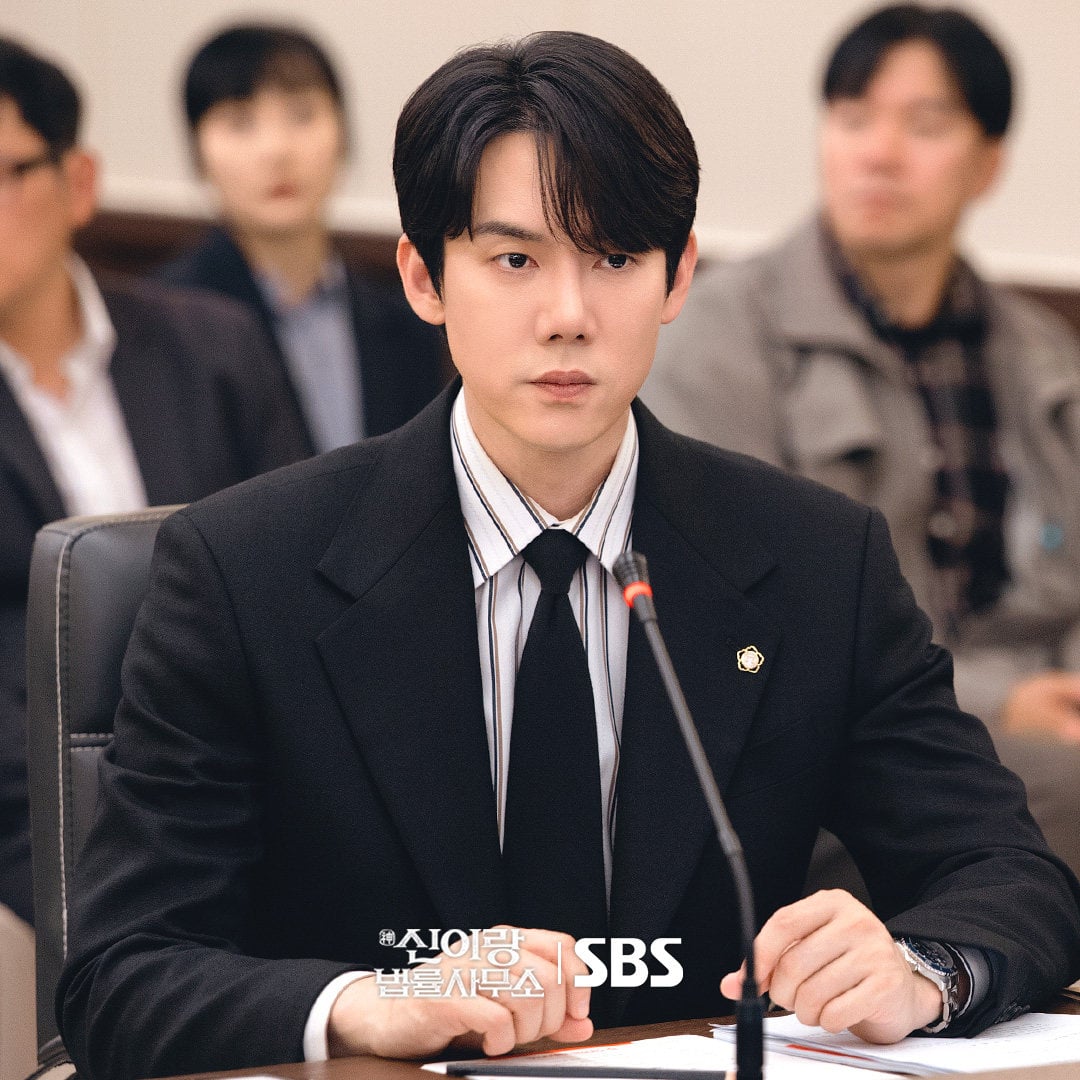

The second half of "Phantom Lawyer" has masterfully pivoted from procedural thrills to a raw, nuanced exploration of mentorship and emotional resilience, themes that are not just familiar but foundational to the K-Pop ecosystem. The evolving dynamic between Esom and Yoo Yeon Seok offers a televised masterclass in professional support that directly mirrors the trainee-to-sunbae, artist-to-company, and member-to-member relationships defining our industry. This analysis breaks down their key moments, provides concrete industry parallels, and reveals why this storyline resonates so profoundly with an audience conditioned to look for the story behind the performance.
- The Mentorship Blueprint: From Rigid Rules to Human Connection
- Emotional Resilience as the Ultimate Performance
- The Power of Public Acknowledgment & The "We" Mindset
- Parallels to the K-Pop System: A Comparative Analysis
- Your "Phantom Lawyer" & K-Pop Questions, Answered
The Mentorship Blueprint: From Rigid Rules to Human Connection
Early episodes established a clear, almost clinical hierarchy: the experienced, by-the-book mentor (Yoo Yeon Seok as the seasoned lawyer) and the impulsive, raw-talent-reliant protege (Esom as the gifted rookie). Episodes 9-10 systematically dismantle this top-down structure, demonstrating that true, sustainable growth occurs not through mere obedience, but through evolving mutual respect, psychological safety, and guidance tailored to the individual's needs. This mirrors the critical transition in an idol's career from being a trainee who follows instructions to an artist who understands intent.
The Shift from "What" to "Why"
Initially, guidance was purely technical: "This is the legal precedent," or "This is how you file a motion." The mentor's role has now deepened to address the psychological underpinnings of actions—the fear, ego, or past trauma driving a decision. This is precisely how veteran K-Pop producers and performance directors operate. Figures like Pdogg (BTS's producer) or Son Sung-deuk (BTS's choreographer) begin by teaching notes and steps, but their most impactful work involves helping artists connect a song's emotion to their own lived experience, or explaining the narrative behind a choreography's aggression or vulnerability. It's the difference between hitting a high note and conveying heartbreak through it, a transformation clear in the vocal evolution of artists like IU or AKMU's Lee Su-hyun.
Vulnerability as a Strategic Teaching Tool
A pivotal dramatic moment involves the mentor revealing a significant, reputation-tarnishing professional failure from his past. This isn't casual storytelling; it's strategic vulnerability. It reframes the relationship from a hierarchy of infallibility to a shared journey of fallible humans. In K-Pop, this is a documented strategy for building lineage and reducing immense pressure. Senior idols like SHINee's Taemin have openly discussed their intense anxieties and struggles, while SUNMI has been transparent about her mental health journey. When these sunbaes share these stories on shows like Radio Star or through heartfelt letters to fans, they do more than be relatable—they actively dismantle the myth of the perfect idol for the next generation, creating a more supportive and humane industry pipeline.
The Three Stages of K-Pop Mentorship mirrored in the Drama
- Foundation (Discipline & Technique): The early episodes where the rookie is corrected on procedure. This is the trainee period: endless vocal lessons, dance practice, and language coaching.
- Internalization (Intent & Emotion): The middle episodes where the "why" is explored. This is the debut phase where idols learn to own a concept, connect with lyrics, and understand their stage persona.
- Partnership (Collaborative Strategy): The current episodes where they strategize as equals. This mirrors the point in an idol's career where they begin contributing to songwriting, choreography, or overall concept direction, like BTS's RM in production or (G)I-DLE's Soyeon in creative direction.
Emotional Resilience as the Ultimate Performance
The drama’s core legal conflict forces characters to perform—to argue, persuade, and present—under immense emotional duress, often while grappling with personal connections to the case. The support system shown isn't about eliminating pressure, but about providing the precise tools to channel it into performance. This is a daily, minute-by-minute reality for idols, for whom the "stage" is everywhere: the music show, the variety set, the airport terminal, and the live stream.
The "Backstage" Support System: An Unseen Infrastructure
Key scenes show the most critical support happening in offices, cars, and hallways—away from the "main stage" of the courtroom. This private bolstering—a quiet word, a shared piece of evidence delivered at the right moment, a reminder of core strength—is the non-negotiable foundation of public success. The K-Pop equivalent is vast and specialized:
- Managers and Coordinators: They act as shields, logistics masters, and often, surrogate family, providing the practical and emotional pep talks off-camera.
- Vocal & Dance Coaches: They offer technical reassurance, building the muscle memory and confidence so that performance becomes automatic even under stress.
- Mental Health Professionals: Increasingly prevalent within agencies, they provide the clinical tools for managing anxiety, public scrutiny, and the identity dissonance between the private self and the public idol.
Legitimizing Emotional Labor: The Invisible Workload
The narrative treats the emotional toll of the case—the guilt, the anger, the empathy fatigue—as seriously as the legal strategy. This validation of emotional labor is crucial. Idols expend this labor constantly: maintaining a bright persona during exhausting fan signs, showing engaging enthusiasm on variety shows after minimal sleep, navigating sensitive questions in interviews with grace, and performing heartfelt gratitude. This labor is real, depleting, and requires active acknowledgment and replenishment from one's team. A company that ignores this is a company risking burnout, as history has tragically shown.

The moment of support isn't a grand speech, but a quiet, firm presence that says, "Your feelings are part of the case file, and we will address them." This mirrors a good manager saying, "Your anxiety about this performance is valid, and here's our plan to manage it," rather than simply demanding the performance.
The Power of Public Acknowledgment & The "We" Mindset
Perhaps the most distinctly K-Pop-relevant theme is the deliberate shift from celebrating individual brilliance to fortifying collective responsibility. The support culminates not in private praise, but in public acts that solidify partnership and redirect the spotlight, a core tenet of idol group dynamics and company culture.
Credit Where Credit Is Due: The Spotlight as a Currency
One critical scene involves the senior lawyer deliberately crediting his junior's crucial insight during a high-stakes partners' meeting, despite having the authority to claim the idea. This public endorsement is a powerful career catalyst, building her credibility within the firm's power structure. The K-Pop parallels are direct and impactful:
- A senior idol like BoA name-dropping a rookie group's performance during her own concert encore.
- A main producer like Bang Si-hyuk highlighting a specific member's lyric contributions in an album behind-the-scenes video.
- A group leader ensuring every member gets a defined "killing part" or center moment during a comeback, much like ITZY's Yeji or Stray Kids' Bang Chan are often seen orchestrating such balance.
Solidarity in Failure and Success: Building the "Us" Brand
The duo begins to frame wins and losses as a shared outcome—"we underestimated the witness," or "our strategy worked." This "we" mentality is the bedrock of successful idol groups. It transforms a collection of talented individuals into a unified brand with a single narrative. This is meticulously cultivated:
- In victory, awards are accepted with group speeches thanking every member and staff.
- In controversy or hardship, statements often come from the group as a whole, distributing pressure and presenting a united front, as seen when groups face unexpected hiatuses or member changes.
- The concept of "part synchronization" in dance is a physical manifestation of this—the group moves as one organism, prioritizing harmony over individual flourish.
Parallels to the K-Pop System: A Comparative Analysis
The dynamics between Esom and Yoo Yeon Seok's characters are not mere fiction; they are a sharply observed, dramatized reflection of the real structures, both formal and informal, that govern success and sustainability in the K-Pop industry. The tables below break down the direct parallels and the consequences when this system fails.
Table 1: The Functional Support System - Drama vs. K-Pop Industry "Phantom Lawyer" Dynamic K-Pop Equivalent Industry Impact & Example Strict mentor softens with strategic vulnerability Sunbae idols sharing survival show traumas or debut anxieties Fosters a healthier, more transparent generational pipeline. Example: SEVENTEEN's leaders often discuss their pre-debut hardships, setting a tone of resilience for their juniors like fromis_9 and TO1 under Pledis. Private, emotional backup before a public performance Managers & coordinators providing crisis management, security, and reassurance off-camera Enables the public-facing "idol persona" to function smoothly. Example: The meticulous care surrounding BLACKPINK during world tours, from security logistics to ensuring rest, allows for their powerful stage presence. Public credit given for a key idea or action Senior artists inviting juniors to collab stages or mentioning them in award speeches Accelerates career growth for juniors. Example: Sunmi taking ITZY's Yeji and Ryujin on stage during her solo concert, or Heize praising STAYC's Isa on a radio show. The shift from "I" to "We" in facing challenges Idol groups presenting a unified narrative during comebacks or controversies Builds unbreakable fan loyalty (fandom identity). Example: When BTS faced industry challenges early on, their message was always one of "BTS and ARMY," creating an unparalleled collective strength. Table 2: When The System Fails - A Cautionary Parallel Absent in "Phantom Lawyer" K-Pop Consequence Real-World Outcome Mentor takes sole credit for protege's work Lack of individual recognition for members, leading to fan disputes and member frustration Can lead to unfair line/screen time distribution, member dissatisfaction, and ultimately, contract disputes or group instability. Emotional labor is dismissed as "part of the job" Artist burnout, mental health crises, and sudden hiatuses As seen in the numerous cases of idols stepping back for anxiety and depression, highlighting the dire need for institutional support. No "We" mindset, only individual blame Group disunity, weak group identity, and fragile fandoms Can result in the kind of lukewarm public reception and struggling fanbase growth explored in analyses of nugu groups, like the scenario in The Empty Hall Echo.This dual-framework explains why the drama's emotional turn feels so authentic and urgent to K-Pop fans. We recognize these patterns because we see their results—and sometimes their tragic absence—in the careers we follow. The support system is what separates a flash-in-the-pan viral moment from a lasting career, a distinction clear when tracking chart performance on our Charts page.
Your "Phantom Lawyer" & K-Pop Questions, Answered
Q: As a K-Pop fan, why should I care about a legal drama? It seems completely unrelated.
A: The connection is profound because the underlying industry mechanics are identical. "Phantom Lawyer" isn't ultimately about torts and litigation; it's about the machinery of mentorship, public performance under pressure, and emotional management that drives every idol's career from trainee days to veteran status. The courtroom is simply a different type of stage, with judges and juries as the audience, and case wins as the "chart rankings." The interpersonal dynamics are a direct translation.
Q: How does this relate to recent viral K-Pop moments or record-breaking comebacks?
A> Viral success is rarely an accident; it's the peak of a pyramid built on a solid support system. The strategic planning, cohesive teamwork, and member resilience required to launch a song like BABYMONSTER's "SHEESH" to 400M views, as discussed in our deep dive, are the real-world equivalent of the drama's meticulous case preparation and in-court synchronization. The viral moment is the "not guilty" verdict; the months of work are the unseen investigation and strategy sessions.
Q: Is the "emotional turn" in the drama a common K-Pop narrative for idols themselves?
A> Absolutely. The most compelling long-term idol narratives are arcs of growth, resilience, and self-discovery. Think of it as the multi-year storyline of an artist like T.O.P, moving from the defined role within BIGBANG to periods of personal silence and public scrutiny, culminating in a bold, individual artistic rebirth. Or consider TWICE's journey from a bubbly, prescribed image to artists openly involved in songwriting and expressing more mature, personal themes. "Phantom Lawyer" compresses a similar career-length arc into a single season's character development.
Q: Can fans actually play a role in this support system, or are we just spectators?
A> In the drama, the "court of public opinion" is a constant factor influencing strategy. Similarly, fan support is the essential external validation that completes the cycle. Organized streaming, voting, and creating positive trending topics are the fanbase's way of providing "evidence" of an idol's impact. Respectful engagement at fansigns, thoughtful letters of encouragement, and defending against malicious comments are forms of emotional support. You are the applauding audience that makes the performance meaningful, the "jury" that returns a verdict of success. However, toxic fan behavior—like internal fighting or invasive sasaeng actions—is the equivalent of a hostile witness, actively undermining the system the artists and their team work so hard to maintain.
Q: Are there specific K-Pop agencies known for exemplifying this positive mentorship model?
A> While no agency is perfect, some are frequently highlighted for their familial or supportive atmospheres. HYBE's ADOR division, under CEO Min Hee-jin, has been noted for its collaborative and artist-respecting approach with NewJeans. Pledis Entertainment, under HYBE, is often praised for the respectful relationship between senior group SEVENTEEN and their juniors. SM Entertainment's "SM Culture Universe", while a large corporate machine, has a history of sunbaes like BoA and TVXQ actively mentoring younger artists. The drama's ideal is a benchmark all agencies strive for, as it directly correlates with artist longevity and brand stability.
Conclusion: The Universal Language of Support
"Phantom Lawyer" has transcended its genre by laser-focusing on the human infrastructure required for any high-stakes performance, whether in a courtroom or on a music show stage. The nuanced, evolving support between Esom and Yoo Yeon Seok’s characters provides a detailed blueprint for understanding the complex, often invisible relationships that power the K-Pop world. It reminds us that behind every successful debut, viral moment, or chart-topping comeback is a fragile network of mutual support, strategic vulnerability, and shared responsibility that must be actively nurtured. The drama ultimately argues that talent is the entry ticket, but it is this ecosystem of support that determines whether that talent flourishes or falters.
Next Steps for the Curious Fan: Watch episodes 9-10 with this analytical lens. Then, re-examine your favorite idol's most recent comeback cycle. Look beyond the music video. Analyze the thank-you speeches for mentions of staff and members. Watch the behind-the-scenes documentary content for glimpses of managers, coaches, and member-to-member reassurance. Observe how a group handles a mistake on stage or a difficult interview question with a unified front. You'll start to see the real-life "Phantom Lawyers"—the managers, sunbaes, producers, and fellow members—working tirelessly in the background. For continued analysis on the visible and invisible systems that shape this world, explore our ongoing coverage on our News page.